


Anglers Booking Team
The expert copywriters at Anglers Booking have meticulously crafted this article. Our dedicated team of writers provides valuable insights and information to enhance your angling experience.
 7 minutes read
Marlin, Wahoo, and Sailfish are regularly described as some of the fastest fish in the ocean. Popular articles give them highway-level top speeds, but many of those numbers were never measured directly. Some came from fishing-line speed, while others were calculated from body shape or muscle performance.
Modern tracking tags, accelerometers, and high-speed video tell a more cautious story. These fish are fast and highly adapted predators, but the best available evidence does not support several famous speed records.
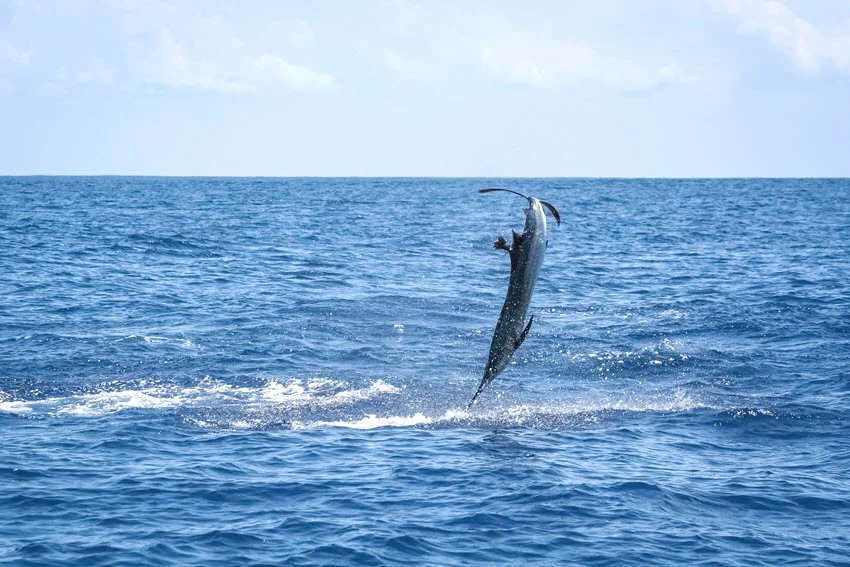
Speed is difficult to define because a brief attack, routine cruising, and a theoretical maximum are different measurements. This article separates directly observed speeds from model-based estimates and older sport-fishing claims.
A fish's speed depends on body shape, muscle type, tail design, size, water temperature, depth, and behavior. Streamlined bodies reduce drag, while narrow caudal peduncles and stiff, crescent-shaped tails transfer force efficiently. White muscle can generate powerful bursts, but it fatigues quickly and cannot sustain maximum effort for long.
Water itself imposes limits. Hydrodynamic research on fish speed limits describes how cavitation can form around the caudal fin at very high speeds near the surface. The resulting vapor bubbles reduce thrust and may damage tissue. The researchers estimated a cavitation-free range of roughly 22 to 34 mph for large swimmers with lunate tails, depending on fin structure and conditions.
The method used to measure speed is just as important. Line leaving a fishing reel can be affected by current, drag, boat movement, line angle, and the fish's direction. Modern acoustic tags, accelerometers, and high-speed video provide better evidence, although each method still has limitations and relatively small samples.
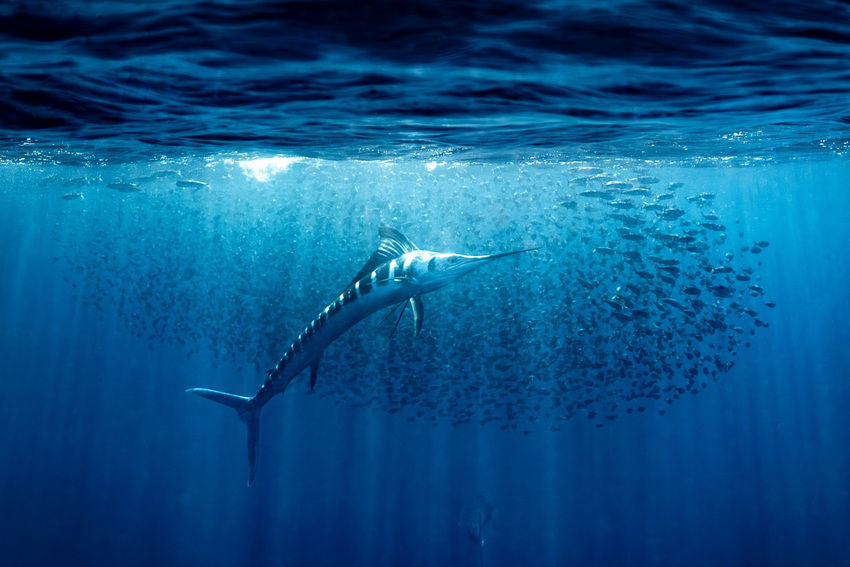
Blue Marlin have the strongest direct speed data among the Marlin discussed here. An acoustic-tagging study followed three fish for a combined 165 hours and estimated sustained swimming speeds of about 1.8 to 2.7 mph. The highest observed horizontal speed was close to 5 mph. These values describe movement during the study, not an absolute maximum, but they remain more reliable than estimates based on fishing line speed.
For Black Marlin, the often-repeated figures of 50 to 80 mph are not supported by comparable direct measurements. A physiology-based analysis of large marine predatory fish concluded that extreme billfish speed claims are unlikely, but it did not establish a species-specific maximum for Black Marlin.
White Marlin are also frequently assigned precise maximum speeds in popular articles, but no robust modern direct measurement supports those numbers. Their smaller size may affect acceleration and maneuverability, but it does not justify presenting an exact speed without evidence. This distinction also matters when discussing Marlin world records.
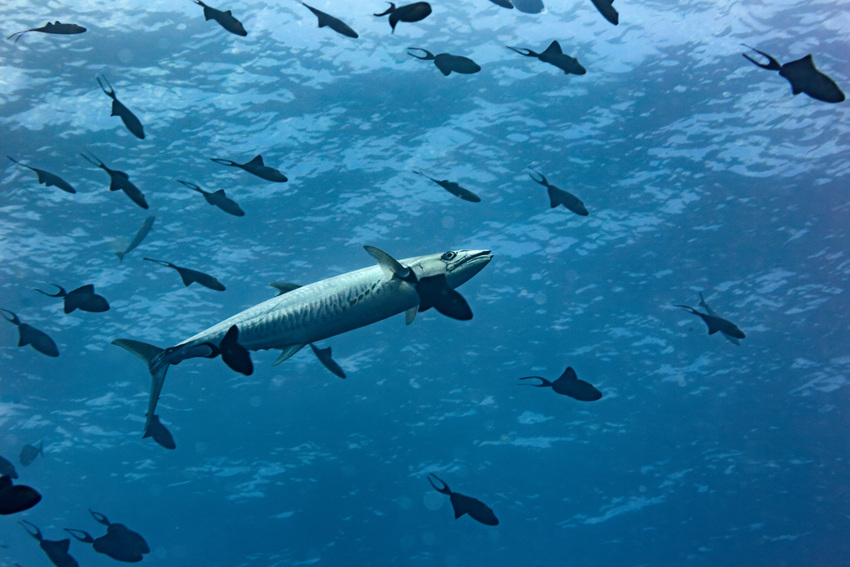
Wahoo have long, narrow bodies, narrow caudal peduncles, and deeply forked tails that support rapid acceleration. Their feeding behavior also reinforces their reputation as fast ambush predators. However, the exact top-speed figure commonly attached to the species is less certain, and the often-repeated estimate of 48 mph comes from older research rather than direct tracking.
A 1964 Nature paper discussed estimated speeds for Wahoo and Yellowfin Tuna, questioning high figures based on line leaving a reel. Instead, the researchers used body shape and an assumed tail-beat rate to calculate possible performance. This was not a modern biologging measurement of a free-swimming Wahoo, while later hydrodynamic work suggests that cavitation may limit the speeds of large fish near the surface.
For that reason, 48 mph should be presented as a historical estimate, not a recorded fact. Wahoo remain capable of sudden runs that make them challenging game fish. Anglers commonly target them by high-speed trolling, while jigging and popping techniques may also produce bites around structure or schools of bait. Their reputation is justified, but the precise number remains unsettled.
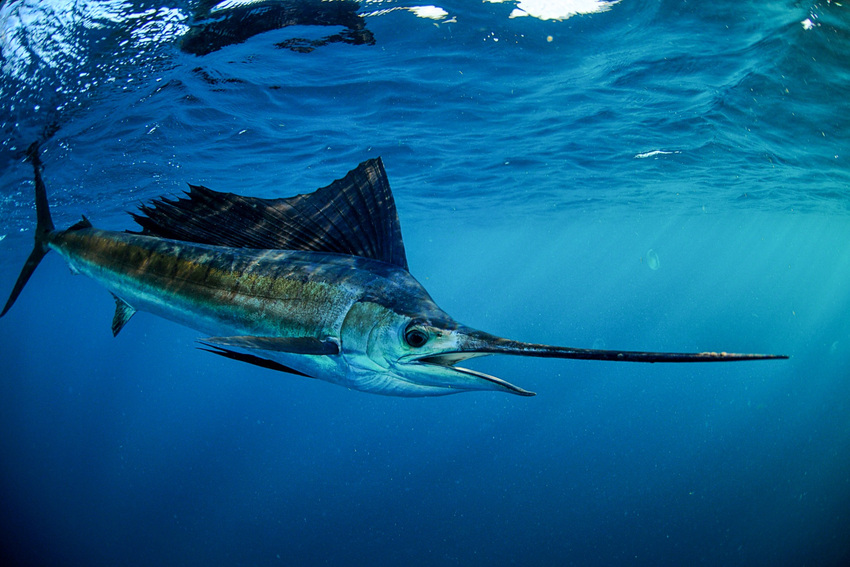
Modern research does not support the famous claim that Sailfish reach 68 mph. In a field study using high-speed video and accelerometers, Sailfish reached bursts of about 15.7 mph during predator-prey interactions. The researchers did not record speeds above 22.4 mph.
A separate physiology-based study estimated a maximum of about 18.6 mph. That result was calculated from muscle contraction time and stride length, so it should be described as a model-based estimate rather than a directly recorded top speed.
Sailfish still excel at fast, controlled attacks. Their streamlined bodies, large tails, and ability to raise or fold the dorsal sail help them maneuver around tightly packed baitfish. Their long bills are used to slash at or destabilize prey, reducing the need for the extreme straight-line speeds described in older accounts.
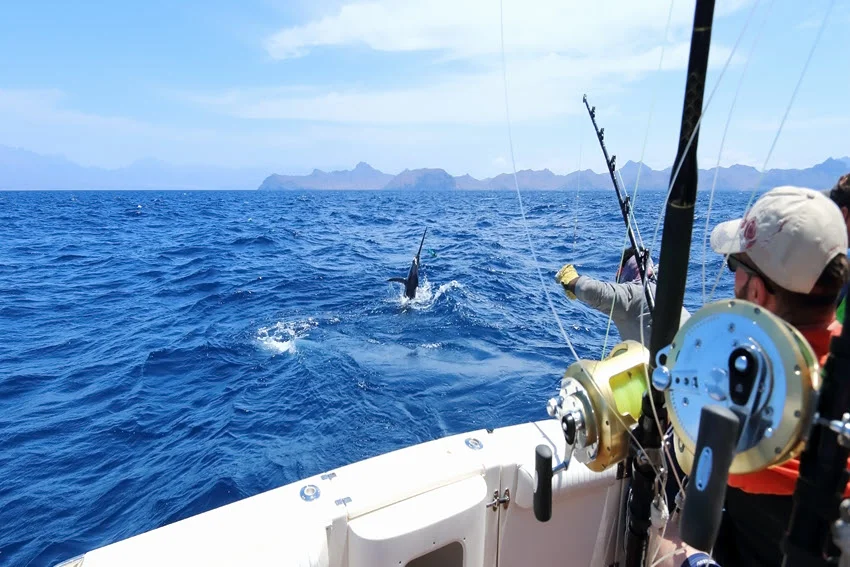
The available evidence differs by species, ranging from direct field measurements to model-based calculations and historical estimates. Here is what the strongest sources currently support.
Because the figures come from different methods, they should not be used as an exact fastest-to-slowest ranking. The best-supported comparison is between the type of evidence available for each fish.
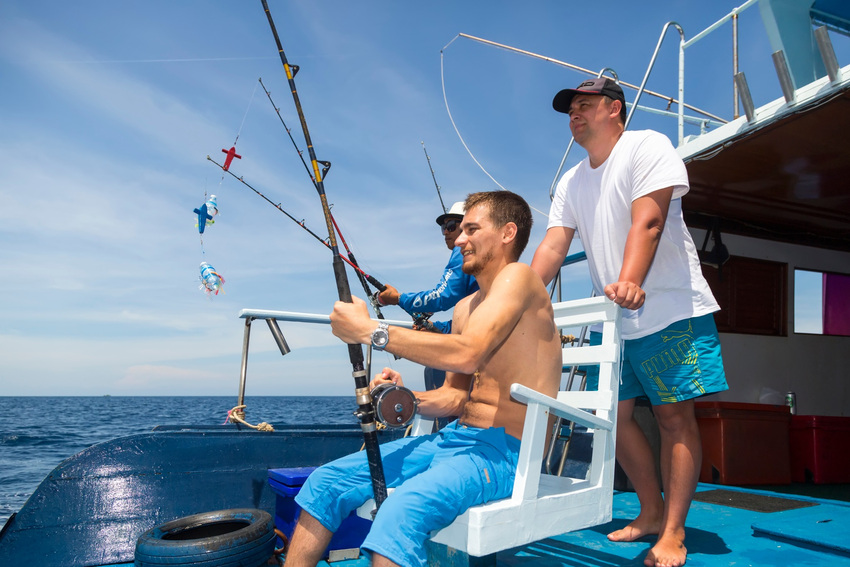
Old speed claims often came from the rate at which line left a reel after a fish was hooked. That method cannot isolate the fish's swimming speed from the effects of current, drag, boat movement, line angle, and gear mechanics.
Some high figures also came from theoretical calculations that did not fully account for muscle performance, tail-beat frequency, depth, or cavitation. Once a dramatic number appeared in magazines or fishing guides, later articles often repeated it without tracing the original method.
Modern tags, accelerometers, and high-speed video provide better evidence, but the available data remain limited. Results can also describe different things: routine cruising, a brief hunting burst, or a model-based maximum. Treating all three as the same measurement creates misleading rankings.
Marlin, Wahoo, and Sailfish are all built for speed, but the familiar rankings are less certain than they appear. Blue Marlin have useful direct telemetry data, Sailfish have field measurements from predator-prey interactions, and Wahoo are still commonly described using a historical estimate rather than modern biologging.
The strongest conclusion is not that one species owns an unquestionable speed record. It is that real-world measurements are generally lower than the numbers repeated in popular fishing content. Comparing the method behind each figure is more useful than comparing the headline number alone.
Have you caught a Marlin, Wahoo, or Sailfish? Tell us about the fish's first run and how it compared with other pelagic species you have targeted.

The expert copywriters at Anglers Booking have meticulously crafted this article. Our dedicated team of writers provides valuable insights and information to enhance your angling experience.

December 6, 2024

February 26, 2025
Subscribe to our newsletter and receive a selection of cool articles every week.
Embark on unforgettable fishing adventures with us at Anglers Booking.
book your charter
September 8, 2026
August 21, 2026
August 18, 2026
August 15, 2026
August 12, 2026
August 8, 2026

August 4, 2026
April 17, 2026

You're now part of our exclusive community. Get ready for premium content and updates straight to your inbox.
close
Subscribe to our newsletter and receive a selection of cool articles every week.
Please enter a valid email address.
Be the first to know when we're back in action.
Please enter a valid email address.
Leave a Comment
Your email address will not be published. Required fields are marked *
Thank you for your comment! It has been submitted for review and will appear on the site shortly.