


Anglers Booking Team
The expert copywriters at Anglers Booking have meticulously crafted this article. Our dedicated team of writers provides valuable insights and information to enhance your angling experience.
 11 minutes read
Today, we analyze Shark fishing in detail. Of course, this is a considerable challenge. Fighting against one of the most powerful ocean predators tests the skill and strength of the angler.
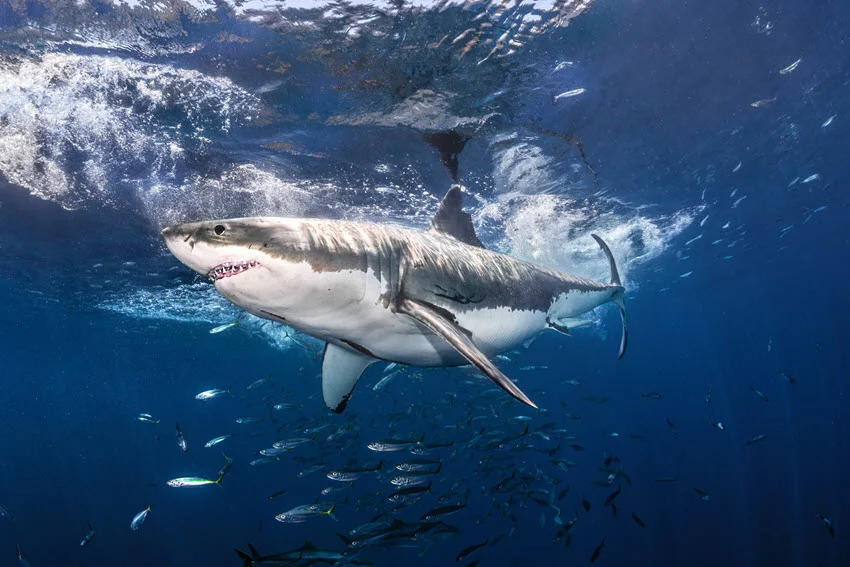
Our article will show you everything you need to know about fishing for the scariest predator. You will get information about gear selection, bait choices, prime time, and locations. After you read it, you will be ready for successful Shark fishing.
There are several very popular Shark species. Below, we describe in detail some of the most sought-after Shark species. We will provide you with detailed information about their size. You will find out when the ideal season is to target them. Of course, that's not all. Let's move on to the next part.
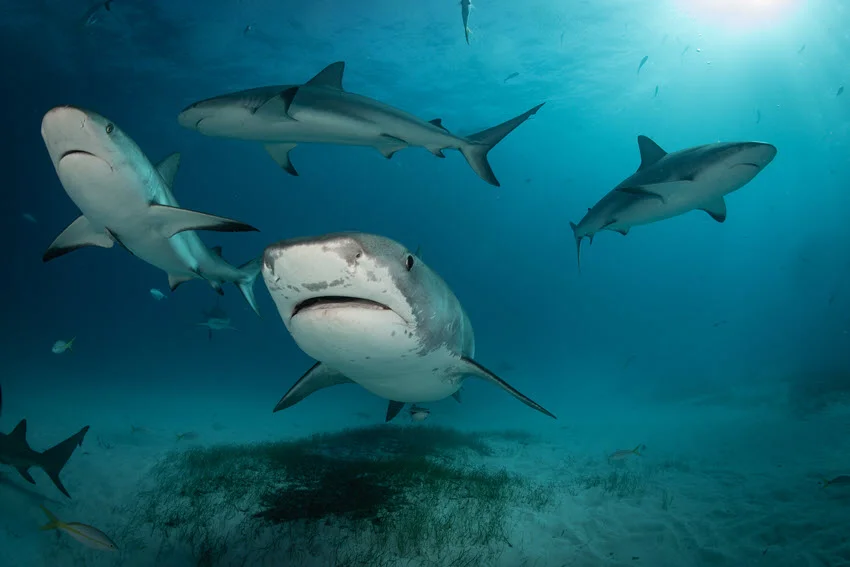
Tiger Sharks are among the largest Shark species. They can reach 216 inches in length. Their weights exceeded 1,400 pounds. They have a lifespan of approximately 27 years.
These Sharks are prevalent in tropical and subtropical waters. Their peak activity is during the summer months. They are typically found at depths ranging from 10 to 1,150 feet. Most often, they are wide near coastal areas and reefs.
Tiger Sharks have a wide-ranging diet. They even consume inedible items! Of course, fish, seals, birds, and squid are still the most common on their menu.
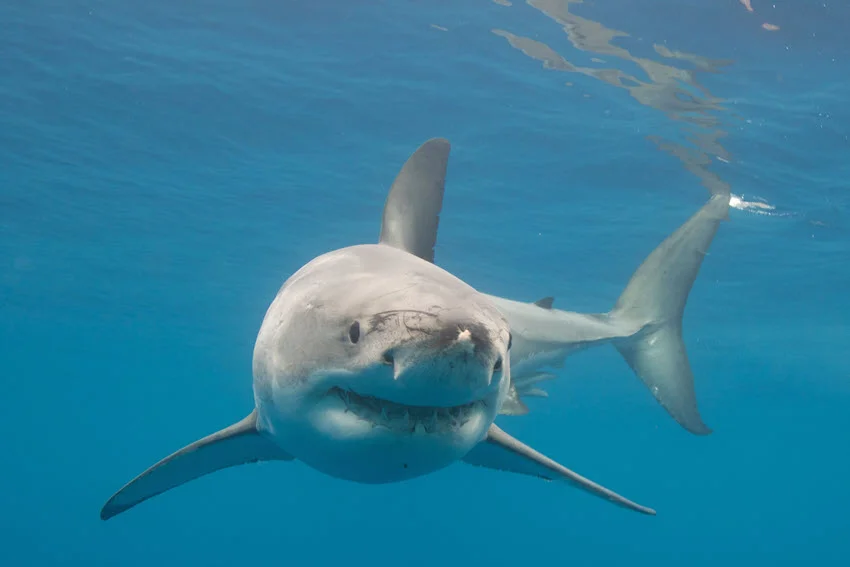
Great White Sharks are among the most famous and feared Shark species. They can reach lengths up to 240 inches and weigh over 5,000 pounds. Their lifespan is around 70 years.
Great whites are found in coastal surface waters in many parts of the world. They inhabit depths ranging from the surface to about 3,900 feet, but are most commonly found within the top 650 feet. Great Whites are highly migratory. They often patrol areas near seal colonies. The period from late spring to early fall is the best time for catching this shark species.
Their diet includes marine mammals like seals, sea lions, small whales, large fish, and seabirds. They are ambush predators, capable of rapid bursts of speed when attacking prey.
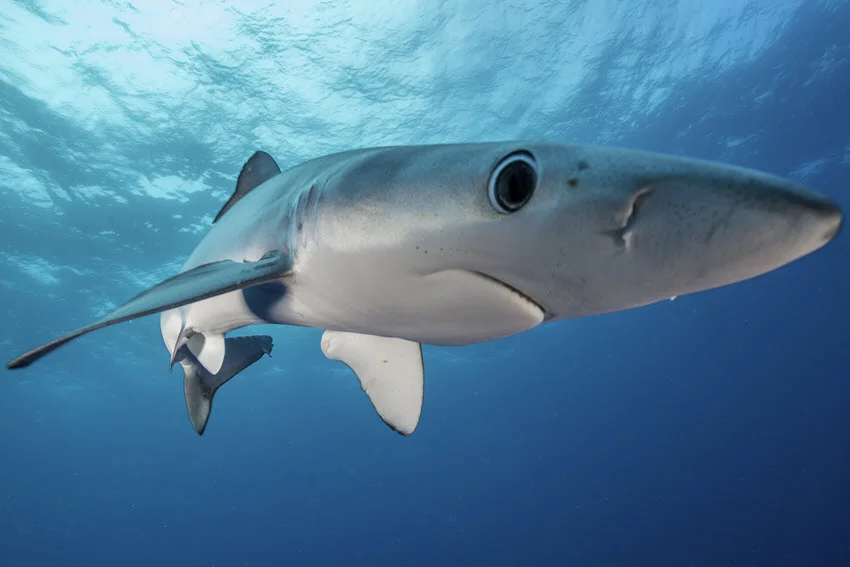
Blue Sharks are sleek and fast open-ocean predators. They can grow up to 150 inches in length and weigh around 400 pounds. Their lifespan is about 20 years.
They inhabit deep temperate and tropical waters and are often found in the open ocean at depths up to 1,150 feet. They typically favor the 330 to 660 feet range. They are most commonly encountered during the warmer months, when water temperatures and prey availability are optimal.
Blue Sharks eat mainly squid, small fish, and other cephalopods. They are known for their long migrations and graceful swimming style.
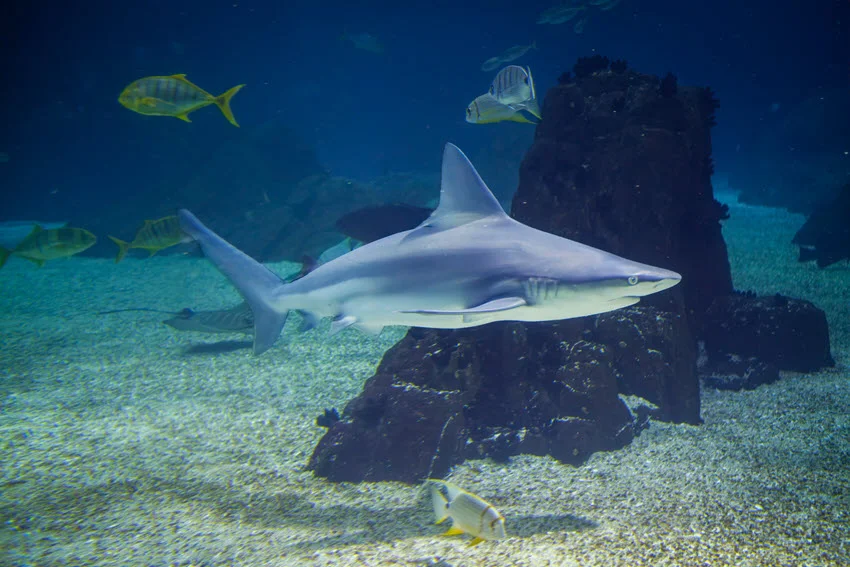
Sandbar Sharks are large coastal Sharks with tall, prominent dorsal fins. They can reach lengths up to 96 inches and weigh about 250 pounds. They live for around 30 years.
Sandbar Sharks prefer shallow coastal areas, estuaries, and bays. They are usually at depths of 20 to 650 feet, but they are most abundant between 65 and 200 feet. Sandbar Sharks are also found along Florida's Atlantic and Gulf coasts. Anglers planning around the Shark fishing season in Florida should know that this species is prohibited from harvest in state waters and must be released immediately.
Their diet consists of small fish, rays, and crustaceans. Compared to other large shark species, they are known for being relatively docile.
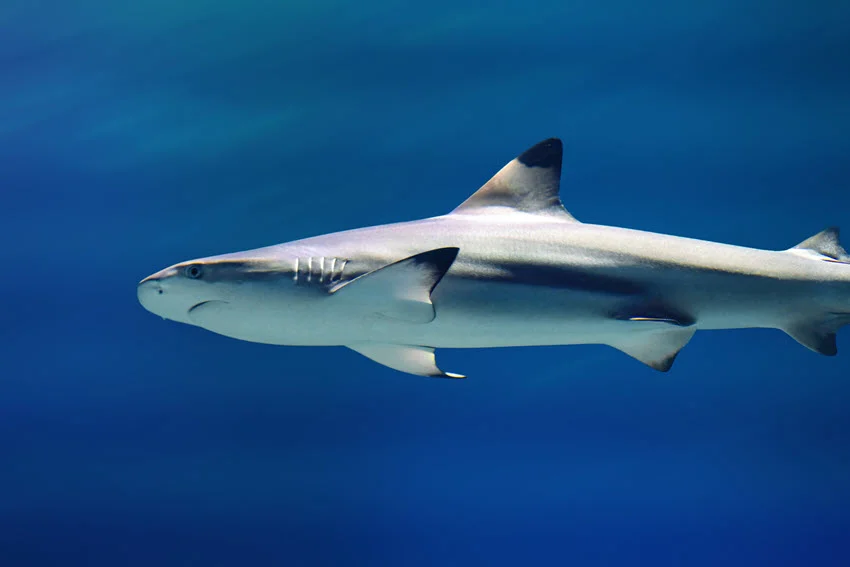
Blacktip Sharks can grow up to 72 inches in length, weigh around 220 pounds, and have a lifespan of about 10 years.
Blacktip Sharks are most active during the summer and early fall. They inhabit coastal waters, often at depths between 2 and 64 feet, in estuaries, bays, and reef areas.
These Sharks feed on small schooling fish such as herring, sardines, and mullet. They also consume crustaceans and cephalopods, and they are agile hunters.
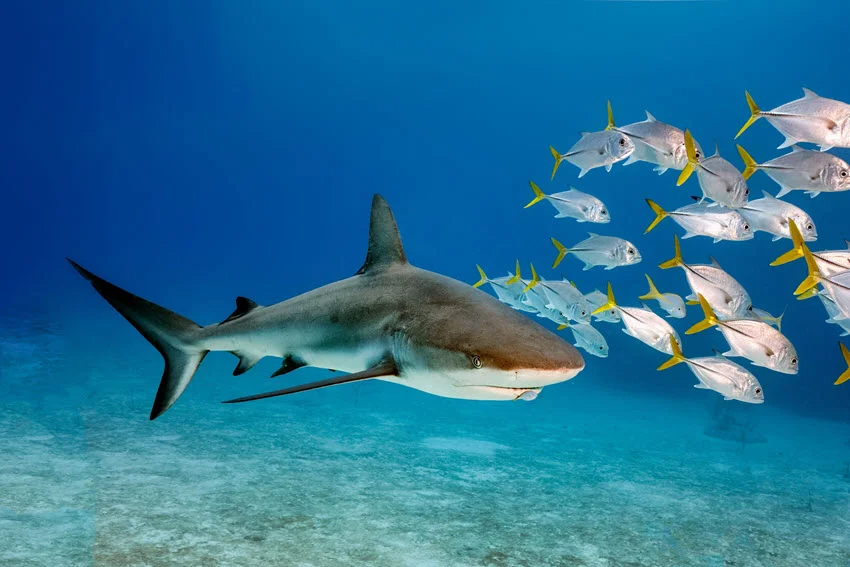
Bull Sharks are robust predators. They can weigh up to 500 pounds and have an average lifespan of around 16 years. Their length is between 84 and 138 inches.
These Sharks are most active during the warmer months. Peak fishing seasons are in late spring and summer. Bull Sharks can often be found in shallow coastal waters. They prefer depths ranging from 3 to 100 feet.
These Sharks have a diverse diet. They feed on turtles, fish, marine mammals, and birds. They have an aggressive hunting style. Adaptability is one of their characteristics.
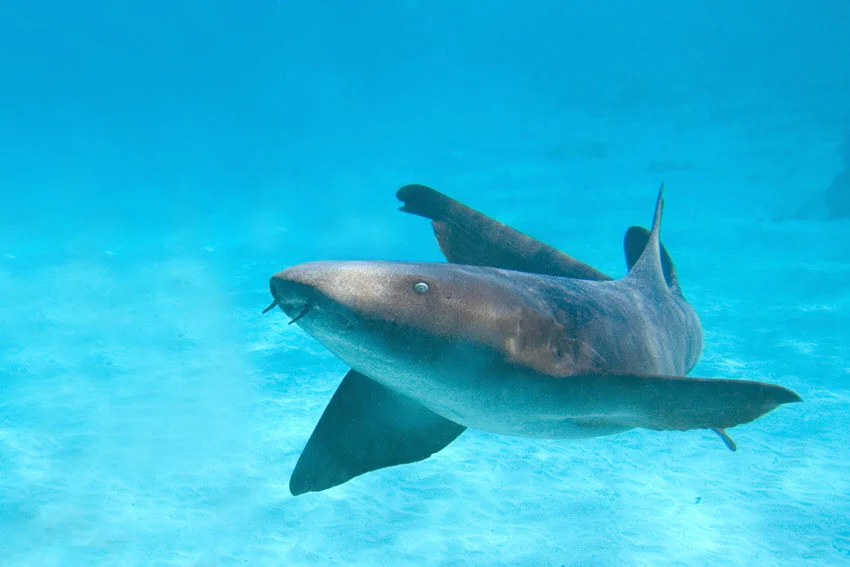
Nurse Sharks can reach lengths up to 120 inches and weigh as much as 230 pounds. They have a lifespan of 25 years.
These Sharks are nocturnal. They prefer warmer waters. During the summer months, these Sharks tend to be most active. They are commonly found in shallow coastal areas at depths less than 40 feet, often near reefs and ledges.
Nurse Sharks are bottom dwellers that feed on crustaceans, mollusks, and small fish. They use powerful suction to extract prey from crevices.
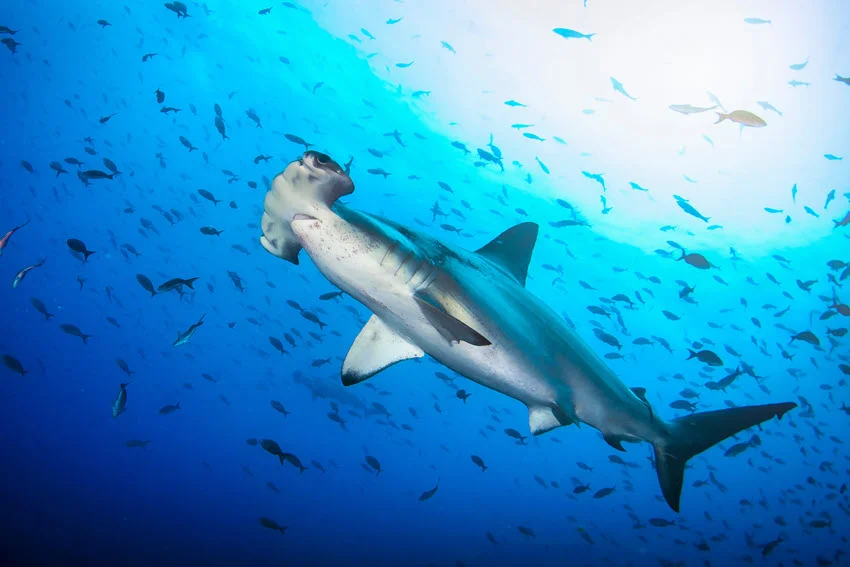
Hammerhead Sharks vary in size, with the great hammerhead reaching lengths up to 240 inches and weights around 1,280 pounds. Their lifespan ranges between 20 and 30 years.
These Sharks are most active during the summer months. Depending on the species, they inhabit coastal and offshore waters, typically found at depths ranging from 20 to over 1,000 feet.
Hammerhead Sharks feed on a variety of prey, including fish, squid, octopus, and crustaceans. They are especially known for hunting stingrays, using their uniquely shaped heads to pin them to the seafloor with precision.
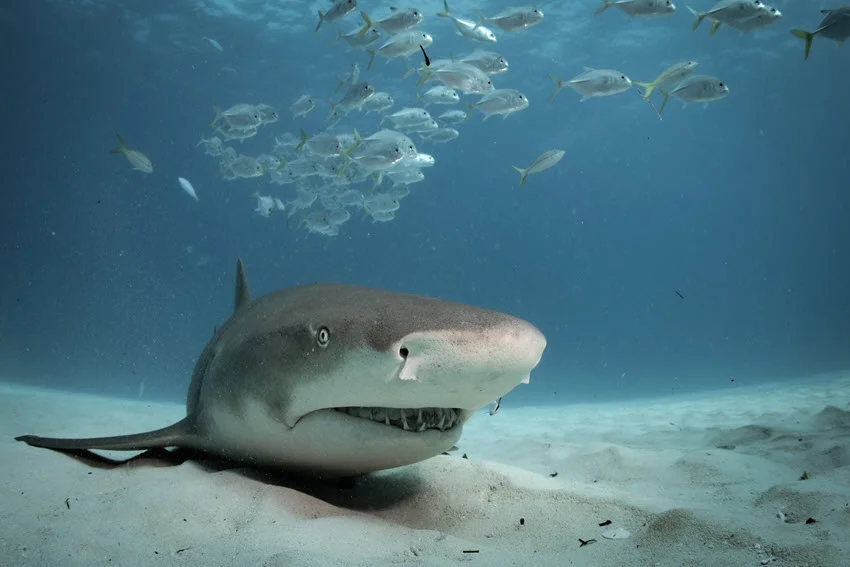
Lemon Sharks typically grow to about 120 inches and weigh up to 420 pounds. They have a lifespan of around 25 years.
These Sharks are most active in late spring and summer, favoring shallow coastal waters. They are commonly found at depths between 10 and 100 feet, especially around sandy bottoms and mangrove-lined areas.
Lemon Sharks feed on a variety of fish and crustaceans. Their diet includes bony fish, rays, and occasionally seabirds.
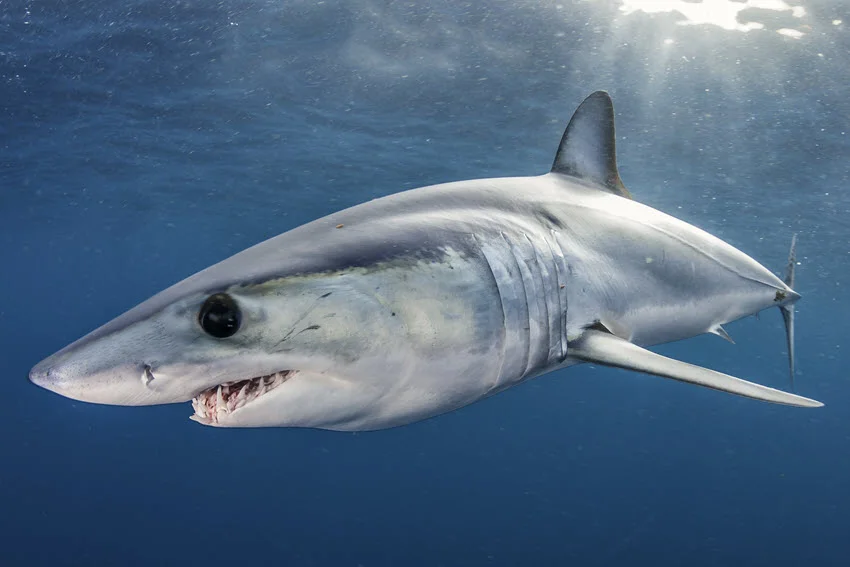
Mako Sharks are among the fastest Sharks. They can reach lengths of up to 156 inches, average weights of around 1,200 pounds, and average lifespans of 30 years.
Summers are their favorite period. They inhabit offshore waters, typically found at depths ranging from 150 to 500 feet, often near the surface when hunting.
Mako Sharks are apex predators that feed on a variety of fish, including mackerel, Tuna, and Swordfish. They are also known to consume other Sharks and cephalopods. When hunting, they are very aggressive.
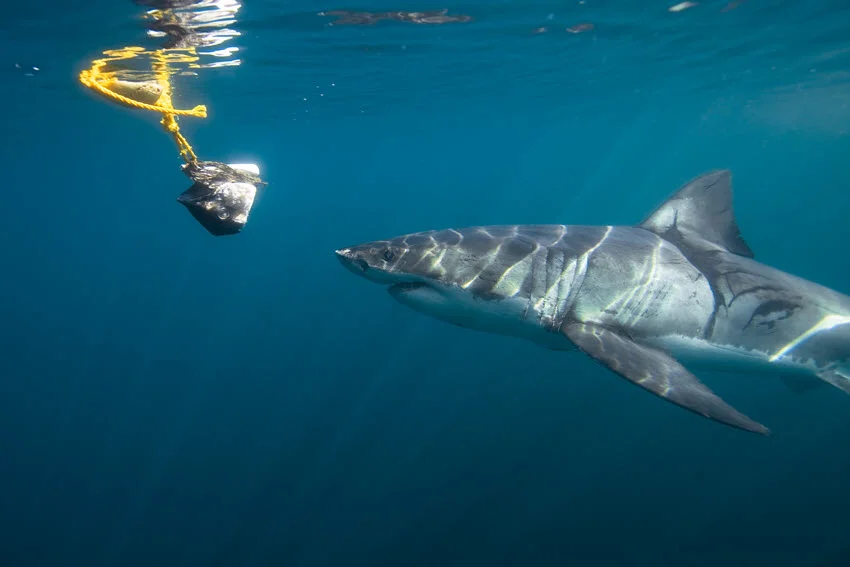
These predators are present year-round in many areas. Still, understanding how they function in certain seasons, times of day, and tidal movements dramatically improves your chances of success. Check the parts below.
Many Shark species thrive in warm waters, making summer a prime season for fishing in regions like the U.S. East Coast and the Gulf of Mexico. During this time, sharks often move closer to the shoreline to feed along beaches, reefs, and estuaries.
However, some species, such as Great White Sharks off the California coast, are most active from late summer through early winter during the cooler months. In tropical regions, like the Florida Keys and northern Australia, Shark activity remains strong year-round due to consistently warm water temperatures.
Sharks are known for their heightened activity during low-light periods. Early morning, late evening, and nighttime often produce the best bites. Many anglers prefer setting out before sunrise or staying out after dark. At this period, Sharks tend to patrol shallow waters in search of prey, increasing the likelihood of an encounter.
Tidal changes strongly influence Shark behavior. Rising tides encourage Sharks to move inshore, following schools of baitfish into shallower waters. A steady current not only stirs food sources but also triggers more aggressive feeding responses. If you fish around the tidal cycle, your fishing will likely be effective.
There are many places that are great for Shark fishing. Of course, you must know about them. Below, we will explore some of the most famous Shark fishing hotspots worldwide. We will find out when the peak season is at these locations and the best times to fish so that you can plan your adventure correctly.
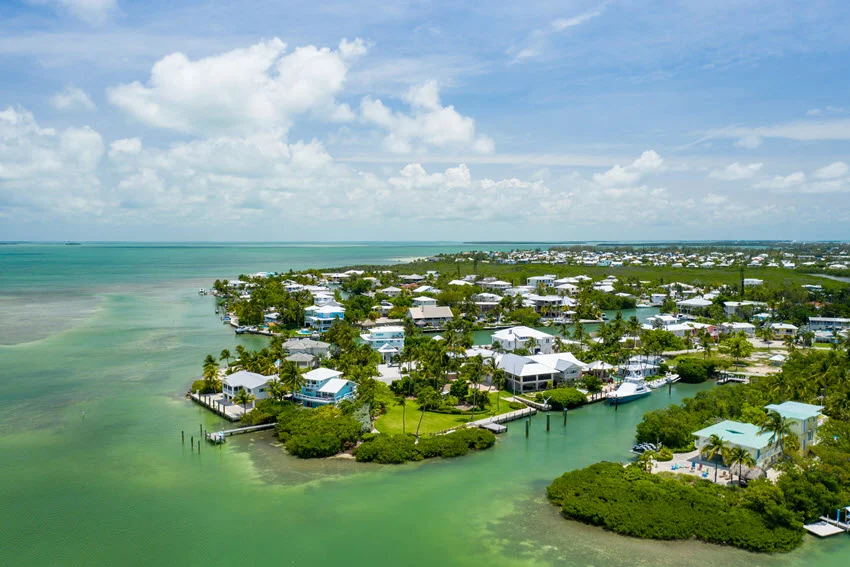
The Florida Keys are considered one of the top Shark fishing destinations in the world. This tropical paradise offers year-round opportunities, but the prime season typically runs from May through August. During these warmer months, the waters around the reefs, flats, and deep channels are packed with Sharks like Hammerheads, Bull Sharks, and Lemon Sharks.
The best times to fish here are usually early morning or late afternoon, especially around changing tides. Many anglers also prefer night fishing, when larger Sharks move closer to the flats and beaches.
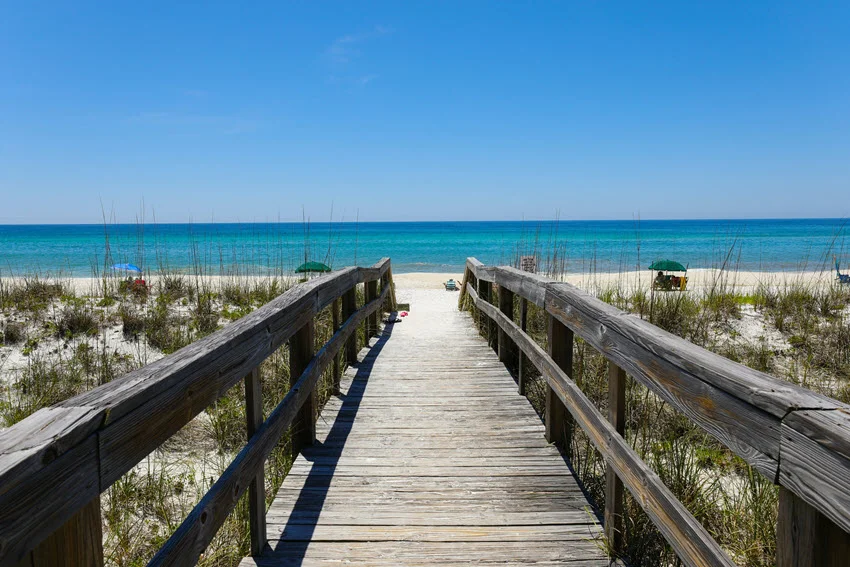
Destin is known as the "World's Luckiest Fishing Village." Besides that, it offers fantastic Shark fishing. The best period is from May through September. Blacktips, Bull Sharks, and Tiger Sharks are commonly caught off the beaches and piers.
Night fishing is popular here. The best bites happen a few hours before and after high tide. Sandbars and deeper channels just offshore are top spots for setting baits.

Fishing in Galveston is the right place for those who tend to catch big Sharks. The Shark season in Galveston peaks between June and September, when the Gulf of Mexico warms up and draws a wide range of species closer to shore, including Blacktips and Bull Sharks.
Fishing at dawn, dusk, and night tends to produce the best action. Places near sandbars, jetties, and shallow coastal waters are places where Sharks can often be found.
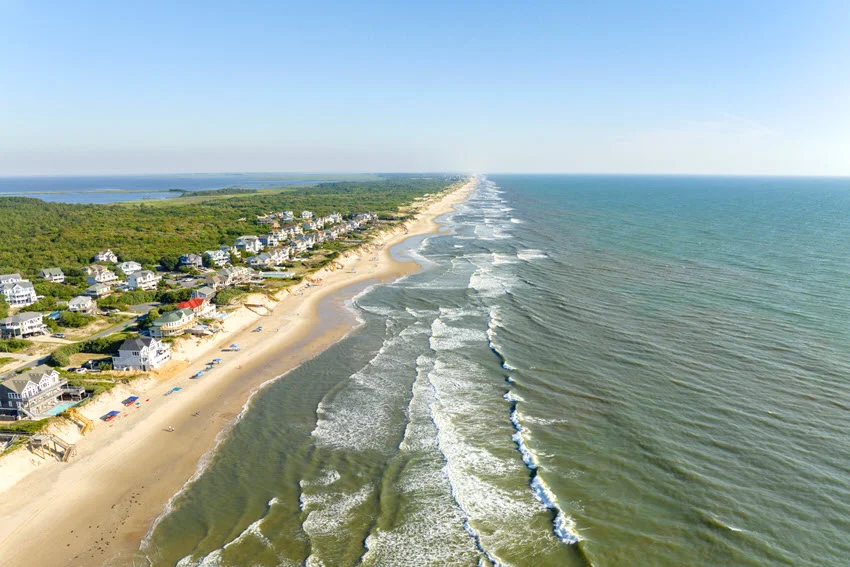
The Outer Banks offer incredible Shark fishing opportunities along their miles of beaches and sandbars. The best season is from June through September. During this period, warm Atlantic currents bring Sharks close to shore. Fishing is most productive during dawn, dusk, and nighttime, especially near inlets and piers.

Shark fishing on the West Coast is alive and well. Especially popular is around San Diego. The best season to target Sharks here runs from July to October. Warm waters during these months attract species like Mako Sharks, Blue Sharks, and Thresher Sharks offshore. Shore-based fishing at piers and beaches can also be productive.
Prime fishing hours are late afternoon or at night. This period coincides with tidal movements around offshore structures and kelp beds.
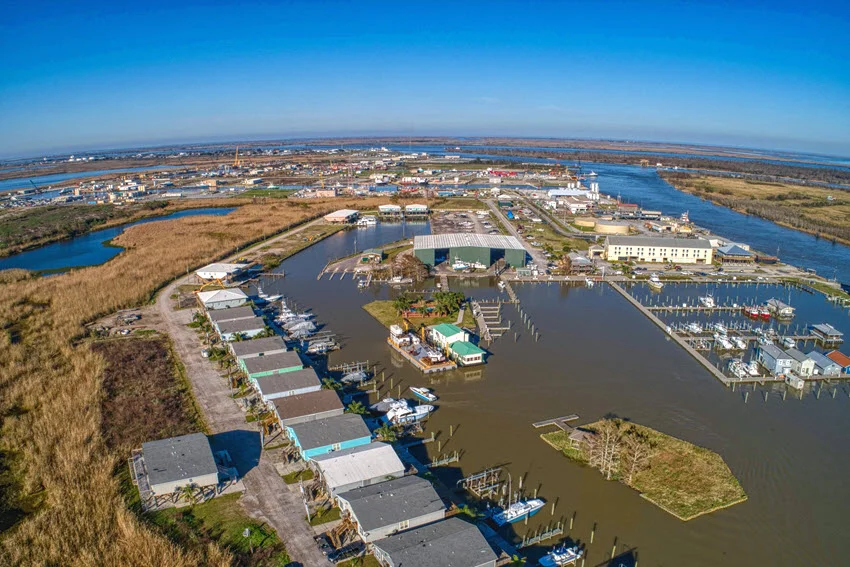
Venice is often called the "Tuna Capital of the Gulf." It is also a great Shark fishing spot. The season peaks from May to October, and offshore trips target species like Mako Sharks and Bull Sharks.
Fishing around oil rigs and deepwater structures is particularly productive. Early morning and late evening hours during moving tides are prime time.

Cape Cod might surprise some anglers, but it's a serious hotspot for Shark fishing. Shark fishing here is especially effective during July and August. Offshore waters attract massive Blue Sharks.
Fishing over the deep canyons and shelf edges is prime during daylight hours. However, overnight trips often see even bigger Sharks coming to the surface to feed.
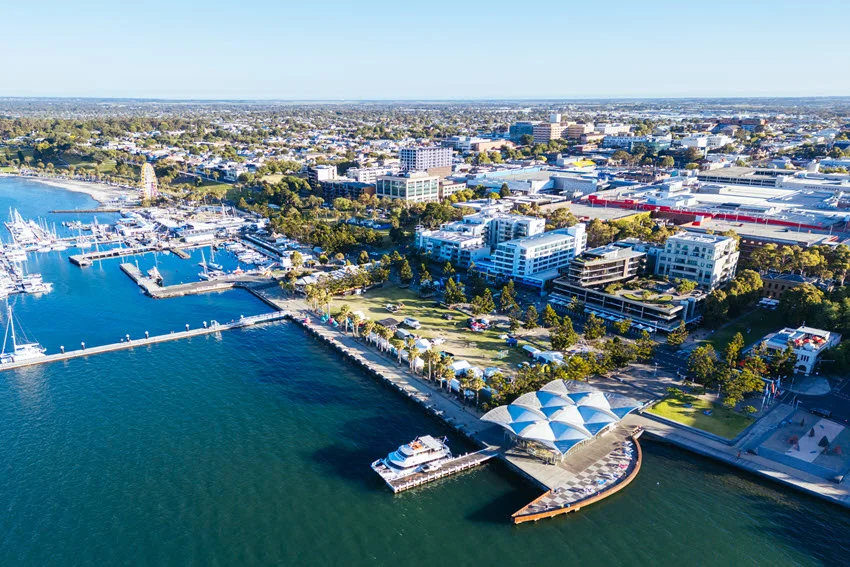
Port Phillip Bay near Melbourne offers thrilling Shark fishing action, especially during the Australian summer, which runs from December through March. Anglers here commonly encounter large Gummy Sharks and Mako Sharks.
Most Sharks are caught during twilight and nighttime, particularly around estuary mouths and deep channel areas. Rising tides bring in baitfish, increasing the chances of Shark encounters.
If you want to seriously improve your chances of landing a catch, there are proven techniques every angler should know. We analyze them in detail below.
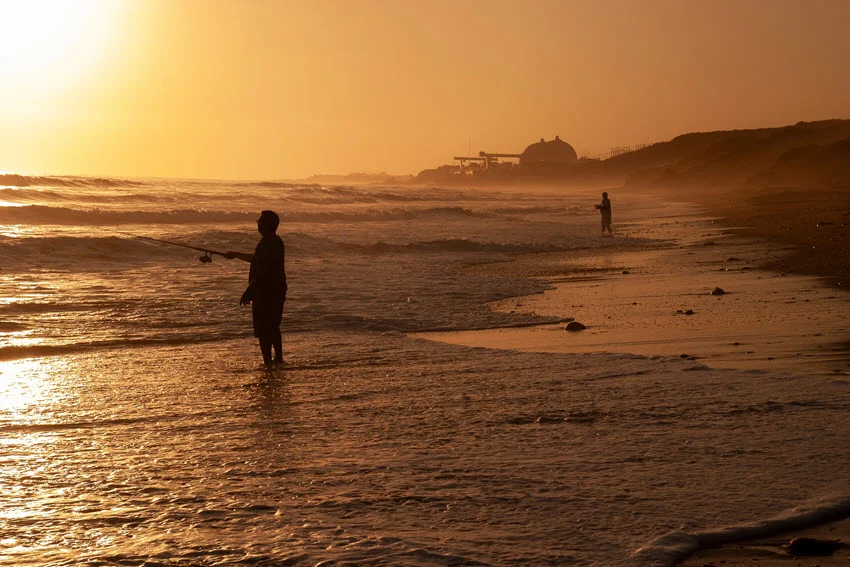
Surf fishing for Sharks offers an exciting challenge for anglers who prefer to stay on dry land. This type of fishing is essentially casting baits past sandbars into deeper water.
Many anglers use a kayak to carry their bait far beyond the breaking waves, dropping it strategically before returning to the shore.
Once the bait is in place, typically a large chunk of fresh or frozen fish, it becomes a waiting game. When a Shark strikes, be prepared for a long battle. It can last over an hour. Surf fishing is especially popular along sandy beaches with good tidal movement and during nighttime when larger Sharks come closer to shore.
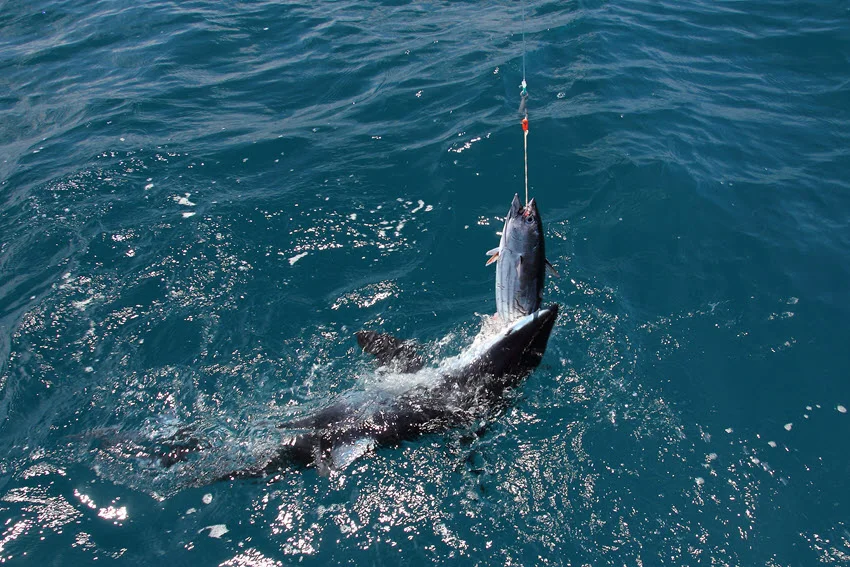
Freelining live bait is a versatile technique often used from boats, although it can also work nearshore. It involves hooking a live baitfish directly onto a strong circle hook without adding much additional weight.
The bait is left to swim freely in the water column, mimicking natural prey. Anglers may add a sinker if they want the bait to stay deeper, but many Sharks will attack both floating and sinking targets. It works well in reefs, drop-offs, and near offshore structures.
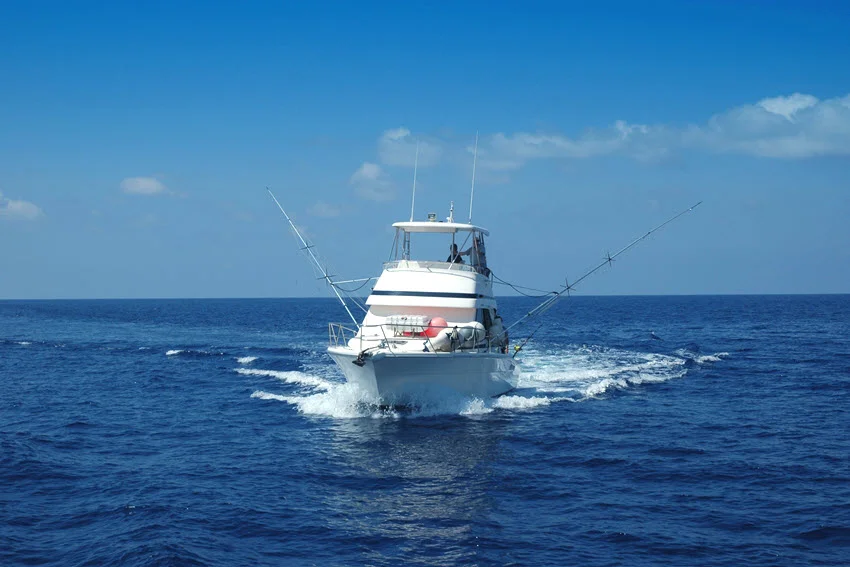
Trolling is a very effective technique. It is often used to target large sharks in deep offshore waters. It involves pulling bait behind a moving boat. The goal is to cover more water and present an easy target for roaming predators.
Anglers adjust trolling speeds depending on the behavior of species that tend to fish. For example, Mako Sharks are known to aggressively pursue trolling baits and often launch dramatic attacks. The best baits for trolling are mackerel or squid, but artificial lures can also be effective in this technique.
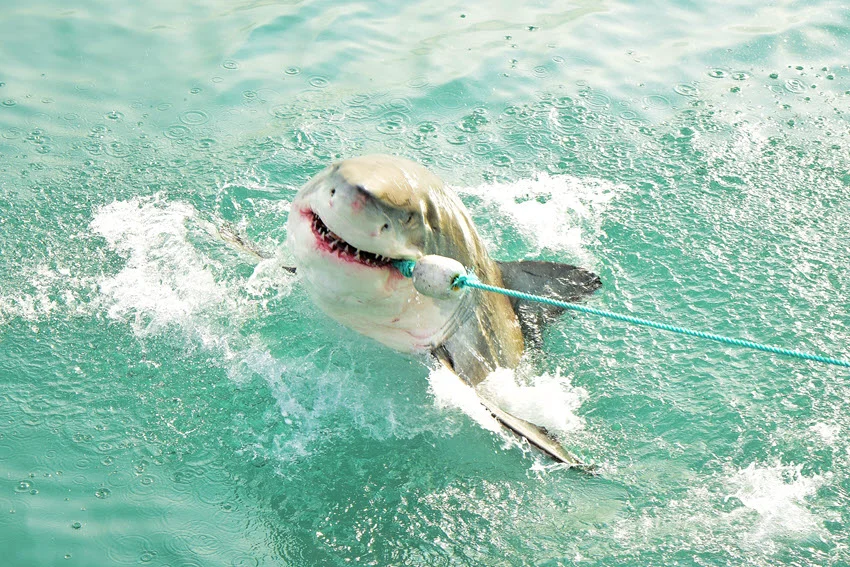
We have come to the part where we will present you with the best baits and lures for Shark fishing. You can use live, dead, or artificial baits. See below for a detailed explanation.
As in most cases, live baits are the best choice. Among the popular live baits are Ladyfish, mullet, threadfin herring, bonito, mackerel, bluefish, ballyhoo, and squid.
You can catch many of these baitfish by cast-netting near beaches, inlets, and around bait schools, or you can purchase them from local bait shops. The key is to keep the bait active and healthy until it's time to rig it.
Dead bait, whether fresh or frozen, can be just as appealing to Sharks, especially because of its strong scent. Options like bloody chunks of mackerel, bonito, or oily fish are particularly effective.
The fresher the bait, the better, but even older, smelly bait can work because the odor spreads through the water, attracting Sharks from a distance. Large pieces with exposed flesh, blood, or even partially rotted sections can produce strikes when Sharks are in a feeding mood.
Artificial lures can also successfully entice Sharks. They are especially effective in active feeding zones. Lures that create flash or vibration are the most effective.
Popular artificial choices include topwater, paddle-tail soft plastics, bucktail jigs, spoons, and jerk baits. These baits work best when Sharks are already aggressive and chasing prey.
When picking lure colors for Shark fishing, water clarity impacts your choice. In clear water, colors like silver, white, and blue work best. You need to use bright colors in murkier waters or low-light situations like dawn or dusk. Chartreuse and pink can help lures stand out and trigger more strikes.
A good rule of thumb is to match the hatch and, when possible, imitate the local prey species in size and color.
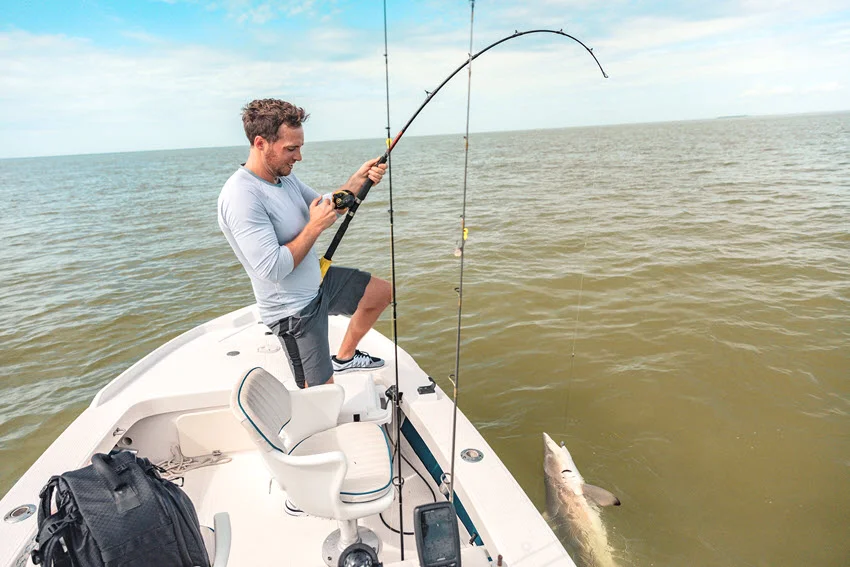
Choosing the correct gear is important when you go Shark fishing. Depending on the size of the Shark, your equipment needs to be strong enough to handle their power, speed, and sharp teeth. Here's how to set yourself up for success.
When targeting smaller Sharks, you don't need the heaviest setup. A medium-heavy action rod paired with a 5,000-size spinning reel is a solid choice. It provides enough strength and control.
A braided line rated between 50 and 100-lb test is recommended. Always use a strong wire leader, 90 to 150-lb test, to withstand their sharp teeth and avoid bite-offs. Fluorocarbon or heavy monofilament leaders may work for smaller sharks, but wire is the safest and most reliable option for most species. Sturdy circle hooks in sizes 8/0 to 10/0 are recommended to ensure a strong hookset.
Larger Sharks demand heavier gear built for serious battles. Use an extra-heavy action rod and a 10,000-size spinning or conventional reel capable of holding large amounts of heavy line.
For big Sharks, go with a braided line of at least 50 to 80-lb test, and make sure you spool several hundred yards to prepare for long runs. Leaders should be upgraded to wire or heavy fluorocarbon around 150 to 200-lb to prevent bite-offs. Hooks should be large, tough, and reliable, generally 10/0 or bigger, made from heavy-gauge metal.
Understanding fishing regulations and preserving specific fish species contributes to protecting fish populations and ecosystems and promoting responsible angling practices.
Anglers Booking Team
Before you even cast your line, there is something you must know. It is about regulations and licenses. Here's the most important thing.
Remember that you will pay a fine if you don't follow the rules. It could ruin your day of fishing, and we're sure you don't want that. Be responsible.
Shark fishing offers an unparalleled thrill for anglers. Whether targeting inshore species or giants, each trip promises a unique adventure. As you head out on your next Shark fishing adventure, be prepared for the fight of a lifetime.
Now is your turn. Where do you plan to go to fish for Sharks? Have you already been on an adventure like this, and have you had success? We are happy to see your comments below.

The expert copywriters at Anglers Booking have meticulously crafted this article. Our dedicated team of writers provides valuable insights and information to enhance your angling experience.

November 12, 2024

February 15, 2025
Subscribe to our newsletter and receive a selection of cool articles every week.
Embark on unforgettable fishing adventures with us at Anglers Booking.
book your charter
September 8, 2026
August 21, 2026
August 18, 2026
August 15, 2026
August 12, 2026

August 8, 2026
August 4, 2026
April 17, 2026

You're now part of our exclusive community. Get ready for premium content and updates straight to your inbox.
close
Subscribe to our newsletter and receive a selection of cool articles every week.
Please enter a valid email address.
Be the first to know when we're back in action.
Please enter a valid email address.
Leave a Comment
Your email address will not be published. Required fields are marked *
Thank you for your comment! It has been submitted for review and will appear on the site shortly.