


Anglers Booking Team
The expert copywriters at Anglers Booking have meticulously crafted this article. Our dedicated team of writers provides valuable insights and information to enhance your angling experience.
 13 minutes read
Sharks are among the most fascinating animals in the ocean. There are over 400 known species of Sharks today. Each of them has a different shape, size, and behavior. Some are peaceful filter-feeders, while others are active hunters.
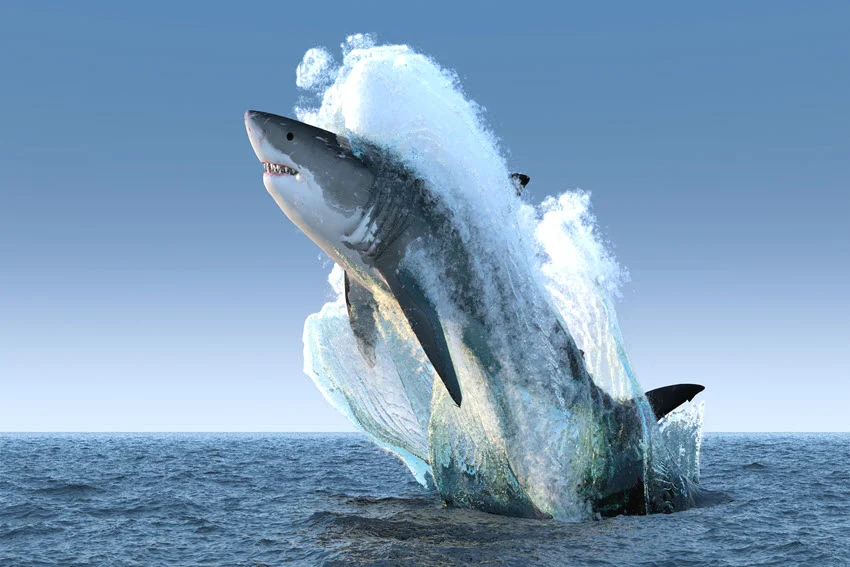
Today, we will analyze some of the most famous types of Sharks, how to identify them, and basic ideas about catching. Follow us on this fantastic adventure.

Sharks belong to a class called Chondrichthyes, which means their skeletons are made of cartilage, not bone. Within that class, scientists divide Sharks into orders and families.
In their natural habitats, Sharks show a wide variety of behaviors. Some Sharks roam vast open oceans, migrating long distances. Others stay near reefs or coastal waters. Some species display bold behaviors, such as threat displays or approaching divers. Many are shy and avoid contact.
Sharks also attract attention for many reasons. Some are well known in popular culture. Sport fishermen prize others for their power and size, while some are important in scientific research because of their ancient lineages or unique adaptations.
Below, we describe in detail some of the most famous Shark species. That will help you to be successful in their fishing. Let's move on to the next part.
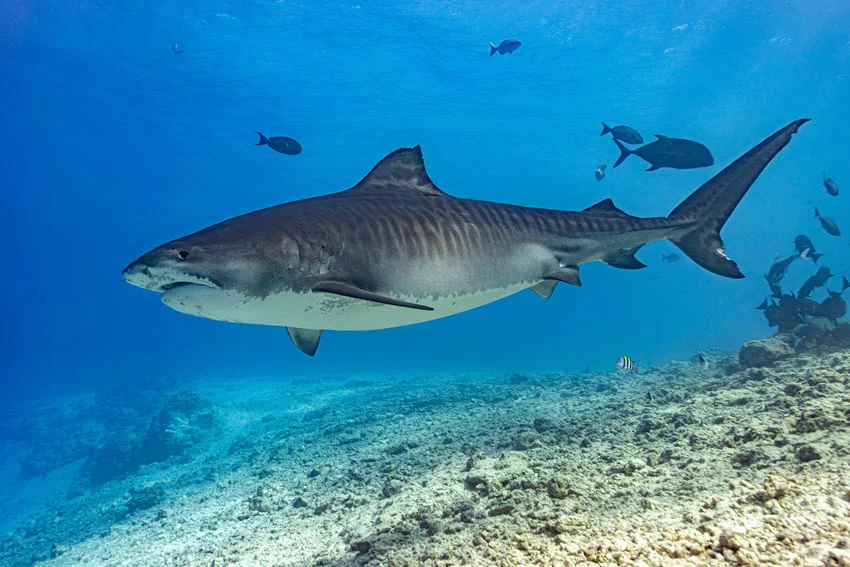
Tiger Sharks are among the largest species of Sharks. They have a powerful body. Their skin shows dark vertical stripes along the sides, especially visible in younger individuals, which gives the species its name. They have a wide mouth and strong jaws capable of crushing shells and bones.
Adult Tiger Sharks can grow up to 216 inches in length and reach weights of over 1,400 pounds. They are built heavily, with a thick mid-body and a large dorsal fin. Their lifespan is about 27 years.
Tiger Sharks are usually found in depths ranging from 10 to 1,150 feet. They favor tropical and subtropical waters and often patrol close to continental shelves, coral reefs, and lagoons. These Sharks are common around island chains and nearshore habitats where prey is abundant.
They are distributed widely across the Atlantic, Pacific, and Indian Oceans. Coastal regions of Hawaii, Florida, and parts of the Caribbean are particularly well-known for their presence of Tiger Sharks, making them one of the most widespread species in warm seas.
The peak season for Tiger Sharks is during the summer months, when warmer waters and prey migrations bring them closer to the coast. Their activity levels rise during this period, giving anglers a better chance of encounters.
When it comes to the time of day, Tiger Sharks are often more active in the late evening and night. Many are also caught during early morning hours when they come closer to shallow coastal areas to feed.
Because of their size and power, heavy-duty gear is necessary. A strong offshore rod paired with a large reel capable of holding several hundred yards of heavy monofilament or braided line is essential.
For boat setups, anglers often use heavy-duty fighting chairs or harnesses to handle long battles. Large circle hooks are favored for both effectiveness and reduced injury when a catch-and-release approach is used.
Baits should be set at varying depths to increase success. Large fish chunks, stingrays, or other oily baits are lovely to them.
Freshly cut tuna, bonito, or mackerel are often used, while some anglers also deploy whole fish to draw them in from long distances thanks to their sense of smell.
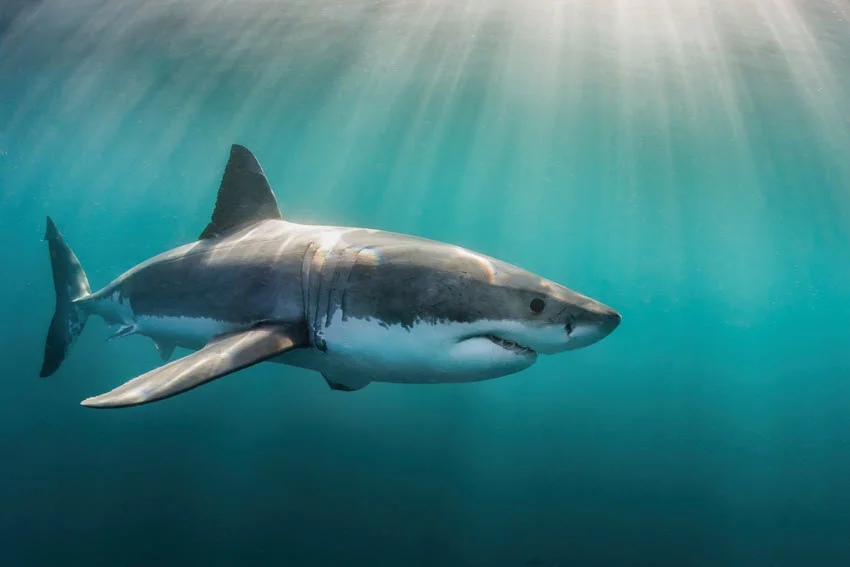
The Great White Shark is perhaps the most famous in the world. Massive size is among their main characteristics. Its body is torpedo-shaped, with a pointed snout, crescent-shaped tail, and large, triangular serrated teeth designed for cutting through thick flesh. The upper body is gray, blending into the ocean depths, while the belly is white, hence its name.
Great White Sharks can grow up to 240 inches in length and weigh more than 5,000 pounds. They are among the heaviest predatory fish on Earth, with a lifespan of about 70 years.
Great Whites are found in waters from the surface down to about 3,900 feet, although they are most commonly encountered within the top 650 feet. They are especially abundant around areas rich in seals and sea lions, such as coastal shelves and rocky islands.
Their range includes both temperate and subtropical seas. They are common along the coasts of South Africa, Australia, New Zealand, California, and the northeastern United States. They are also known for long migrations across open oceans.
The peak season for catching Great Whites is from late spring through early fall, when warmer temperatures and prey migrations bring them closer to shore. These months align with increased seal and sea lion activity, their primary food source.
In terms of time of day, Great Whites are ambush predators. The best part of the day is early mornings and late afternoons. These periods are when they hunt near the surface, giving anglers a better chance of encountering them.
Catching a Great White requires specialized heavy-duty equipment. Strong rods rated for giant game fish, paired with reels capable of holding several hundred yards of 100+ pound test line, are standard. Steel leaders are a must to withstand their serrated teeth.
Most encounters with Great Whites are done from boats equipped for big-game fishing. Anglers often use harnesses or fighting chairs to manage the extreme power of these Sharks, as fights can last several hours.
Bait presentation should be set across this range. Large chunks of tuna, bonito, or mackerel are commonly used, and whole fish baits are also effective.
Since they are drawn by scent and movement, chum lines are used to attract them closer. Their natural diet of seals and large fish means oily baits and fresh carcasses work exceptionally well.
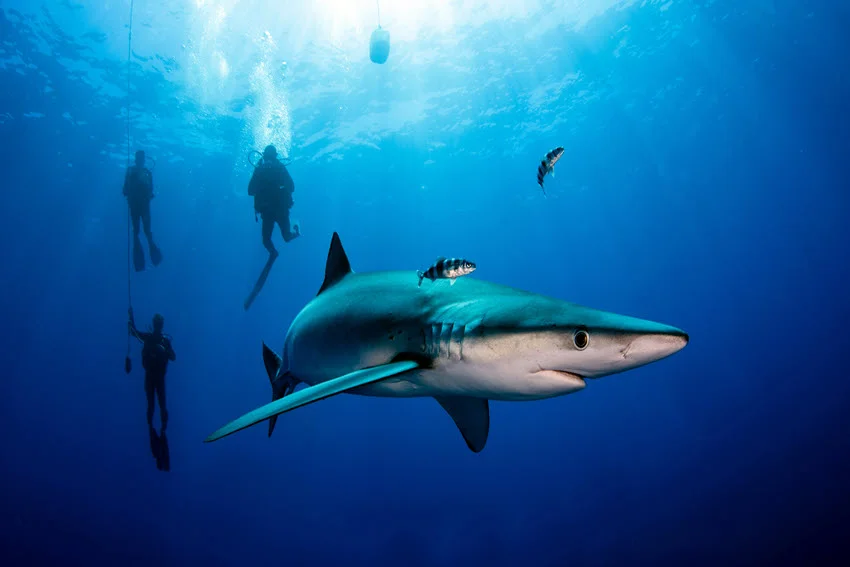
The Blue Shark is a slender, elegant predator, recognized for its vivid blue upper body and lighter underside. It has a long, tapered body, large eyes, and an extended snout, giving it a very streamlined appearance. Its long pectoral fins and graceful swimming style make it one of the most distinctive Sharks in open waters.
Blue Sharks can grow up to 150 inches long and weigh around 400 pounds. They are lighter compared to many other large Sharks, which allows them to move quickly through the water. Their lifespan averages about 20 years, making them among the shortest-lived shark species.
Blue Sharks are usually found at depths of up to 1,150 feet, although they most often swim between 330 and 660 feet in the open ocean. These depths provide cooler waters and access to squid, their favorite prey.
They inhabit temperate and tropical oceans worldwide and are most frequently seen far offshore. Blue Sharks are prevalent in the North Atlantic, including waters off the U.S. East Coast, Europe, and the Mediterranean Sea.
The best season to catch Blue Sharks is during the warmer months, when water temperatures rise, and squid migrations increase. They are most abundant in summer, making this the prime fishing period.
The prime time of day is the night and early morning, when squid come closer to the surface. However, they can also be caught during daylight hours while traveling in search of schools of prey fish.
Because of their size and strength, anglers use medium to heavy offshore rods with strong reels holding at least 300 yards of line. Wire or heavy monofilament leaders are recommended.
Anglers often use chum lines to draw Blue Sharks closer to boats. Fighting harnesses are helpful for more protracted battles, as these Sharks are agile and put up an intense fight even at moderate sizes.
As we mentioned, Blue Sharks are usually caught at depths of 330 to 660 feet, which means baits are often set midwater. Fresh squid is considered the most effective bait since it closely matches their natural diet.
Oily baits (mackerel, herring, and sardines) also work well. Anglers sometimes use whole fish or large fish chunks to release a strong scent trail that attracts Blue Sharks from a distance.

The Sandbar Shark is a stocky Shark with a rounded snout and a very tall, triangular dorsal fin, which makes it easy to identify. Its body is usually gray-brown on top, with a lighter underside, providing camouflage when viewed from above or below.
Sandbar Sharks can grow up to 96 inches in length and weigh about 250 pounds. They are medium-sized compared to many other Shark species. The life span of these Shark species is 30 years. Their more compact build makes them slower swimmers but well-adapted for life in shallow waters.
Sandbar Sharks are found at depths of 20 to 650 feet, though they are most commonly abundant between 65 and 200 feet. These depths give them access to sandy bottoms, bays, and estuaries where prey is plentiful.
They are common in the western Atlantic, especially off the U.S. East Coast and Gulf of Mexico. They are also found in the Mediterranean and parts of the Indo-Pacific, preferring warm, shallow coastal waters.
The peak season for Sandbar Sharks is from late spring through early fall. During these months, warmer waters attract them closer to shore and into bays.
They are most often caught during daylight hours, particularly in the early morning and late afternoon, when they patrol near sandy bottoms searching for fish and crustaceans.
Because Sandbar Sharks are mighty but not extremely massive, medium-heavy tackle is often enough. Intense spinning or conventional rods with reels holding 50 to 80-lb test line work well. Wire leaders are used to prevent bite-offs.
Since these Sharks are nearshore, surf fishing gear can also be used. Anglers often fish from piers, beaches, or boats in shallow bays where Sandbars are abundant.
Bait for Sandbar Shark is usually placed near the seafloor. Fresh cut fish, squid, and rays are common targets.
They respond well to oily baitfish such as mullet, mackerel, and menhaden. Many anglers fish with chunk baits near sandy bottoms or channel edges to maximize chances of catching them.

The Blacktip Shark is a sleek, medium-sized Shark with a streamlined body and a pointed snout. Its most distinctive feature is the black tips on most of its fins, especially noticeable on the dorsal, pectoral, and caudal fins. Its body color ranges from gray to bluish on top, with a pale underside, giving it good camouflage in shallow coastal waters.
Blacktip Sharks can grow up to 72 inches in length and weigh around 220 pounds. They are relatively minor compared to other large Shark species. Speed and agility are among the main characteristics of Blacktip Sharks. Their lifespan is about 10 years, which is shorter than that of many other Sharks.
Blacktip Sharks inhabit shallow waters, often at depths of 2 to 64 feet. They are most frequently found in estuaries, bays, lagoons, and along coral reef edges, where they can hunt schooling fish.
They are widely distributed in tropical and subtropical coastal waters, including the western Atlantic from Massachusetts to Brazil, the Gulf of Mexico, the Caribbean, and the eastern Pacific.
The peak season for Blacktip Sharks is during summer and early fall, when they are most active in warm coastal waters. These months also coincide with baitfish migration, increasing the likelihood of encounters.
They are most active in the early morning and late afternoon. During these times, Blacktip Sharks often feed near the surface, leaping and spinning out of the water as they hunt schools of fish.
Medium- to heavy-spinning or conventional tackle is suitable for Blacktip Sharks. A reel with 200 to 300 yards of 30 to 50-lb test line is generally enough. Wire or heavy fluorocarbon leaders are used to prevent bite-offs.
Because they are agile and strong fighters, anglers often use stand-up rods with good lifting power. They are a popular species for both surf fishing and boat fishing.
Bait for Blacktip Sharks is usually fished near the surface or mid-water, where they hunt. Fresh-cut fish (mullet, sardines, and herring) are highly effective.
They also respond well to live bait, as their natural diet consists of fast-moving schooling fish. Using live mullet or small jacks increases the chance of a strike, especially during peak feeding times.
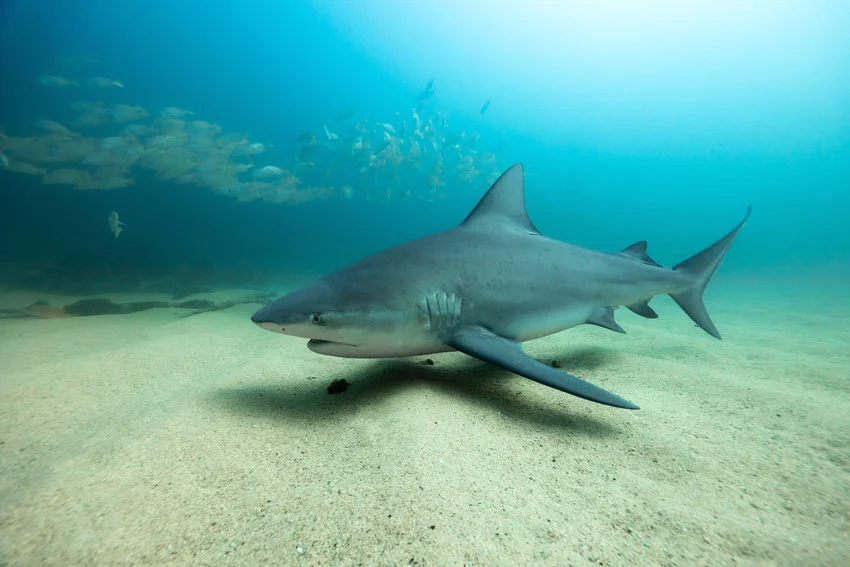
The Bull Shark has a short, blunt snout and small eyes. Its body is thick and muscular, giving it a compact but strong appearance. Unlike most Sharks, Bull Sharks can survive in saltwater and freshwater. This characteristic makes them one of the most adaptable Shark species in the world.
Bull Sharks range between 84 and 138 inches in length and can weigh up to 500 pounds. They are considered medium to large Sharks, with an average lifespan of about 16 years. Their solid build and aggressive hunting style make them one of the top predators in coastal waters.
Bull Sharks are often found at depths of 3 to 100 feet, preferring shallow coastal zones, bays, and river mouths. They are also one of the few Shark species that can swim far upriver and live in freshwater habitats.
They are distributed globally in warm waters, including the Atlantic coast of the Americas, the Gulf of Mexico, parts of Africa, India, and Australia. They are frequently seen in estuaries and lagoons, making them easier to find than most other large Sharks.
The peak season for Bull Sharks is during late spring and summer, when warmer water temperatures bring them closer to coastal areas and river mouths. During these months, they are highly active and easier to target.
In terms of time of day, the early morning and late evening are the best times to catch Bull Sharks. They will patrol both shallow and deeper areas during low-light hours.
Because Bull Sharks are strong and aggressive, anglers use heavy-duty offshore rods with reels capable of holding 300 to 400 yards of 80 to 100-pound test line.
Fighting harnesses or belts are commonly used since Bull Sharks put up powerful, sustained fights. Many anglers also prefer circle hooks for better hook placement and safer catch-and-release.
Bull Sharks are usually caught at depths of 3 to 100 feet, meaning bait should be fished near the bottom or mid-water in shallow coastal areas. Large cut baits such as mullet, stingray, or bonito are very effective.
They also respond well to fresh live bait, including large fish and small Sharks. Because they are opportunistic feeders, oily baits with a strong scent trail can quickly draw them in.
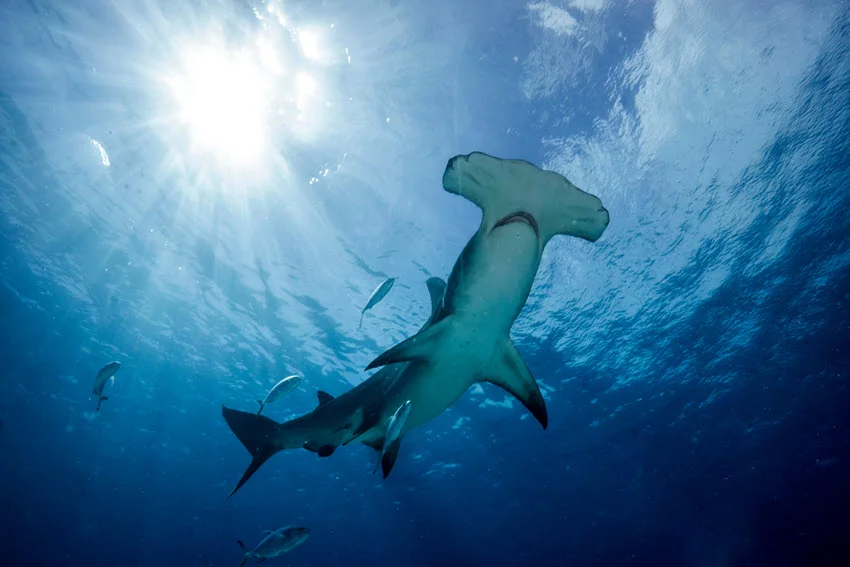
The Hammerhead Shark is one of the most distinctive Shark species, instantly recognizable by its broad, flattened head shaped like a hammer. This unique head structure provides excellent vision and enhanced prey detection. Their bodies are streamlined, with tall dorsal fins and slender tails that help them maneuver quickly in open water.
Depending on the species, Hammerhead Sharks can vary in size. The Great Hammerhead is the largest, reaching up to 240 inches in length and weighing around 1,280 pounds. Their lifespan ranges between 20 and 30 years, making them long-lived predators compared to many other Sharks.
Hammerhead Sharks are found at depths ranging from 20 to over 1,000 feet, depending on the species. They often cruise near continental shelves, drop-offs, and coastal reefs, especially where stingrays are abundant.
They inhabit warm tropical and subtropical waters worldwide. They are particularly common in the Atlantic and Indian Oceans, the Gulf of Mexico, and around Pacific islands. Some species also form large schools during migrations.
The summer months are the peak for fishing for Hammerhead Sharks. At this period, warm waters draw them closer to coastal habitats. These periods also coincide with prey migrations, making them easier to locate.
They are usually more active in the late afternoon and evening, when they patrol feeding grounds. Their tendency to travel in groups, especially smaller species, maximizes the chances of catching them during these times.
Heavy-duty offshore gear is essential for Hammerhead Sharks, especially when targeting the larger Great Hammerhead. Anglers use rods capable of handling 100+ lb test line, paired with strong reels and several hundred yards of line capacity.
For boat fishing, fighting chairs or harnesses help manage long, decisive battles. Circle hooks are commonly used to improve handling and increase release survival.
Baits are often adjusted depending on where you are fishing to match local conditions. Fresh stingray is highly effective.
Other productive options include squid, mackerel, and tuna, which mimic the prey they hunt. Using oily baits or chunk lines can also help draw Sharks in from a distance.
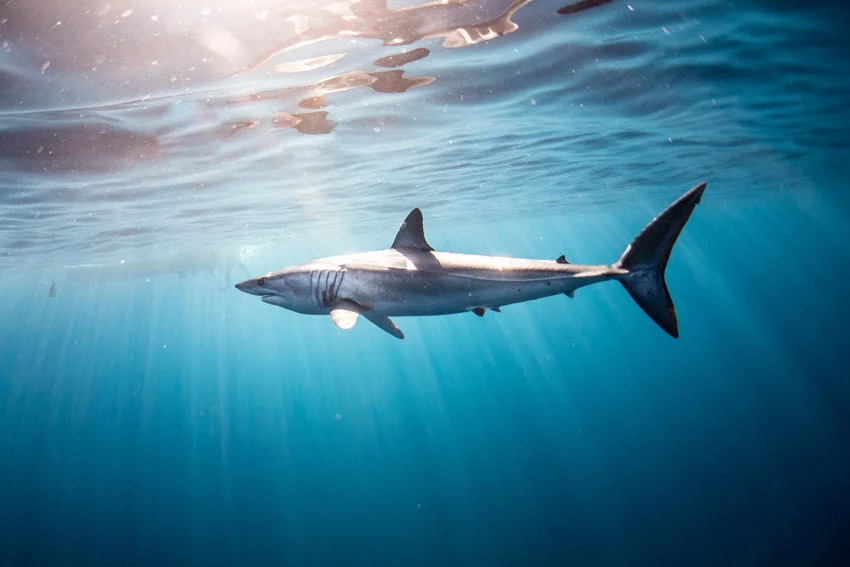
The Mako Shark is one of the fastest Sharks in the ocean, with a sleek, torpedo-shaped body built for speed. It has a pointed snout, large black eyes, and long, slender teeth. This Shark has metallic blue coloration on the back and a lighter underside.
Mako Sharks can reach up to 156 inches in length. In terms of weights, the average is 1,200 pounds. They are among the heaviest of the fast-swimming Sharks, with a lifespan of about 30 years.
Mako Sharks are most commonly found at depths of 150 to 500 feet, although they can also move near the surface when hunting. They are true offshore species, preferring open waters far from coastlines.
They are widely distributed across temperate and tropical oceans, especially in the Atlantic, Pacific, and Indian Oceans. They are often encountered in places with abundant tuna and other large pelagic fish.
The best season to catch Mako Sharks is during summer, when warm waters bring them into regions where Tuna and Swordfish are abundant. This is the time when their feeding activity is at its highest.
Try to fish Mako Shark during daylight hours, particularly in the morning when prey schools rise in the water column. Their hunting style makes them more likely to strike moving baits during bright parts of the day.
Because of their speed and strength, anglers use heavy-duty offshore gear when targeting Mako Sharks. Rods and reels designed for big-game fishing with 80 and 130-lb test line are standard. Wire leaders are essential to prevent bite-offs.
Harnesses or fighting chairs are used to handle long battles, as Makos frequently show acrobatic jumps and rapid runs. Large circle hooks are recommended to improve hookup rates.
Mako Sharks are caught at depths of 150 to 500 feet, so baits should be placed mid-water or closer to the surface, depending on prey activity. Fresh tuna, mackerel, and bonito are among the best bait choices.
They also respond well to live bait, particularly fast-moving species such as small tuna or jackfish. Because of their aggressive nature, trolling with flashy, moving baits can also provoke strikes.

Before heading out, it is essential to have information about the Shark species that you tend to catch. Different Sharks live at various depths and prefer different areas, so knowing where to look is the first step to success.
Safety must come first when fishing for Sharks. These animals are powerful, and handling them can be dangerous. Using adequate equipment is essential. Keep your hands and feet away from the Shark's mouth, and never fish alone if you are going after larger species.
Conservation is also an essential part of Shark fishing. Many Sharks grow slowly and reproduce slowly. Practicing catch-and-release with the right gear keeps Shark populations strong for years to come.
Respect fishing laws and regulations. Many places have strict rules about which Sharks can be kept and which must be released. If you do not follow any of these rules, you could be subject to a penalty fee.
Understanding fishing regulations and preserving specific fish species contributes to protecting fish populations and ecosystems and promoting responsible angling practices.
Anglers Booking Team
Shark fishing can be dangerous. To stay safe, anglers need to follow good safety practices and obey fishing regulations. Do not miss the parts below.
When fishing for Sharks, safety must be a priority. Sharks are powerful animals, and mishandling them can cause accidents. Following a few simple tips can reduce risks.
If they follow these tips, anglers can fish without risking themselves or others on the boat.
Shark populations are vulnerable, so fishing laws are in place to manage and protect them. Below are key facts about regulations regarding Shark fishing.
Just follow these rules, and you will enjoy Shark fishing responsibly. And if you do not respect the regulations, you will have to pay punitive penalties.
Shark fishing requires knowledge. By learning about different types of Sharks and how they behave, anglers are on the right track to catch this amazing ocean predator.
And what type of Shark are you most excited to catch? Have you ever tried Shark fishing before? Share your answers in the comments below.

The expert copywriters at Anglers Booking have meticulously crafted this article. Our dedicated team of writers provides valuable insights and information to enhance your angling experience.

October 27, 2024

November 10, 2024
Subscribe to our newsletter and receive a selection of cool articles every week.
Embark on unforgettable fishing adventures with us at Anglers Booking.
book your charter
September 8, 2026
August 21, 2026
August 18, 2026
August 15, 2026
August 12, 2026
August 8, 2026
August 4, 2026
April 17, 2026

You're now part of our exclusive community. Get ready for premium content and updates straight to your inbox.
close
Subscribe to our newsletter and receive a selection of cool articles every week.
Please enter a valid email address.
Be the first to know when we're back in action.
Please enter a valid email address.
Leave a Comment
Your email address will not be published. Required fields are marked *
Thank you for your comment! It has been submitted for review and will appear on the site shortly.