


Anglers Booking Team
The expert copywriters at Anglers Booking have meticulously crafted this article. Our dedicated team of writers provides valuable insights and information to enhance your angling experience.
 9 minutes read
Amberjack fishing tests strength and endurance. Known as hard fighters, these aggressive fish are nicknamed "reef donkeys" for their determination to return to the reef once hooked.
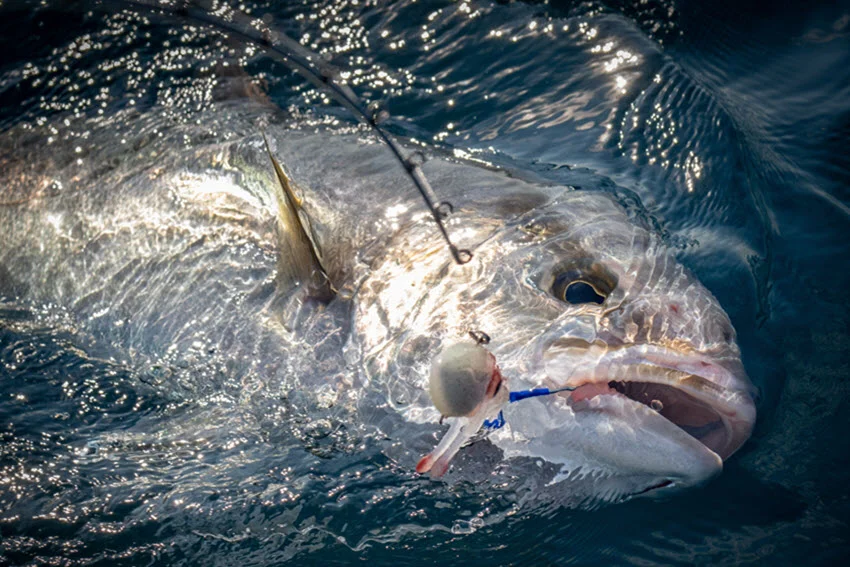
When you are fishing for Amberjack, whether in deep water or around wrecks and ledges, you will find that it is one of the most physically demanding and rewarding types of offshore fishing that the sport has to offer.
In the sections that follow, you will learn how to catch Amberjack successfully. We will cover the most popular types of Amberjack, the best time and place to fish for them, the most popular and effective methods, and the best lures and gear to use to catch them.
There are several species of Amberjack found worldwide. However, a few have gained more popularity than the others. The most popular species of fish to target are the Greater Amberjack and the Lesser Amberjack. Although these fish share similarities in appearance and behavior, they differ from one another. Let's have a look at these fish.
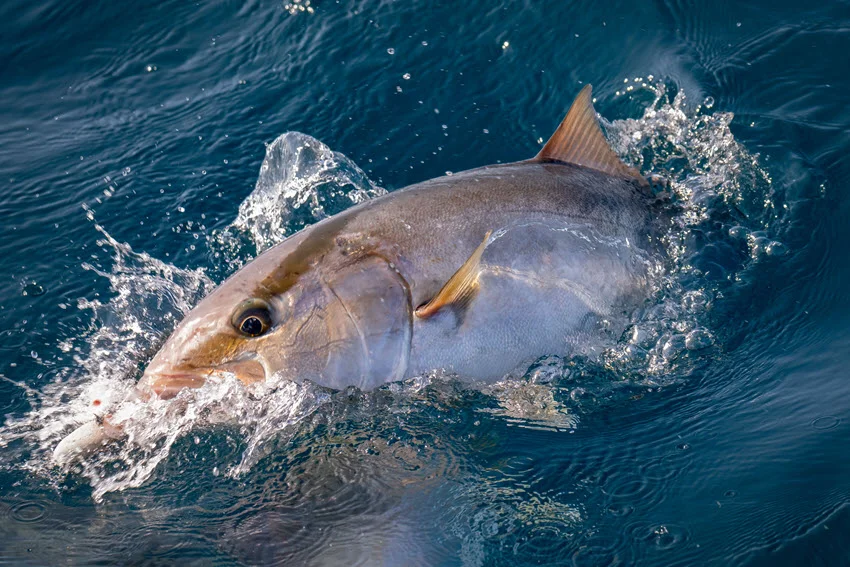
Greater Amberjack can grow up to 60 inches in length, though most individuals are around 40 inches long and weigh under 40 pounds. Some exceptional individuals can exceed 100 pounds (the world record is 163 pounds; location: Zenisu, Tokyo, Japan) in prime offshore waters. The Greater Amberjack has an elongated, torpedo-shaped body with a dark stripe that extends from the origin of the first dorsal fin, through the eye, and across the head.
This species is found throughout the warm waters of the Atlantic Ocean, the Gulf of Mexico, and the Caribbean Sea. They are commonly associated with offshore structures such as reefs, wrecks, oil rigs, and deep ledges, typically at depths of 60 to 240 feet.
Greater Amberjacks are strong predators that strike blue runners, pinfish, croakers, squid, and other baitfish that gather around reefs. For anglers fishing in Florida waters, it also helps to understand the Greater Amberjack season, since harvest opportunities may be limited to certain times of year.
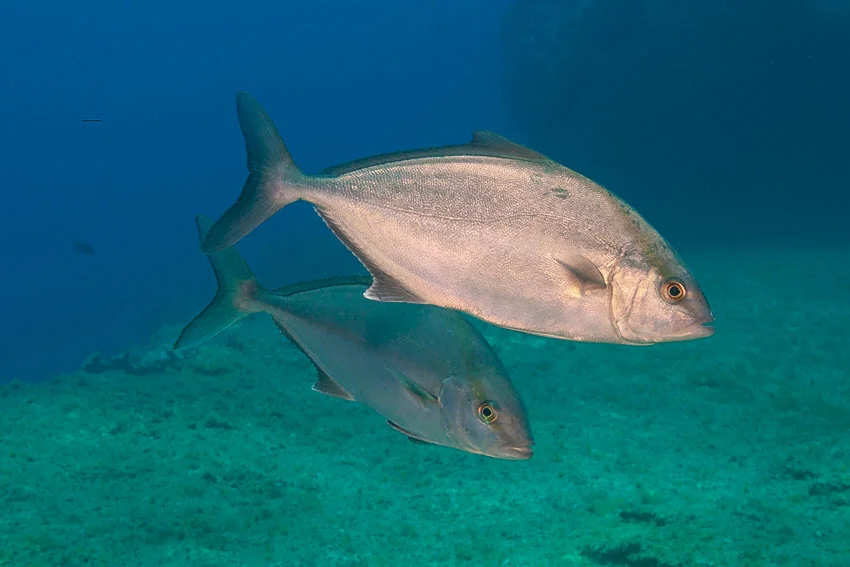
The Lesser Amberjack is smaller, but still a worthy opponent. Most individuals weigh less than 10 pounds, although larger specimens occasionally occur in deeper offshore waters. They closely resemble Greater Amberjack but are generally slimmer and slightly lighter in coloration.
They are typically found deeper than the Greater Amberjack near offshore structure. They can be fished year-round in warm-climate areas, with peak activity in spring and summer.
Lesser Amberjacks eat smaller fish, squid, and other species found around coral reefs. Like the Greater Amberjack, they tend to live in structure-oriented areas and are very aggressive while feeding. They also put up a strong fight once they are hooked, given their size.
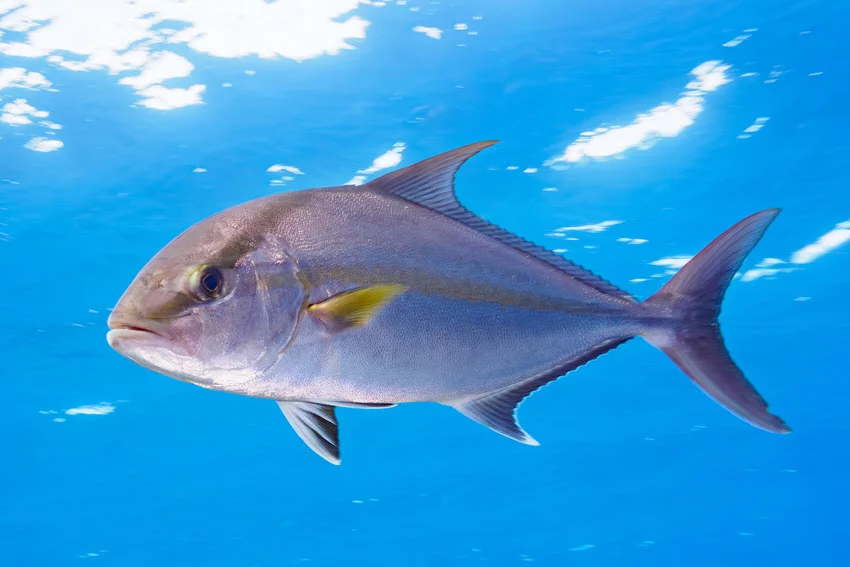
Amberjack fishing can be highly seasonal, depending on water temperature, migration, and regional regulations. However, their activity levels vary throughout the year, and understanding how they change will help you increase your success rate.
The warm months are usually the best time to fish for Amberjack in most areas, as the water is warm, and bait is plentiful in the areas near the structure. This is when Amberjacks are most aggressive during their feeding.
The fall season is another time when Amberjack can be caught, especially when bait is available on reefs and wrecks. As water temperatures continue to drop, Amberjack may migrate to deeper waters.
While winter fishing can be done in areas where water temperatures remain constant, it's considered one of the slowest times for fishing.
In general, the best times are early morning and late afternoon. At these times, the baitfish are active, and the Amberjack are more likely to feed around structure.
Mid-day fishing is possible, but is more effective in deeper water, with limited sunlight. Unlike many shallow-water species, Amberjack are less affected by bright sunlight because they usually stay at greater depths.
The Amberjack can bite at any time if conditions are right, with a lot of bait and a reasonable current. However, it is more effective to plan and time your fishing trips to take advantage of the transition periods between light and dark, or vice versa.
Current is an important factor in Amberjack fishing. These fish tend to hold near structures waiting for the moving water to carry food to them. A moderate current is best because it triggers a feeding response without making bait presentation too difficult.
Sometimes it is challenging to hold bottom contact when the current is strong, especially when vertical jigging or using live bait. Making adjustments to weight and placing your boat up-current of a location can be helpful.
A slack current can limit an Amberjack's activity, but it can also make it easier to place a bait precisely around a location with a lot of structure. Knowing how these fish react to moving water can be the difference between a slow day and a day with non-stop action.
Amberjack can be found in numerous locations in the Atlantic Ocean and the Gulf of Mexico, and there are some areas where you can experience some of the best and most consistent fishing for this species. The following is a list of the best locations for Amberjack fishing.
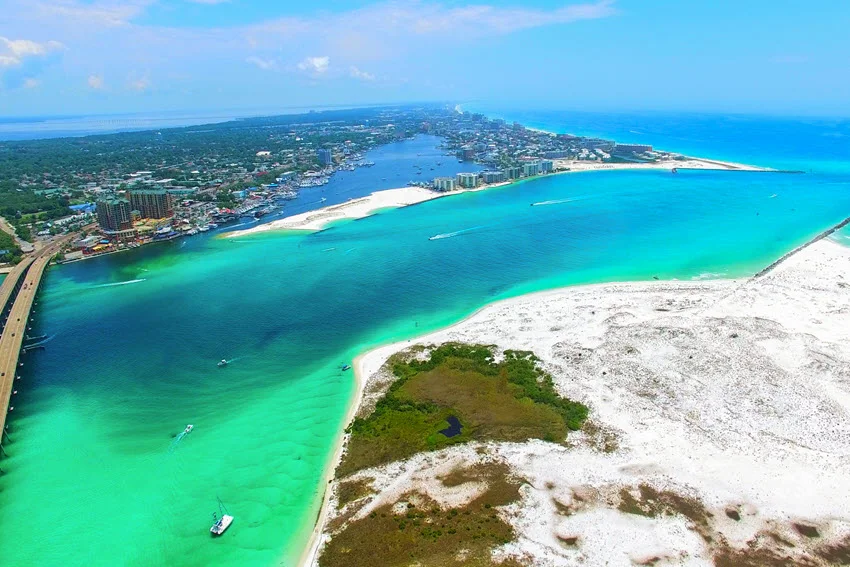
Destin, Florida, is one of the top Amberjack fishing destinations in the Gulf of Mexico, known for its quick access to deep water and productive reef systems, with prime spots located just 15 miles offshore. It is a key location in the Panhandle, providing anglers with easy access to the best fishing spots, whether on charter or personal boats.
Amberjack fishing in Destin can be especially productive before seasonal closures or after the season reopens, often in late summer and fall. Amberjack regulations in Gulf waters can change by season and area, so anglers should always check the latest Florida and federal rules before planning a trip.
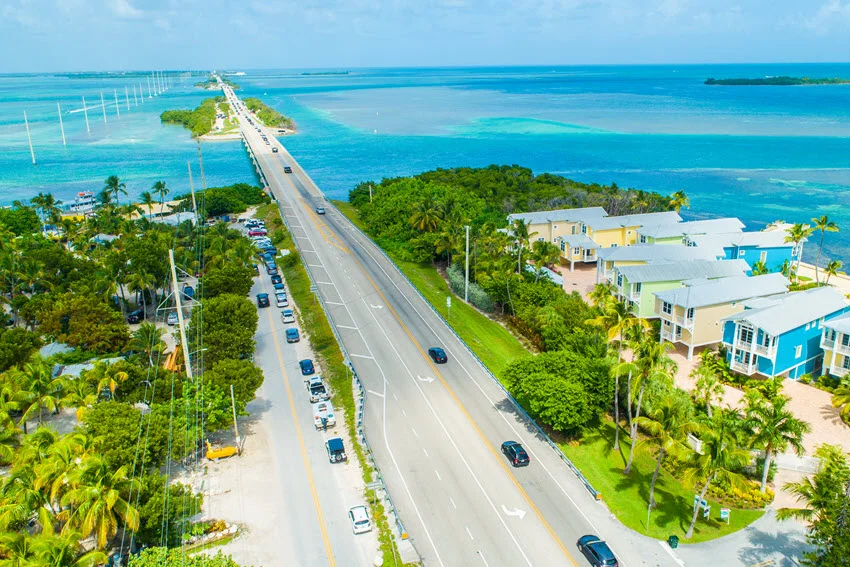
Key West has the special advantage of providing access to both the Gulf of Mexico and the Caribbean-influenced waters of the Florida Straits. The Key West area has many reefs, wrecks, and offshore humps that provide the ideal habitat for Amberjack to thrive.
Spring and fall are the most productive seasons for Amberjack around Key West. During these times, favorable water temperatures and bait movement make fish more active around the structures.
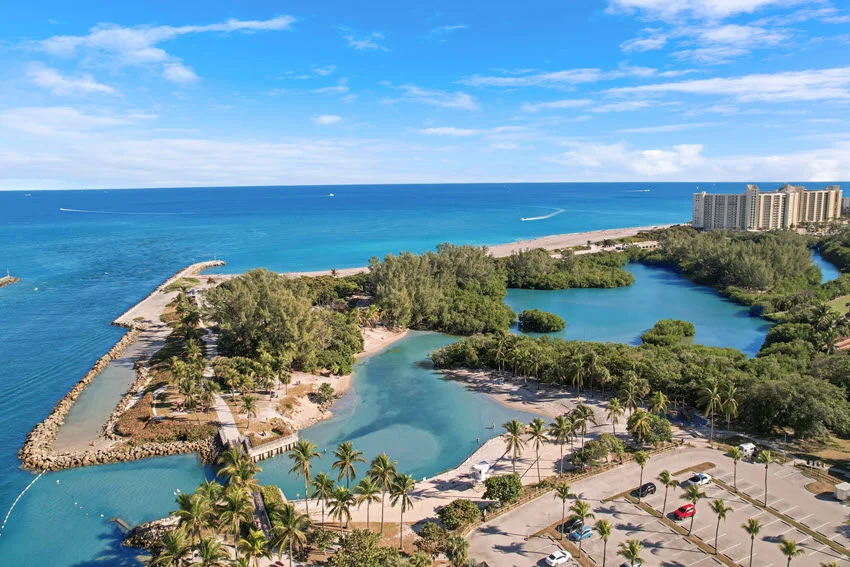
Jupiter, situated along Florida's Atlantic coastline, is another popular location for Amberjack fishing. The area offers favorable fishing conditions, with deep water close to shore and numerous reef structures that harbor game fish.
Spring and fall are especially productive for Amberjack fishing as changes in water temperatures and baitfish movements tend to intensify Amberjack activity in offshore structures.
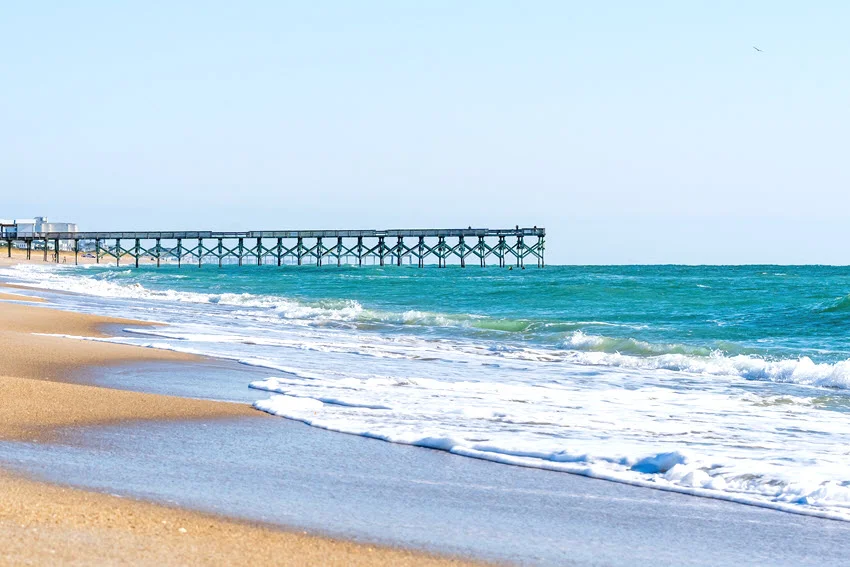
Wanchese is a major fishing port on the island of Roanoke, in the Outer Banks of North Carolina, that gives anglers access to productive waters that hold a wide variety of species, including Amberjack. These waters are full of wrecks, reefs, and other structures that attract a large number of fish species.
The late spring and summer are the best times for anglers to target Amberjack off the Outer Banks, as the warm waters drive the fish toward wrecks and deep reefs.
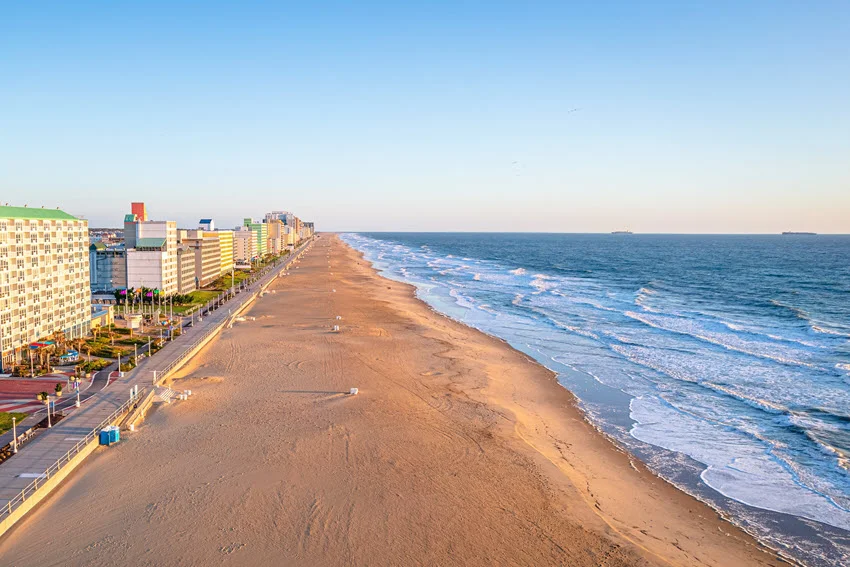
Virginia Beach is home to several notable offshore structures where Amberjack tend to gather during the warmer months of the year. Structures such as Chesapeake Light Tower and nearby wrecks attract good numbers of Amberjack.
The peak season for Amberjack in Virginia Beach is usually in early and mid-summer, and that is when Amberjacks swim in their greatest numbers in this region. In early fall, Amberjacks are still holding in deep structures before their numbers dwindle.
Amberjacks are powerful predators that thrive near structures such as reefs, wrecks, and ledges. Successful anglers focus on techniques that keep baits or lures close to these strike zones, whether they are fishing close to shore or far out at sea.
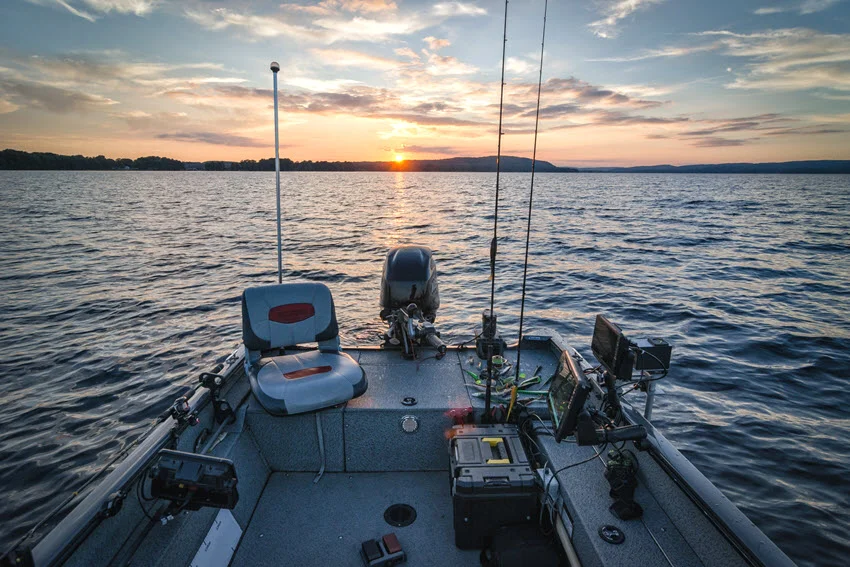
Vertical jigging has also gained popularity among offshore anglers fishing for the Amberjack species. The technique requires dropping the heavy metal jig to the seafloor, then lifting it rapidly through the water column. The unpredictable movement resembles an injured baitfish, thus enticing the Amberjack to attack the lure aggressively.
Amberjacks respond well to fast-moving jigs, particularly near wrecks and reefs. This technique helps anglers find fish in the water column and offers a physically demanding fishing style that matches the stamina needed to reel in strong Amberjack.
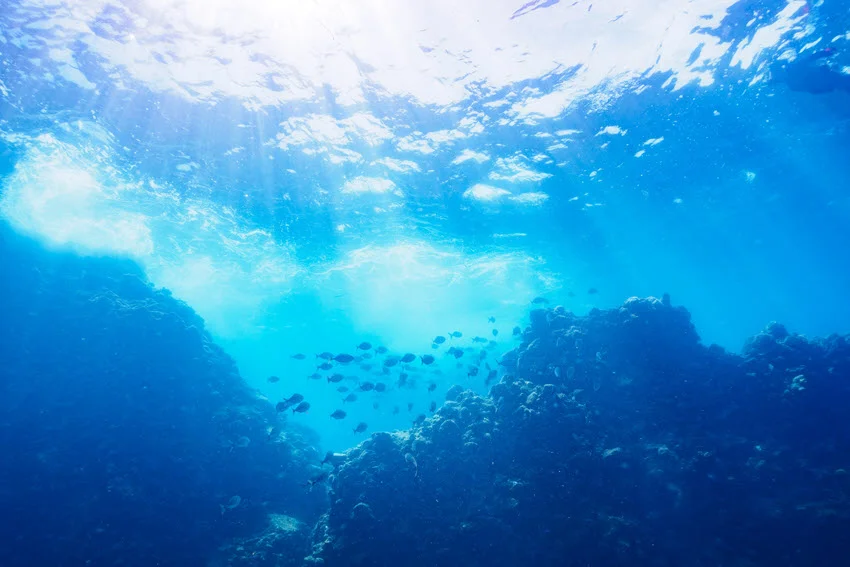
Bottom fishing is another reliable way to catch Amberjack, as they often dwell near structures where baitfish gather. By presenting a bait close to these places, it reaches the Amberjack's feeding zone. Weighted gear is typically used to lower the bait to the likely location of these fish.
In bottom fishing, the boat's position relative to the structure is crucial. Boats are usually anchored or allowed to drift slowly so the bait stays close to the structure without getting hung up. Amberjack is well known for its initial run, so the angler should be prepared at all times.
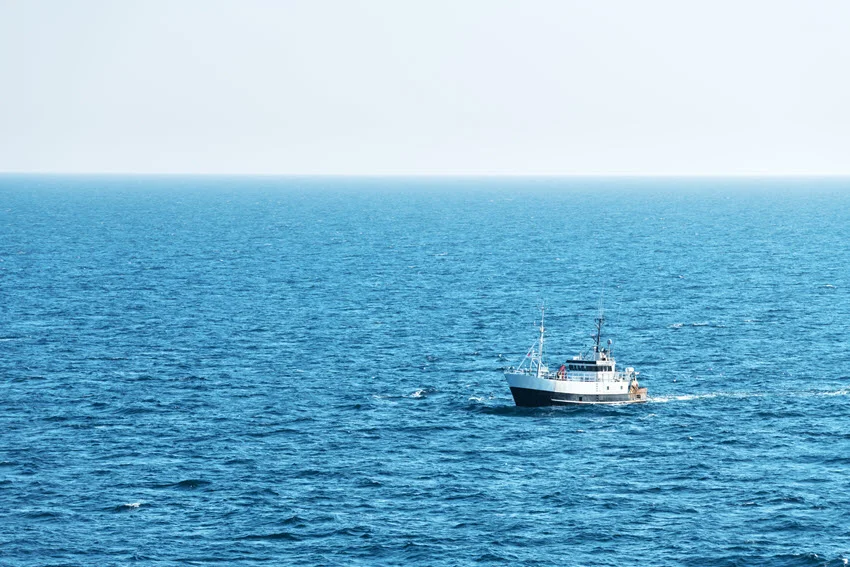
Drifting is a great technique for fishing large offshore areas with scattered structure. Rather than anchoring down, the boat drifts naturally with the current, and the baits are simply cast into the productive zones. This is a great way to cover a lot of water and possibly find where the Amberjack are actively feeding.
This approach works especially well when the fish are suspended above a wreck or moving between pieces of structure. By controlling the drift speed and bait depth, anglers can keep the presentation natural while staying in the strike zone, which is often key when targeting Greater Amberjack offshore.
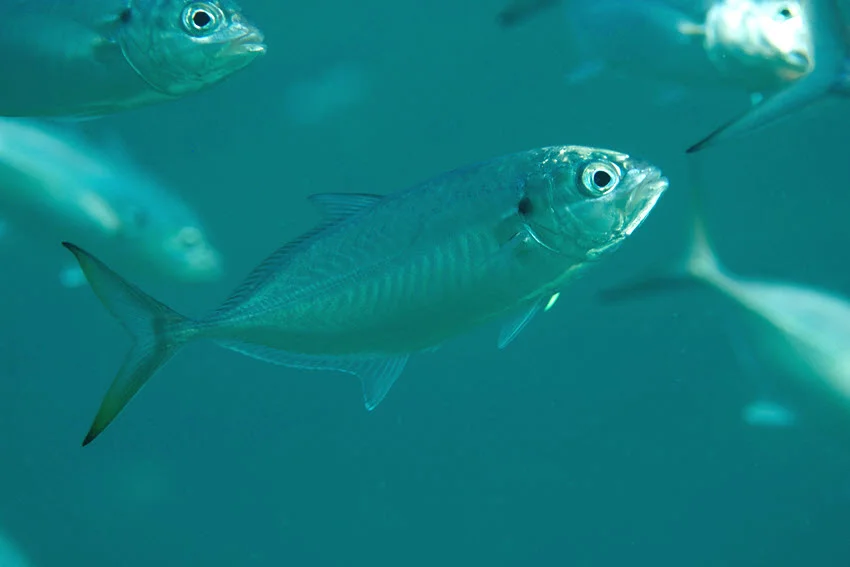
Bait selection is one of the most important factors when targeting Amberjack. The goal is to present your bait or lure near the structure where Amberjack are holding. Below are some of the most effective bait and lure options.
Live bait is widely considered the most effective option for catching Amberjack, as they rarely ignore a lively baitfish swimming near reefs or wrecks. Blue runners are among the most popular live baits because of their hardiness and their natural occurrence around offshore structure. Other productive live baits include pinfish, croakers, and bonito.
Dead baits can also work, but it should be noted that live baits generally outperform them when fishing for Amberjack. Cut baits release oils that can attract fish that are holding in the area. Dead baits that can be used include squid, mackerel, and bonito strips.
Artificial lures can be very productive if Amberjack are actively feeding. Heavy metal jigs are among the favorite lures, especially if you are jigging in deeper water. These lures sink quickly and let anglers work the water column with a sharp action that mimics an injured baitfish. Soft plastic swim baits and large bucktail jigs are also effective lures.
Lure color can also affect success when fishing with artificials. In darker or deeper water, bright colors such as chartreuse, white, pink, and glow can be very effective because they are more visible to predators in these areas around a reef or wreck. In clearer waters or bright sunlight, colors such as silver, blue, and green can work better.
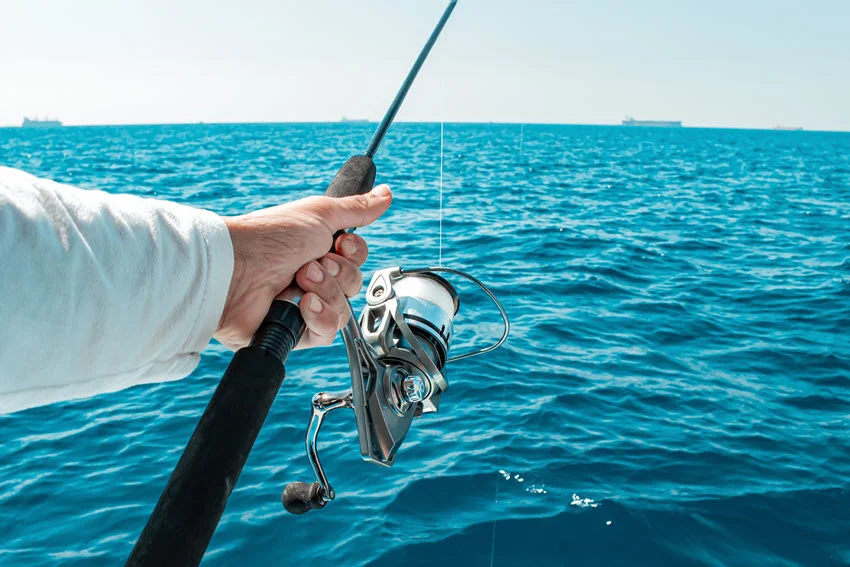
Amberjacks are powerful fish that require strong, reliable gear due to their explosive power and tendency to dive straight back towards structures when hooked. Using the right gear increases the chances of successfully catching these powerful predators.
If targeting school-size or average Amberjack, a medium-heavy offshore setup can provide a good balance between strength and control. A rod capable of handling 50 to 80-lb line can provide sufficient strength to handle strong runs while also offering some flexibility during the fight. Conventional reels are also popular due to their strength and line capacity.
A braided line between 65 and 80-lb is a popular choice. However, this should be matched with an 80 to 100-lb fluorocarbon or monofilament type of leader material. Circle hooks ranging from 7/0 to 9/0 are used in conjunction with live or cut baits and provide you with excellent hook-up rates and keep your fish hooked during the battle.
To deal with the larger Amberjack, you'll have to go up to heavy-duty tackle. A heavy offshore rod with a line rating of 80 to 130-lb is the kind of lifting power you'll need to haul the fish away from the structure, while heavy capacity conventional reels with strong drag systems are a necessity to apply constant pressure to the fish.
Most anglers use braided line in the 80 to 100-lb test for maximum strength and sensitivity, with a heavier 100 to 120-lb leader for the sharp edges of the reefs and the fight. Larger circle hooks in the 9/0 to 10/0 size are preferred for the larger live baits, and heavy terminal tackle is a must. For deeper water, heavier sinkers are required to keep the bait in the strike zone.
Understanding fishing regulations and preserving specific fish species contributes to protecting fish populations and ecosystems and promoting responsible angling practices.
Anglers Booking Team
You should check the current regulations depending on whether you are fishing in state or federal waters. The regulations are set to protect the fish population and allow future generations to enjoy Amberjack fishing. The following are some of the vital facts regarding the license and regulations.
It is worth noting that before going, it is important to check the regulations with the state agency or NOAA. This should be the first item on the checklist for every fishing trip.
One of the most exciting fishing challenges in offshore fishing is Amberjack fishing. Amberjacks are known to be strong fish that put up a good fight when hooked, especially when they attempt to dive back to reefs, wrecks, and other structures. This makes Amberjack fishing one of the most exciting fishing activities for anglers.
Are you planning your first trip to target these fish? Or maybe you have already had success in Amberjack fishing? Share your favorite fishing locations or techniques with us. Your advice could be exactly what a fellow angler needs to reel in their next trophy catch!

The expert copywriters at Anglers Booking have meticulously crafted this article. Our dedicated team of writers provides valuable insights and information to enhance your angling experience.

April 25, 2026

August 4, 2025
Subscribe to our newsletter and receive a selection of cool articles every week.
Embark on unforgettable fishing adventures with us at Anglers Booking.
book your charter
October 2, 2026
September 8, 2026
August 21, 2026
August 18, 2026
August 15, 2026
August 12, 2026
August 8, 2026
August 4, 2026

You're now part of our exclusive community. Get ready for premium content and updates straight to your inbox.
close
Subscribe to our newsletter and receive a selection of cool articles every week.
Please enter a valid email address.
Be the first to know when we're back in action.
Please enter a valid email address.
Leave a Comment
Your email address will not be published. Required fields are marked *
Thank you for your comment! It has been submitted for review and will appear on the site shortly.