


Anglers Booking Team
The expert copywriters at Anglers Booking have meticulously crafted this article. Our dedicated team of writers provides valuable insights and information to enhance your angling experience.
 13 minutes read
Popping is not just a fishing technique, it's a thrilling experience. Born in tropical waters, it has captivated sea anglers worldwide with its dynamic nature. The visual spectacle of fish aggressively hitting the surface, drawn by the commotion and show created by the bait, is a sight to behold.

It sounds a little funny when you realize that the essence of the technique is to cast a bait that mimics the sound and struggling prey movements to attract the fish. However, the biggest appeal is in that slightly dramatic situation: the surface action and adrenaline rush of watching a predatory fish fiercely strike the bait.
If you're intrigued by the concept of pooping and want to get into the ins and outs, then stay tuned and read on. We walk you through the basics of this exciting technique, explaining it in a fun and informative way. So, let's play and hunt with the help of popping!
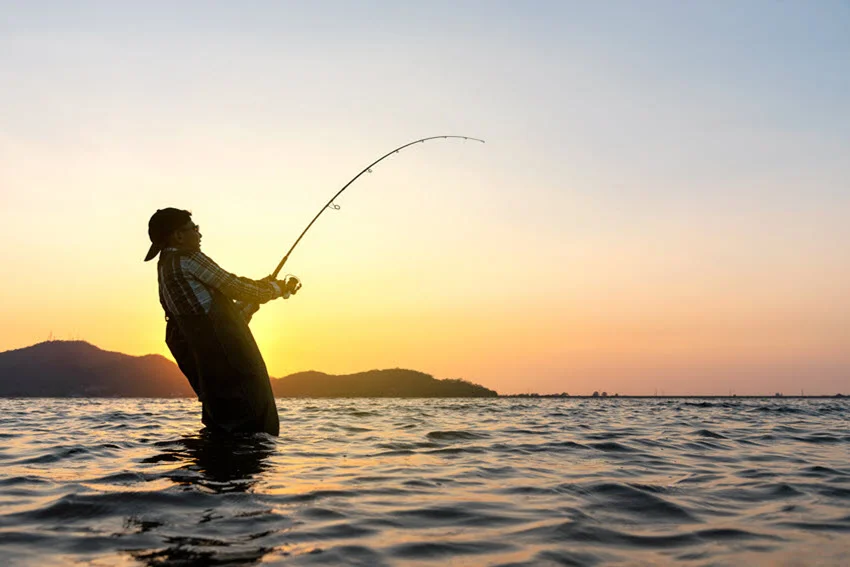
Primarily visually attractive, popping is an exciting fishing technique involving a specialized lure, i.e., a popper that imitates the sounds and actions of agitated prey on the water's surface. It is used for species living near the top of the water column or floating near the surface.
The popper has an interesting design, a concave or slanted face. When pulled out, it catches the water and makes a characteristic popping and splashing sound, skillfully mimicking a struggling fish or prey in distress. For most species, this means the prey is an easy target, and they go on the attack.
To finish catching the game in your favor, you must set the hook firmly when the fish hits the popper, playing it to tire it out using a constant pressure and rod pull system. This system involves maintaining a steady pressure on the fish, preventing it from escaping and using the rod to guide the fish towards you. Then, you apply the coil with a smooth, pumping action.

Don't be fooled into thinking popping is just for small fish. With practice, you can even catch Tuna or Trevally. Popping is not just active and dynamic, it's a game of precise control and timing. The more you practice, the more you'll appreciate its interactive and communicative nature with nature and fish. And the best part? It's not an expensive technique.
Most fish are drawn to the noise and movement of popping, lured into attacking the bait with explosive force. The versatility of popping allows you to fish in various environments, from tropical saltwater plains to freshwater lakes and rivers, with minimal preparation. So, popping is an excellent beginner technique if you're aiming to catch pelagic species.

Traditionally, popping is best used in warmer waters, especially in tropical and subtropical regions, where most species actively feed on surface prey. It is best applied in the early morning or late afternoon when fish feed more aggressively. You can also use it in choppy conditions or where the noise and splash created by the popper can stand out and attract fish that would otherwise be difficult to lure.
Popping is suitable for fishing around structures such as reefs, rocks, and floating debris in fresh or saltwater areas. Another distinct advantage is that you can do all this either from a boat or from the shore, with a great chance to catch some of the big predatory fish in a fun way.

All fish are predatory; fighting for life and food is their daily duty. This means that their senses are very sharp, and popping provides just that, capturing visual and auditory stimuli that mimic the action of agitated prey on the water's surface. That sound and play on the water is an instant trigger, and target fish see or hear the erratic movements of an injured or struggling fish. This noise can be heard long distances, attracting fish from various directions.
In addition, with its concave or slanted face, the popper's design creates a very realistic imitation of the prey, thus clearing the doubts of most hungry fish, especially Tuna, Trevally, and Bass. The visual aspect of a popping decoy, also known as a popper, is often enhanced by bright colors, reflective surfaces, or realistic patterns, which adds to its attractiveness.
The impetuous popping triggers the fish's warrior instincts and provokes a reactionary attack, often driven by territorial behavior or competition between fish. This means that when a fish hears the commotion created by the popper, it may attack not just for food but also to defend its territory or assert dominance over other fish. Essentially, this technique's success lies in its ability to imitate its prey's natural movements and sounds, triggering the fish's predatory instincts.

Popping is a fun, seemingly simple technique to catch big game fish. Here are the most commonly seen species with this exciting method:
Giant Trevally: This is the primary fish species caught by popping, as it is very easy to inspire them to bite. Fierce and impulsive in temperament, these fish are known for their incredible strength. You'll find them in tropical and subtropical waters around reefs and rocky outcrops.
Tuna: Several species, including Yellowfin and Bluefin, will be relatively easily attracted to the noise and commotion created by poppers. They will swim in from great distances, attracted by the shock.
Mahi Mahi: This fish species is known for its vibrant colors and acrobatic fights. Its habitat is warmer waters, and it is attracted to floating debris or sargassum, where it catches smaller fish.
Barracuda: A snake-like species with sharp teeth and aggressive behavior, the Barracuda often circulates in coastal waters and is very attracted to the popper's fast, irregular movements.
Kingfish: Yes, even the famous Kingfish known for its speed and strong running, you can inspire and infuse with a popper. They are usually found in warmer coastal waters and around structures like reefs and wrecks.
Bass: Largemouth, Smallmouth, and Striped Bass can also be caught using pop-up techniques. These fish primarily live in freshwater lakes and rivers or brackish waters.
Snapper: This crustacean fish is also susceptible to snapping, especially when fishing close to the surface around reefs and other underwater rocks.
Amberjack: Amberjack is another species that likes to circle reefs and wrecks. They are known for their strength and are a popular target for popping enthusiasts.
Yes, it's fascinating what fish you can lure with popping, which is even more reason to dedicate your time to this technique.
You can't fish without good gear; popping gear isn't complicated. Let's explore it in more detail.

Popping requires rods designed to provide optimal performance for this dynamic fishing technique. Here are the main types of rods used in popping:
Spinning Rods: These are the favorite of most popping anglers because they are lightweight and are a good choice for anglers who are used to spinning reels. They typically range from 7 to 9 feet in length, which helps achieve greater casting distance. They have fast to extra-fast action. This means they bend primarily at the tip, allowing for quick, precise movements when working with the popper.
Casting Rods: Casting rods are characterized by fast to extra fast action and high to extra heavy power. It is precisely these that provide precise control and power to handle large predatory fish such as Tuna. Typically ranging from 7 to 9 feet in length, they facilitate long casts and leverage during intense battles. Made from graphite or composite, they offer the durability and sensitivity to handle heavy lures and strong lines.
Popping Rods: Specially designed for popping, these rods are typically 7 to 9 feet long, allowing for long casts. In addition, they are fast and bend primarily at the tip to convey quick, sharp movements imitating agitated prey. They are cumbersome and are essential to aggressive strikes by large predatory species such as giant Trevally and Tuna.
As you can tell, the rods must be long and strong enough to withstand the weight and aggressiveness of the fish.

Reels are a breakthrough component in techniques like pop-ups, where precision and power are paramount. There are two main types of reels used in poping: spinning and baitcasting reels.
Spinning Reels: This type has an open design where the spool rotates perpendicular to the rod, allowing quick and easy casting. If you have just started popping, use this reel with matching rods. They are excellent at throwing light baits and less prone to backlash than baits. They can cope with a wide range of fishing conditions and target species and are not without the number one choice of most popping anglers.
Baitcasting Reels: Baitcasting reels are preferred by experienced anglers who combine them with very heavy rods, where precise control and power are required. They have a closed design with a spool that rotates parallel to the rod, greater casting accuracy, and can handle heavier lines. In addition, they are equipped with brake systems that prevent backlash. This type is perfect when casting distance, accuracy, and the ability to handle strong fish are critical.
Remember to pair the reels with the rod and make one compact hole, which will help you control and land the fish easily.

Popping lines must be persistent, strong, and as little visible as possible. Which one you choose depends on the target species and the aquatic environment.
Braided Lines: Surely one of the best because they provide an unrivaled ratio of superior strength to diameter, with great resistance to tearing. At the same time, they are very sensitive and transmit even the slightest bite or movement to the angler. Abrasion-resistant can withstand fishing in rough, rocky environments where fish like Tuna and Trevally are usually targeted.
Monofilament Lines: Flexible and easy to handle, monofilament ropes are also less prone to tangling than braided ropes. They have a higher tensile strength than knitted ropes, which can be useful in absorbing sudden shocks from aggressive blows. In addition, they are more buoyant, which makes them suitable for presentations on the water with poppers. They are excellent in conditions where visibility is less of a concern and when targeting species like Bass and Barracuda in fresh and saltwater.
Fluorocarbon Leaders: They are often combined with braided or monofilament main lines because such a combination provides resistance to abrasion and invisibility under water. Fluorocarbon has a similar refractive index to water, making it less visible and more resistant to UV rays and abrasion than monofilament. This line type is usually used in clear water conditions or when targeting species with sharp vision.
When choosing a line, do not be guided by the price, but consider the size and behavior of the fish you are targeting. So, your popping fishing performance will get the support it deserves.

The hooks ensure a secure connection, support, and effective fight with the fish, which you will eventually land in your fishing bucket. Here's an overview of the types of hooks commonly used for popping:
Triangular Hooks: This type has three prongs and offers multiple contact points, increasing the likelihood of securing a solid hook when the fish strikes. They have strong holding power and minimize the risk of the fish escaping during the fight. The downside is that they can potentially cause more damage to the fish and are more susceptible to tangling with bait or other lines due to the barbs.
Single Hooks: They have only one point and can be found in designs such as straight shank, offset, and circle hooks. They offer easier and safer hook removal, reducing fish stress and minimizing injuries. Also, single hooks are less likely to get tangled in lures or other lines. The disadvantage of this type is that they require precise hook placement due to their single point of contact and may have slightly lower hook efficiency than treble hooks.
Inline Single Hooks: They have a straight handle with a single point and are designed for an aerodynamic profile to reduce or neutralize water resistance. They allow a natural presentation, reducing the resistance of the bait and ensuring an easier retrieval.
Remember to maintain your gear, whatever you use, so that it lasts you for years.
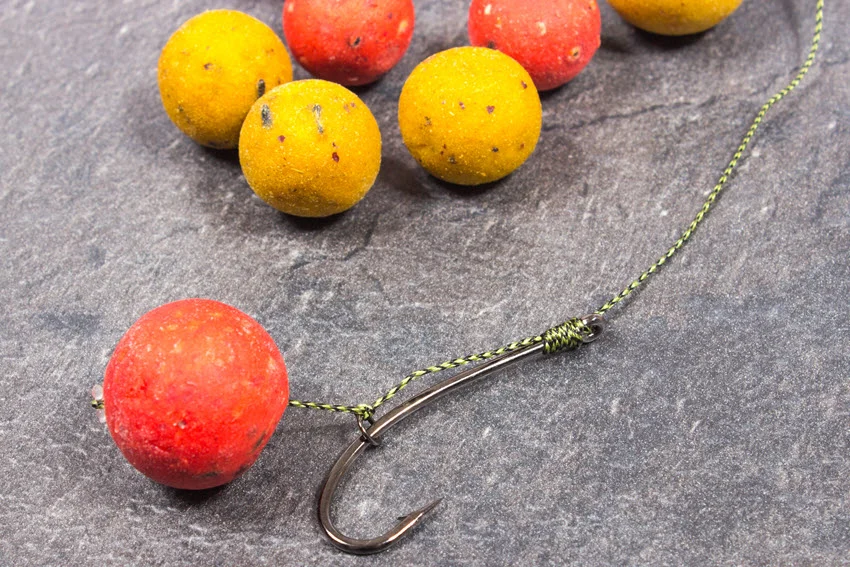
Rigs are another component to pay attention to and ensure they blend well with the rest of the equipment.
Single Rig: These are usually connected to a fluorocarbon or wire leader with swivel and split rings. They allow for a simplified presentation with reduced drag and are easier to retrieve and safer to remove the hook, reducing stress and injury to the fish. However, this single-hook rig requires precise hook placement due to the single point of contact, which sometimes leads to less efficiency, especially with aggressive fish.
Treble Rig: This rig consists of treble hooks attached to a bait with split rings, a swivel, and a fluorocarbon or wire leader. These multiple contact points increase the chances of catching fish while offering strong holding power and support during aggressive strikes. However, the disadvantage is that they can cause greater injury to the fish and have a greater risk of entanglement with bait or other lines.
Make sure the rigs are light enough. Then, they can place the bait in an environment where there are no fish or present the bait in a way that will scare fish.
The popper fishing technique is also unique in that it does not involve the use of typical artificial and live bait. Instead, the primary focus is on poppers designed to mimic the movement and appearance of distressed or injured prey on the water's surface. Different poppers are used in saltwater environments and others in freshwater. Read more about each below.

Saltwater poppers are made from slightly different materials than freshwater ones. They are designed to handle the ocean's challenging conditions and attract various predatory fish from far and wide.
Chugger Poppers: This type has a deeply indented face that contributes to a more powerful splashing and popping sound when pulled out. They are generally equipped with solid treble or single hooks to handle the power of large saltwater fish such as giant Trevally, Tuna, and Barracuda. This type of popper is effective in rough and open water where noise and splashing are needed to attract fish from a distance.
Surface Poppers: These have a characteristic aerodynamic body and a slightly concave face. Their girth allows for a variety of draws, including the action of "walking the dog" and splashing. They can create enticing movements and are used for Mackerel, Kingfish, and Catfish species. They are more suitable for calm to moderately choppy waters where precise, erratic movements are required to attract fish.
Pencil Poppers: Pencil poppers have a long, slender body that gradually tapers slightly, allowing for large casts over long distances. They are designed to skip and dart across the water's surface, creating a dramatic commotion effective for species such as Striped Bass, Bluefish, and various Tuna. They are ideal for casting from shore or boats in open water and around structures such as reefs and jetties.
Bubble Poppers: Bubble poppers are pretty specific because they have a unique chamber that traps air and releases bubbles during retrieval, creating a bubble trail that mimics fleeing prey. They have additional splashing and more substantial noise. Primarily used to target species such as Sailfish, Mahi Mahi, and Wahoo, they perform best in clear, calm, to moderately choppy waters where visual appeal is vital.
Understanding the design and area where you will be popping can significantly improve your fishing strategy, which means choosing the correct tackle for the right fish and environment.

Freshwater areas behave significantly differently, with different water movements and fish species. The popper has to respond to all that and for the fish to believe and bite.
Traditional Poppers: Traditional poppers can create a popping and splashing sound when pulled out, successfully mimicking the sounds of insects and small frogs for bait fish. This type of popper is light and small, ideal for targeting species such as Bass, Panfish, and Pike. They are very effective in calm to slightly wavy waters, such as lakes, ponds, and slow-moving rivers.
Frog Poppers: As the name suggests, they are designed to resemble frogs. They have a soft body and realistic legs, creating turbulence on the water's surface. They can also be found with weed guards to prevent getting stuck in heavy vegetation. This species is usually used for fishing in beds, sedges, and other heavy cover, where they are known to catch Bass and Pike.
Insect Poppers: They are small and intricately designed to mimic various insects such as grasshoppers, cicadas, and dragonflies. They are also very light and have realistic colors and patterns that resemble natural insects. It is effective for catching Trout and Smallmouth Bass, especially in streams, ponds, and lakes where insects naturally fall into the water and attract feeding fish.
Fly Poppers: These are also small and light and are used mainly with a fly rod and line. They imitate small prey such as insects, spiders, and small bait fish. These poppers are very effective for fly anglers targeting Bluegill, Crappie, and Smallmouth Bass species. They are excellent in streams, ponds, and lakes where delicate and precise presentations are required to attract wary fish.
Although you can sometimes combine and use saltwater poppers in freshwater environments and vice versa, having separate ones for each occasion is still better. That way, you have a better chance of getting a better and more successful catch.
Popping is primarily practiced from a boat and shore and offers unique advantages. What you choose is entirely up to you.

Popping from a boat means versatility and easier access to a variety of locations, including reefs, shoals, and open water. Plus, it's easier to carry a variety of gear and explore different terrains, especially if your focus is on fish like Tuna and Mahi Mahi.

Shore fishing is practical because it is available to anglers without a boat. Depending on your chosen shore location, you can target fish near structures such as rocky shores, piers, and breakwaters. If you fish from a jetty, you can easily access deeper waters, while shore fishing allows you to fish in shallow waters such as estuaries, mangroves, and ponds where fish come close to the shore to feed.
Choosing between fishing from a boat or the shore is up to you, your popping fishing style, and your approach. Also, the type of water you fish in and the specific behavior of your target fish play a significant role. As for success, as always, it mostly depends on you.
Popping is a fishing technique that can be performed in several different ways and approaches. Here are the most popular ones.
Chugging is a popping strategy that uses a chugger popper with a profoundly indented face to create loud splashes and characteristic popping sounds. This method attracts more aggressive predatory fish species in marine and freshwater environments.
The strategy involves casting as far as possible and retrieving baits with sharp, aggressive rod tip jerks, with mini pauses to induce strikes. The best time to apply is in calm to moderately choppy waters and during dawn or dusk. You will need medium to heavy action rods and strong lines to land as many aggressive species as possible.
"Walking the dog" is an effective popping strategy that uses surface lures and leads to create zigzag movements on the water, imitating the erratic movements of injured prey, i.e., like a restless dog walking on a chain. It involves casting accurately near fish-holding structures and then jerking the rod tip rhythmically to move the bait from side to side.
This strategy mostly provokes a strike from predatory fish such as Mackerel, Kingfish, Bass, and Pike. Ideal for both saltwater and freshwater environments, the plant thrives in clear to moderately turbid waters, especially early in the morning or late at night. Use a medium to fast action and braided rod to improve bait control and strike detection.
Popping is a traditional technique that involves classic poppers, which are pulled with quick, short strokes of the rod tip. In this way, they create a recognizable snapping sound and surface disturbance, imitating the movements of injured prey.
What attracts the fish is the loud splash and the visible stirring in the water. It is effective in salt and freshwater environments, especially in calm to moderately choppy waters. For this classic strategy, use a medium to heavy action rod and strong line to easily handle aggressive fish.
So, your approach depends primarily on you and where you are. Attention to the underwater structure is essential, as this can significantly improve sound penetration through the water and attract fish.
The popping sound is very addictive and cool and we believe it can attract you and the fish you are targeting. So, whether you prefer the sharp crackle of traditional poppers or the mesmerizing zig-zag draw of "walking the dog," each method has its charms, flaws, and effectiveness.
Understanding fish behavior is also important for success, but the rewards are exciting strikes and fun fishing adventures.
If you've tried it all and maybe you're a popping master, please write to us in the comments about your experiences and share tips or questions! Our mission is to learn and grow together as anglers constantly.

The expert copywriters at Anglers Booking have meticulously crafted this article. Our dedicated team of writers provides valuable insights and information to enhance your angling experience.

November 8, 2024
Subscribe to our newsletter and receive a selection of cool articles every week.
Embark on unforgettable fishing adventures with us at Anglers Booking.
book your charter
October 2, 2026
September 8, 2026
August 21, 2026
August 18, 2026
August 15, 2026
August 12, 2026
August 8, 2026
August 4, 2026

You're now part of our exclusive community. Get ready for premium content and updates straight to your inbox.
close
Subscribe to our newsletter and receive a selection of cool articles every week.
Please enter a valid email address.
Be the first to know when we're back in action.
Please enter a valid email address.

Leave a Comment
Your email address will not be published. Required fields are marked *
Thank you for your comment! It has been submitted for review and will appear on the site shortly.