


Anglers Booking Team
The expert copywriters at Anglers Booking have meticulously crafted this article. Our dedicated team of writers provides valuable insights and information to enhance your angling experience.
 11 minutes read
There's nothing more thrilling for an angler than catching a true giant of the sea. The pursuit of record-breaking fish, those once-in-a-lifetime catches that test strength, skill, and endurance, defines the heart of sportfishing. One thing is sure: every angler dreams of landing the biggest fish ever caught.
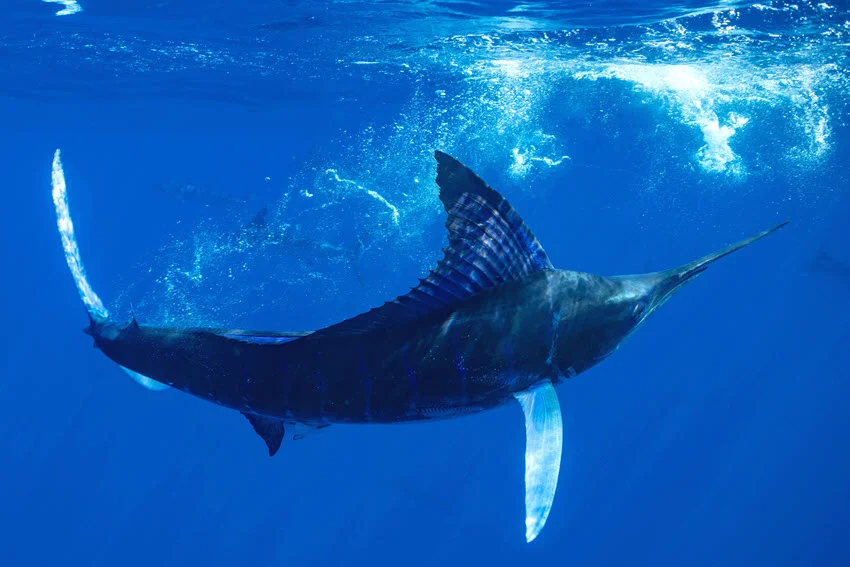
Today, we analyze in detail two true superstars of the deep: Swordfish and Marlin. These fish species are not ordinary. They inspire awe in the fishing world. They are known for their size, speed, and raw power. This fish species has become legendary in sport fishing, often stealing the spotlight in some of the most iconic catches in history.
But which one holds the ultimate title for size? We'll dive deep into the biggest Swordfish and Marlin ever recorded, exploring verified world records. Along the way, we'll highlight their differences, break down the species, and examine the gear and bait commonly used to target these apex predators.

The Swordfish is one of the ocean's most formidable predators. It has an elongated, flat beak and typically inhabits the deep sea. Swordfish fishing is among the most challenging pursuits in big-game angling. Many anglers dream of catching a record-breaking specimen. However, it's not that simple; only the luckiest and most skilled individuals manage to land a massive Swordfish.
As you can see, the heaviest Swordfish ever caught on rod and reel weighed an astonishing 1,182 pounds. This monumental catch remains the International Game Fish Association (IGFA) all-tackle world record for Swordfish. Marron's record has stood unchallenged for over seven decades. That shows how big a feat this is.
Marlins are among the most iconic big game fish in the ocean. Over the years, anglers have pushed limits to land the biggest of each Marlin species. In terms of size, the Black and Blue Marlin are the largest. In the sections below, we analyze the Marlins' records by species.

The largest caught Marlin, including all species, is the Black Marlin. Alfred Glassell Jr. holds the world record for this fish. You can see its details below.
Alfred's record was a weight of 1,560 pounds. Interestingly, this record was made in the same year as the Swordfish record, 1953. For the record, he used a Tycoon rod and Fin-Nor reel off Cabo Blanco, Peru. The fight lasted nearly two hours.

The Blue Marlin is one of the most powerful game fish in the world. Its size, strength, and spectacular leaps make it a prized target for sport anglers. Among countless attempts to land giants of this species, one catch still stands as unmatched. The IGFA recognizes this catch as the world record.
This record Marlin was caught off the coast of Vitoria, Brazil. Amorim's achievement has stood the test of time for over three decades. His catch remains a symbol of angling excellence and the incredible marine biodiversity of Brazil's offshore waters.

Striped Marlin have long pectoral fins. Powerful bursts of speed are its characteristic. The most massive Striped Marlin ever caught on rod and reel remains a true milestone in sportfishing history.
Angler Bill Boniface caught this incredible fish off the coast of Tutukaka, New Zealand. The Marlin was the result of a battle between man and fish that defined a lifetime achievement. Despite advances in gear and technique, no one has managed to top Boniface's accomplishment in nearly four decades.

Speed and agility are among the main characteristics of White Marlin. It is the smallest of the Marlin species. Still, it commands respect in the sportfishing community. Below, we present details about the largest White Marlin ever caught.
Evandro Luiz Coser from Brazil is the owner of this record. The weight of the record catch was 181 pounds, 14 ounces. It is an interesting fact that the location of this record is the same as the location of the Blue Marlin record. It is about Vitoria, Brazil. Coser used a Magnaflex rod paired with a Penn International 30 reel, spooled with 30-pound Ande line. He was trolling a baitfish when he caught this record specimen.

Swordfish and Marlin are iconic billfish species. They have some similarities. But, at the same time, they are different. Below, we analyze their differences.
Swordfish have a long, flat, sword-like bill. Their bodies are more streamlined. They lack pelvic fins and have a single dorsal fin. Their shape and bill give them an advantage when hunting in deep waters.
On the other hand, Marlins, especially Blue, Black, and Striped species, possess spear-like bills that are more rounded. Their larger, sail-like dorsal fin is a distinguishing characteristic. Marlins retain their pelvic fins, unlike Swordfish.
Swordfish are generally smaller than Marlins. The average Swordfish weighs between 200 and 500 pounds. They can reach lengths of 10 to 12 feet. Swordfish have a shorter lifespan of 9 to 10 years.
In comparison, Marlins are generally larger in both weight and size. The average Blue Marlin weighs around 200 to 400 pounds and can grow up to 10 to 12 feet in length. Black Marlin, however, are larger. Their weight ranges from 400 to 800 pounds and can exceed 14 feet in length. Marlins live longer than Swordfish, with some species reaching up to 20 years of age.
Swordfish are deep-water dwellers. They primarily inhabit the open ocean. They are known for diving to great depths. Sometimes it is up to 2,000 feet. Swordfish are found in the Atlantic and Pacific Oceans.
Marlins are also found in the open ocean. They tend to prefer shallower waters. Blue Marlin are found in the tropical and subtropical waters of the Atlantic and Indian Oceans. Striped Marlin are found in cooler waters. Black Marlin are often associated with the Indo-Pacific region.
Swordfish are solitary hunters. They are known for their aggressive feeding behavior. They primarily use their sword-like bill to slash at schools of fish and squid, disorienting their prey before consuming it. Swordfish can also hunt during the night. That is one of the reasons why they are not so easy to catch.
Marlins, particularly Blue Marlins, are also aggressive hunters. However, they often use their speed and power to chase down prey rather than relying on their bill to slash.
Different baits are used for Swordfish and Marlin fishing. It is essential to recognize that there is no universally best bait. The bait that will be most successful depends on several factors. We deal with this below.

Swordfish are primarily nocturnal hunters. They often feed at night. That means live bait is commonly used to attract them. Some of the most effective Swordfish baits are below.
Swordfish are primarily targeted using live baits. They rely on scent, movement, and durability at depth. Live squid is considered the top bait due to its irresistible scent and realistic motion. It is often rigged whole or in mantle sections. Most often, they are paired with luminous lights to enhance visibility between 100 and 800 feet.
Ballyhoo is another go-to live bait. It is known for its oily flesh and reliability when rigged through the dorsal area. Bonito, used as strips or whole, provides a strong scene, ideal for resisting deep-sea currents. Depending on the location, live baitfish, such as mullet, are also used to mimic the natural prey of Swordfish, especially at depths between 800 and 1,500 feet.
When live bait is unavailable or anglers want to enhance attraction, artificial options come into play. Skirted lures, vinyl or silicone covers placed over live bait, ерoffer added flash, pulsating movement, and protection from bait thieves. These lures, typically 9 to 11 inches long, come in glow or foil finishes to stand out in dark water.
Deep-drop glow jigs, featuring weighted heads and translucent bodies, are fished with electric reels at extreme depths (up to 1,500 feet). These provide a reliable, low-maintenance alternative that can still trigger Swordfish strikes.

Marlins are aggressive predators and respond to a variety of baits, both live and artificial. When trolling, Marlin are often attracted by brightly colored lures or live fish. Here are some of the top baits for Marlin.
When targeting Marlin, many seasoned anglers rely on live baits for their natural presentation and scent. Mackerel, Bonito, Sardinas, Skipjack Tuna, and small Yellowfin Tuna are often used as live bait for Marlin.
These baits are especially productive in tight fishing zones, such as near floating buoys, current edges, and steep drop-offs, where Marlin are likely to gather. Trolling slowly in these areas allows the live bait to swim freely and naturally, which often results in aggressive strikes from nearby predators.
Artificial lures are widely used for Marlin fishing. They could be very effective when anglers need to cover large stretches of open water. They are designed to imitate the movement and shimmer of real baitfish. These lures provoke strikes based not only on feeding instincts but also on aggression. The art of Marlin lures was pioneered in Hawaii.
That was particularly off the coast of Kona. Here, early anglers experimented with handmade designs using wood, glass, and even unconventional items like bath towels. Modern lures are now precisely engineered and weighted for optimal trolling performance at various speeds.

You are aware of the size and strength of these fish. Of course, hunting them requires special gear. Let's analyze them below.
The rods must be strong. They must be able to withstand the powerful lunges of these enormous fish. That is why they are made of strong materials. Flexibility is also a characteristic of such sticks.
Rods used for Swordfish should be sturdy. At the same time, they must be light to allow for quick maneuvers. A rod with a heavy spine but a sensitive tip is ideal for detecting bites at great depths.
Marlin rods are usually longer. Also, they are more robust. They are from 7 to 8 feet. These rods are designed for trolling and fighting the fish once hooked.
For fishing for Swordfish and Marlin, it is necessary to use quality reels. Reels for them must have a powerful drag system. They should be able to withstand up to 50 pounds of pressure.
Marlin anglers need a reel with an extremely high drag setting. That is usually between 80 and 100 pounds. Many anglers opt for conventional reels or electric reels when trolling for fish.
The fishing line is also crucial for reeling in these large species of fish. It must be strong enough. It must handle the fish's fight without snapping under pressure.
A thicker line (100 to 200-pound test) is necessary to catch Swordfish. This line should be abrasion-resistant. This is important because Swordfish can make sharp, fast movements that cause friction with the water.
Lines ranging from 130 to 200 pounds in test strength are optimal for Marlin. That should be enough to fight Marlin.
Larger, stronger hooks (8/0 to 12/0) are necessary when fishing for Swordfish. These hooks should be made from durable, corrosion-resistant materials. This way, it withstands long fights and saltwater conditions.
For Marlin, a strong, corrosion-resistant hook is necessary. Its sizes range from 9/0 to 12/0. Circle hooks are often used. They help prevent deep-hooking.
Tackle and accessories are just as necessary as the rod and reel when it comes to catching these mighty fish.
For Swordfish and Marlin, a heavy-duty leader line is necessary to prevent the fish from cutting through the main line with their sharp teeth or bill. The leader should typically be 300 to 400 pounds test. It must be made from fluorocarbon or stainless steel.
After successfully landing a Marlin or Swordfish, you'll need a gaff to bring the fish aboard. The gaff should be strong and sharp enough to pierce the fish's tough exterior without damaging the meat.
Swordfish and Marlin are true giants of the ocean, and landing one is no small feat. This means that you must use adequate techniques to catch Swordfish and Marlin. In the following sections, we will introduce you to some of the most effective and proven methods.

Swordfish are deep-water predators. They are primarily active during the night. For them, you must use fishing methods that can reach great depths. Additionally, techniques for them must be able to handle heavy line tension.
Deep drop fishing is the cornerstone technique. This technique is used for targeting Swordfish during the day. Deep drop fishing involves dropping heavy baited rigs, often rigged with squid or large fish, directly to the Swordfish's preferred depth. Due to the depth, anglers typically use electric reels or high-capacity conventional reels.
The challenge is to maintain the bait near the strike zone without getting tangled or losing it to the terrain. Anglers often fish with circle hooks to ensure better hook sets. For this technique, patience is vital. Bites can be subtle and may take time to register.
At night, Swordfish often come closer to the surface to feed. Night drift fishing involves drifting a boat slowly. For this, live or fresh bait such as squid or Bonito is used. They are suspended near the surface. The darkness helps to mask the boat's presence.
This technique requires anglers to stay alert, as Swordfish strikes at night are often explosive and aggressive. Proper heavy tackle and quick hook setting are essential for success.
Buoy fishing is excellent for targeting Swordfish in deep or nighttime conditions. It involves deploying baited lines attached to floating buoys. These lines suspend the bait at specific depths. That is often between 600 and 1,500 feet.
The buoys allow multiple rigs to be set across a wide area. Lights or glow sticks are often added to attract Swordfish in the dark. This technique is ideal for passive fishing, but it still requires attention. When a Swordfish hits, it can strip line rapidly. Strong tackle, careful rigging, and depth precision are key to landing these elusive predators.

Now, we amalize techniques for hunting Marlins. Marlins are powerful and fast surface hunters. The right strategy is essential if you want a trophy Marlin.
Trolling is the most common and effective method for catching Marlin. This technique involves dragging large artificial lures or rigged baitfish behind a moving boat at speeds usually between 6 and 10 knots. The motion imitates fleeing prey, which triggers the Marlin's predatory instincts.
Anglers use a variety of lures, such as skirted ballyhoo, plastic squid imitations, or feathered teasers, which create splashes and vibrations. Trolling allows covering large areas of water and is especially effective in the early morning or late afternoon when Marlin are actively hunting near the surface.
Live bait fishing is a preferred technique for many anglers. It involves using live fish such as Mackerel, small Tuna, or Bonito, rigged to swim behind the boat. Marlin finds live bait irresistible because it behaves naturally in the water.
This method requires precise boat handling and quick reactions. Live bait fishing leads to longer, more challenging fights. It provides a rewarding experience for skilled anglers.
Kite fishing is an advanced technique. In it, live bait is suspended on a kite above the water, allowing it to swim naturally near the surface without the noise of the boat. The kite keeps the bait in a natural position and away from the boat's wake.
This technique is beneficial in calm water conditions. In those conditions, it can produce exciting surface strikes. Kite fishing requires skill in managing the kite and the rod simultaneously.

These fish are more than just a catch. They are a symbol of big fish. Additionally, they are an integral part of the culture. The most famous cultural reference to Marlin is found in Ernest Hemingway's classic novel "The Old Man and the Sea."
The story follows angler Santiago. He battles a massive Marlin in a test of endurance, spirit, and respect between man and nature. Hemingway's work immortalized the Marlin as a symbol of honor. This novel elevated the Marlin to a legendary status in Western literature. Marlin also appears in films, commercials, and even logos.
Swordfish play a significant role in the cuisine and economy of numerous countries worldwide. In Italy, Greece, and Spain, Swordfish is a traditional and valued dish. Often it is grilled or served raw in dishes like carpaccio. In Japan, it's used in sushi preparations.

The North Atlantic Swordfish population has made a remarkable recovery. This is due to effective international management. Once overfished in the 1990s, the stock was rebuilt ahead of schedule. This is thanks to specific measures. Catch limit is among them. Today, it's one of the most sustainable seafood choices.
In contrast, Marlin species continue to face significant threats. Overfishing is a big problem for this species. The International Union for Conservation of Nature (IUCN) lists the Blue Marlin as vulnerable. Sport fishing is one of the primary reasons for the decline in the Marlin population. Additionally, incidental capture in commercial fisheries is a significant issue.
Catch-and-release practices are vital for the conservation of these species. Proper handling techniques can significantly increase the survival rates of released fish.
We have finished comparing these fish. We compared the records and presented the most effective methods for catching them. The records, as you could see, are impressive. There is no doubt that thousands of pedacors around the world dream of being the record holders.
Of course, it is not easy. However, one should be optimistic. You may be the hunter of the next record specimen of some of these fish.

The expert copywriters at Anglers Booking have meticulously crafted this article. Our dedicated team of writers provides valuable insights and information to enhance your angling experience.

March 31, 2025
March 17, 2026
Subscribe to our newsletter and receive a selection of cool articles every week.
Embark on unforgettable fishing adventures with us at Anglers Booking.
book your charter
October 2, 2026
September 8, 2026
August 21, 2026
August 18, 2026
August 15, 2026
August 12, 2026
August 8, 2026
August 4, 2026

You're now part of our exclusive community. Get ready for premium content and updates straight to your inbox.
close
Subscribe to our newsletter and receive a selection of cool articles every week.
Please enter a valid email address.
Be the first to know when we're back in action.
Please enter a valid email address.
Leave a Comment
Your email address will not be published. Required fields are marked *
Thank you for your comment! It has been submitted for review and will appear on the site shortly.