


Anglers Booking Team
The expert copywriters at Anglers Booking have meticulously crafted this article. Our dedicated team of writers provides valuable insights and information to enhance your angling experience.
 17 minutes read
Trout are freshwater fish that prefer cold, oxygen-rich waters in rivers, lakes, and streams. Trout are valued for sport fishing and culinary purposes. Different Trout species have unique appearances and behaviors.
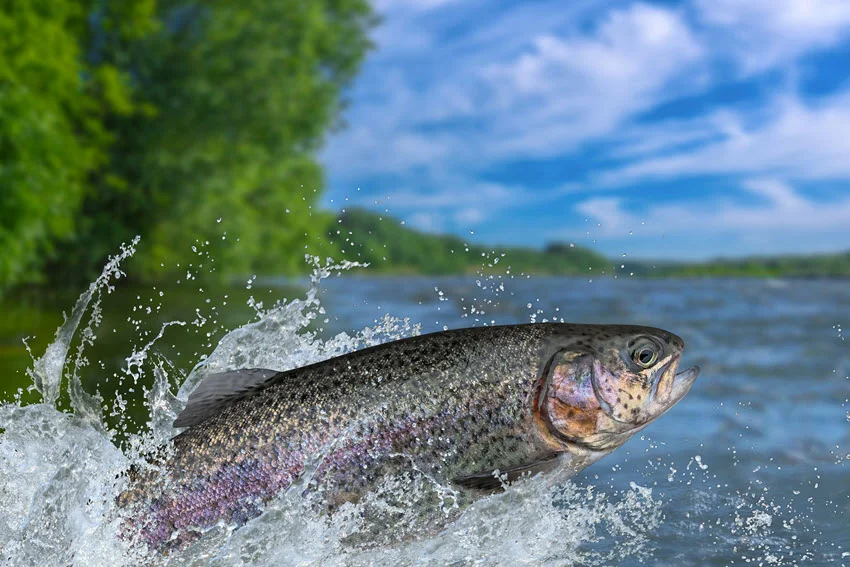
Our task is to help you distinguish Trout gardens, as this is crucial to your fishing success. Of course, you'll also get lots of fishing tips. Well, focus, concentrate, make a coffee, and let's go on a relaxing, rewarding adventure!
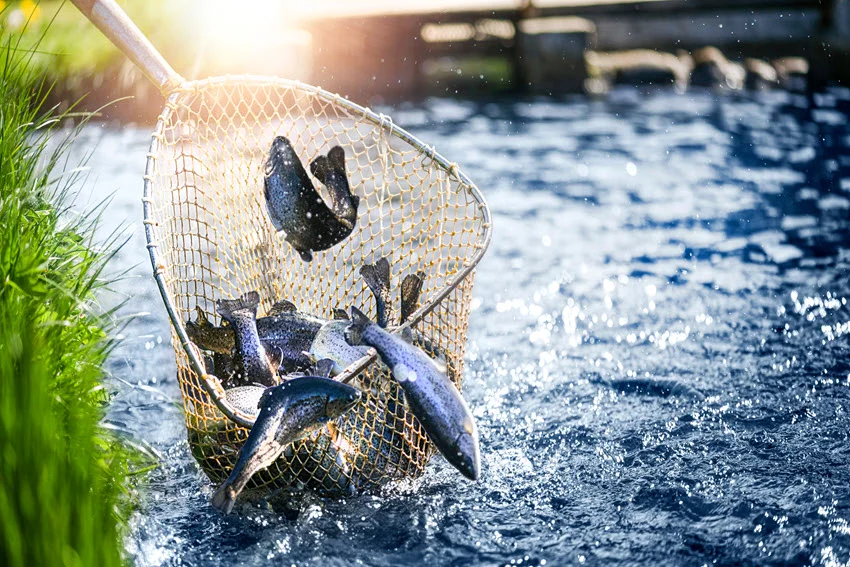
In this article, we will cover six main types: Rainbow Trout, Brown Trout, Brook Trout, Lake Trout, Cutthroat Trout, Speckled Trout, Tiger Trout, and Golden Trout. Of course, these fish share many common characteristics. On the other hand, there are differences among them. They have different habitats, looks, and places where they live.
Did you know that Trout is a very adaptable fish? It easily adapts to different conditions; however, Trout need clean, cold water to thrive. Trout feed on insects, small fish, and crustaceans. Their behavior can change with the seasons. During summer, they may seek cooler, deeper areas. In spring, they are more active in shallow waters.
Part of Trout's popularity stems from its intense fight when hooked and its high-quality meat, which is mild yet flavorful. They are also widely stocked in many regions to support recreational fishing, making them accessible to anglers of all skill levels. Beyond sport, Trout are often considered an indicator species. Healthy Trout populations usually mean the water ecosystem is in good condition.
We already mentioned that Trout species vary in color, size, and habitat. Therefore, understanding their unique traits is important for success. In this section, we'll look at each primary type of Trout. We will discuss their appearance, size, location, seasonal patterns, gear, and bait preferences.
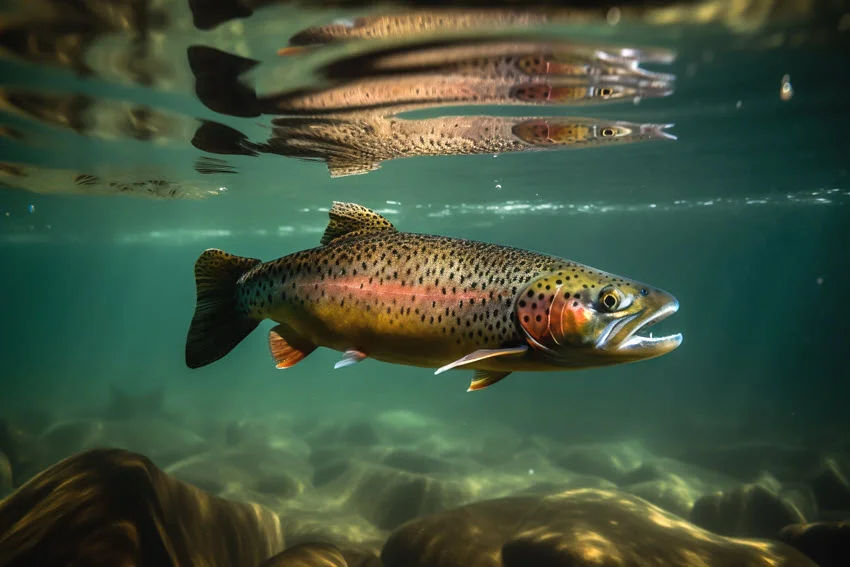
Rainbow Trout are known for their striking pink to reddish stripe running along each side of the body, from gills to tail. Their backs are usually olive-green, fading to silvery white on the belly. Small black spots cover the back, dorsal fin, and tail. The fins often have a white edge. During spawning, the pink stripe can become more vibrant.
Adult Rainbow Trout range from 18 to 24 inches in length. The average weight of this species of Trout is from 2 to 8 pounds. In ideal conditions, some of them can grow much larger (the world record is 48 pounds).
Rainbow Trout are often found in water depths between 3 and 15 feet in rivers, and 10 to 50 feet in Lakes. At what depth they are depends on the temperature. In spring and fall, they are usually in shallower areas. In summer, they move deeper to stay cool.
They live across much of North America. The most significant number of them is in the western United States, the Great Lakes region, and many stocked lakes and rivers nationwide. They have also been introduced to other continents. Rainbow Trout is one of the most widespread Trout species globally.
Peak season for Rainbow Trout fishing is usually spring and fall, when water temperatures range from 50°F to 60°F. In colder climates, early summer can also offer good fishing opportunities before the heat drives fish deeper.
The best times of day are early morning and late afternoon. During this period, Rainbow Trout tend to feed more actively in low-light conditions. Overcast days can also extend feeding activity into midday.
Light to medium spinning rods, 6 to 7 feet in length, paired with a smooth reel and 4 to 8-lb test line, work well for most Rainbow Trout situations. Fly rods in the 4 to 6-weight range are also popular. It is very effective for fishing in rivers and streams.
If fishing in larger Lakes for trophy-sized Rainbows, slightly heavier gear with stronger line (8 to 12-lb test) is recommended. It is capable of handling long runs and powerful jumps.
Bait choice may depend on depth. In shallower waters, worms, salmon eggs, and small spoons are very effective.
In deeper water, trolling with small plugs or using sinking flies can produce good results. Artificial lures that imitate minnows or aquatic insects are also productive.
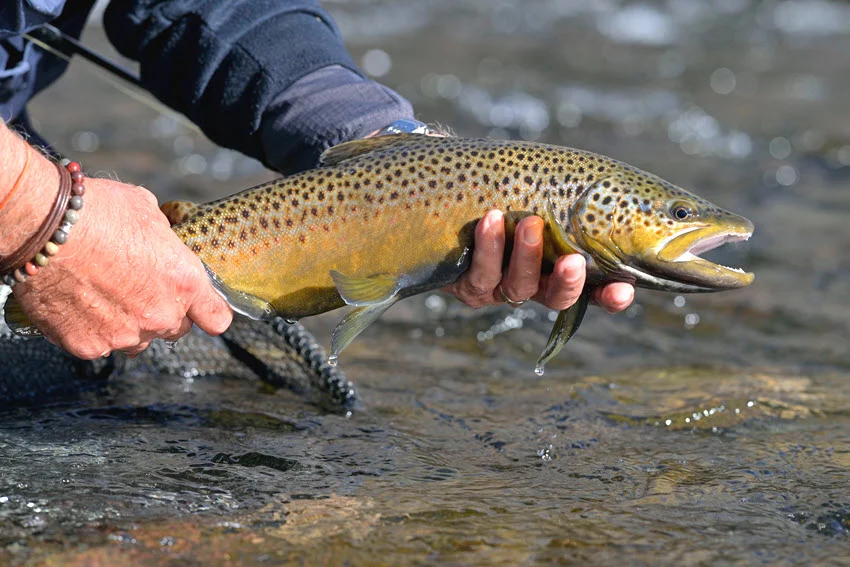
Brown Trout have a golden-brown to olive-colored body. They often have darker brown or black spots surrounded by a lighter halo. They also have some red or orange spots scattered along their sides. The belly is usually creamy or yellow. The dorsal and adipose fins often show black spots. This coloration helps them blend into their surroundings. That is the reason why they are hard to spot in the water.
Typical Brown Trout in rivers measure 12 to 20 inches and weigh between 1 and 5 pounds. In larger lakes, they can grow to 30 inches or more and exceed 10 pounds. Exceptional specimens, particularly in the Great Lakes, have been known to surpass 20 pounds.
Brown Trout are commonly found at depths of 2 to 12 feet in rivers and 10 to 40 feet in lakes. In warmer months, they tend to seek deeper, cooler areas. They are often near submerged logs, boulders, or undercut banks.
They are native to Europe but have been introduced across North America, New Zealand, South America, and parts of Asia. In the U.S., they thrive in cooler streams and rivers in the Northeast, Midwest, and mountain states. Also, they are widespread in large lakes (Lake Michigan and Lake Ontario).
The prime fishing season for Brown Trout is late spring through early fall. Peak is in September and October. During these months, Brown Trout prepare for spawning. In this period, they often become more aggressive and easier to tempt with lures.
Early morning is the best time to target Brown Trout. They are more likely to venture into shallower water to feed under low-light conditions. Night fishing can also be effective. You can try it in summer when they avoid the daylight heat.
For river fishing, a medium-light spinning rod of 6 to 7 feet paired with 6 to 10-lb test line offers a good balance of sensitivity and strength. Fly rods in the 5 to 7-weight range are also suitable.
When targeting large lake-dwelling Brown Trout, heavier spinning or trolling setups with 10 to 15-lb test line are recommended. Downriggers or lead-core lines help reach the deeper zones where big Browns hold during warm weather.
In shallow water, live bait (nightcrawlers, minnows, or grasshoppers) can be highly effective. Small spinners and spoons also work well.
In deeper water, trolling with crankbaits or large streamers that imitate small fish is productive. Brown Trout are opportunistic predators, so lures that mimic injured baitfish often trigger strikes.
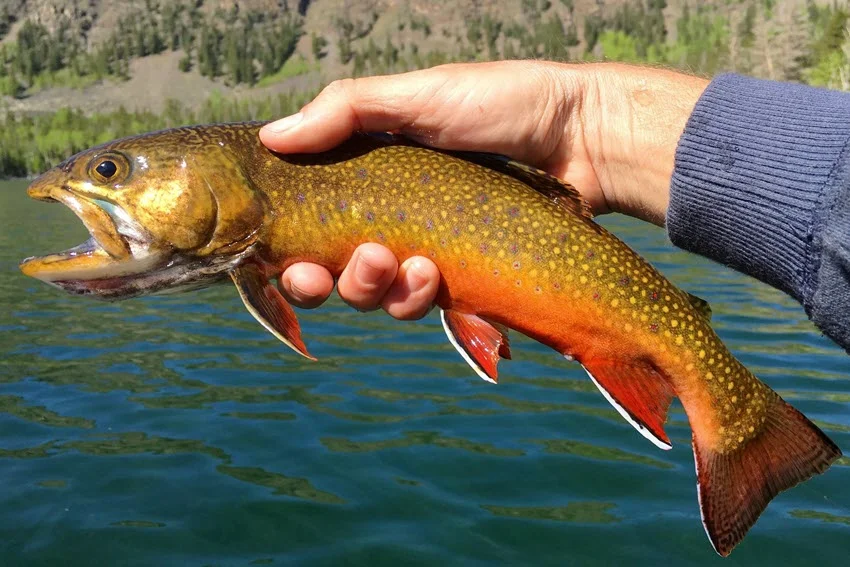
Brook Trout have a dark green to Brown body with a distinctive marbled pattern, known as vermiculation, along the back and dorsal fin. Their sides display scattered red spots, often encircled by blue halos. Their lower fins usually have a white leading edge followed by black and orange bands. The belly can turn bright orange or red during spawning.
Most Brook Trout in streams measure 6 to 15 inches and weigh 1 to 3 pounds. In larger lakes, particularly in the northern U.S. and Canada, they can reach 20 inches and weigh 4 to 6 pounds. The current world record Brook Trout weighed over 14 pounds and was caught in Canada.
Brook Trout are commonly found at depths of 1 to 6 feet in small streams and 5 to 20 feet in lakes. They prefer cold, clear water with plenty of oxygen. They can be found near submerged logs, overhanging banks, or shaded pools.
They are native to eastern North America, ranging from the Appalachian Mountains to eastern Canada. They also thrive in higher elevations in the western United States, where they have been introduced. Also, they are widespread in parts of Europe and South America.
The peak season for Brook Trout fishing is late spring and early summer. Early fall, before spawning, could also be productive for fishing. They remain active in cooler waters so that warm mid-summer temperatures can slow their feeding in shallow streams.
Brook Trout are most active during early morning (late evening also could result in successful fishing) when water temperatures are coolest. Overcast days can extend this feeding window into midday, especially in lakes.
Light spinning rods of 5 to 6 feet, paired with 2 to 6-lb test line, are ideal for stream fishing. Small fly rods in the 3 to 5 weight range work well with dry flies or nymphs (especially in clear mountain streams).
In larger Lakes, slightly longer rods and 6 to 8-lb test line provide extra casting distance and strength. Trolling with small spoons or spinners can also be effective in deeper water.
Brook Trout are often caught in depths of 1 to 6 feet in streams and 5 to 20 feet in Lakes. In shallow creeks, live bait (worms, crickets, or grasshoppers) can be very effective, as can small artificial flies.
In Lakes, spinners, spoons, and sinking minnow or aquatic insect imitations often produce good results. Brook Trout are aggressive for their size and will strike at moving baits.
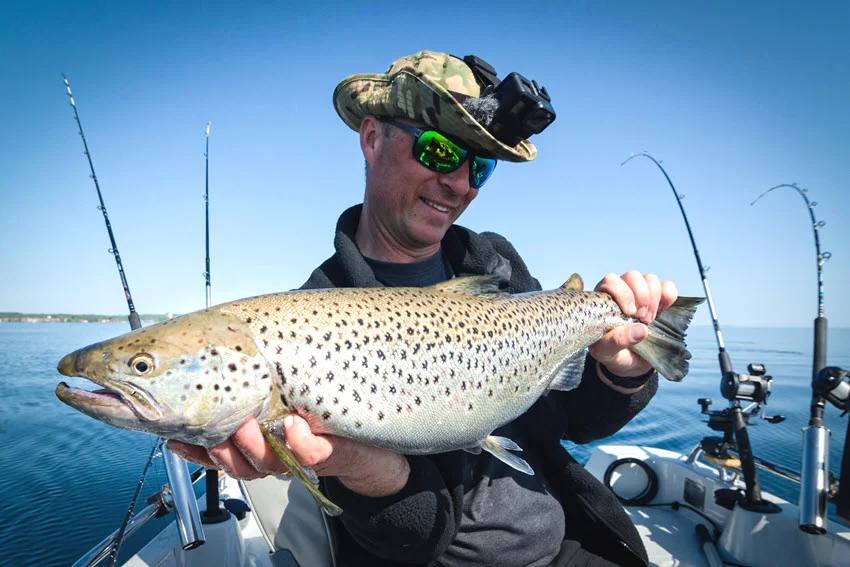
Lake Trout have a dark gray to greenish body covered with light-colored spots that extend onto the head and fins. They have a deeply forked tail. That is one of their most distinctive physical traits. The belly is usually lighter (ranging from off-white to pale gray). Its dorsal fin may show faint mottling.
Most Lake Trout measure 15 to 30 inches. The average weight of this Trout is from 4 to 15 pounds. Trophy specimens can exceed 40 inches and weigh over 50 pounds. They are one of the most prominent members of the Trout family. The world record for this Trout is amazing, 72 pounds. This Trout can live for decades in the right conditions.
Lake Trout are typically found at depths of 30 to 60 feet in summer. In spring and fall, they can often be found in shallower waters, at depths of around 10 to 30 feet. They prefer cold water, usually between 40°F and 55°F. Lake Trout will move deeper when surface temperatures rise.
They are native to North America, especially in the Great Lakes, deep northern lakes in Canada, and parts of Alaska. They also inhabit large reservoirs and have been introduced to high-altitude Lakes in the western United States.
The best season for Lake Trout is spring and fall. During this time, they are in shallower water and more accessible without specialized deep-water gear. In midsummer, fishing often requires trolling deeper.
Early morning and evening hours are generally the most productive times. In cooler months, they may remain active throughout the day. In summer, low-light periods are best for targeting them near the surface.
Medium to heavy-duty trolling rods paired with strong reels and 15 to 30-lb test line are recommended for larger Lake Trout. This type of gear is especially productive when fishing deep. Downriggers, lead-core line, or weighted lures are often necessary to reach their preferred depths in summer.
For shore fishing in spring or fall, medium-action spinning rods with 10 to 15-lb test line can work well, especially when casting spoons or swimbaits near drop-offs.
Some of the best Trout baits are large spoons, deep-diving crankbaits, and heavy jigs tipped with baitfish. Bright colors (silver, white, and chartreuse) can be particularly successful in clear water. Darker or more contrasting colors may work better in murkier conditions.
Live bait (ciscoes, smelt, or large minnows) can also produce big fish. These baits are suitable for slow-trolling along steep drop-offs or near underwater structures. Using a downrigger or lead-core line helps keep the bait at the desired depth for extended periods.
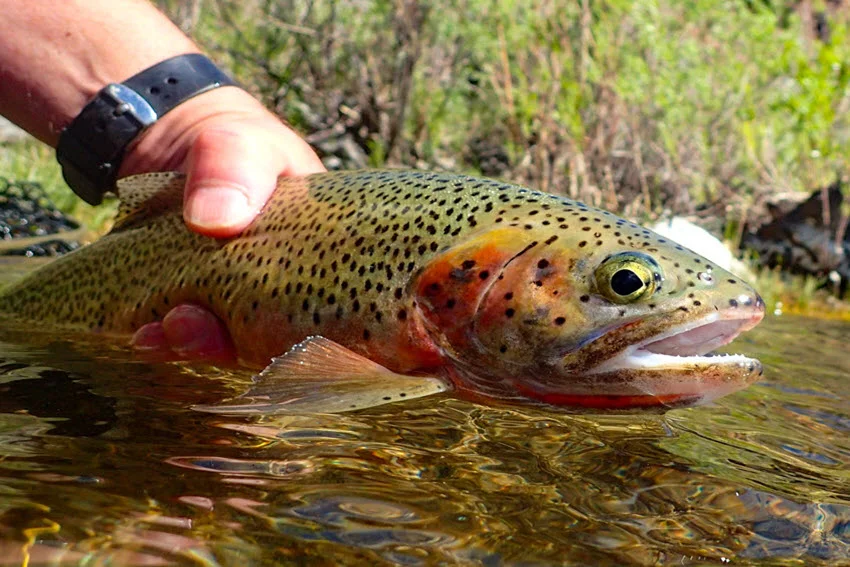
Cutthroat Trout are easily recognized. It has a green back that fades into silvery-green sides. Black spots are usually concentrated toward the back half of the body. A distinctive orange or red slash appears under the lower jaw. The belly is typically lighter in color, creating a clear contrast with the darker back. During spawning season, males often develop deeper, more vibrant colors.
Most Cutthroat Trout range from 12 to 20 inches in length and weigh between 1 and 5 pounds. In larger Lakes or coastal systems, they can grow beyond 24 inches and weigh over 7 pounds. Some subspecies in nutrient-rich waters have been recorded at over 15 pounds.
Cutthroat Trout are often found in shallow water, 2 to 10 feet deep, in rivers during spring and fall. They move deeper to 15 to 30 feet in lakes during summer. They prefer clean, cold water and are often associated with gravel-bottomed streams.
They are native to western North America, from Alaska through the Rocky Mountains and into the Pacific Northwest. They also inhabit high-mountain lakes and coastal estuaries where sea-run varieties, known as Coastal Cutthroat, are found.
Peak season for Cutthroat Trout is late spring and early fall. During these times, water temperatures are cool, and fish are actively feeding. In coastal systems, sea-run Cutthroat often return to freshwater in the fall.
The best times of day are early morning and late afternoon. On cloudy days or in shaded mountain streams, they may remain active throughout midday, especially in cooler months.
Light to medium-light spinning rods of 6 to 7 feet paired with 4 to 8-lb test line work well for stream and river fishing. Fly rods in the 4 to 6 weight range are ideal for dry flies, nymphs, and streamers.
In Lakes or estuaries, slightly heavier tackle (8 to 10-lb test) can help manage larger fish, especially when trolling or casting spoons in open water.
In shallower waters, small spinners, dry flies, and grasshopper imitations work well, especially in streams and rivers where cutthroat actively feed on insects drifting near the surface. Matching your fly or lure size to the local insect. That can significantly increase success.
In deeper lake settings, trolling with small spoons or using live bait (nightcrawlers or shrimp) can be effective for reaching fish holding farther from shore. Coastal cutthroat also respond well to baitfish imitations (small plugs or streamers).
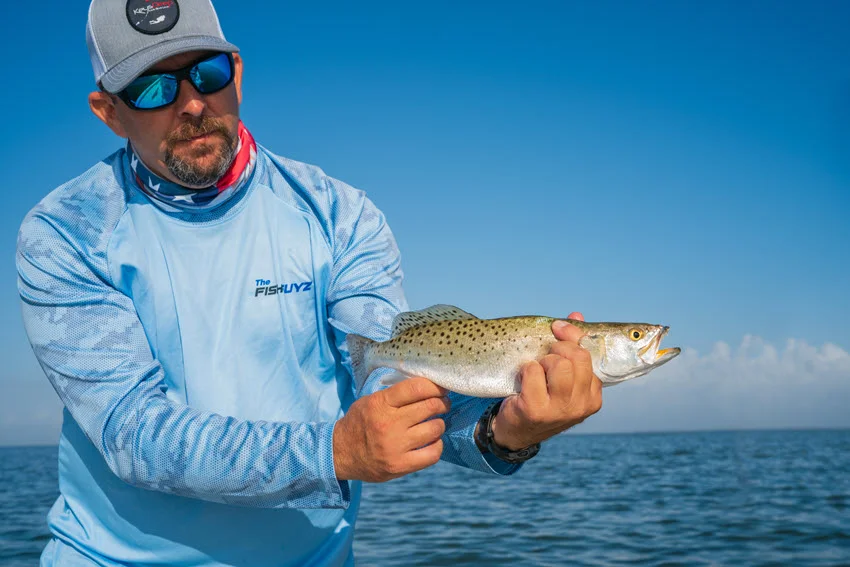
Speckled Trout have a silvery body. It has a greenish or grayish back and numerous black spots scattered along the back, dorsal fin, and tail. The body shape is elongated, with a slightly pointed head. Their mouth is big. Their lower fins are usually lighter in color, sometimes with a yellowish tint.
Adult Speckled Trout typically measure 14 to 24 inches and weigh 1 to 4 pounds, although trophy-sized fish, known as "Gator Trout," can exceed 30 inches and weigh over 8 pounds. The current record specimens have reached more than 17 pounds in ideal coastal conditions.
Speckled Trout are commonly found at depths of 3 to 10 feet in bays, estuaries, and coastal waters. They prefer grassy flats, oyster beds, and sandy bottoms where baitfish are abundant.
They inhabit the Gulf of Mexico and the Atlantic coasts of the southeastern United States, from Texas to Maryland. They are most abundant in Louisiana, Florida, and Texas. In these places, warm coastal waters provide an ideal habitat year-round.
Peak fishing season for Speckled Trout is spring through early summer, and again in fall when temperatures drop slightly. In winter, they may move into deeper channels or nearshore waters to avoid cold snaps.
The most productive times of day are dawn and dusk. During these periods, they hunt actively in shallow grass flats. On overcast days or during tidal movement, they may feed throughout the day.
Medium-light spinning rods of 7 feet, paired with 8 to 12-lb test monofilament or braided line, work well for casting lures and live bait in shallow waters.
For targeting larger Trout, a slightly heavier rod and 15 to 20-lb test braided line can help manage stronger runs and prevent breakoffs, especially around oyster beds.
Speckled Trout are often caught in depths of 3 to 10 feet. In shallow grass flats, live shrimp under popping corks and small soft-plastic jigs are highly effective.
In deeper channels or during cooler months, slow-trolling with mullet or pinfish, as well as jigging with scented soft plastics, can yield excellent results.
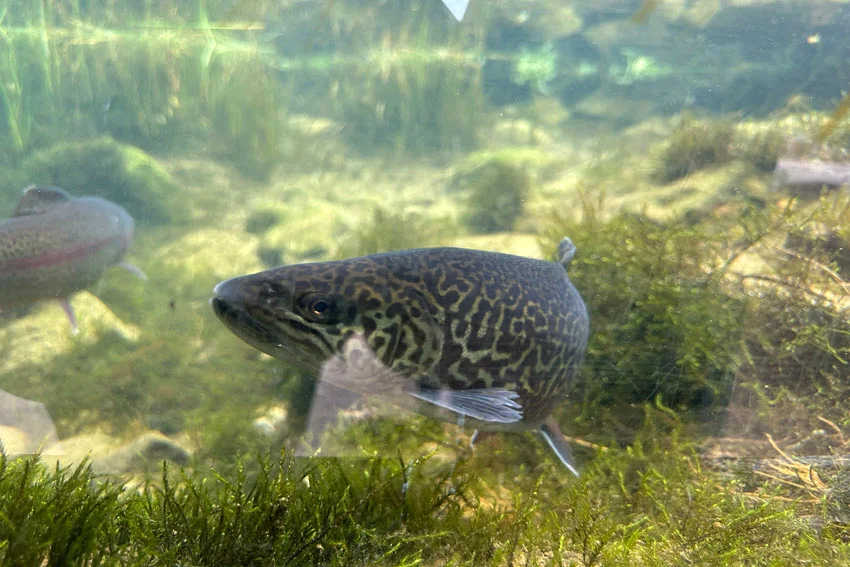
Tiger Trout is a hybrid species. It is the result of crossing a female Brown Trout with a male Brown Trout. Their body color can range from yellow-Brown to a deep orange. The entire body is covered in wavy, tiger-like markings and blotches, which give the species its name.
Most Tiger Trout range from 14 to 20 inches in length and weigh between 1 and 5 pounds. In rich Lake environments, they can exceed 24 inches and weigh 6 to 8 pounds, with rare trophy specimens weighing up to 10 pounds.
Tiger Trout are typically found at depths of 5 to 20 feet in Lakes, and 2 to 8 feet in streams during cooler months. In summer, they often move deeper, sometimes down to 30 feet, seeking colder, well-oxygenated water.
They are not naturally occurring in the wild in large numbers, as they are an artificial hybrid, but they have been stocked in many Lakes and reservoirs in the western and northeastern United States. They are especially common in Utah, Wyoming, Colorado, and Pennsylvania.
The best seasons for Tiger Trout are late spring and early fall. At this period, they feed aggressively in cooler shallow waters. In summer, fishing deeper areas with proper gear is often necessary.
The most productive times of day are early morning and late afternoon, though they may remain active longer during overcast weather or in shaded Lake coves.
Medium spinning rods of 6.5 to 7 feet with 6 to 10-lb test line are effective for most tiger Trout fishing. Fly rods in the 5 to 6-weight range are also a good choice. They are particularly effective when using streamers or nymph patterns.
For targeting larger specimens in deep Lakes, heavier tackle (10 to 12-lb test) combined with trolling setups or sinking lines can help present lures at the correct depth.
In shallow water, they respond well to spinners, spoons, and flies that imitate baitfish or aquatic insects. Using brightly colored lures or patterns with silver flashes can be especially effective in clear conditions. The reason for this is that Tiger Trout are highly visual predators.
In deeper lake zones, trolling with crankbaits or fishing with nightcrawlers and minnows can produce large fish. They are known for their aggressive strikes, which makes them fun to target with moving lures.
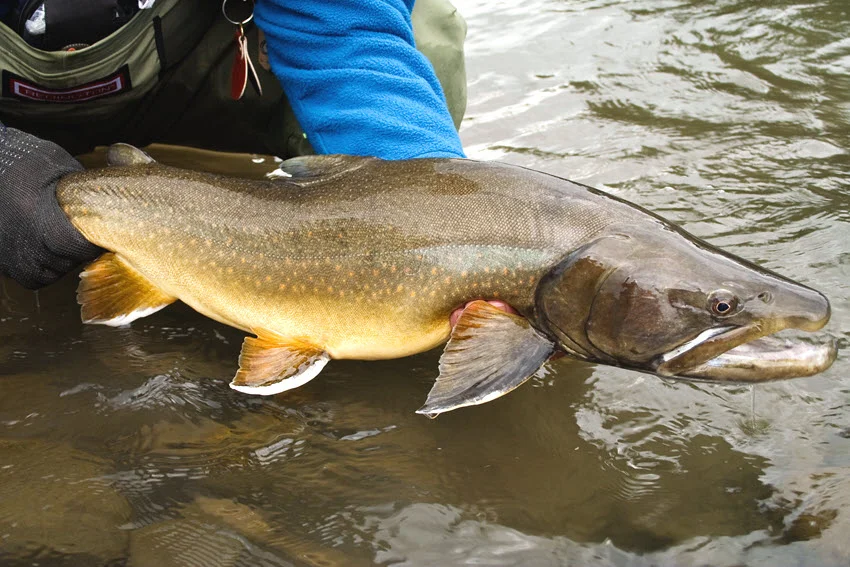
Bull Trout have a darker greenish-grey body, marked with light to orange spots along the sides. These spots lack surrounding halos, giving them a cleaner, more defined appearance. The belly is typically lighter, and during spawning, males develop vivid orange-red coloring on the abdomen and flanks. Their tails are slightly forked, and their heads are proportionally large compared to their bodies.
Adult Bull Trout measure 14 to 24 inches and weigh 2 to 6 pounds in streams. In large Lakes, they can exceed 30 inches and weigh over 12 pounds, with exceptional specimens surpassing 20 pounds.
Bull Trout are commonly found at depths of 5 to 15 feet in rivers during cooler months. In large lakes during summer, they often move into deeper water, sometimes reaching depths of up to 50 feet. They require cold, clean water, generally below 55°F. This type of Trout is susceptible to changes in habitat.
They are native to the northwestern United States and western Canada, with substantial populations in Montana, Idaho, Washington, Oregon, and British Columbia. Bull Trout inhabit mountain streams and deep glacial Lakes.
The best fishing season for Bull Trout is late spring through early fall. The prime activity occurs in June and September. At this period, water temperatures are cool and fish are feeding heavily.
Early morning and late afternoon are the most productive times, especially in rivers. In Lakes, midday fishing can still be good if targeting deeper, cooler zones.
Medium to medium-heavy spinning rods of 7 to 8 feet (paired with 10 to 15-lb test line) work well for larger Bull Trout in Lakes. Fly rods in the 7 to 8-weight range are recommended for large streamers.
When fishing rivers, using slightly lighter tackle with 8 to 10-pound test line can improve sensitivity. This setup still gives you enough strength to handle their powerful runs.
Large streamers, spoons, and crankbaits are highly effective, as Bull Trout are aggressive predators. Using lures with natural colors can be very effective. Practicing a steady, erratic retrieve often triggers strikes.
Fishing with live bait (minnows) can also be productive, especially when drift-fished through deep pools or trolled slowly in lakes. Adding a bit of movement to the bait can make it more enticing to Bull Trout holding near the bottom.
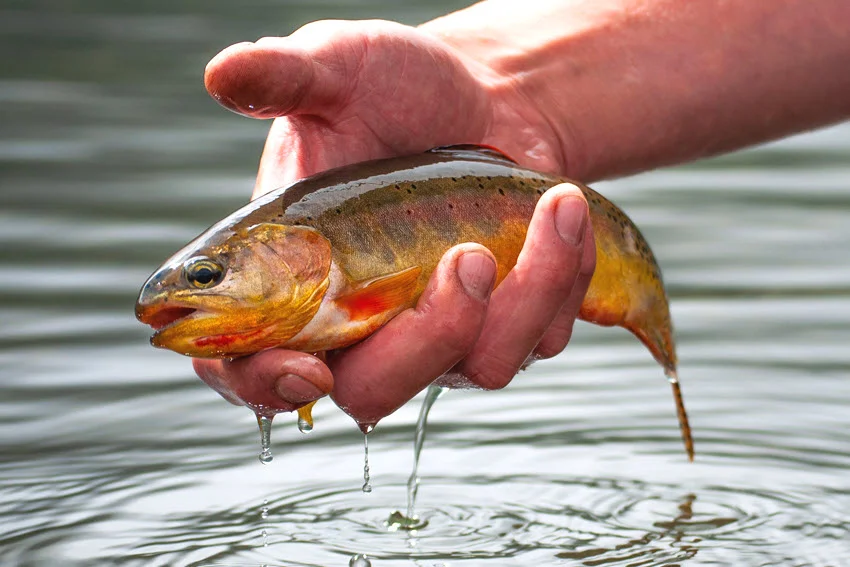
Golden Trout is one of the most colorful Trout species. It has a brilliant golden-yellow body. Also, it has a red horizontal stripe running along each side. They often have dark spots concentrated toward the tail and upper back. Dorsal and tail fins are sometimes edged in white. Males in spawning season develop even brighter red-orange coloring along their flanks.
Most golden Trout are 6 to 12 inches long and weigh less than 1 pound in their native high-mountain streams. In nutrient-rich Lakes, they can reach 16 inches and weigh up to 2 pounds. Rarely, stocked populations in larger waters have produced specimens exceeding 4 pounds.
Golden Trout are usually found at depths of 1 to 6 feet in small alpine streams and lakes. They prefer very cold, clear water with gravel or rocky bottoms.
They are native to California's Sierra Nevada mountains. This Trout is widespread in the Kern River drainage, but has been introduced to other high-elevation waters in the western United States.
The peak fishing season for Golden Trout is late spring through early fall, as many of their native waters are inaccessible in winter due to snow. Mid-summer offers the best conditions in alpine lakes when the ice has melted.
They are most active in the morning. Also, evening fishing can be very productive. During sunny days, they may feed sporadically throughout midday in shaded areas or deeper pools.
Light spinning rods of 5 to 6 feet with 2 to 4-lb test line are ideal for small mountain streams. Fly rods in the 2 to 4-weight range are popular for presenting delicate dry flies and small nymphs.
When fishing in alpine Lakes, slightly longer rods help with casting distance, and a floating or intermediate fly line can cover different depths effectively.
Golden Trout are often caught in depths of 1 to 6 feet. In shallow streams, small dry flies, nymphs, and grasshopper imitations are highly effective.
In Lakes, spinners, small spoons, and wet flies fished just below the surface can trigger strikes, especially in the early morning when Trout are cruising near the shore.
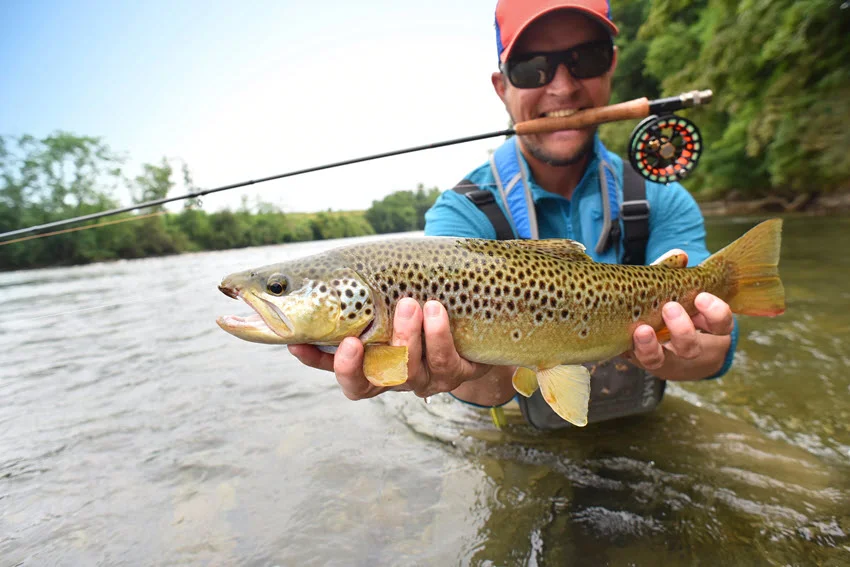
When fishing for Trout, always pay attention to the water temperature and clarity. Trout prefer cold, clear water. Early spring and fall are often the best times to fish. Look for shaded spots near logs, rocks, or underwater structures where Trout like to hide. Calm water near riffles or pools is also a good place to start.
Choosing the right bait or lure is important. Live bait (worms or insects) works well, especially for beginners. If you prefer artificial lures, small spinners, spoons, or flies can attract Trout by imitating their natural food. Try to match the bait's size and color to what Trout usually eat in that area.
Use light fishing gear to feel bites more easily and avoid scaring the fish. A light rod with a sensitive tip and light line helps you detect even small bites. When fly fishing, practice casting smoothly and accurately to place your fly gently on the water.
Be patient and oversee the water. Trout can be shy and quick to move away if they sense danger. Move slowly along the bank, avoid sudden movements, and try different spots if you don't get bites. Fishing early in the morning gives the best results. Also, late in the afternoon is a significant period for Trout fishing. Trout are more active during these cooler parts of the day.
Understanding fishing regulations and preserving specific fish species contributes to protecting fish populations and ecosystems and promoting responsible angling practices.
Anglers Booking Team
You will enjoy fishing. However, you wouldn't want something to spoil your nice day on the water. To prevent this, you must be careful and take precautions. In addition, you must respect the law and regulations. See the section below.
Before you head out to fish, consider key safety facts. Below are tips to enjoy your time on the water without problems. Don't miss the part below.
If you follow these tips, you can fish safely and focus on having a great experience outdoors. Each of them is important, so do not skip any of them.
Understanding and following fishing regulations is important to protect Trout. The primary organization responsible for conserving this species is Trout Unlimited. Below, we discuss the most critical regulatory issue you should know.
Following these regulations ensures a fair and great fishing experience for everyone. By respecting both safety practices and fishing rules, anglers can enjoy Trout fishing responsibly and sustainably.
Trout fishing is a great activity. By learning to identify different types of Trout and understanding their habits, you are on the right track to successful fishing while always respecting regulations.
What's your favorite type of Trout to fish? What bait shows as the most susceptible? We are happy to see your answers.

The expert copywriters at Anglers Booking have meticulously crafted this article. Our dedicated team of writers provides valuable insights and information to enhance your angling experience.
October 17, 2025

April 2, 2025
Subscribe to our newsletter and receive a selection of cool articles every week.
Embark on unforgettable fishing adventures with us at Anglers Booking.
book your charter
October 2, 2026
September 8, 2026
August 21, 2026
August 18, 2026
August 15, 2026
August 12, 2026
August 8, 2026
August 4, 2026

You're now part of our exclusive community. Get ready for premium content and updates straight to your inbox.
close
Subscribe to our newsletter and receive a selection of cool articles every week.
Please enter a valid email address.
Be the first to know when we're back in action.
Please enter a valid email address.
Leave a Comment
Your email address will not be published. Required fields are marked *
Thank you for your comment! It has been submitted for review and will appear on the site shortly.