


Anglers Booking Team
The expert copywriters at Anglers Booking have meticulously crafted this article. Our dedicated team of writers provides valuable insights and information to enhance your angling experience.
 12 minutes read
The species of Trout that delights anglers all over the world, with striking colors, acrobatic fights, and widespread availability, is the one and only Rainbow Trout. The beautiful fish, famous for their shimmering bodies decorated with a pink lateral stripe, inhabit clear waters and are equally at home in lakes, rivers, and streams.
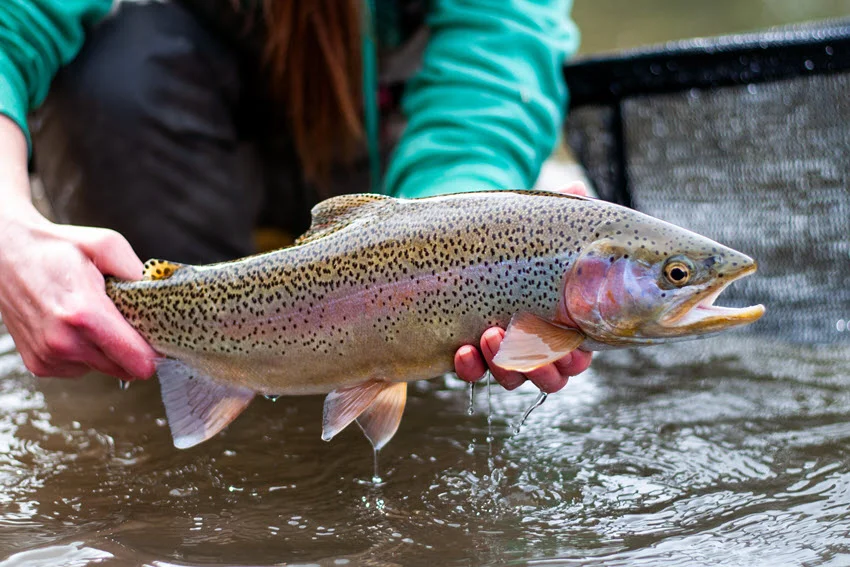
Although a symbol of healthy waters, the Rainbow Trout is a big gourmand that enjoys almost every available food, insects, small fish, and crustaceans, making them a prime target for fly and spin anglers. There is no shortage of options for luring these beauties, and since we know that many of you love this fish, we will break down the best techniques, baits, and strategies for landing Rainbow Trout below. So stay tuned!

Most fish from the Trout family prefer clean, colder waters and are most sensitive to habitats that are rich in oxygen. They have sharp senses of sight and smell, making them skilled hunters, especially in clear water where they can easily spot prey. However, don't mistake them for an easy catch! Rainbow Trout are brilliant and cautious, with behavior that will test your skills, patience, and bait.
Their incredible ability to adapt to different environments and their sensitivity and wisdom in recognizing unnatural presentations mean that precision and timing are key. Their intriguing nature inspires anglers to present the bait better, whether live or artificial.
Rainbow Trout is emblematic of bubbling mountain streams and expansive lakes, and its adaptable nature and sharp instincts make it exciting to target. Whether racing through swift rivers or lurking in the depths of lakes, Rainbow Trout is a master at finding the perfect balance of oxygen, food, and cover.
It's important to know that their keen vision and sensitivity to movement mean they won't fall for any bait, so it's crucial to get into their heads and the residents. So, let's see where these fish are most often found.

If you fish in rivers and streams, focus on areas with stronger currents, with many submerged rocks, fallen logs, or overgrown vegetation. Such places offer both protection and plenty of prey. Rainbow Trout tend to hunt insects here, so fly fishing with nymphs or casting small spinners upstream can produce excellent results. Make your hunting time early morning or late evening when insect activity peaks.
Use lighter tackle to ensure a better and more live bait presentation. Since they are very complex creatures, you can explore deeper pools or eddies where the currents slow down, especially for larger specimens. These fish use these pools or eddies for resting or feeding. Always make sure to stay as quiet as possible.

In the lake's calm waters, Rainbow Trout often stay close to shore during the cooler months, feeding on insects and small fish. As soon as the water temperature rises, they retreat to deeper, cooler waters.
Therefore, the lake waters are excellent for trolling with spoons or using bait such as nightcrawlers or power bait near the drop. Water temperature is a key factor for lake hunting for these fish because it makes them more active. It is best when the water temperature is between 50-60°F.

Rainbow Trout can be more aggressive and less cautious in purpose-stocked ponds, making them ideal for beginners. Most fish will respond to classic baits, including worms, and small artificials. Cast near edges or areas where water flow creates natural movement as they tend to congregate there.
Always focus on Rainbow Trout's favorite ambush spots near submerged structures. Also, vary your speed, casting technique, and different types of bait and presentation, which will help you hone your skills for other, more challenging waters.

You can easily catch Rainbow Trout and predict its behavior more than anywhere else in the reservoir areas. Focus on the transition zones, inlets, outlets, and submerged points, as these are their primary feeding grounds.
If you target them in the winter, they will be near the surface or along the banks, which is an ideal time to cast spoons, lines, or flies. They are in deeper, cooler waters in the spring and summer, so using a drop or trolling with diving baits can be a good choice. Early mornings and late evenings are still the most productive times.

Transitional areas are complex hotspots where shallow water meets deeper water, and inlets or outlets are primarily full of structure and rock. Rainbow Trout are common here to hunt insects, small fish, and crustaceans.
Focus on seams where fast and slow currents meet, as Trout use these areas to conserve energy. Adjust bright-colored lures or lures depending on water clarity, and fish early in the morning or late at night.
The best time to catch Rainbow Trout depends mainly on the season and time of day, as their activity changes with water temperature and food availability. Spring and fall are the prime seasons for Rainbow Trout because their metabolism is more active, making them aggressively feed near the surface.
Depending on where you are, this species can be caught year-round. Even winter fishing can still produce results, especially during the hottest parts of the day. Always pay attention to the local weather, insect hatching, and water clarity, as all these affect the activity of this fish.

No fish behaves the same all the time, including Rainbow Trout. This also means that you have to adapt your entire fishing approach, including baits, to their seasonality changes.
Rainbow Trout go on an invasive foraging spree in the spring to replenish their energy. This is when insects such as mayflies and caddisflies emerge, making fly fishing particularly effective. Lures such as nymphs or dry flies that mimic these insects work best this season and keep the focus on shallow water, especially during the warmer afternoons.
As distinct lovers of cooler waters, these fish go deeper during the summer heat. Early mornings and late evenings become prime fishing times, and deep trolling techniques with spinners or using live bait such as minnows work best. If fishing in rivers, cast in shaded areas with faster currents and higher oxygen levels.
Fall is a favorite season for those who prefer this type of Trout. Then, the lower temperatures bring them closer to the surface, and their nutrition increases in preparation for winter. You can use many lures, such as streamers, spinners, and live baits, such as worms, which work well during this time. Also, many Trout spawn in the fall, which is a good time to fish near gravel beds.
Even during the winter, Rainbow Trout do not rest; although calmer, they can still be caught with patience. Slow-moving baits, such as worms or small spoons, are good options. Focus on deeper river basins or lower reaches of lakes where the water temperature remains stable.
Rainbow Trout are opportunistic feeders. Their diet primarily includes insects, worms, and small aquatic creatures. From juicy nightcrawlers to vibrant gills and delicate salmon eggs, it's key to understand the Trout's environment and match your bait to what they naturally feed on. Let's take a close look.

These insects are often used to catch Rainbow Trout, as they are part of their menu, and their natural scent and meandering movement make them irresistible to Rainbow Trout. Nightcrawlers are best used for fishing in lakes, streams, and rivers, as nightcrawlers are versatile and can be set in various ways, on a split-strike hook or under a float.
This bait performs exceptionally well in faster water, where its realistic action draws. To further increase success, use smaller pieces of nightcrawlers for clearer water and full worms in murky conditions. Nightcrawlers are suitable for deeper and shallower water and are always good to have in your tackle box.

Another favorite on the Rainbow Trout menu is Salmon Roe. Its vibrant color, natural scent, and soft texture are perfect for Rainbow Trout, especially during spawning when they search for eggs. Salmon roe works best in slower-moving waters, such as deep pools or lake shores, where Trout have time to spot it.
To present them well, rig the salmon eggs on a small hook or bait holder. This will ensure they stay in place as they present naturally. Floating them off the bottom or hanging them under a bobber is not a bad idea to increase visibility. The advantage is that they are very effective.

You can rarely go wrong with minnows; they are rightly considered the ultimate bait for Rainbow Trout. They can be used live or dead and mimic the movement and appearance of small fish, which are a significant part of the Trout's diet. Minnows are used mainly in lakes and reservoirs, where Trout actively hunt for larger meals.
They can be used with a simple hook and sinker rig to naturally float the grubs in the current or hang them under a float in still waters. To increase your chances, choose fish that are appropriate for the size of the forage fish in the area.

While they may not be the first bait that comes to mind, take our word for it: crickets are incredibly effective, especially in streams and rivers. The good thing about crickets is that they are relatively easy to find and use, either by pulling them in with the current or dangling them just above the bottom with a light rig.
It is important that they live for the most realistic presentation, and they work best in the warmer months when insects are the primary food source for Trout. Light and easy to carry, crickets are a natural and economical bait option.

Mealworms are among the best live bait choices, especially when other baits can lose effectiveness in colder conditions. These miniature critters are full of protein and mimic aquatic insects and larvae well. You can use them with a light tackle, rigged with small hooks, and set near the bottom or under a bobber.
The subtle movement and natural scent work wonders in clear, calm waters, where Trout can carefully inspect their prey. Best of all, mealworms are easy to handle and store. Their reliability and effectiveness make them a must-have bait for Trout fishing.
Artificial lures often provide benefits that natural lures do not have or even enhance some of the characteristics of natural lures. From colorful spinners that create flashes and vibrations to realistic soft plastics that mimic insects, they can entice even the most wary Trout.

Spinners are among the most common lures for catching Rainbow Trout due to their striking flashes and vibrations. The spinning blade reflects light and mimics the movement of the small baitfish. Spinners are versatile and work well in fast-moving rivers and calm lakes.
The best ones for Rainbow Trout are about 1/8 to 1/16 ounces in size and colors, such as silver, gold, or rainbow patterns for maximum attraction. Cast them upstream in rivers and retrieve them evenly, allowing the current to enhance their natural action.

Soft plastics are fantastic at imitating insects, worms, and small fish. They are also very flexible and can be used in clear, slow-moving waters. Popular styles include imitation soft worms, grubs, and nymphs in natural colors such as brown, olive, or clear.
Anglers typically cast soft plastics with a loaded jig head or drop shot for a precise presentation near the bottom or mid-water. They retrieve them slowly and steadily with a slight twitch of the bait to mimic the behavior of their prey. Soft plastics are a versatile, durable, and reusable option.

This artificial bait is primarily used to target larger, more aggressive Trout. It consists of hard baits that mimic injured fish by creating a movement that attracts them.
They are particularly effective in lakes and deep pools. For optimal results, choose smaller crankbaits in natural colors, such as silver, gold, or brown Trout patterns. Present them with a steady or stop-and-go motion to mimic prey's escape, especially in large bodies of water.

A classic artificial lure is known for its versatility and effectiveness. Its curved metal design creates a fluttering action, attracting Trout from a distance. To best imitate the natural movement, use smaller spoons, about 1/16 to 1/8 ounce, in colors such as silver and or gold, and retrieve them at a steady or variable speed.
If fishing in still water, let the spoon sink briefly before retrieving it. Spoons are simple but incredibly effective, and they are a timeless addition to any Trout angler's arsenal.

This type adds an exciting element to fishing by creating surface disturbances that mimic insects or small fish struggling in the water. It is best used in low-light conditions, such as early mornings or evenings, and in calm waters where Trout are more likely to strike.
They can be found as small baits or floating lures in natural colors. To use them effectively, cast them close to Trout feeding areas and retrieve them with short, jerky movements. Such explosive strikes often provoke Rainbow Trout, making them an exciting and profitable choice.
With their keen senses, cautious behavior, and bursts of agility, Rainbow Trout can challenge and test even experienced anglers. This means your gear and approach to technique must be kept sharp and adapted to their environment.

Rainbow Trout requires finely tuned gear that balances sensitivity but leaves room for control. Here's a list of gear we think does the job:
Without wisely chosen gear and strategy, catching Rainbow Trout can be difficult, but with these tips, you'll be ready to face their clever tactics!

As a highly cautious species that does not bite so easily, you must also pay attention to the colors and styling of baits and lures. So, if you are fishing in very clear waters, focus on subtle, natural colors like silver or gold, while for murkier waters, choose pink, even flashy colors that can attract their attention.
It can be spinners, spoons, and baits, and it is important to match the size of the baits with the conditions. Thus, smaller lures work well in streams and larger ones in lakes and reservoirs. You may need to experiment with different retrieves, as Rainbow Trout can be finicky and wary.
Rainbow Trout is one of the most sought-after fishing species. Thanks to its different habitats, it can be caught using various techniques, including adapting the bait. Let's see what methods are best for Rainbow Trout.

Fly fishing is a technique most often associated with fishing for Rainbow Trout. As its name suggests, it involves using light artificial flies that imitate the Trout's natural prey, such as insects and grubs. The movement must be precise because the fly requires finesse, and the goal is to gently lower it to the water's surface to avoid spooking.
This technique works best in rivers and streams where the Trout feeds on the surface. Which type of artificial fly you choose, whether wet, dry, or nymph, is critical and should suit the local cast. Fly fishermen are usually most productive in the early morning or evening. It is a widespread technique, especially among those who love nature.

As a technique that can be adapted to various habitats, it is one of the favorites for Rainbow Trout. Using strong yet lightweight rods and reels, anglers cast various lures, such as spinners, spoons, or crankbaits, to mimic the Trout's natural prey. It works best on rivers and lakes, with the retrieve speed adjusted to the conditions.
For rivers, casting upstream and pulling with the current creates a natural presentation, while in lakes, varying the retrieve speed attracts Trout. In addition to light tackle, subtle lures are key to targeting Trout, especially in clear waters. A simple and easily adaptable technique, spin fishing is chosen by beginners and experienced alike.

Trolling is the best method for fishing for Rainbow Trout in large lakes or reservoirs. It involves dragging lures behind a moving boat, such as spoons, crankbaits, or dodgers. You adjust the trolling speed and depth to match the Trout's activity, creating the best possible presentation.
If you're going deeper, using a line or lead-core line helps you reach areas where Rainbow Trout often hide, especially during the warmer months. Trolling quickly locates active fish, making it ideal for large bodies of water. It's also the best technique for targeting larger Trout, as they're more likely to chase moving bait. Trolling is a relatively simple technique that combines strategy and research.

A classic and relatively simple technique, float fishing is ideal for beginners and experienced anglers. Using a float to suspend the bait at the desired depth, such as live worms or artificial lures. Cast your rig into likely Trout areas, such as eddies, pools, or near submerged structures, and watch for any float movement that indicates a bite.
This technique allows precise bait placement in rivers and lakes of different depths, making it appealing for Trout fishing. The method's visual and interactive aspect adds excitement as you wait for the telltale bobber dip to signal a hooked Trout.

Drift fishing is for lakes and rivers where water currents allow the free flow of bait. Drifting involves letting a boat or kayak drift along with its rhythm and presenting bait, such as live worms or soft plastics, in a natural float along the water current.
A light rig with a low draft is sufficient because it allows the bait to move freely in the current, imitating natural prey. The technique requires precision, as the bait must stay close to the bottom, where the Trout often feeds. Adjusting the weight and length of the leader ensures that the bait floats naturally without getting stuck.

Rainbow Trout fishing is an enjoyable outdoor activity, but you should never camp out for safety. Whether wading rivers, casting from the lakeshore, or boating, remember that safety is the foundation of good fishing.
Always have a plan and stick to it. If you're going further into deeper waters, equip yourself with a GPS, locator, life safety kit, and vest.

Understanding fishing regulations and ethical practices about specific fish species protects fish populations and ecosystems and promotes responsible angling practices.
Anglers Booking Team
Because of its importance and because it is a symbol of healthy waters, fishing for Rainbow Trout is as much about enjoying the experience as it is about respecting nature and preserving resources. In most regions, occasional actions to protect habitats, spawning grounds, and abundance of these fish are in force.
Compliance with fishing laws and regulations is critical to maintaining healthy populations, so always check local laws about fishing seasons, size limits, and daily catch quotas before you set out.
The leading organization that takes care of this species is Trout Unlimited; they observe all Trout species and their abundance and habitat. Practice catch-and-release whenever possible, especially for a wild Trout or during spawning, and use barbless hooks to minimize injury. Handle the fish with wet hands to protect its delicate mucous coating.
Choosing the best bait for Rainbow Trout is not only a matter of luck but also understanding the fish's habitat, behavior, and feeding habits. Every lure has its time and place, from the lures of natural worms and hunters to the enticing colors of artificial lures.
Success lies in expertly combining the right bait with the proper technique and adapting to the conditions, ultimately making Trout fishing an art. We are sure that there are many fans of this fish among you, and we would love to hear from you about your favorite baits and tricks that have worked for you!
Drop your fishing tips or stories in the comments below! We are always here to share experiences and advice with you! Happy Fishing!

The expert copywriters at Anglers Booking have meticulously crafted this article. Our dedicated team of writers provides valuable insights and information to enhance your angling experience.

April 2, 2025

August 4, 2025
Subscribe to our newsletter and receive a selection of cool articles every week.
Embark on unforgettable fishing adventures with us at Anglers Booking.
book your charter
October 2, 2026
September 8, 2026
August 21, 2026
August 18, 2026
August 15, 2026
August 12, 2026
August 8, 2026
August 4, 2026

You're now part of our exclusive community. Get ready for premium content and updates straight to your inbox.
close
Subscribe to our newsletter and receive a selection of cool articles every week.
Please enter a valid email address.
Be the first to know when we're back in action.
Please enter a valid email address.
Leave a Comment
Your email address will not be published. Required fields are marked *
Thank you for your comment! It has been submitted for review and will appear on the site shortly.