


Anglers Booking Team
The expert copywriters at Anglers Booking have meticulously crafted this article. Our dedicated team of writers provides valuable insights and information to enhance your angling experience.
 12 minutes read
Snapper is one of the most popular fish for anglers. They are prized not only for their delicious taste but also for the exciting challenge they offer anglers. There are many types of Snapper, and each of them has its own look and habitat.
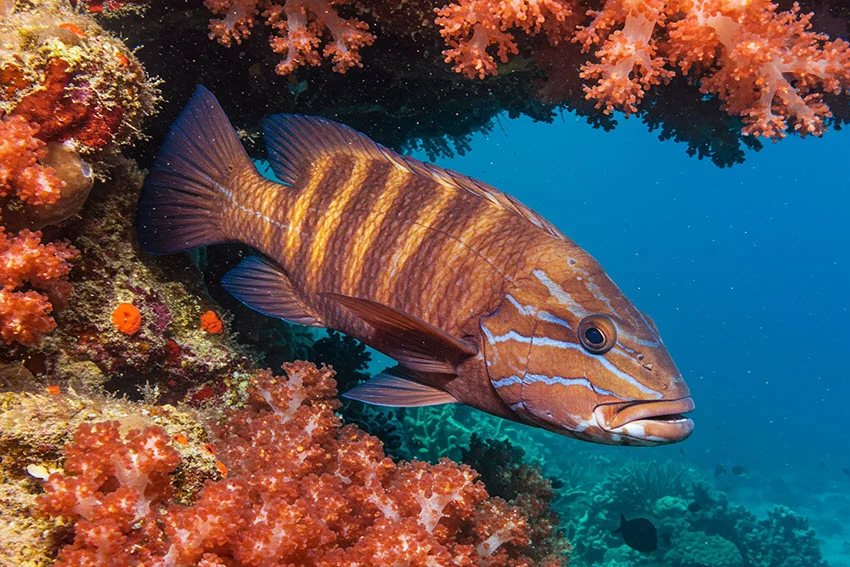
To catch them successfully, it helps to know how to identify them. Additionally, knowing which fishing methods work best in your environment will lead to more successful fishing.
Today, we'll explore the most common types of Snapper, but that's not all, of course. We share proven tips on catching them and much more.
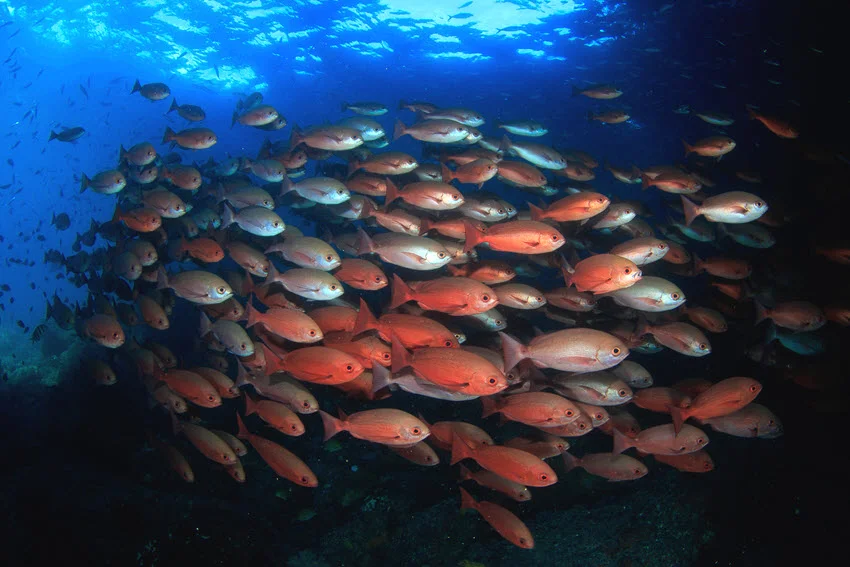
Snappers are saltwater fish found in warm, tropical seas. Some of the most popular species include the Red Snapper, Mangrove Snapper, Yellowtail Snapper, Vermilion Snapper, Mutton Snapper, and Queen Snapper. Most Snappers have a firm and streamlined body. A large mouth with sharp teeth and slightly oversized eyes are their common physical characteristics.
These fish are known not only for their looks but also for their behavior. Snappers often stay near reefs, rocky bottoms, or wrecks. In such places, they can catch crabs, smaller fish, and shrimp to eat. They are strong swimmers and can put up a powerful fight when hooked.
While each species has its unique traits, they all share a few things in common: delicious, firm meat, adaptability to different habitats, and a tendency to be a thrill to catch. Understanding their habits will give you the best chance for success.
We're starting with an overview of the most popular Snapper types. You'll learn how they differ and what makes each one a favorite among anglers. Stay tuned!
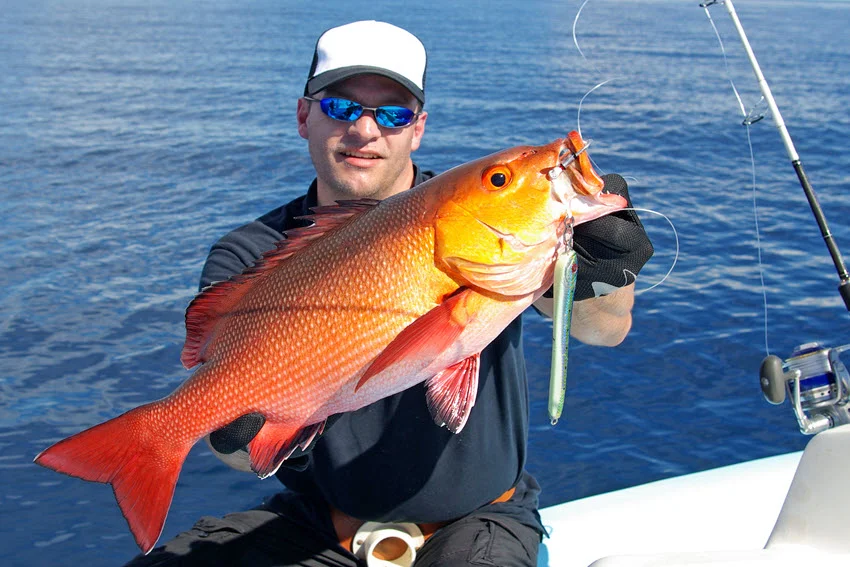
The Red Snapper is one of the most recognized fish in saltwater fishing. It has a deep, laterally compressed body. Its color ranges from vivid red to pink, covering both its scales and fins. The eyes are a striking reddish color, and the mouth is large with sharp teeth. Its dorsal fin is continuous, with the front spines slightly longer than the rear spines.
Adult Red Snappers measure between 20 and 40 inches. They can weigh up to 50 pounds. Juveniles tend to be lighter in color. Mature fish develop a deeper, richer red. Their firm, streamlined shape allows them to swim quickly.
Red Snapper can be found on the southeastern coast of the United States. The Gulf of Mexico and the Caribbean Sea are also their habitat. They prefer waters over 50 feet deep. These fish are often located near structures such as reefs, oil rigs, and rocky outcrops. These habitats offer them shelter from predators.
Juvenile Red Snappers stay in shallower waters closer to shore. As they grow, they move into deeper waters, where they join larger schools around reefs and ledges. Locating them usually requires a fish finder and knowledge of the area's underwater structures.
The peak season for Red Snapper fishing is in the warmer months. Late spring to early fall is considered the best time of year to catch this type of Snapper. Summer offers the highest activity levels. During this period, fish feed more aggressively in preparation for spawning.
Early morning is the best time of day for fishing for Red Snapper. However, you can try the late afternoons, as these periods coincide with lower light levels, making them more comfortable for leaving their hiding spots to hunt. Tidal movement can also influence activity. Stronger currents often trigger more bites.
A medium- to heavy-spinning or conventional rod with a strong backbone is ideal for targeting Red Snapper. Pair it with a high-capacity reel capable of holding heavy line, as these fish are powerful fighters that may try to dive into structures. A braided line of 30 to 50-lb test is commonly used for its strength and sensitivity.
A sturdy leader is essential since Red Snapper have sharp teeth that can cut through weaker lines. Many anglers prefer fluorocarbon leaders for their abrasion resistance and invisibility underwater. A selection of circle hooks in various sizes works well for live-bait and cut-bait presentations.
Live bait (pinfish, cigar minnows, and small blue runners) is highly effective for Red Snapper. Their natural movement attracts attention and triggers predatory instincts. Squid and cut bait are also popular. They could be very productive when fishing in deeper waters.
Artificial lures (jigs and soft plastics) can be used to target active fish. They are used when dropped near reefs or ledges. Bright colors (pink, white, and chartreuse) often work best in deeper water, where light levels are lower. Matching the bait size to the average fish in the area can significantly improve your catch rate.
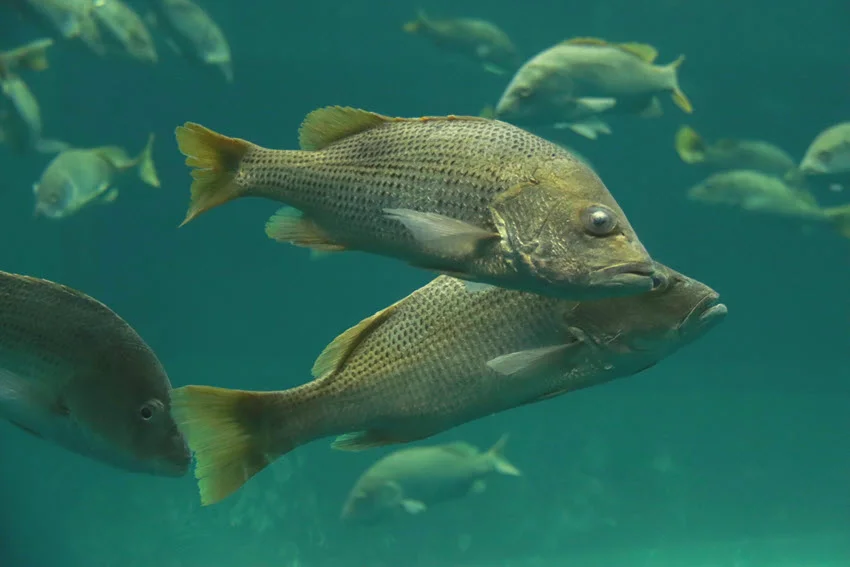
Mangrove Snapper, also known as the Gray Snapper, has a slimmer body compared to some of its relatives. Its coloration ranges from gray to dark brown, often with a bronze or reddish tint, and small, irregular pale spots are scattered across the sides. The eyes are typically reddish-orange, and the fish has a sharp, slightly curved dorsal fin. Juvenile fish may show faint vertical bars along their sides that fade as they mature.
These types of Snapper grow between 10 and 20 inches and weigh 1 to 10 pounds, though larger specimens up to 20 inches are possible in offshore waters. They have a strong jaw with fine teeth, making them effective predators of small fish and crustaceans. Their sleek build gives them quick bursts of speed for ambushing prey.
Mangrove Snappers are versatile and can be found in inshore and offshore environments. Inshore, they inhabit mangrove shorelines, bridges, piers, and docks, using structure for cover. Offshore, they gather around reefs, wrecks, and rock piles in deeper waters. They prefer depths up to 600 feet.
Juveniles spend much of their time in estuaries and brackish water before moving offshore as they grow. Their adaptability to various habitats is one of the reasons they are among the most widespread Snapper species.
They can be caught year-round. However, warmer months offer better action, especially inshore. Summer evenings and nights are particularly productive. The reason for this is that fish move closer to the surface to feed under the cover of darkness.
Tidal movement plays a significant role in their feeding behavior. Strong outgoing tides often concentrate baitfish, drawing in Mangrove Snappers to feed aggressively.
A light-to-medium spinning setup works well for inshore Mangrove Snapper fishing. Use 10 to 20-lb braided line with a fluorocarbon leader to avoid spooking fish in clear water. Circle hooks or small J-hooks are ideal for their size.
When fishing offshore for larger Mangrove Snappers, step up to a medium-heavy rod with 30 to 40-lb braid. The heavier gear helps pull fish away from structure before they can break the line.
Live shrimp, small baitfish (pilchards or pinfish), and cut bait are excellent choices. These baits can be fished near the bottom or under a float when targeting inshore fish.
Artificial lures such as soft-plastic jerkbaits and small jigs also work well, especially when retrieved near structure. Natural colors (silver, white, and green) mimic the appearance of their prey.
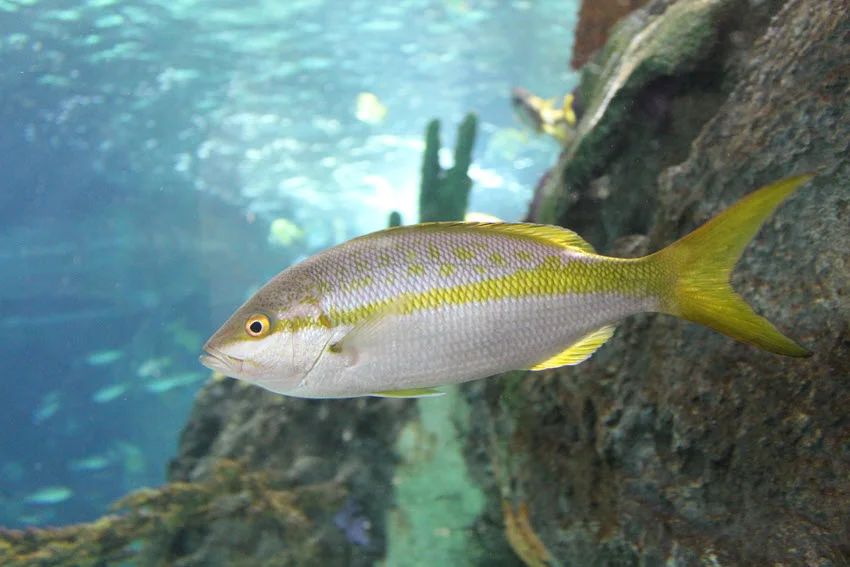
Yellowtail Snapper is easily recognized. It has a bright yellow stripe that runs from its snout to its forked tail, which is also entirely yellow. Its body is slender and covered in small, silvery scales with a hint of blue-green along the back. The eyes are large and dark.
Yellowtail Snappers grow 12 to 30 inches long and weigh 1 to 5 pounds. Their thin, agile bodies allow them to maneuver quickly in schools. Because of that, they are challenging targets for predators and anglers without the right tactics.
They are most common in the tropical and subtropical waters of the western Atlantic (especially in the Florida Keys, the Bahamas, and the Caribbean). They prefer coral reefs and sandy areas near drop-offs. Most often, this fish can be found at depths of 30 to 250 feet.
Yellowtail Snappers are often found mid-water above reefs, swimming in schools. This behavior makes chumming an effective way to bring them within casting range.
They can be caught year-round. However, summer and early fall generally produce the best results. Calm, clear conditions are ideal. This is because these fish are sight feeders that rely heavily on vision.
Morning is the prime time for Yellowtail fishing. Late afternoon could also be very productive. Additionally, night fishing under lights can also work well in the right conditions.
A light spinning rod with 8 to 15-lb test line is perfect for Yellowtail Snapper. The key is finesse. These fish are wary and will shy away from heavy tackle. Use long fluorocarbon leaders for a natural presentation.
Small hooks and light weights help keep bait looking natural in the current. A high-speed reel can be helpful for quickly reeling in fish before predators like Barracuda or Sharks attack your catch.
Cut bait (squid strips and ballyhoo) works exceptionally well. They are especially productive when they are combined with chumming. Live shrimp can also entice bites from larger fish in the school.
Small jigs tipped with bait can be effective, particularly when allowed to drift naturally with the current. Bright colors (yellow, pink, and chartreuse) can help get attention in clear water.
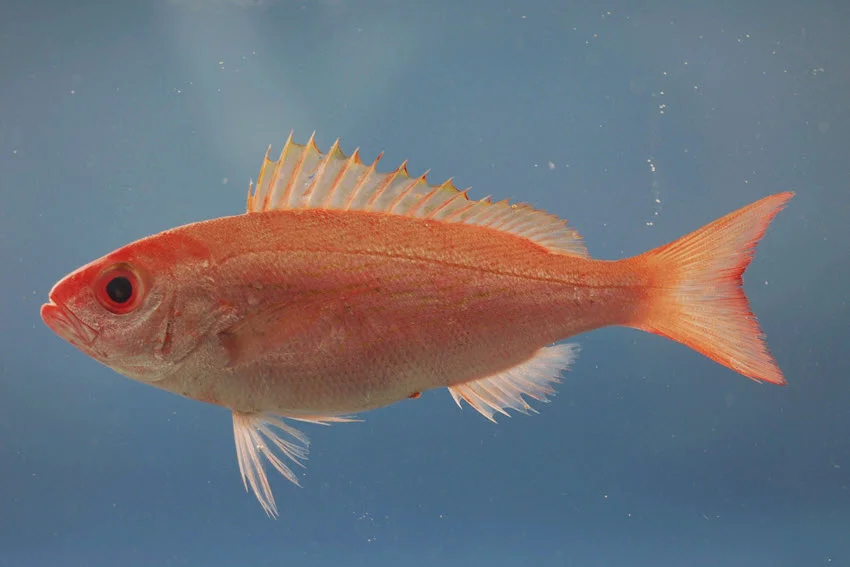
Vermilion Snapper, sometimes called "Beeliner," is smaller and more slender than the Red Snapper, even though they are among the most commonly compared Snappers. However, it has a similar bright reddish-pink coloration. Its sides may show faint horizontal lines, and the fins often have a hint of yellow. The mouth is more petite compared to other Snapper species. Eyes are large and dark.
Most Vermilion Snappers measure 14 to 24 inches in length. Most often, their weight ranges from 1 to 4 pounds. They are popular for a few reasons. Their delicate flavor is one of them. Additionally, anglers love catching this Snapper for its schooling behavior. This behavior can enable quick action once a group is located.
They inhabit offshore waters. This fish can be found at depths between 80 and 350 feet. Look for them around reefs, ledges, and rocky slopes. They often form large schools that can be spotted on sonar as dense clusters near the bottom.
Vermilion Snappers are found in the western Atlantic from North Carolina to Brazil, including the Gulf of Mexico.
They can be caught year-round, but they tend to bite best in the cooler months when water temperatures drop slightly. During these times, they feed more aggressively in preparation for spawning.
Fishing early in the morning often produces the best catches, as the moving water stirs up food from the seabed.
A light to medium rod with 15 to 30-lb braid is ideal for fishing at the depths where Vermilion Snapper are found. A sensitive rod helps detect their subtle bites.
Use a multi-hook rig to increase your chances of catching multiple fish at once when a school is feeding actively. Small circle hooks are ideal for fish with smaller mouths.
Small pieces of squid, cut fish, or shrimp are excellent baits for Vermilion Snapper. These baits can be dropped straight to the bottom or drifted just above it.
Artificial options (small metal jigs) can also work, especially when tipped with natural bait. Slow jigging near the bottom is a proven way to entice a strike from these fish.
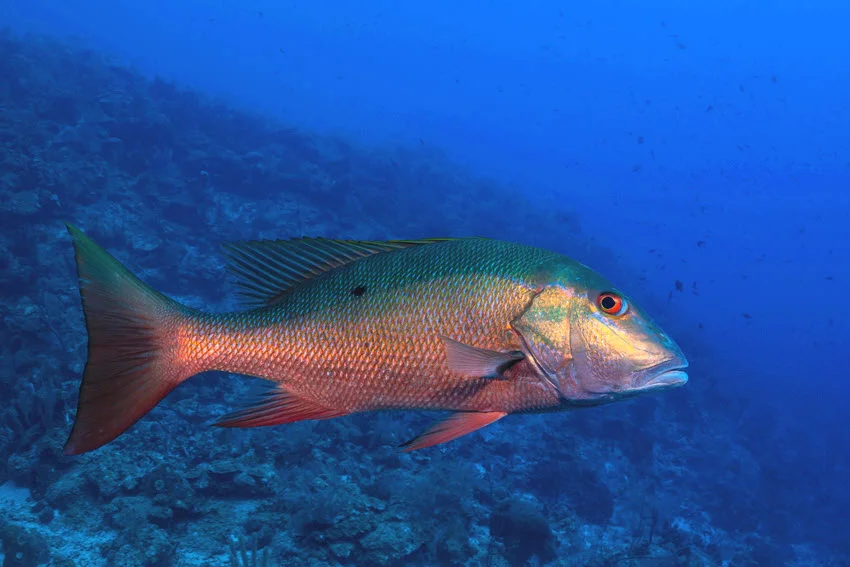
Mutton Snapper is a medium-sized fish. It is known for its pinkish to reddish body. This type of Snapper has a distinctive dark spot on each side near the tail. Its body shape is slightly oval and robust. A blunt head and a large mouth filled with sharp teeth are also physical characteristics of this fish. The fins usually have a hint of yellow or orange, especially the tail and anal fin, giving the fish a colorful appearance.
Adult Mutton Snappers grow to about 18 to 30 inches in length. Their weight ranges from 10 to 20 pounds. They have a streamlined shape. This type of shape allows them to swim swiftly and maneuver well around rocky areas. The unique spots and bright fin colors make them easier to identify compared to other Snapper species.
Mutton Snappers are commonly found in the western Atlantic Ocean. They are especially common around the Caribbean Sea and the Florida Keys. This Snapper prefers coral reefs, rocky ledges, and drop-offs. These areas provide plenty of smaller fish and crustaceans for them to eat. These fish tend to stay near structures at depths less than 300 feet.
A characteristic of the Mutton Snapper is that it often forms small schools. Juveniles are more common in shallower waters, while adults move deeper as they grow.
The best time to catch Mutton Snapper is during the warmer months, from late spring through early fall. During this period, they are more active and feed aggressively, especially during dawn and dusk.
Fishing around the new moon phase or when the tides are moving often results in better catches. Evening trips can also be productive since Mutton Snappers sometimes feed in low-light conditions near reefs.
A medium spinning or conventional rod paired with 15 to 30-lb braided line is suitable for Mutton Snapper fishing. A sensitive rod helps detect subtle bites, which are common with this species.
Use fluorocarbon leaders of about 20 to 30-lb test for abrasion resistance near rocky structures. Circle hooks in sizes 2 to 4/0 work well for live or cut bait presentations.
Live shrimp, pinfish, and small crabs are excellent live bait choices for Mutton Snapper. These baits attract the fish with their natural movement and scent.
Cut bait (squid strips or fish chunks) also works well, especially when dropped near the bottom close to reef structures. Soft plastic lures and jigs can be used as alternatives, especially when jigged slowly near the seabed.
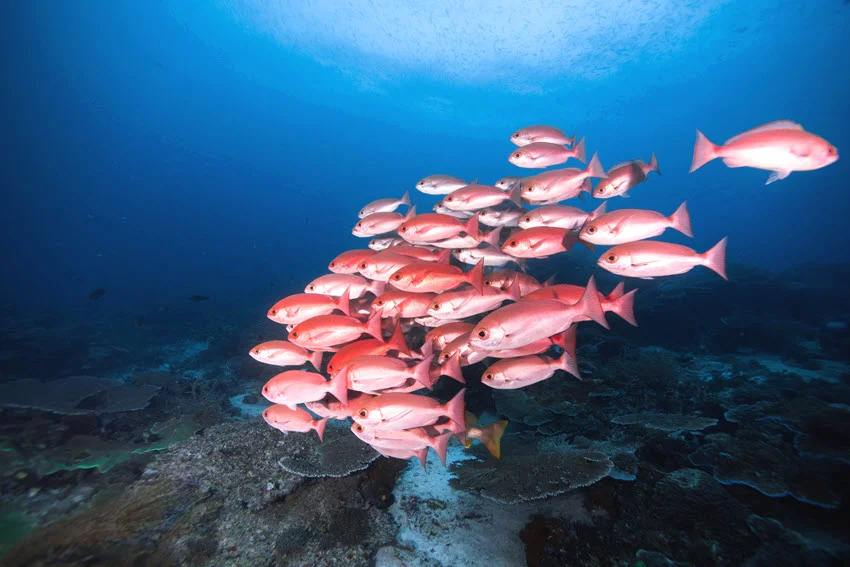
Queen Snapper is a striking fish. It has an elongated body covered in bright red scales with a metallic sheen. It has large eyes adapted for deepwater vision. Fins of this fish often have a yellowish tint. The head is pointed with a large mouth full of sharp teeth, ideal for catching prey in darker depths.
They grow to 20-30 inches long and usually weigh between 5 and 10 pounds. Their slender, streamlined bodies help them move swiftly in deep water, where they mostly live.
Queen Snapper inhabit deeper offshore waters. They can be found at depths ranging from 300 to 1700 feet. They prefer rocky reefs, ledges, and steep drop-offs in the western Atlantic, from the Florida Keys down through the Caribbean Sea.
Due to their deepwater habitat, they are less accessible than other species and tend to school near underwater structures that provide shelter and serve as hunting grounds.
Queen Snapper fishing is generally best during the warmer months. The period from late spring through early fall is very productive. They tend to feed more actively during twilight hours, such as dawn and dusk.
Fishing during periods of moderate current is often productive, as moving water stirs up food and encourages feeding. Night fishing with lights can also attract them closer to the surface in some areas.
A medium-heavy rod paired with a reel capable of holding at least 200 yards of 30 to 50-lb braided line is ideal for Queen Snapper. The deep depths they live in require strong gear to handle long drops and powerful runs.
Fluorocarbon leaders of 40 to 60-lb test are recommended for abrasion resistance near rocky structures. Use large circle hooks or J-hooks, sizes 4/0 to 7/0, to handle their bigger mouths and strong bites.
Live baits (pilchards, pinfish) are very effective for Queen Snapper. Their natural movement attracts attention even in low-light conditions.
Cut bait (chunks of fish or squid strips) is also popular and can be drifted near the bottom to entice strikes. Metal jigs dropped near reefs and slowly retrieved can be effective when live bait is unavailable.
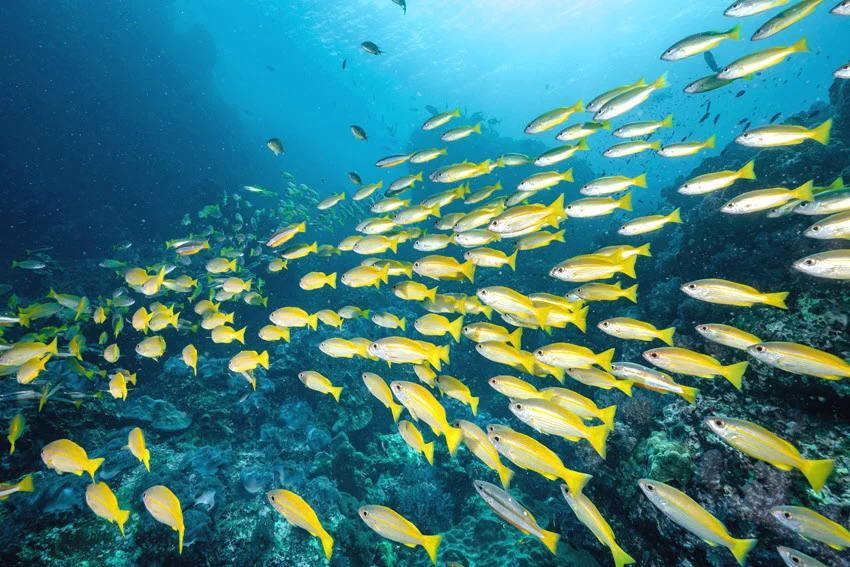
In this part, we want to familiarize you with some general tips for Snapper fishing. When we discuss tips, the first question is "Where to find them?" Well, as we already mentioned, you can find them around structures (reefs, wrecks, ledges, and rocky bottoms). These are prime Snapper habitats.
Another tip is to use a fish finder. This tool can be valuable for locating schools. They are often used in deeper waters. Once you find an area, approach quietly to avoid spooking the fish. Set up your gear with care.
Keep it a natural presentation. Use fluorocarbon leaders for invisibility. Choose hook sizes that match the bait. Make sure they are also suitable for the target species. Let your bait drift with the current. Chumming can be highly effective.
Match your strategy to the conditions. On calm, clear days, use lighter tackle. Also, use smaller baits. In rougher or deeper waters, heavier gear will help you control the fish and avoid break-offs.
Understanding fishing regulations and preserving specific fish species contributes to protecting fish populations and ecosystems and promoting responsible angling practices.
Anglers Booking Team
In this section, we analyze anglers' safety. Additionally, we discuss the regulations and licenses required for fishing.
Before heading out, make sure you and your gear are ready for a safe trip. Keep these points in mind:
Please follow these tips. That way, you can enjoy your fishing trip without risks and return home safely with your catch.
The goal of fishing regulations is to protect Snapper populations. It's important to be aware of and comply with local laws. Below, we analyze fishing regulations in detail.
Following these regulations helps ensure that fish populations remain available in the future. Keep in mind that you may have to pay a fine if you do not follow the laws and rules.
Targeting Snapper combines skill, knowledge, and patience. Knowing how to identify different types of Snapper and understanding their habits will improve your catch rate. Effective gear and baits will make your time on the water more successful. With these tips, you will have a successful fishing day.
And what type of Snapper is your favorite for fishing? Which bait was the most successful according to your experiences? We are happy to see your answers!

The expert copywriters at Anglers Booking have meticulously crafted this article. Our dedicated team of writers provides valuable insights and information to enhance your angling experience.
July 1, 2026

January 15, 2025
Subscribe to our newsletter and receive a selection of cool articles every week.
Embark on unforgettable fishing adventures with us at Anglers Booking.
book your charter
October 2, 2026
September 8, 2026
August 21, 2026
August 18, 2026
August 15, 2026
August 12, 2026
August 8, 2026
August 4, 2026

You're now part of our exclusive community. Get ready for premium content and updates straight to your inbox.
close
Subscribe to our newsletter and receive a selection of cool articles every week.
Please enter a valid email address.
Be the first to know when we're back in action.
Please enter a valid email address.
Leave a Comment
Your email address will not be published. Required fields are marked *
Thank you for your comment! It has been submitted for review and will appear on the site shortly.