


Anglers Booking Team
The expert copywriters at Anglers Booking have meticulously crafted this article. Our dedicated team of writers provides valuable insights and information to enhance your angling experience.
 11 minutes read
If you are preparing for Grouper fishing, you are in the right place. More precisely, we learn about the types of Grouper. You may be wondering, "How does this relate to fishing?" Well, the answer is simple: success often depends on understanding the differences between Grouper species and knowing how each one behaves.
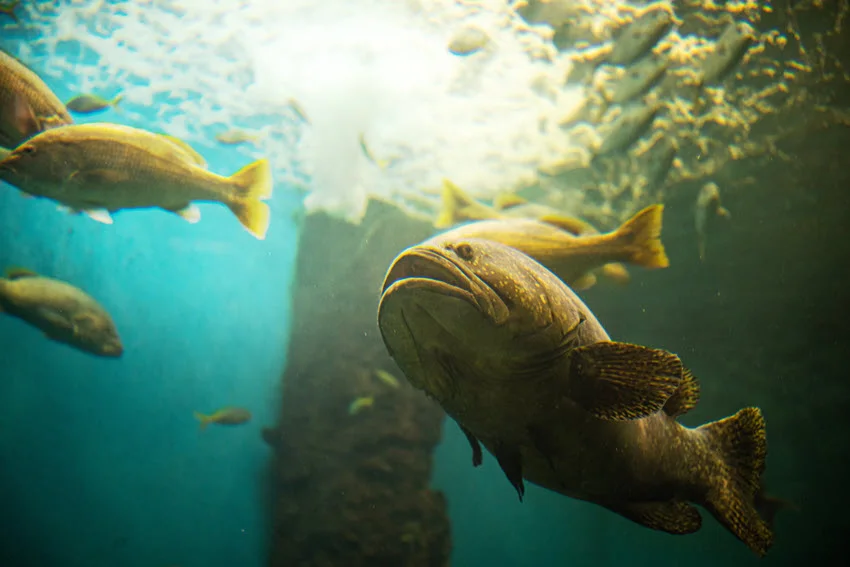
In this article, we explore the most popular Grouper species. We will discuss their habitats, behavior, and seasonal patterns. When you learn these details, you will be able to expect a great catch. Welcome to our new fishing adventure!
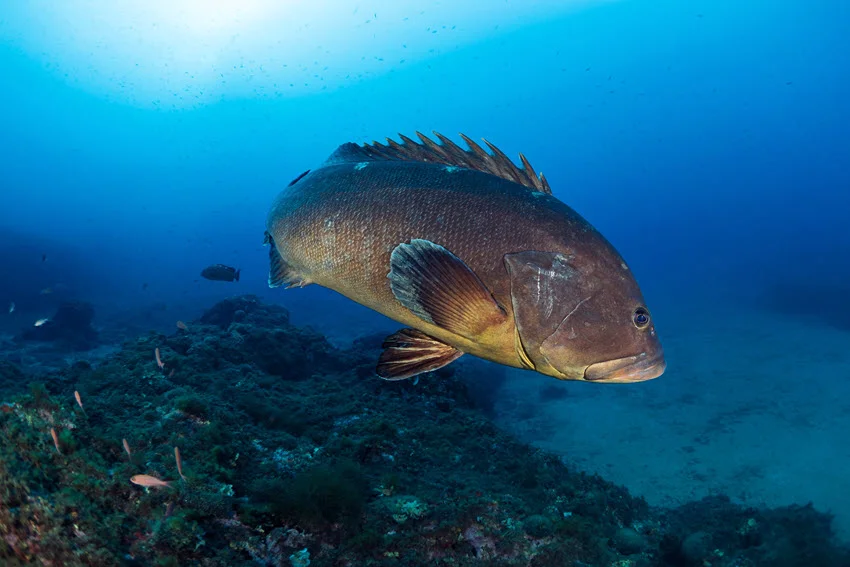
Groupers are large, heavy sea fish. There are many different types of Groupers. We will cover some of the most famous. They are Atlantic Goliath Grouper, Red Grouper, Black Grouper, Gag Grouper, Yellowfin Grouper, and Snowy Grouper.
These fish inhabit reef environments. They are ambush predators. Their large mouths create powerful suction, enabling them to swallow prey whole. Their behavior includes territoriality and, at certain times, forming large spawning gatherings.
Groupers are sought after by commercial fisheries and recreational anglers. They are prized for culinary value. Also, they provide a real challenge when caught. Slow growth and late maturity are among their main characteristics.
Groupers are notable for their sturdy bodies. You can find that in varied colors. In this section, we'll analyze the most popular species of it. Don't miss parts below.
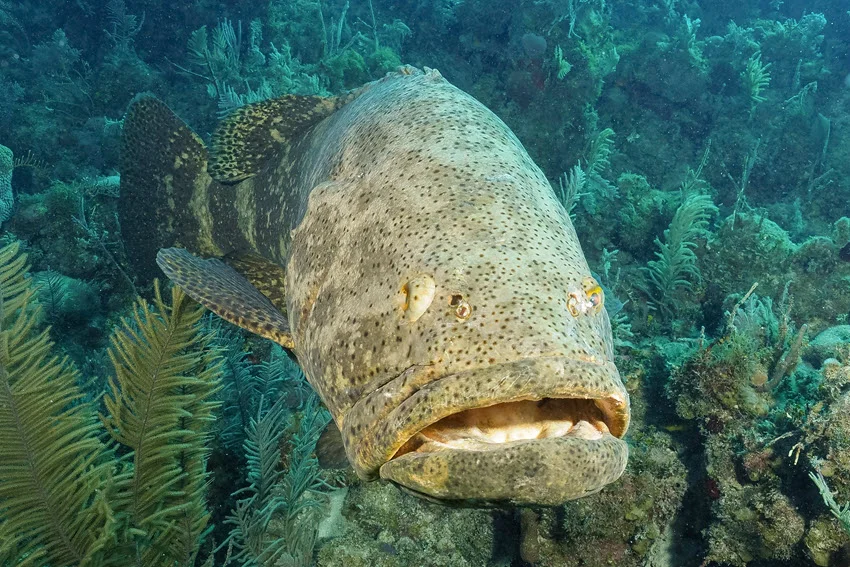
We start with the Atlantic Goliath Grouper. This is the largest Grouper species in the Atlantic Ocean. It has a robust, heavy body. This Grouper is colored in a mix of yellow, brown, or green-gray. On its head, there are numerous small black spots.
Its head is broad and flat with small eyes. The Atlantic Goliath Grouper fins, especially the pectoral and caudal, are rounded and strong. Juveniles often show faint vertical bars on their sides. When fully grown, This Grouper can reach up to 96 inches in length and weigh as much as 800 pounds.
These giants are found near rocky reefs, wrecks, artificial reefs, oil platforms, and mangrove creeks. Juveniles often stay in shallow mangrove areas.
You can encounter them from northeastern Florida, throughout the Gulf of Mexico and the Caribbean, down to Brazil, as well as off West Africa in the eastern Atlantic.
The best time to target Goliath Grouper is summer, when spawning activity is highest. These fish gather in groups during full moons in summer, particularly in August and September.
These bottom-dwelling ambush predators often feed early in the morning, so this is the prime time to catch them. Late afternoon is also a solid period. During these periods, their prey is most active (typical of ambush reef predators), though specific studies are hard to find, and they tend to target low-light periods around dawn or dusk.
Targeting such massive fish calls for hefty tackle. Use stand-up rods or heavy conventional setups with a drag capacity of 80 to 90 pounds to withstand their initial dive and strength.
Anchoring near structure or mangroves is common; also, make sure to have descending devices and barotrauma-safe gear for release, as regulations require catch-and-release with minimal harm.
These powerful Groupers feed on slow-moving fish and crustaceans. Ideal baits include large chunked fish, crabs, shrimp, or even octopus, presented very close to structure.
Deploy the bait at an angle so the scent drifts into their ambush zone. Placement accuracy is key to attracting them without spooking.
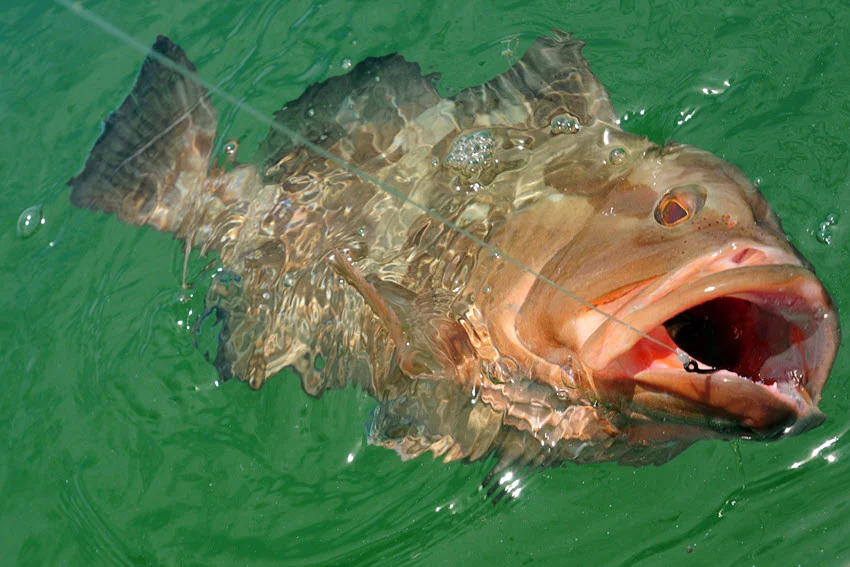
Red Grouper has a robust shape. Its body is dark reddish-brown on the upper side. It fades toward the belly into a light pink or nearly white. Tiny light pink or whitish spots or marbling often appear across its body. It has a large mouth and sharp teeth suited for sucking in prey.
In size, Red Grouper grows to about 48 inches and may weigh up to 50 pounds. However, the average catch is around 20 inches and 15 pounds.
Red Grouper are found at varying depths depending on age. Juveniles inhabit shallow waters, usually 10 to 60 feet deep, where they shelter among grass beds, rock outcrops, and limestone crevices. As they grow, adults move to deeper areas, generally between 100 and 300 feet, though they can be found as deep as 1,000 feet.
In terms of distribution, Red Grouper are found throughout the western Atlantic, from North Carolina to Brazil, including the Gulf of Mexico and Caribbean reefs. Juveniles prefer smaller patch reefs and hard-bottom areas, while adults occupy complex habitats (ledges, caverns, coral reefs) and live-bottom structures covered with sponges and corals.
The Red Grouper spawns mainly from January through June, with a peak in May. Fisheries are often closed during peak spawning months (January to April federally, and in some regions, others) to protect the population.
The most active feeding times tend to be early morning or late afternoon, when light is low, and prey is mobile – typical ambush-predator behavior. However, specific studies are not cited here.
For Red Grouper, a medium-heavy bottom-fishing setup (a 20 to 40-lb class rod with a sturdy conventional reel) works very well. Strong braided line in the 40 to 65-lb range is commonly used, paired with circle hooks (5/0 to 8/0) to reduce gut hooking and improve release survival.
Rigs (Carolina or knocker setups) are effective for presenting bait close to reefs, rock piles, or ledges where Red Grouper hide. Using fluorocarbon leaders in the 40 to 60-lb range can also improve success.
Red Groupers respond well to strips of squid wing, which are easy to rig and aromatic in water. Other effective baits include small fish chunks, shrimp, or crustaceans, presented near structure and slightly off the bottom to entice a strike.
Shrimp and crustaceans work well when presented near structure and just off the bottom to trigger aggressive strikes. In addition to natural baits, heavy bucktail jigs and soft plastic lures tipped with bait strips can produce results.
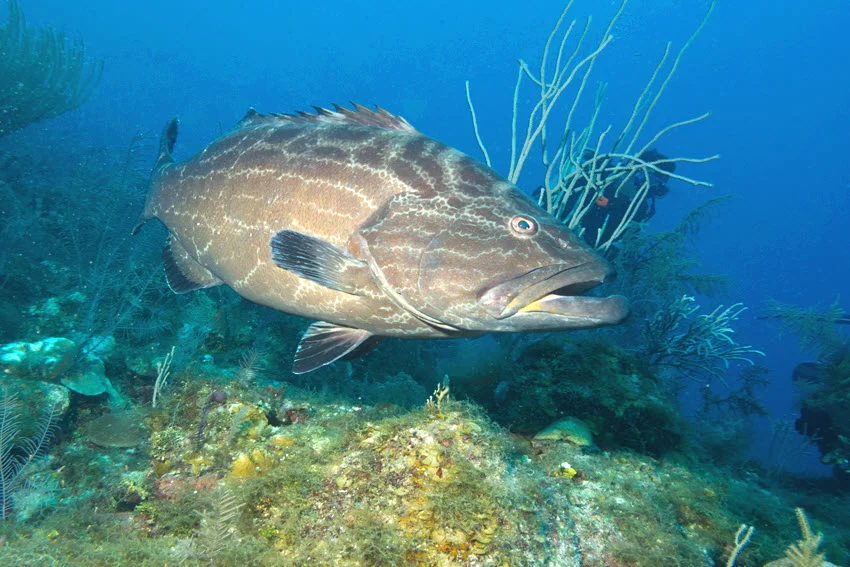
The Black Grouper is a large-bodied reef fish with an olive-gray to dark brown base color. Its sides are patterned with rectangular dark blotches that often form a camouflage-like mosaic. The fins are darker, sometimes with subtle edging, and juveniles tend to have brighter markings that fade as they mature.
Black Groupers can grow impressively large, reaching lengths of up to 52 inches and weighing up to 179 pounds. Most caught by anglers are significantly smaller, averaging 20 to 40 inches in length and weighing 30 to 50 pounds.
Black Grouper usually live at depths ranging from 60 to 250 feet. Adults prefer outer reef slopes, ledges, and rocky bottoms, while juveniles often use shallower reefs and seagrass beds as nurseries.
Geographically, they are found throughout the western Atlantic, including Florida, the Bahamas, the Caribbean, the Gulf of Mexico, and as far south as Brazil. They are especially common off the coast of the Florida Keys and along the southeastern U.S. coast.
The peak season for Black Grouper fishing is from December to April, when they migrate closer to shore and reefs for spawning and feeding.
The best times of day to catch them are early morning and late afternoon, as they are most active ambushing prey when light levels are low, especially around reef structures.
Because Black Grouper are powerful fighters, strong gear is a must. Use a heavy-action rod and conventional reel with braided line in the 60 to 100-lb range to prevent them from pulling back into reef holes. A fluorocarbon leader of 80 to 100-lb helps against their abrasive environment.
Bottom rigs, such as a sliding sinker (Carolina rig) or a knocker rig, are most effective, as they keep bait close to the structure where Grouper wait to ambush.
Black Grouper are often caught near reefs and rocky ledges where they stay close to the bottom, so your bait should be weighted to keep tight to structure.
When we discuss the best baits for this type of Grouper, let's start with live fish, which is the most effective bait for this Grouper. You can use pinfish, grunts, or sardines. They will attract the Grouper's predatory instincts. However, you won't always have live bait available. Alternatively, you can use cut baits such as squid or mullet strips.
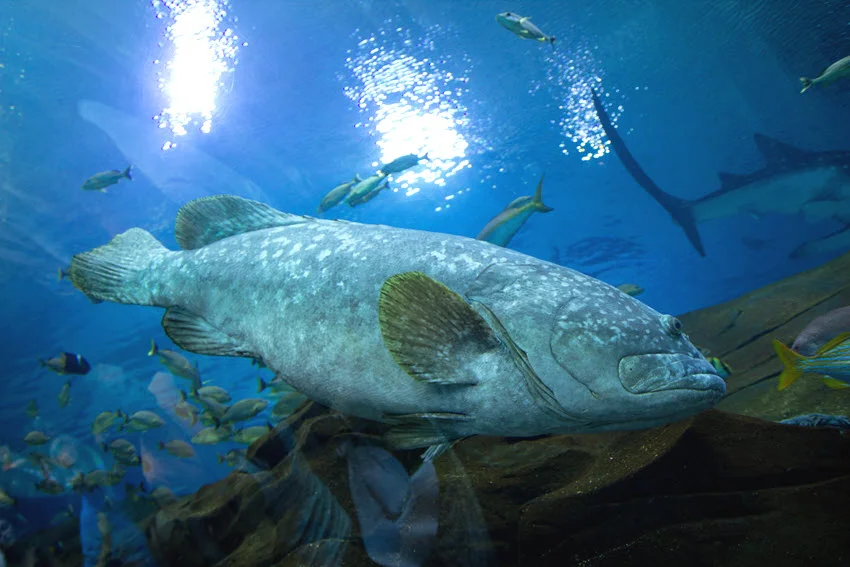
The Gag Grouper has a stocky body with a pale gray to brownish background. It is covered with irregular dark, worm-like markings that give it a marbled appearance. Its fins are darker, with the anal and caudal fins showing a bluish or dusky edge. Juveniles exhibit more pronounced mottling than adults.
Gag Grouper can reach lengths of about 36 inches on average. It is interesting to note that the most prominent recorded individuals measure up to 57 inches long and weigh between 5 and 50 pounds. However, trophy catches sometimes exceed 80 pounds.
Gag Groupers are commonly found at depths of 60 to 250 feet over rocky bottoms. Juveniles often inhabit shallow estuaries, seagrass beds, and coastal bays before moving offshore as they grow.
Their distribution covers the western Atlantic Ocean, from North Carolina through Florida and the Gulf of Mexico, down into the Caribbean and parts of South America, particularly Brazil.
When discussing the best time for Gag Grouper fishing, fall and early winter are the preferred seasons. Some of the most successful fishing is recorded in October to December. During this time, they move closer to shore to spawn and feed. Of course, that makes them more accessible to anglers.
As with many Groupers, the best times to fish for Gags are early morning and late evening. At this part of the day, they are more likely to leave the safety of reef crevices to ambush prey.
A strong tackle is essential for landing a Gag Grouper. Anglers often use medium-heavy to heavy rods paired with reels loaded with 50 to 80-lb braided line. A fluorocarbon leader between 60 and 80-lb is recommended for abrasion resistance when fighting near rocky structures.
Bottom-fishing rigs such as knocker rigs or sliding-sinker setups are most effective, keeping bait close to the bottom where Gags patrol. For trolling, deep-diving plugs also work well when covering reef edges.
Baits should be weighted to reach the bottom structure. Fishing near ledges, reefs, or wrecks is especially productive.
The best natural baits are live pinfish, grunts, sardines, and cigar minnows. Dead bait, squid, mullet strips, or cut bonito all work effectively. Artificial lures (vertical jigs or deep-diving plugs) can also trigger strikes from aggressive Gags.
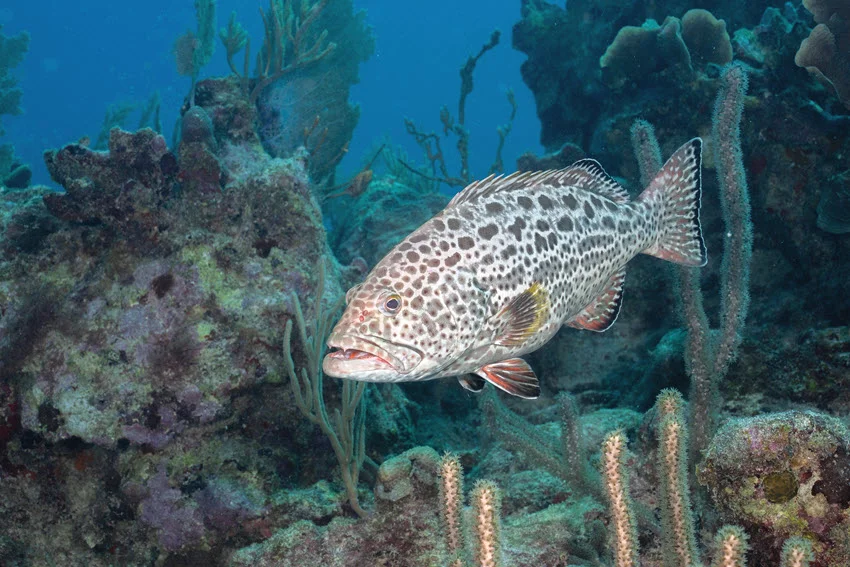
The Yellowfin Grouper is easily recognized by its reddish-brown to olive body and bright yellow fins, especially the dorsal, anal, and caudal fins. Its body is covered with irregular dark blotches or spots, which can sometimes form faint vertical bars. Juveniles are paler with more prominent spotting, while adults display the characteristic yellow fins.
Yellowfin Groupers can grow to about 36 inches and weigh 20 to 30 pounds on average. Larger individuals have been recorded at 46 inches and up to 60 pounds.
Yellowfin Grouper are usually found at depths of 60 to 180 feet, favoring rocky reefs, ledges, and areas with significant coral cover. Juveniles may inhabit shallower reefs and seagrass beds near shore.
Geographically, they occur in the western Atlantic. They live in places from Florida and the Bahamas to the Caribbean and northern South America. They are common along the Gulf of Mexico and Caribbean reef systems.
Winter fishing is the best time for Yellowfin Grouper, and also during early spring. Many anglers report their best success in December and April.
Dawn and dusk are the peak periods of the day for catching this fish. At these periods, they are most actively feeding. For that reason, these are optimal times of day for anglers to try to catch Yellowfin Grouper.
Medium- to heavy-duty rods paired with reels capable of holding 40 to 60-lb braided line are recommended. Fluorocarbon leaders of 50 to 60-lb help resist abrasion from reefs and sharp structures.
Bottom rigs (sliding sinker or knocker rigs) work well. They keep bait close to reef ledges where Yellowfin Grouper hunt.
Weighted rigs are essential to keep bait in the strike zone, especially since Yellowfin Grouper often hold close to deep reefs, rocky ledges, and drop-offs. Live baits (pinfish, sardines, or grunts) are the most effective choices, as their natural movement quickly attracts attention.
When live bait is not available, cut squid, mullet strips, or other fresh fish chunks can be excellent alternatives, releasing strong scents that travel through the water column.
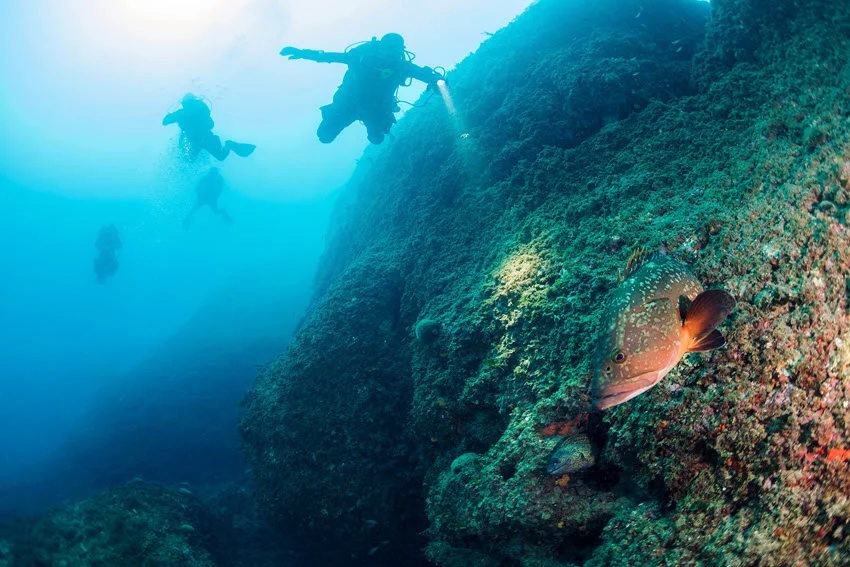
The Snowy Grouper is a deep-water Grouper. A stout body is one of the physical characteristics of this fish. It has a dark gray to brown color. Its most distinctive feature is the presence of small, irregular pale or white spots scattered across the head, body, and fins. That gives it a "snow-dusted" appearance. The fins are broad and rounded. The head of the Snowy Grouper is large with a pronounced jaw suited for ambushing prey.
Snowy Groupers can grow up to 51 inches long and weigh as much as 150 pounds, although most individuals caught are smaller, averaging around 20 to 30 inches in length and 15 to 40 pounds in weight.
Snowy Grouper inhabit deep waters ranging from 300 to 800 feet, often around rocky ledges, deep reefs, and offshore banks. They are almost exclusively found in offshore habitats, far from shallow coastal areas.
Geographically, they occur in the western Atlantic, from New England down to the Gulf of Mexico, Caribbean, and parts of northern South America. Deep offshore banks and reef structures along the eastern Gulf and southeastern U.S. coast are prime locations.
The peak season for Snowy Grouper fishing is late fall through early spring. During this period, water temperatures encourage feeding activity at shallower portions of their deep range.
The most productive time of day is usually midday to late afternoon, as they tend to hunt more actively for fish and invertebrates in low-light, deep-water environments.
Because Snowy Grouper live in deep water and are strong fighters, anglers need heavy-duty rods and reels capable of handling 60 to 100-lb braided line. A strong fluorocarbon leader of 80 to 100-lb helps prevent break-offs against rock and ledge surfaces.
Bottom rigs (knocker rig or heavy Carolina rig) are ideal for keeping bait near the bottom, and a deep-drop reel system is often used to reach depths of 300 to 800 feet safely.
Weighted baits that stay tight to the bottom are essential when targeting Snowy Grouper. They respond best to cut bait (squid, mackerel, or bonito strips), which release a strong scent trail in deep water.
Live baits, including small bottom-dwelling fish (pinfish or grunts), are also highly effective. They often entice larger Snowy Grouper out of cover. In addition, heavy vertical jigs worked slowly near structure can trigger aggressive strikes, especially when other bait options are less available.
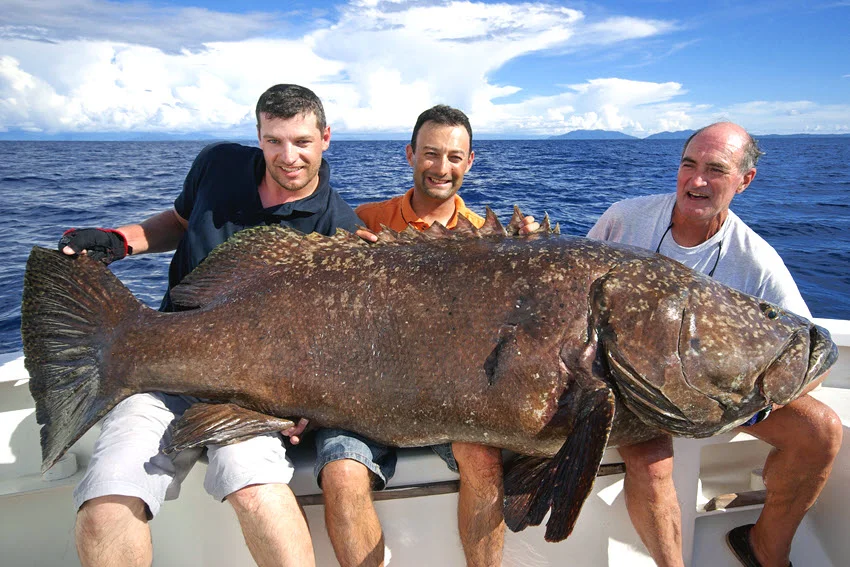
Some general tips can help you have success in Grouper fishing. First of all, if you want to catch this fish, patience is necessary. Sudden movements can scare off Grouper. This means you should avoid making any noise. Watching underwater structure will increase your chances of finding hiding places where Groupers are waiting for prey.
Of course, the better gear you have, the more successful you will be in fishing. Heavy rods and reels, equipped with strong braided line and a durable fluorocarbon leader, help prevent break-offs when Groupers make powerful runs into rock. Bottom rigs (sliding sinker or knocker rigs) work best for keeping bait in the strike zone near reefs and ledges.
Choosing the correct bait can make a big difference. Live bait is very effective. However, cut bait can also attract strikes. Present bait close to the bottom or near structure to look like natural prey movements.
Understanding fishing regulations and preserving specific fish species contributes to protecting fish populations and ecosystems and promoting responsible angling practices.
Anglers Booking Team
When fishing for Grouper, you should be aware of safety and fishing regulations. Below, we discuss key facts related to this.
Below are some essential security tips. Adhere to them; otherwise, you risk an injury that would definitely spoil your fishing experience.
Keep these safety tips in mind so your Grouper fishing trip stays safe, smooth, and enjoyable.
Groupers are subject to fishing regulations. Below are some important regulatory concepts.
Regulations vary from state to state, region to region, and species to species, so it is wise to be informed before fishing. If you do not follow some of these rules, you must pay a penalty fee.
Grouper fishing can be challenging for anglers. Their size and strength require you to be well-prepared to catch them. And don't forget: fish ethically and responsibly; it's important for the Grouper population.
Now we'd love to hear from you! Which Grouper species from this guide are you most interested in targeting? Share your thoughts in the comments below.

The expert copywriters at Anglers Booking have meticulously crafted this article. Our dedicated team of writers provides valuable insights and information to enhance your angling experience.

November 7, 2024

April 30, 2025
Subscribe to our newsletter and receive a selection of cool articles every week.
Embark on unforgettable fishing adventures with us at Anglers Booking.
book your charter
October 2, 2026
September 8, 2026
August 21, 2026
August 18, 2026
August 15, 2026
August 12, 2026
August 8, 2026
August 4, 2026

You're now part of our exclusive community. Get ready for premium content and updates straight to your inbox.
close
Subscribe to our newsletter and receive a selection of cool articles every week.
Please enter a valid email address.
Be the first to know when we're back in action.
Please enter a valid email address.
Leave a Comment
Your email address will not be published. Required fields are marked *
Thank you for your comment! It has been submitted for review and will appear on the site shortly.