


Anglers Booking Team
The expert copywriters at Anglers Booking have meticulously crafted this article. Our dedicated team of writers provides valuable insights and information to enhance your angling experience.
 10 minutes read
Today, we discuss types of Catfish. More precisely, we will focus on the "big three" of fishing in the United States. These are the Channel Catfish, the Blue Catfish, and the Flathead Catfish.
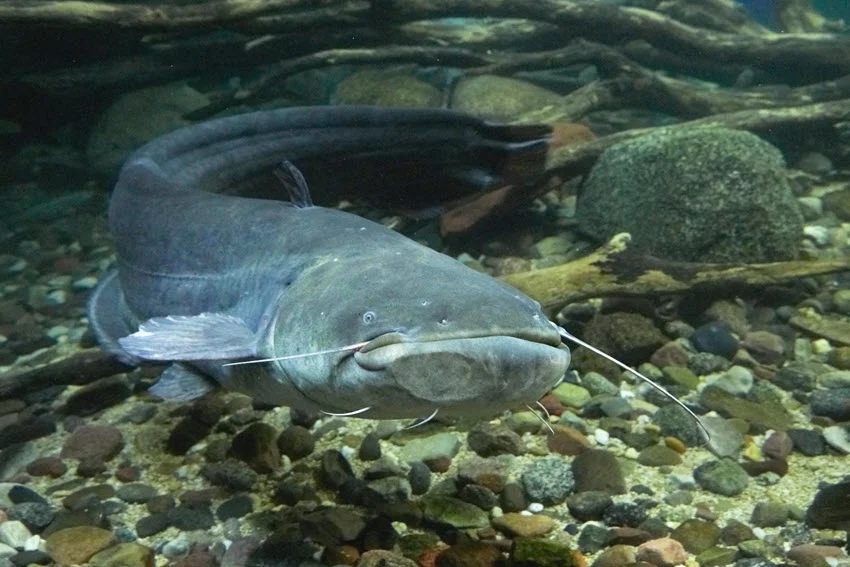
We will also discuss some of the less common species you may encounter. These include the White Catfish and Black Bullhead. Each has its specific characteristics. Each species requires a different fishing approach, which we explain in detail.
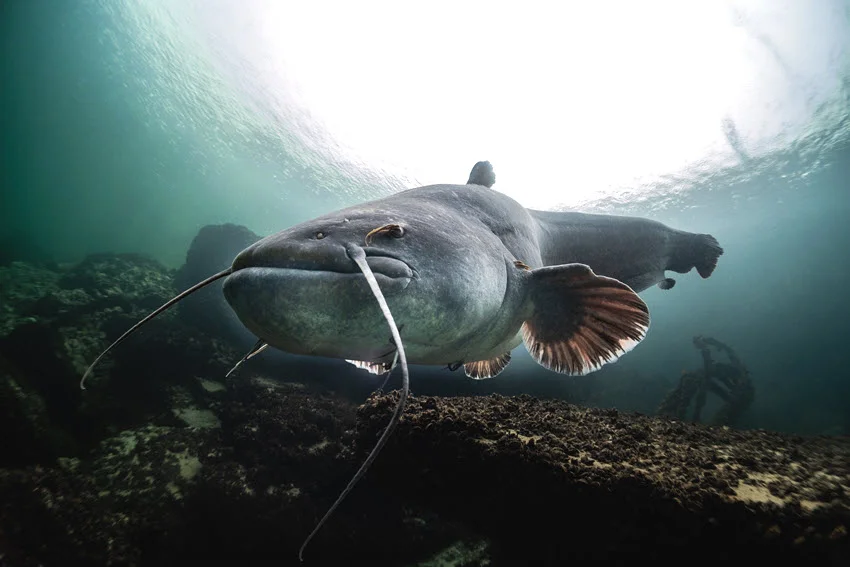
Catfish are fish with whiskers around their mouths. These are popular among anglers due to their size, fight, and wide availability in rivers and lakes.
These fish often live on or near the bottom of rivers, lakes, or ponds. Many Catfish are nocturnal or crepuscular and are more active at night or in low light. They use their barbels, sense of smell, and other senses more than eyesight to detect food in murky water. They also hide a lot. Their favorite hiding spots are under logs, rock ledges, and submerged structures.
Catfish are very popular for eating; their flesh is mild and considered tasty by many. Some species are also kept in aquariums. Smaller ones or exotic ones are interesting as pets because of their unusual shape.
Catfish are one of the most widespread freshwater fish groups in North America. We will analyze in detail the most important information on the most popular topics of this type. Let's get started.
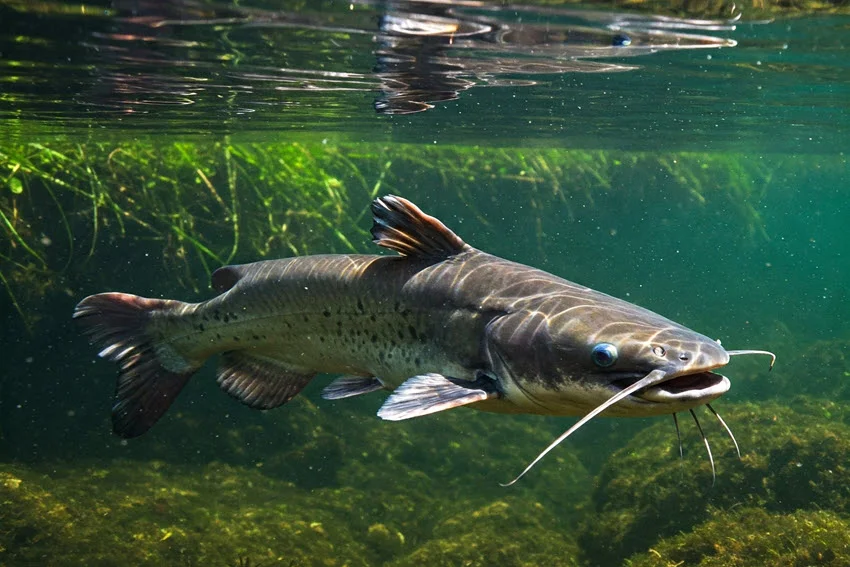
Channel Catfish are easily recognized. They have forked tails, slender bodies, and barbels that hang around the mouth like whiskers. Their upper jaw extends slightly farther than the lower jaw. Their anal fin is curved with 24 to 30 rays. The body coloration ranges from olive or silvery grey on the back to a lighter belly, sometimes with scattered black spots, especially on younger fish. Their eyes are centrally located and relatively large compared to those of other big Catfish species.
In terms of size, Channel Catfish are medium among the big three. They commonly grow between 12 and 32 inches in length. Their most common weight is from 2 to 10 pounds. Larger specimens are not unusual in rivers or lakes with abundant food, and trophy Channel Cats can reach over 30 pounds.
Channel Catfish often inhabit waters between 10 and 25 feet deep. However, they may move shallower in spring or at night when feeding. They thrive in rivers, reservoirs, lakes, and community ponds, thanks to their widespread stocking across the U.S.
They prefer environments with moderate currents, riprap banks, submerged logs, and holes near river bends. They are adaptable and are now found in nearly every state in the U.S., making them the most widespread Catfish species in North America.
The peak season for Channel Catfish fishing is late spring through summer, especially from May to August when water temperatures rise above 70°F. Warmer water increases their feeding activity, and they spread out across lakes and rivers in search of food.
The best times of day are early morning and late at night. Channel Catfish are especially active after dusk and before dawn. During these periods, they leave deeper waters to feed along shorelines or shallows.
Medium to medium-heavy rods with strong reels are enough for Channel Catfish. A line strength of 10 to 20 pounds test is recommended, circle hooks in sizes 2/0 to 5/0 work well, especially when fishing on the bottom.
Most anglers fish Channel Catfish using bottom rigs with sinkers to hold bait near the river or lake bed. Float rigs can also be effective in shallow ponds or when fishing near structures.
Channel Catfish respond very well to baits that produce strong scents. Popular choices include chicken liver, cut baitfish, shrimp, and commercial stink baits. Their strong sense of smell enables them to find food even in low-visibility conditions.
Live baits (worms, nightcrawlers, and minnows) are also effective, especially in smaller ponds or stocked lakes. Fresh bait and varying presentation depths can trigger more bites.
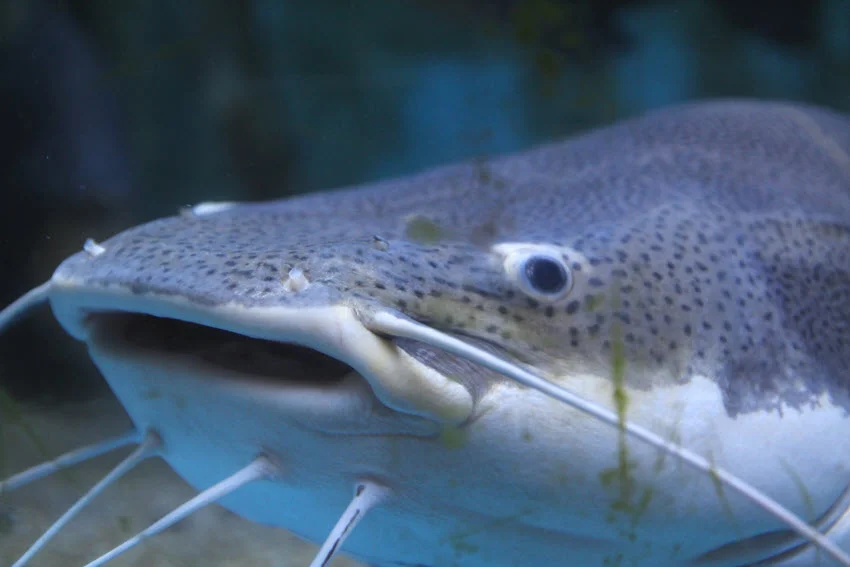
Blue Catfish are the largest Catfish species in North America. They are easy to recognize by their bluish-gray coloration and heavy, muscular bodies. Their anal fin is straight-edged with 30 to 36 rays. Their tails are deeply forked, with rounded edges. The upper jaw extends slightly farther than the lower jaw, and their barbels are darker on top and lighter underneath. Their eyes are small and set further forward on the head.
Blue Catfish commonly measure between 24 and 48 inches. Its average weight is 20 to 40 pounds. Trophy specimens can be much bigger. Many caught in rivers along the Mississippi Basin and Chesapeake Bay exceed 80 pounds. Their size makes them a prized catch for serious anglers.
Blue Catfish often inhabit waters between 20 and 60 feet deep. Rivers with strong currents or in reservoirs with deep Channels are places where you can find these fish. They thrive in large rivers (the Mississippi, the Missouri, and the Ohio) as well as in artificial reservoirs.
They prefer areas near drop-offs, holes, and submerged structures where they can ambush prey. In estuarine environments, Catfish have adapted to brackish waters, making them unique among large freshwater Catfish.
The prime season for catching Blue Catfish is late fall through early spring. During these periods, water temperatures are cooler, ranging from 50°F to 70°F. They feed aggressively during these periods to prepare for spawning in late spring.
The best times of day to catch them are early morning and late evening. It is interesting to note that many trophy Blue Catfish are caught at night when they move from deep Channels to shallower flats to feed.
Heavy-duty rods and reels are essential for Blue Catfish because of their potential size. Anglers often use 30 to 80-pound test line with large circle hooks sized 6/0 to 10/0. Strong leaders are also essential to handle their weight and power.
Bottom rigs with heavy sinkers work best in deep Channels. Drift fishing and trolling methods are also commonly used on large rivers and reservoirs.
At depths of 20 to 50 feet, Blue Catfish prefer large, oily baits. Fresh cut shad, herring, or skipjack are considered the top choices. The natural scent trail attracts them even in strong currents.
Live bait (big shiners or sunfish) can also work, especially when targeting trophy fish. Using fresh, natural bait increases the chances of landing larger Blues than with artificial or processed bait.
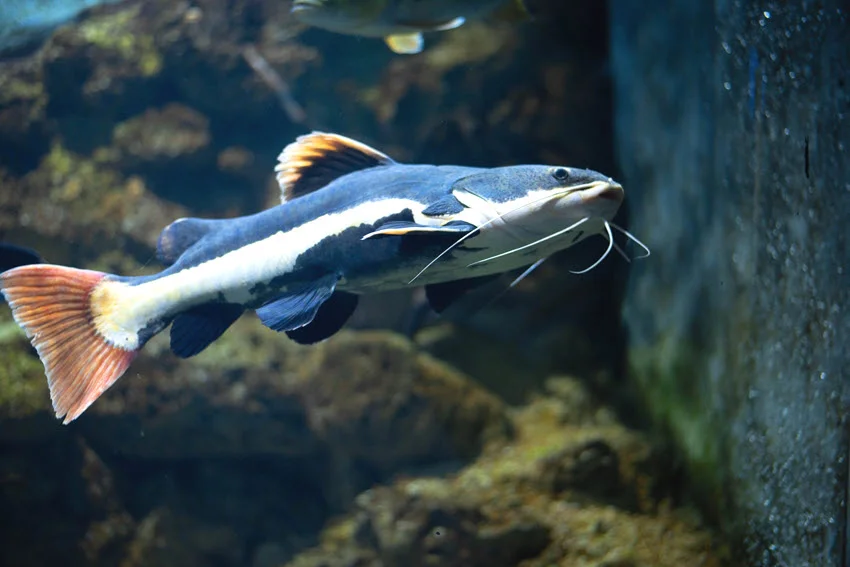
Flathead Catfish are distinct because of their broad, flat "shovel-like" head and lower jaw that extends past the upper jaw. Their body coloration ranges from pale yellow to brown, often with darker mottled patterns that help them blend into river bottoms. In comparison with Channel and Blue Catfish, their anal fin is shorter and rounded, with only 14 to 17 rays. Their tail fin is slightly notched rather than deeply forked.
Their barbs are light gray or whitish, and their eyes are small and positioned further forward. In terms of size, the Flathead Catfish is the second-largest in North America. They grow to between 24 and 46 inches long. Their standard weights range from 10 to 40 pounds. However, trophy fish are much larger.
Flathead Catfish swim in deeper waters, at depths of 15 to 50 feet. They thrive in slow-moving rivers, reservoirs, and large creeks, where they seek cover in deep holes, undercuts, or beneath submerged logs.
Unlike Channel or Blue Catfish, Flatheads are more reclusive and prefer heavy cover. They are not as common in open water but are consistently found near structures and dark, turbid river Channels. In places like that, they can ambush prey.
The best season for catching Flathead Catfish is late spring through early fall, especially as water temperatures rise above 70°F. They become most aggressive during pre-spawn and spawning periods.
The most productive times of day are nighttime and dusk, since Flatheads are nocturnal hunters. They leave deep holes after dark to roam along shallow flats and near-shore areas in search of live prey.
Heavy tackle is necessary because of the Flathead's power and size. Anglers commonly use 30 to 60-pound test line with large circle or J-hooks ranging from 5/0 to 10/0. Strong rods with sturdy reels are essential for pulling them from heavy cover.
Flathead Catfish are known for intense and sudden strikes. For that reason, the gear needs to withstand quick bursts of power. Many anglers use slip-sinker rigs or float rigs when fishing near structure.
At depths of 15 to 40 feet, Flathead Catfish respond best to live bait. Among the best bait choices for Catfish are large minnows, sunfish, goldfish, or Bullheads, which are especially effective because Flatheads are strict predators compared to Channel or Blue Catfish.
While live bait is most effective, dead baitfish can also produce strikes. They are productive when placed near a structure at night. The natural movement and scent of live prey, however, trigger more consistent results.
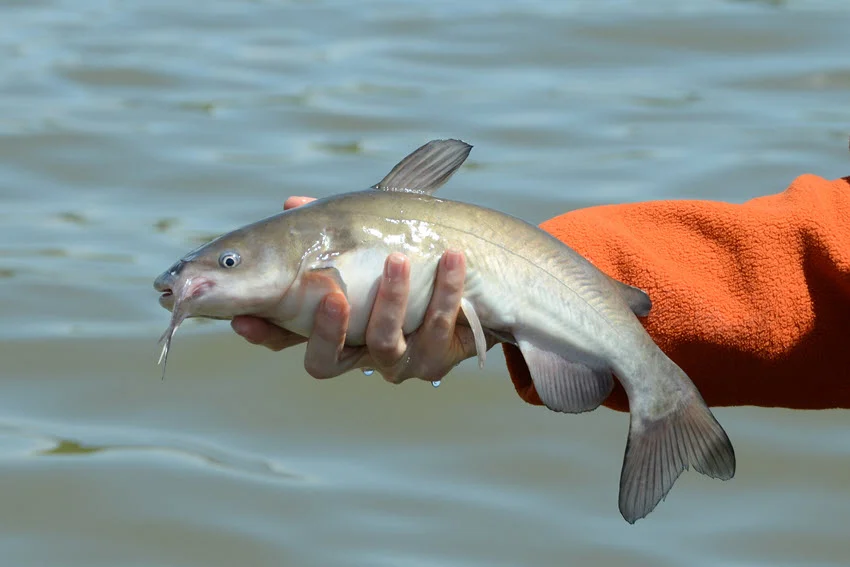
White Catfish are also popular among anglers. They are mainly found along the eastern United States, from Florida up to New York. Their body coloration ranges from bluish-gray to dark green on the back with a whitish belly. They can be confused with Channel Catfish, but they differ in having fewer anal fin rays (22 to 24) and a distinctive blue ring around the eye. The upper jaw also extends farther than the lower jaw.
White Catfish reach 12 to 16 inches in length, with larger individuals growing up to 24 inches. They weigh between 2 and 6 pounds, although some individuals can reach up to 10 pounds in ideal habitats. Their manageable size and abundance make them a common catch in rivers and ponds.
White Catfish prefer shallower waters, often between 5 and 20 feet deep. They are commonly found in calm coves, slow-moving rivers, and brackish estuaries along the East Coast.
They thrive in muddy or sandy bottoms. At these places, they can feed on invertebrates and small fish. Their tolerance for lower salinity also allows them to live in coastal estuaries, which sets them apart from other freshwater Catfish.
The peak season for White Catfish is during late spring through summer when water temperatures are warmest. They spawn when the water temperature reaches about 70°F, making this period particularly productive.
The best fishing times are early morning and late evening, as White Catfish are more active during low-light hours. Night fishing in slow-moving rivers and brackish coves is often very successful.
Light to medium fishing gear is sufficient for White Catfish, given their modest size. A 6 to 12-pound test line with smaller circle hooks works well. Bottom rigs and slip sinker rigs are the most effective setups.
Because zCatfish are often found in smaller waters, bank fishing with simple rigs is also productive. Ultra-light bvfar can make catching them especially fun for beginners.
At depths of 5 to 15 feet, White Catfish feed eagerly on worms, nightcrawlers, and cut bait. They are opportunistic feeders that rely heavily on their sense of smell.
Commercial dough or stink baits also work well, especially in murkier water. Using fresh bait increases your chances of catching larger specimens in both rivers and estuaries.
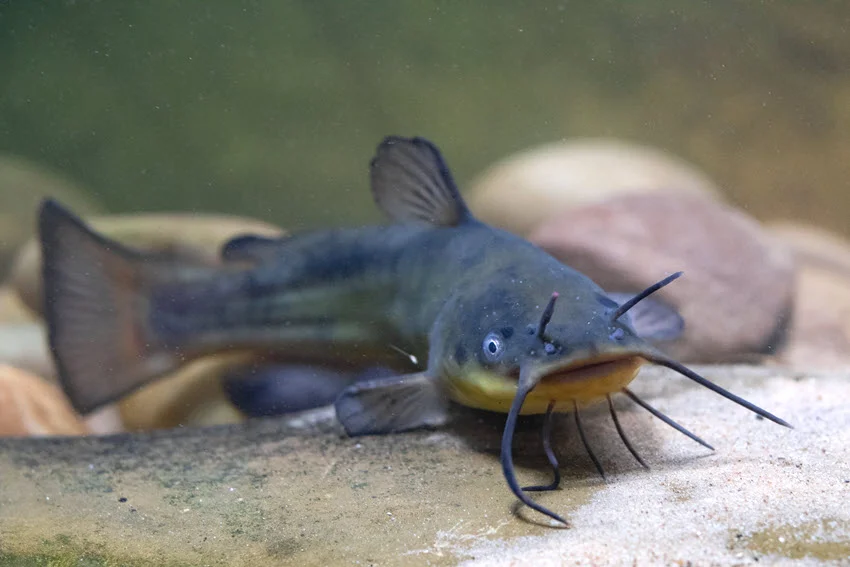
Black Bullheads are among the most widely distributed Catfish species in North America, ranging from southern Canada to northern Mexico. They are stocky fish with rounded tails, dark olive to yellow-brown bodies, and a lighter underside. Unlike Channel or Blue Catfish, their tails are not forked but slightly notched, with rounded edges.
Their anal fin has 17 to 21 rays, and their upper jaw extends farther than the lower jaw. Because their coloration changes with age and season, identification should be based on fin shape and rays rather than color alone. Black Bullheads grow to about 10 to 16 inches in length, though some can reach up to 24 inches; their weight ranges between 1 and 4 pounds. Larger individuals weighing more than 5 pounds are found in rich habitats.
Most often, this type of Catfish thrives in shallow waters. They could be found between 3 and 15 feet deep. They prefer turbid, slow-moving rivers, ponds, and lakes. Places with muddy or silty bottoms are their favorites.
They thrive in poor water conditions with low oxygen levels where other fish may not survive. Due to their adaptability, they thrive in a wide range of environments.
The best time to catch Black Bullheads is late spring through early fall, especially when water temperatures are between 65°F and 80°F. They become most active at night during spawning season.
They bite throughout the day, but the most productive periods are evening and nighttime hours when they leave cover to feed in shallower areas.
Due to their smaller size, light tackle is recommended. A 4 to 8-pound test line with small hooks is usually sufficient. Simple float rigs and bottom rigs both work well.
Anglers often enjoy targeting Bullheads with ultra-light rods, which makes the fight more exciting, even though the fish are small.
At depths of 3 to 10 feet, Black Bullheads feed on worms, insect larvae, and cut bait. Nightcrawlers are especially effective in muddy ponds and streams.
They also readily take dough baits and small pieces of chicken liver. This type of fish has an opportunistic feeding behavior, making them easy to catch, especially for beginner anglers.
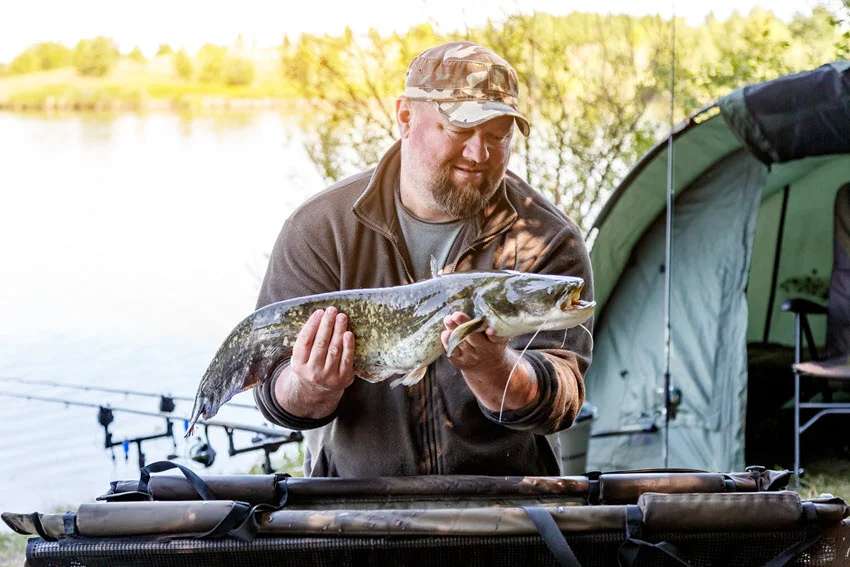
One of the best tips for catching Catfish is to focus on location. These fish spend most of their time near the bottom. That means fishing close to the river or lake bed can be productive. Look for fallen trees, deep holes, or undercut banks. In lakes and reservoirs, Channels and drop-offs are prime spots where Catfish often gather.
Match your bait with the type of Catfish you tend to catch. Using the right bait will increase the size of the fish you are likely to catch. Consider timing carefully when planning a Catfishing trip. Knowing when each species is most active helps you avoid wasted hours on the water.
Lastly, match your freshwater lures and tackle to the type of fish you want to catch. Light gear works well for Bullheads and White Catfish. Heavier rods and stronger line are needed for Blue and Flathead Catfish.
Understanding fishing regulations and preserving specific fish species contributes to protecting fish populations and ecosystems and promoting responsible angling practices.
Anglers Booking Team
When fishing for Catfish, it's important to ensure your safety. Additionally, you must respect laws and regulations.
Fishing for Catfish can be fun, but anglers should keep safety in mind. These tips will help reduce injuries.
By following safety measures, anglers can avoid accidents and fish without risks.
Fishing rules are different depending on where you are, but a few standard regulations apply to Catfish across the United States.
If you don't follow any of the regulations, you'll have to pay a fine and penalties. That could definitely ruin your day on the water.
Catfish offer a rewarding experience for all anglers. Knowing where to find them, when to fish, and which gear to use can contribute to fishing success.
Whether you're targeting the big three or White Catfish and Black Bullhead, knowing the differences in size and habitat depth is important. Matching your bait to the species could make all the difference.
We would love to hear from you! What is your favorite type of Catfish to catch, and which bait or technique has worked best for you? We are happy to see your answers in the comments below.

The expert copywriters at Anglers Booking have meticulously crafted this article. Our dedicated team of writers provides valuable insights and information to enhance your angling experience.
February 21, 2026
Subscribe to our newsletter and receive a selection of cool articles every week.
Embark on unforgettable fishing adventures with us at Anglers Booking.
book your charter
September 8, 2026
August 21, 2026
August 18, 2026
August 15, 2026
August 12, 2026
August 8, 2026
August 4, 2026
April 17, 2026

You're now part of our exclusive community. Get ready for premium content and updates straight to your inbox.
close
Subscribe to our newsletter and receive a selection of cool articles every week.
Please enter a valid email address.
Be the first to know when we're back in action.
Please enter a valid email address.

Leave a Comment
Your email address will not be published. Required fields are marked *
Thank you for your comment! It has been submitted for review and will appear on the site shortly.