


Anglers Booking Team
The expert copywriters at Anglers Booking have meticulously crafted this article. Our dedicated team of writers provides valuable insights and information to enhance your angling experience.
 10 minutes read
Some Sharks remain near the surface, while others travel far below the sunlit layer. The Portuguese Dogfish has been reported at a depth of 12,139 feet, making it the deepest-living Shark currently documented.
That figure describes the deepest reported occurrence of the species, not a dive followed from the surface. This distinction matters because researchers measure Shark depth through tags, cameras, submersibles, and fisheries records, and those methods do not provide the same type of evidence.

Tagging studies, deep-sea cameras, and fisheries records show that different types of Sharks enter the mesopelagic and bathypelagic zones to feed, migrate, and use deep-water habitat. This guide separates directly measured dives from occurrence records and explains how Sharks function in cold, dark, high-pressure environments.
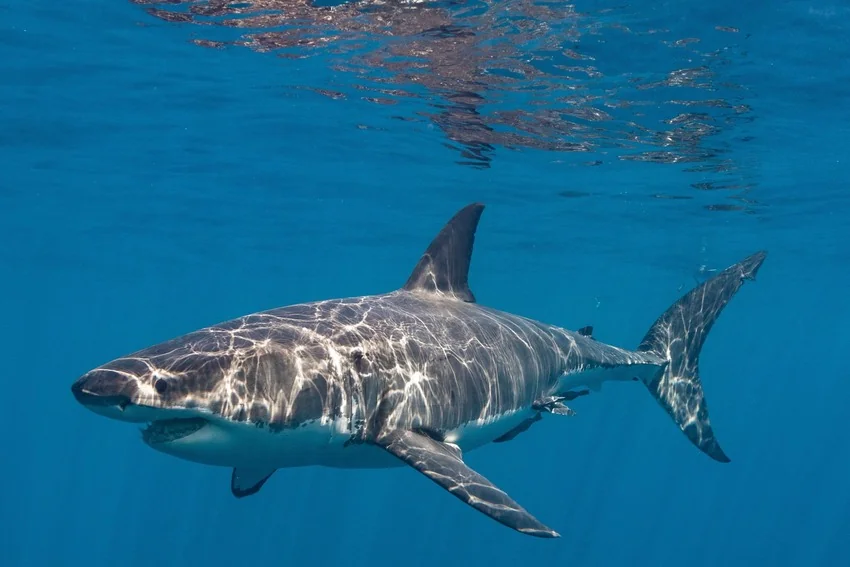
To understand Shark depth records, it helps to first understand the main ocean depth zones. Light, temperature, pressure, oxygen, and food availability change as depth increases.
Sharks entering the mesopelagic or bathypelagic zones face darkness, cold, increasing pressure, and changing oxygen levels. For some species, however, movement into deep water is a regular part of feeding or migration.
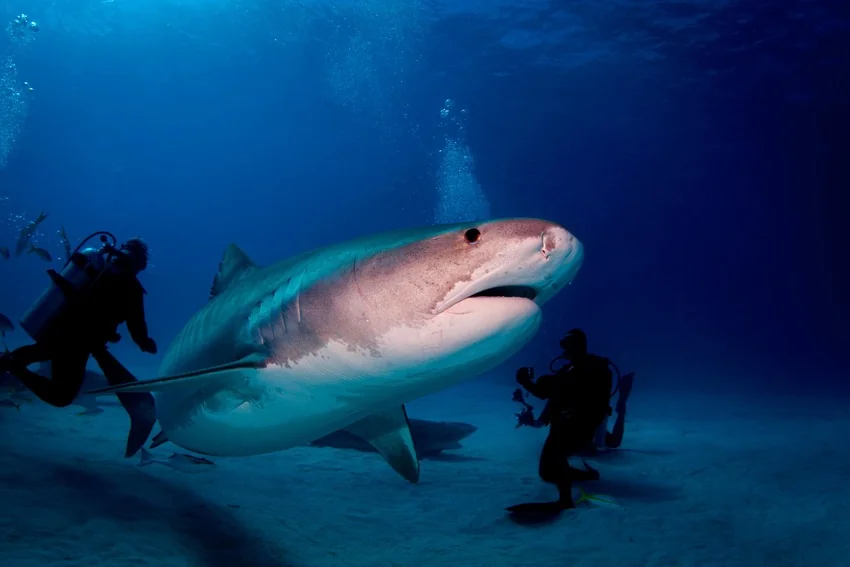
Measuring Shark depth is difficult because the animals move through a three-dimensional environment that is often inaccessible to researchers. Scientists combine tags, cameras, submersibles, and catch records to build a clearer picture.
Researchers use pop-up satellite archival tags, acoustic tags, and other depth-recording instruments to measure depth, temperature, movement, and sometimes location. Tagging can document repeated movement by the same Shark, although sensor range, attachment time, and premature release can limit the data.
Baited camera systems, landers, submersibles, and ROVs allow researchers to observe Sharks at depth. In 2025, eight Pacific Sleeper Sharks were recorded around a cow carcass placed at 5,344 feet in the South China Sea. The observation confirmed the species at that depth and documented feeding behavior, but it did not track a dive from the surface.
Trawl surveys, longline catches, and verified specimens can establish that a Shark occurs at a particular depth. These records help define habitat ranges, but they should not be described as directly measured dives unless the animal's movement was tracked.
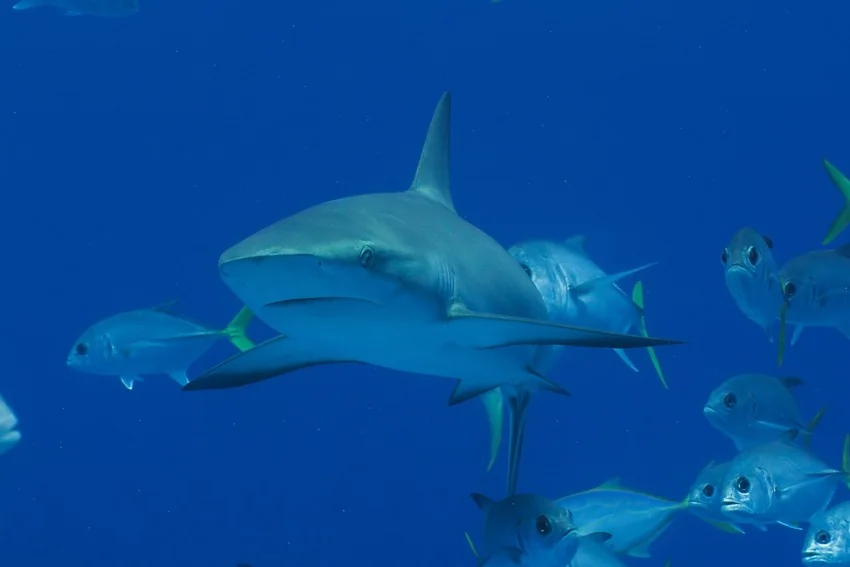
No single feature explains deep diving across all Sharks. Buoyancy, metabolism, sensory systems, and tolerance for cold and pressure vary by species and work together.
Unlike many bony fish, Sharks do not have a gas-filled swim bladder. This avoids the large volume changes that a gas-filled organ would experience as pressure increases during descent.
A large, oil-rich liver contributes to buoyancy and also stores energy. It does not make every Shark perfectly neutrally buoyant, but it can reduce the energy required to remain in the water column.
Many deep-living Sharks conserve energy through slow movement and relatively low metabolic demand. This can be useful where water is cold, and food is limited.
In darkness, Sharks use the lateral line, electroreception, smell, and low-light vision to detect movement and locate prey. The importance of each sense varies among species.
Deep-water Sharks often function at temperatures far below those at the surface. Their movement, metabolism, and cellular processes are adapted to the temperature range of their habitat.
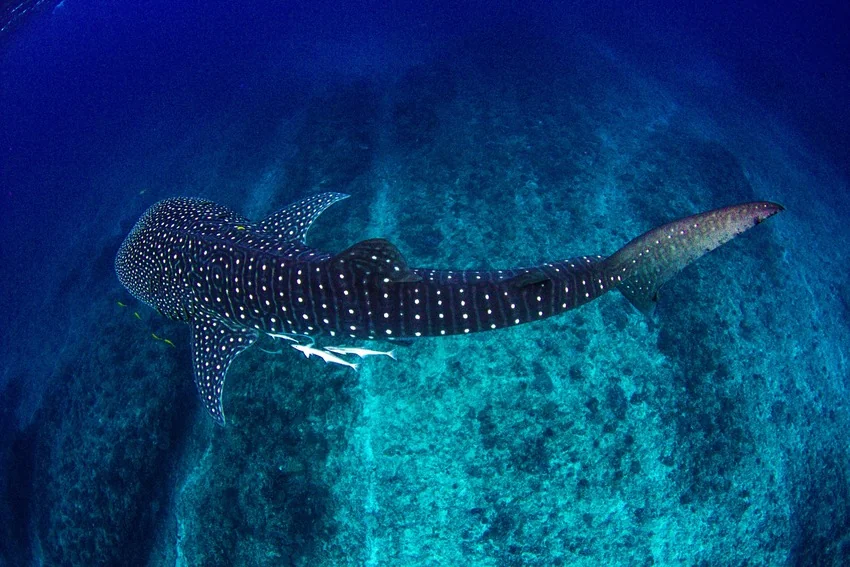
The figures below do not all represent the same type of record. Some are directly measured dives from electronic tags, while others are the deepest verified depths at which a species was observed or collected.
The Portuguese Dogfish has been reported at depths of up to 12,139 feet, making it the deepest-living Shark currently documented. It is a bottom-associated species found along continental slopes and abyssal plains. This is a habitat-depth record, not a directly tracked dive.
A Whale Shark tagging study recorded a maximum depth of 6,325 feet. The tag's depth failsafe was triggered during the event, showing how instrument limits can restrict what researchers learn about the deepest part of a dive. The result is a direct measurement from a tagged Shark, unlike occurrence records based on captures or observations.
Blue Sharks often move vertically through the water column as conditions and prey distribution change. One tagging study recorded a Blue Shark at 3,382 feet. Researchers associate many of these excursions with foraging and temperature, but patterns differ among locations and individual Sharks.
In 2025, eight Pacific Sleeper Sharks were filmed at 5,344 feet around a carcass on the seafloor. Larger individuals approached and fed more directly, while smaller individuals circled or waited. Researchers also observed eye retraction during feeding and proposed that it may protect the eye because the species lacks a nictitating membrane.
Bluntnose Sixgill Sharks have been reported from depths of up to 8,202 feet. They occupy habitats ranging from continental shelves to deep slopes and can make substantial vertical movements. The maximum figure is best presented as a reported habitat depth rather than a universal diving limit.
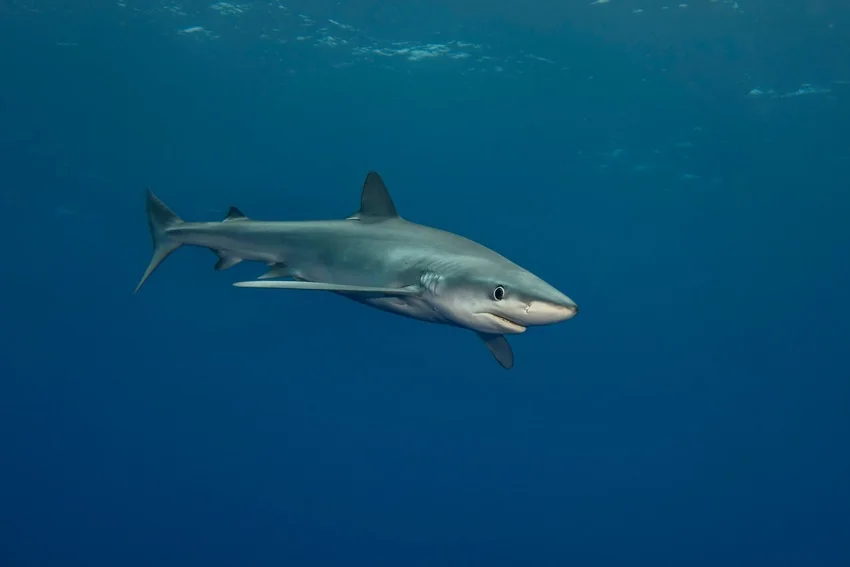
Deep water exposes Sharks to high pressure, darkness, cold, and, in some regions, low oxygen. Their ability to function under these conditions depends on multiple adaptations rather than a single anatomical feature.
Pressure increases by approximately one atmosphere for every 33 feet of seawater. At 3,000 feet, the surrounding pressure is about 92 atmospheres. Because Sharks lack large gas-filled spaces such as swim bladders, changes in pressure do not cause the same expansion and compression problems found in gas-filled organs.
High pressure can affect cell membranes, proteins, and chemical reactions. Deep-water species require cellular systems that continue functioning under pressure, but these mechanisms vary and are not equally documented for every Shark species.
Cold water generally slows metabolic processes, while low oxygen can restrict the depths and time available to some Sharks. Slow, energy-efficient movement can reduce demand, but tolerance differs among species and ocean regions.
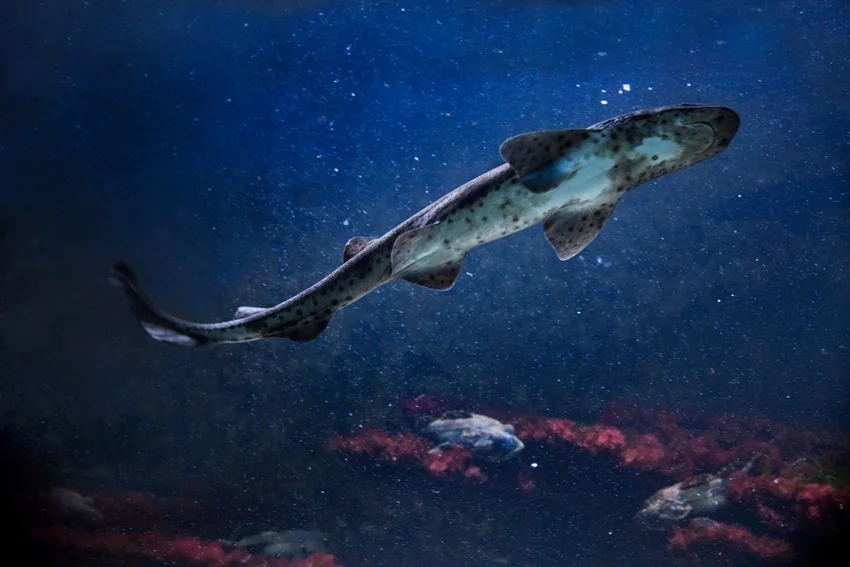
Sharks enter deep water for several possible reasons. Tagging and camera studies most strongly support foraging and movement between habitats, while other explanations remain species-specific or provisional.
Many deep dives are associated with foraging. The mesopelagic and bathypelagic zones contain fish, squid, plankton, and other organisms that move vertically through the water column. Blue Sharks and Whale Sharks may follow these resources to depth.
Vertical movement allows Sharks to use different temperature layers, prey fields, and parts of the ocean. Predator avoidance or reduced competition may contribute in some cases, but direct evidence is limited and should not be generalized across species.
Some Sharks alternate between cooler deep water and warmer surface layers. This behavior may balance access to prey with temperature-dependent muscle performance and recovery.
The Pacific Sleeper Shark observation suggests size-related differences in access to a carcass. Larger individuals fed directly, while smaller Sharks often circled or waited. This is evidence from one observed aggregation and should not yet be treated as a universal social hierarchy.
Depth use may also differ by sex, size, or reproductive stage. However, evidence for deep-water nursery areas or sex-specific reproductive habitat remains limited for many species.
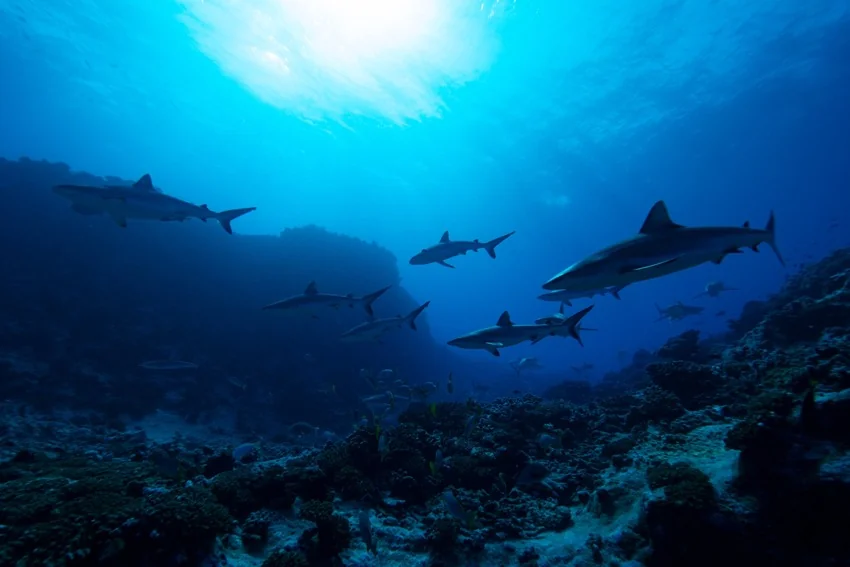
Deep-diving Sharks can be difficult to monitor, yet their habitats overlap with fisheries and changing ocean conditions. Reliable depth data help managers understand where and when vulnerable species encounter these pressures.
Many deep-diving Shark species grow slowly, mature late, and have relatively low reproductive output. Portuguese Dogfish, for example, are caught in deep-water fisheries. Bycatch from deep-sea fishing and other fisheries can reduce populations that may recover slowly.
Climate change can alter temperature, oxygen, and prey distribution throughout the water column. Expanding oxygen minimum zones may compress suitable habitat for some Sharks, while warming can change when and where they move vertically.
Many deep-water Sharks remain poorly studied. Tag depth limits, battery life, attachment duration, limited recoveries, and the cost of deep-sea observation all leave gaps in current records.
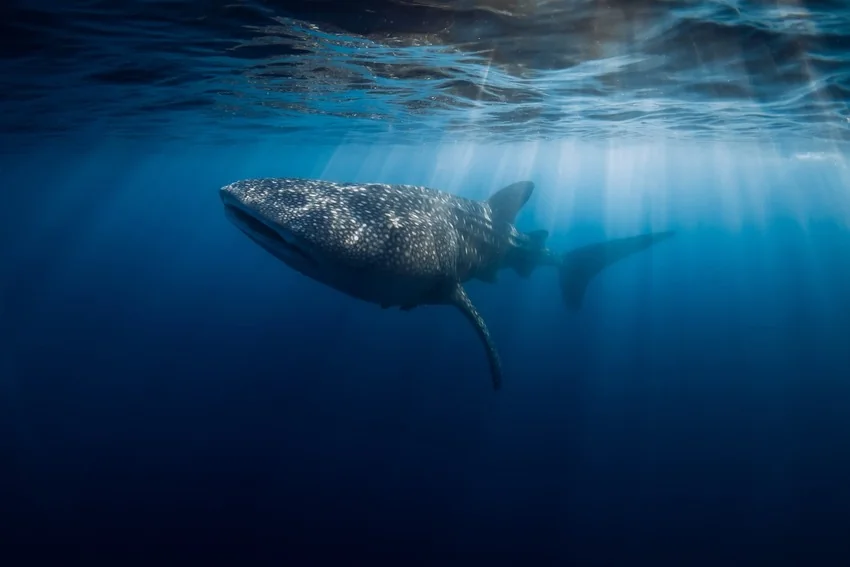
Improved tags, cameras, and autonomous systems are making deep-water Shark research more precise. The next challenge is combining these methods without treating one observation as a universal pattern.
The Whale Shark record shows the importance of pressure-resistant tags with greater measurement ranges. When a tag reaches its depth limit or activates a failsafe, the recorded value may be a minimum rather than the animal's absolute maximum depth.
Baited landers and ROVs can document behavior that tags cannot show. Combining video with telemetry and environmental measurements provides stronger context for what a Shark is doing at depth.
Clear science communication can help the public understand why a single depth observation is different from a tagged dive record. Citizen science may also contribute sightings and identification data when observations can be verified.
As depth data improve, fisheries management can better account for vertical habitat use, bycatch risk, and species-specific vulnerability. Effective measures still depend on location, jurisdiction, and the quality of available evidence.
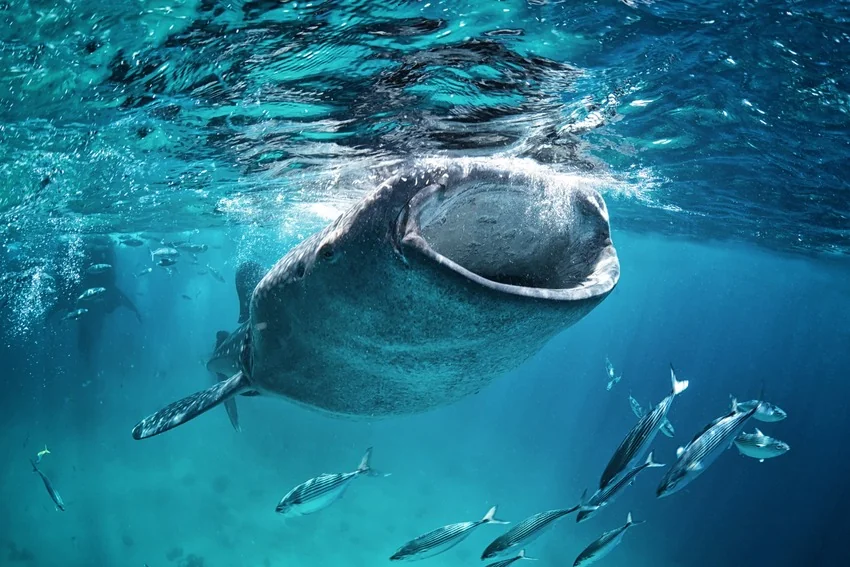
Deep-diving Sharks feed on fish, squid, and other organisms in mesopelagic and bathypelagic food webs. Their predation can influence prey behavior and the movement of energy through deep-water communities.
Sharks that move between depth zones can also transport organic matter and nutrients through feeding, metabolism, and waste. The scale of this contribution is difficult to quantify, so it should be described as a potential ecological effect rather than a proven increase in whole-ocean productivity.

Understanding fishing regulations and preserving specific fish species contributes to protecting fish populations and ecosystems and promoting responsible angling practices.
Anglers Booking Team
Shark fishing rules vary by species, location, fishing method, and jurisdiction. Some species are prohibited, while others have permit, size, bag, gear, or seasonal requirements. Anglers should check current NOAA Fisheries regulations and applicable state rules before targeting or retaining any Shark.
In US Atlantic federal waters, recreational Shark fishing may require an HMS permit and Shark endorsement, and prohibited species must be released with minimal injury. Non-offset, non-stainless-steel circle hooks are required in specified situations. Proper catch-and-release fishing remains important even where retention is legal.
Sharks reach deep water for different reasons, and the evidence depends on how each record was collected. A tagged Whale Shark dive, a baited-camera observation of Pacific Sleeper Sharks, and a Portuguese Dogfish occurrence record are all valuable, but they do not measure the same thing.
Better tags and deep-sea observation tools will continue to refine known depth limits. Until then, the most accurate approach is to separate confirmed measurements from estimates and describe the limits of the available evidence.

The expert copywriters at Anglers Booking have meticulously crafted this article. Our dedicated team of writers provides valuable insights and information to enhance your angling experience.

October 14, 2024

April 9, 2025
Subscribe to our newsletter and receive a selection of cool articles every week.
Embark on unforgettable fishing adventures with us at Anglers Booking.
book your charter
September 8, 2026
August 21, 2026
August 18, 2026
August 15, 2026
August 12, 2026
August 8, 2026

August 4, 2026
April 17, 2026

You're now part of our exclusive community. Get ready for premium content and updates straight to your inbox.
close
Subscribe to our newsletter and receive a selection of cool articles every week.
Please enter a valid email address.
Be the first to know when we're back in action.
Please enter a valid email address.
Leave a Comment
Your email address will not be published. Required fields are marked *
Thank you for your comment! It has been submitted for review and will appear on the site shortly.