


Anglers Booking Team
The expert copywriters at Anglers Booking have meticulously crafted this article. Our dedicated team of writers provides valuable insights and information to enhance your angling experience.
 10 minutes read
Jacks are powerful saltwater fish. Speed, strength, and aggressive strikes are among their main characteristics. Belonging to the Carangidae family, these fish thrive in warm and temperate waters around the world. Anglers value them not only for their fighting ability but also for their wide distribution across coastal and offshore waters.
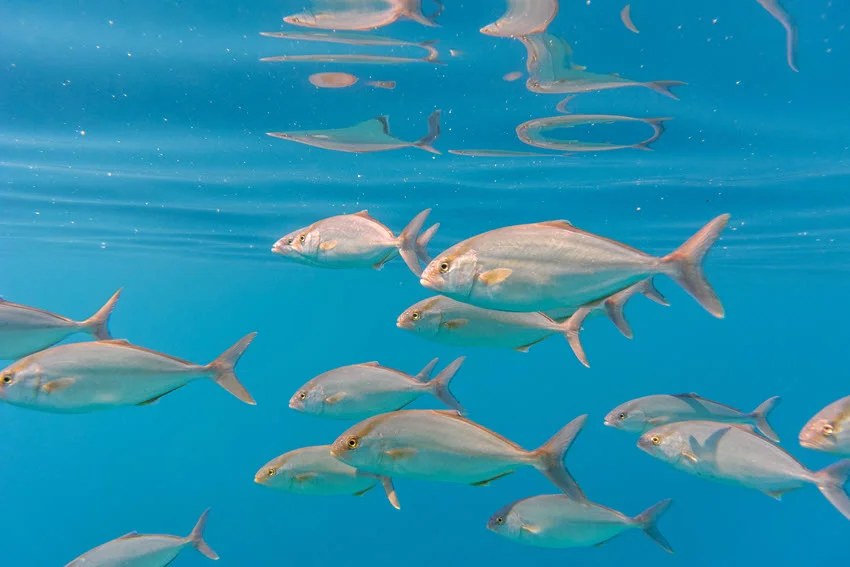
In this guide, we will discuss the most popular Jack species. You will learn how to identify them and which baits and gear are most effective. Of course, that is just a small part of the information that we prepared for you. So, it is the right time to start our new adventure!
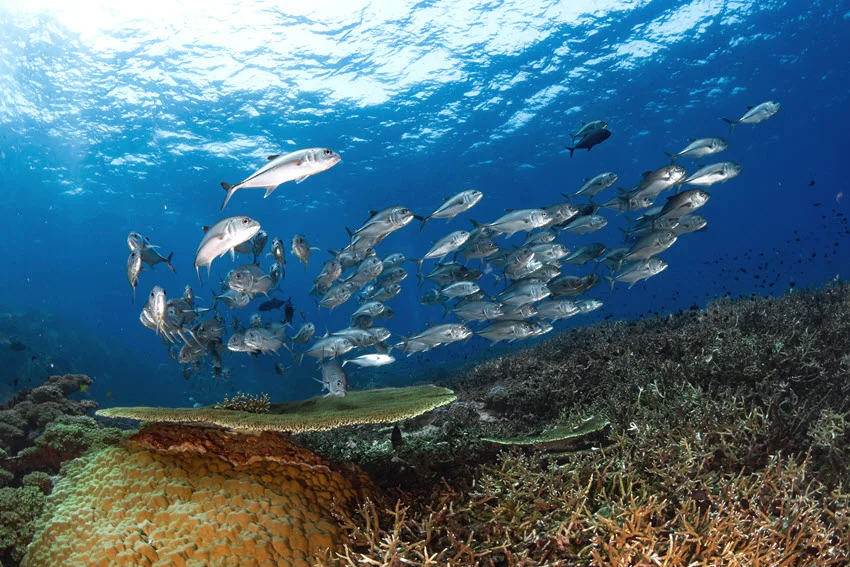
Jacks are mid-to-top-level predators. They feed aggressively on small fish. Very often, they move in schools, which influences prey abundance and the behavior of other predators in the area.
They can be found from shallow bays and estuaries to offshore reefs and wrecks. This ecological versatility supports the balance of the marine systems in which they live.
Anglers value Jacks for the challenge they provide when hooked. Their speed and stamina make them strong fighters. Their presence in different habitats ensures frequent encounters for recreational fishers.
Below, we will analyze 5 of the most famous species of Jacks. These are Greater Amberjack, Giant Trevally, Almaco Jack, Jack Crevalle, and Spanish Jack.
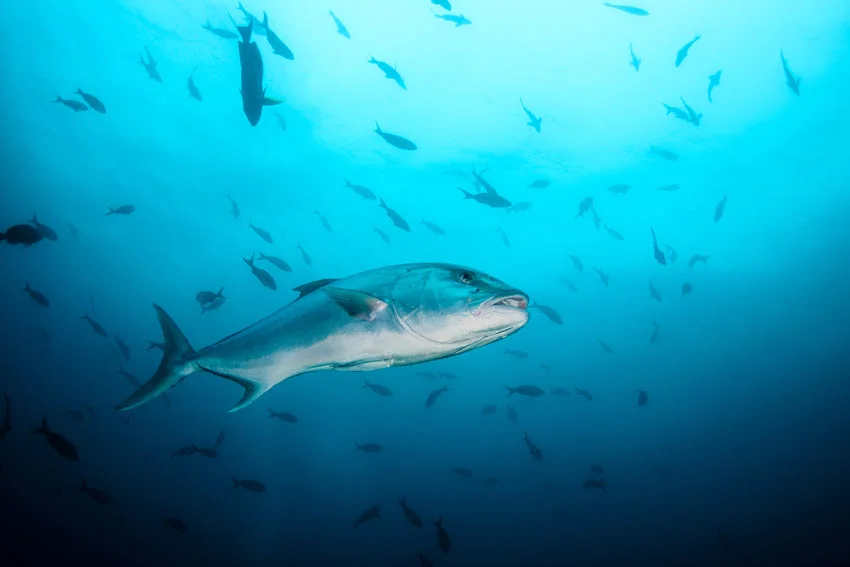
The Greater Amberjack is a robust, elongated fish. Its coloration ranges from brownish to bluish-grey on the dorsal side, contrasting with silvery-white underparts. A distinctive diagonal sooty stripe runs from the snout along the center of the back dorsal fin. Another dark stripe extends from the upper jaw across the eye to in front of the first dorsal fin. The fins are dusky in color. The second dorsal and anal fins have a low anterior lobe.
Greater Amberjacks can grow up to 72 inches in length. However, most adults reach lengths of about 36 inches. Their weight ranges from 40 to 60 pounds. Females grow larger and live longer than males.
Greater Amberjacks inhabit the western Atlantic Ocean (Gulf of Mexico and the Caribbean Sea). They inhabit deep waters near reefs and wrecks. They can be found at depths ranging from 60 to 300 feet. These habitats offer a safe refuge for the species.
They are also present in the Mediterranean Sea, where they are distributed along the coasts of southern Europe and northern Africa. In these regions, they occupy similar deep-water habitats, favoring areas with complex underwater topography.
The peak fishing season for Greater Amberjack varies by region. However, most often it occurs during the warmer months. In the Gulf of Mexico, the best times are from late spring through early fall. At these periods, they could be found near the surface or in mid-water columns.
For Greater Amberjack, early morning is usually the best time of day. Fishing in the late afternoon is also productive. Additionally, fishing at periods of low light can increase catch rates. Greater Amberjacks are very active at these times.
To target Greater Amberjack, anglers should use heavy-duty rods and reels. A rod rated for 30 to 50-pound test line is suitable. This rod should be paired with a reel equipped with a powerful drag to withstand the fish's vigorous runs. Braided line should be used because of its strength and sensitivity.
Leaders should be made of abrasion-resistant materials to prevent break-offs when the fish dives into structures. Hooks should be large, strong, and corrosion-resistant.
Live bait (pinfish, menhaden, or squid) is the first option for catching Greater Amberjack. These baits can be presented near the bottom or in the mid-water column, depending on the fish's location.
Artificial lures (jigs and spoons that imitate baitfish or squid) can also be productive. Brightly colored lures work well at greater depths.
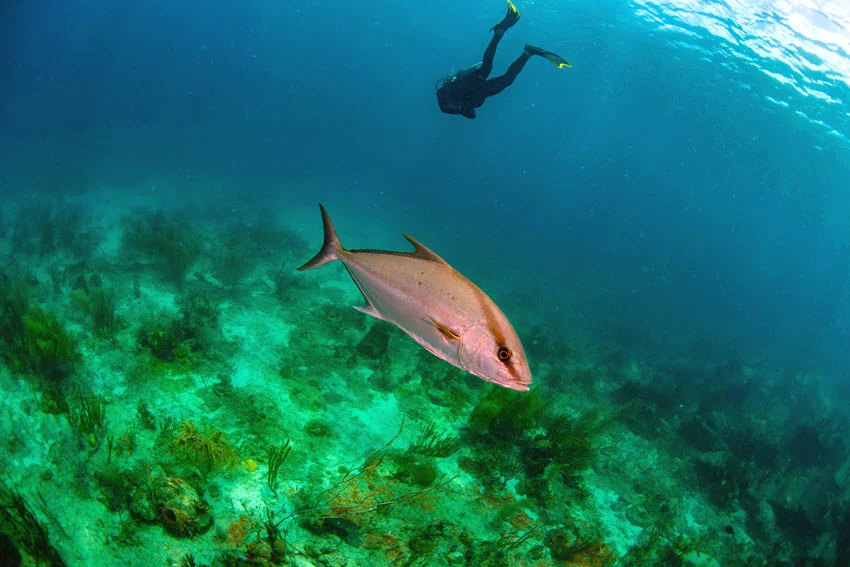
The Almaco Jack has a slightly high-backed body. Its color is dusky on top, dark brown or blue‑green, with lighter lower sides and a belly that may appear lavender or brassy. There is a faint amber or olive stripe along each side. Its dorsal and anal fins are long and somewhat sickle‑shaped, with the first few rays of the second dorsal fin very long. The tail is forked.
Adults commonly reach about 30 to 36 inches in length. Their average weight is around 10 to 20 pounds. In ideal conditions, they can grow to about 60 inches long and weigh as much as 135 pounds (rarely).
Almaco Jacks are commonly found near offshore reefs, wrecks, and rocky bottoms, at depths ranging from 15 to 800 feet, though anglers encounter them around 100 to 300 feet. Juveniles may remain near floating debris or sargassum mats.
Geographically, they are widespread in the Atlantic and Pacific Oceans, including the Caribbean, Gulf of Mexico, and the surrounding areas of island chains in the Pacific. Their wide distribution makes them accessible to many anglers.
The peak season is spring through fall (April to November) when water temperatures favor activity. During these months, Almaco Jacks are more likely to be near reefs and feeding grounds.
Early morning is the best time, as the fish become more active. Night fishing can also be effective since they sometimes rise in the water column under low light.
Medium-to-heavy rods and reels rated for 20 to 50 lb test line are ideal for handling the strength and speed of Almaco Jack. Braided main lines provide both sensitivity and durability, making it easier to feel strikes and set the hook efficiently.
Leaders should be abrasion-resistant to prevent break-offs near reefs and wrecks. Strong circle hooks are preferred for secure hook sets and catch-and-release fishing.
Live bait (small fish or squid) is effective when fished near reef or wreck structures, targeting the depths where Almaco Jack typically feed.
Artificial lures, including jigs, spoons, and plugs, are also productive, especially at 100 to 300 feet, where adult fish are commonly found. Bright or reflective lures can increase visibility. They will attract strikes in deeper or murky water.
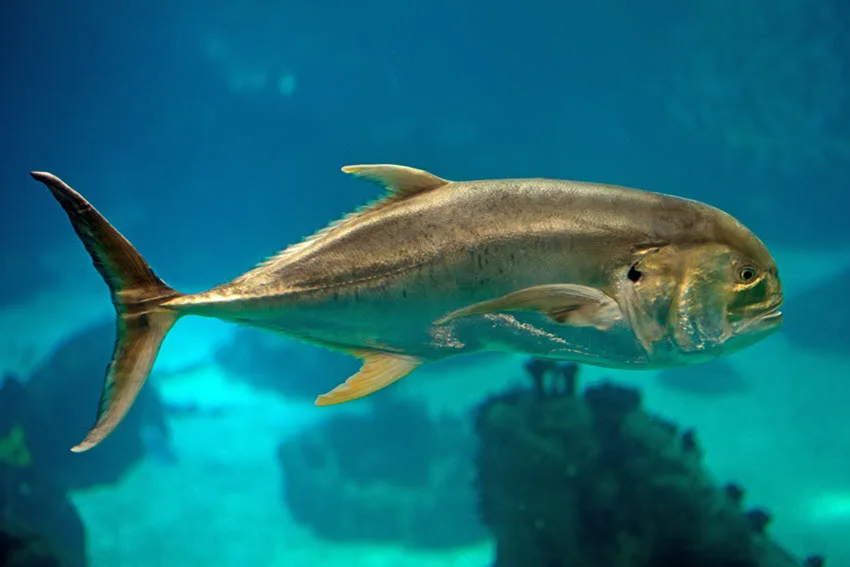
Jack Crevalle is muscular with a slightly rounded head and a deep, compressed body. Its dorsal surface is greenish-brown, while the sides are silvery with a yellowish tinge. A dark blotch appears on the gill cover, and the tail fin is strongly forked. They have a robust and predatory look. They are famous for being fast swimmers.
They generally reach 24 to 36 inches in length and weigh between 5 and 20 pounds. In some situations, larger specimens may occasionally exceed 36 inches and 25 pounds.
Jack Crevalle inhabit coastal waters, estuaries, and nearshore reefs. They are frequently found at depths of 5 to 100 feet, often schooling around baitfish or structure.
They are common along the Atlantic coast of the U.S., the Gulf of Mexico, and the Caribbean Sea. Juveniles use shallow waters for shelter, while adults patrol inshore and nearshore areas searching for prey.
Peak season is late spring to early fall, when water temperatures are warmer, and schools of prey fish are abundant.
Morning is the best time to catch this type of Jack. Late afternoon is also a good time to expect fishing success.
Medium spinning or baitcasting rods rated for 20 to 30 lb test line are an excellent option for Jack Crevalle. Braided lines are preferred for their sensitivity, allowing anglers to detect even subtle bites.
Leaders should be abrasion-resistant to withstand contact with the structure and sharp fins. Hooks sized 2/0 to 4/0 are used very often. They provide a strong hold for catch-and-release or kept fish.
Using some of the best Jack Crevalle bait (mullet, menhaden, or small squid) is highly effective when fished near schools at depths of 5 to 50 feet. This mimics the natural prey of Jack Crevalle, triggering aggressive strikes.
Jigs, spoons, and surface plugs are among the most effective artificial lures. They are effective for targeting feeding fish near the surface or in areas with active bait schools.
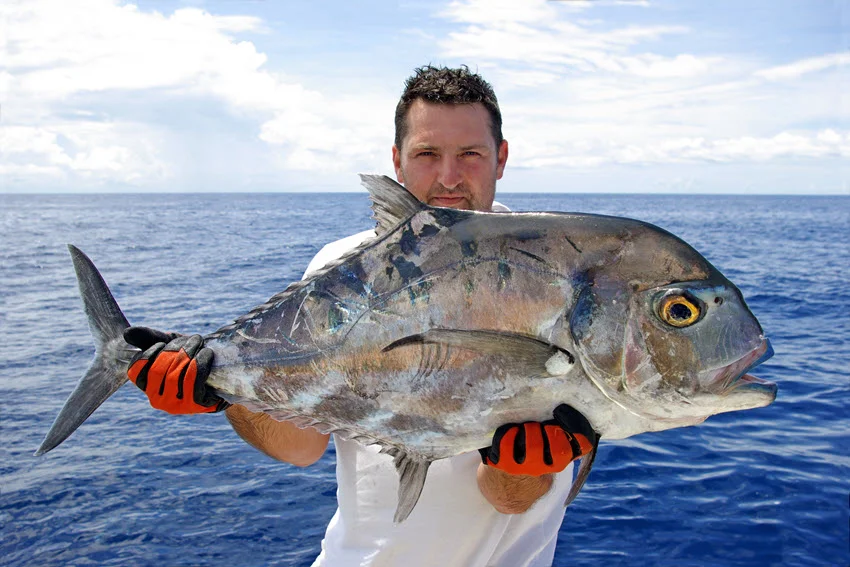
The Giant Trevally is another very popular type of Jacks. Its dorsal side is dark grey to black, while the sides and belly are silvery. Juveniles often have scattered dark spots on the body that fade with age. The head is steep with a blunt snout, and the jaws are strong with a large mouth. Its dorsal and anal fins are relatively long. The tail is deeply forked, which helps with quick acceleration. Adult males may appear darker and more metallic.
Giant Trevallies can grow up to 66 to 72 inches in length. Their maximum weight is up to 176 pounds. Most adult fish encountered by anglers are 36 to 48 inches long. The average weight of Giant Trvally is between 40 and 60 pounds. This size makes them among the largest and most sought-after sport Jacks in the Indo-Pacific region.
Juveniles thrive in shallow coastal areas and estuaries. At offshore reefs, lagoons, and atolls, adult fish can be found. They are often encountered at depths of 10 to 200 feet, depending on age.
Giant Trevallies are widely distributed across the Indo-Pacific, including eastern Africa, the Red Sea, India, Southeast Asia, northern Australia, and Hawaii. Juveniles prefer turbid, sheltered waters, while adults patrol reefs, channels, and exposed offshore areas searching for prey.
The best time to catch Giant Trevally is in warmer months. At this period, the fish feed very often. In the Seychelles and Maldives, this coincides with the dry season.
The early morning and late afternoon hours are most productive, as Giant Trevallies actively hunt prey during low light. Cloudy weather can also increase feeding activity, improving anglers' chances.
Heavy-duty rods rated for 50 to 80-lb test line are recommended, paired with a high-capacity reel with strong drag. Braided lines provide enough strength. Abrasion-resistant leaders are necessary for fighting large fish near rocks. Large, sharp circle hooks (8/0 to 10/0) are standard.
Anglers often use both trolling and casting setups, depending on water depth. Leaders help prevent break-offs during explosive runs or sudden dives toward structure.
Live baitfish (mullet, sardines, or small trevally) are the best for this type of Jacks. They are often fished near reefs, channels, or drop-offs at depths of 10 to 200 feet (as noted earlier).
Artificial lures, including poppers, jigs, and stickbaits, work great. They could be effective for surface-striking behavior. Bright, reflective lures are useful in greater depths to attract attention.
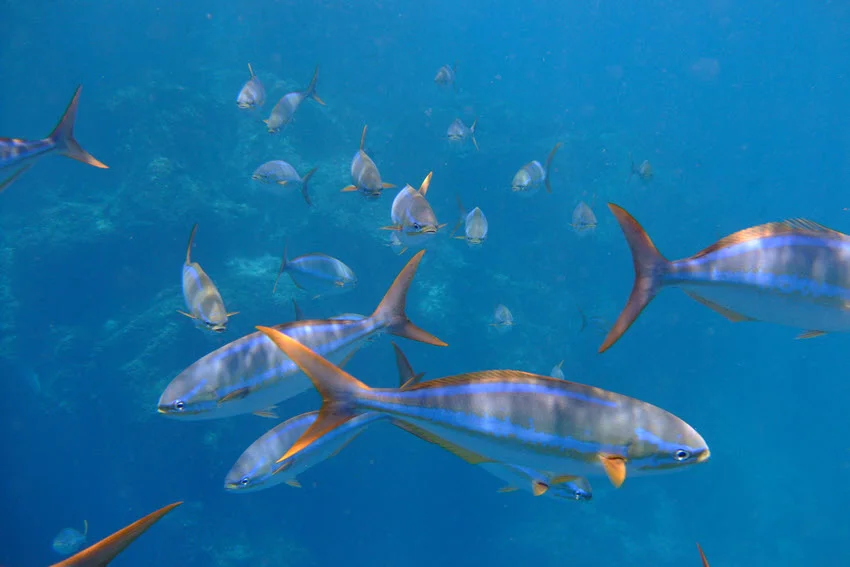
Spanish Jack is similar in shape to Jack Crevalle but has a slightly lighter coloration. The dorsal side is bluish-grey, with silvery sides and a silvery belly. A dark spot may be visible on the gill cover, and fins are generally yellowish or grey. The tail is deeply forked, and the head is blunt with strong jaws.
Spanish Jack measures 18 to 30 inches and weighs 15 to 20 pounds, making it slightly smaller than Jack Crevalle. Larger individuals may weigh up to 25 pounds.
They are distributed in the eastern Pacific, from southern California to Peru, and are often found near reefs, rocky coasts, and bays. They inhabit depths of 10 to 80 feet, preferring structured habitats where they can find abundant prey fish.
Adults patrol offshore reefs, while juveniles may stay closer to estuaries and shallower coastal areas for shelter and food.
Peak season aligns with the warmer months, spring through early fall, when water temperatures are ideal, and baitfish are plentiful.
Generally, for all Jacks, morning stands us as the best period of the day. Additionally, late afternoon can be productive, as Spanish Jacks are active hunters in low light.
Medium rods (15 to 25 lb test line) should be paired with baitcasting reels. Leaders should be abrasion-resistant to prevent line breakage.
Hooks should be sharp and strong to handle the fish's bites, ensuring reliable hook sets whether practicing catch-and-release, paired with baitcasting reels, or keeping your catch.
Live bait (small fish and shrimp) is effective at depths of 10 to 50 feet near structured areas, mimicking natural prey and provoking strikes.
Artificial lures, including spoons, jigs, and small plugs, are also productive, particularly in shallower waters where Spanish Jack actively hunts.
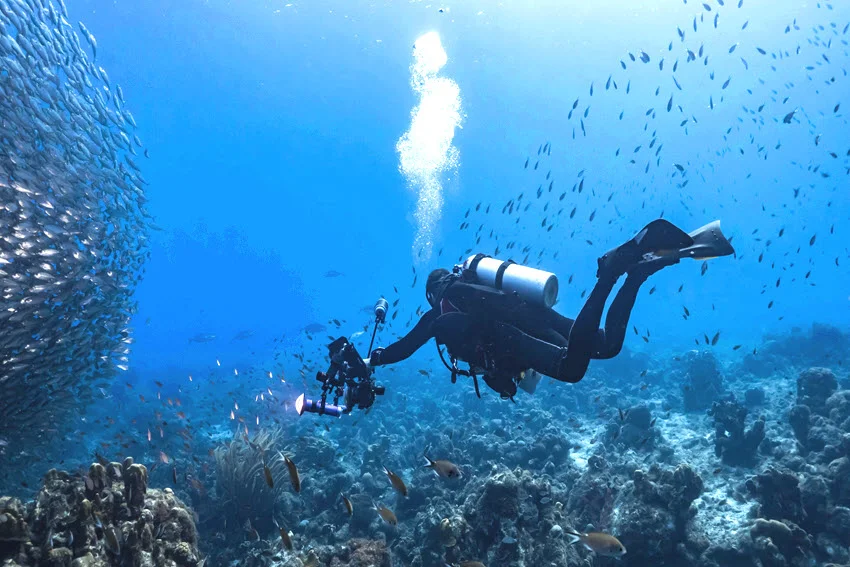
Catching Jacks successfully requires knowing where they like to hide. Look at reefs, wrecks, rocky ledges, or artificial platforms. Jacks often patrol these areas hunting for smaller fish, so fishing near these structures increases your chances. Using a fish finder is a great way to find Jacks.
Timing is critical. Early morning or late afternoon are the best times of day because Jacks feed actively during low-light conditions. Days with some cloud cover can also improve success, as Jacks are less cautious when sunlight is reduced. Seasonal patterns matter too. Most species are more active during warmer months, so plan your trips accordingly.
Choosing the effective gear can make a big difference. Medium to heavy rods with strong reels and braided line are recommended for fighting Jacks. Leaders should be abrasion-resistant because Jacks often dive toward structures. Hooks must be sharp and strong enough to handle their powerful bites.
Bait and lure selection also matters. Live bait works very well. Artificial lures can also attract aggressive strikes. Pay attention to water movement and present the bait near schools of prey or in the midwater column, depending on the species and time of day.
Understanding fishing regulations and preserving specific fish species contributes to protecting fish populations and ecosystems and promoting responsible angling practices.
Anglers Booking Team
When fishing, do so safely and in accordance with the laws and regulations. Proper precautions protect you and your crew. Also, it helps preserve Jack populations.
Before heading out, you must know how to fish safely. The following tips can reduce risks. Don't miss the part below.
It is not difficult to follow these simple safety tips. Respecting them ensures you have a safe and relaxed Jack fishing trip.
Fishing regulations protect Jack populations. Respecting local rules and regulations is necessary. Below, we discuss it in detail.
Following regulations ensures balanced Jack populations and preserves marine habitats. We must note that if you fail to follow any of these rules, you will incur a penalty fee, which could significantly disrupt your day on the water.
Jacks are some of the toughest saltwater fish an angler can encounter. Their speed, power, and wide distribution make them a thrilling target worldwide. With the right gear, bait, and strategy, every encounter with a Jack is an unforgettable fight.
Which Jack species is your favorite to catch? Share your go-to Jack fishing tip or tell us which technique from this guide you plan to try first in the comments below.

The expert copywriters at Anglers Booking have meticulously crafted this article. Our dedicated team of writers provides valuable insights and information to enhance your angling experience.

March 4, 2025

July 24, 2025
Subscribe to our newsletter and receive a selection of cool articles every week.
Embark on unforgettable fishing adventures with us at Anglers Booking.
book your charter
September 8, 2026
August 21, 2026
August 18, 2026
August 15, 2026
August 12, 2026
August 8, 2026
August 4, 2026
April 17, 2026

You're now part of our exclusive community. Get ready for premium content and updates straight to your inbox.
close
Subscribe to our newsletter and receive a selection of cool articles every week.
Please enter a valid email address.
Be the first to know when we're back in action.
Please enter a valid email address.
Leave a Comment
Your email address will not be published. Required fields are marked *
Thank you for your comment! It has been submitted for review and will appear on the site shortly.