


Anglers Booking Team
The expert copywriters at Anglers Booking have meticulously crafted this article. Our dedicated team of writers provides valuable insights and information to enhance your angling experience.
 9 minutes read
Tarpon, often called the "Silver King," are one of Florida's most famous game fish. They are known for explosive strikes, long runs, and big aerial jumps, and they can grow well over 200 pounds.
Tarpon are found along Florida's coastlines, bays, and inlets, especially during the warmer months. They migrate seasonally, following warm water and schools of baitfish.
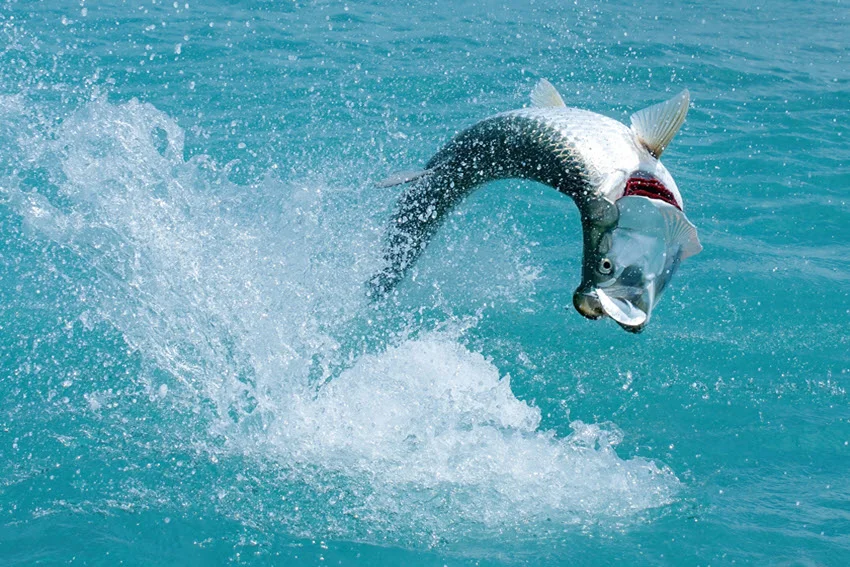
They can be caught year-round in South Florida. However, the main Tarpon season runs from spring through early fall. The Florida Fish and Wildlife Conservation Commission (FWC) regulates Tarpon fishing to protect the species.
In this guide, we will outline the best times for fishing, where to find it, the essential rules, and handling practices to understand before you head out on your new adventure.
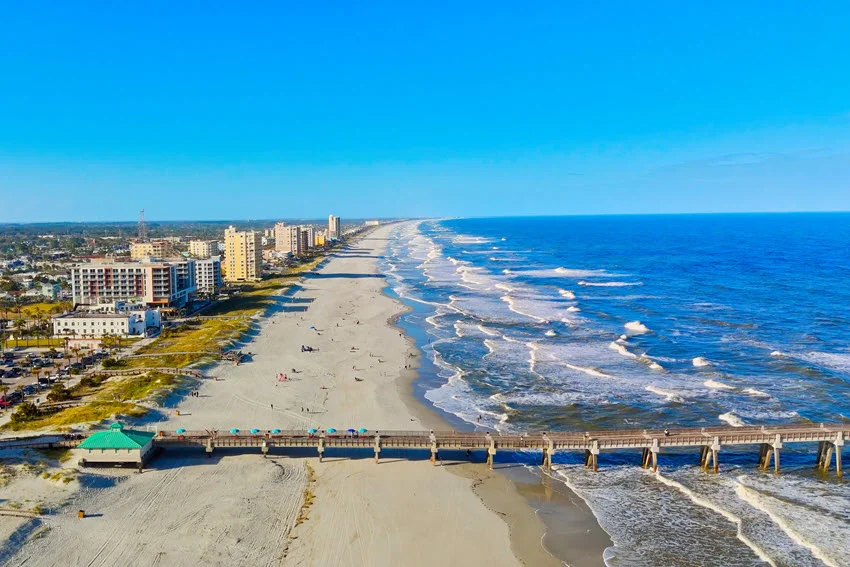
Florida Tarpon rules are consistent statewide, but anglers usually discuss them by coast: the Atlantic and the Gulf. The rules are nearly identical across both, and the FWC strictly enforces them to protect Tarpon populations.
On Florida's Atlantic Coast, Tarpon fishing is open year-round, but harvest is not allowed. All Tarpon have to be released as soon as possible. There is only one exception. An angler can retain a Tarpon if they possess a valid Tarpon tag, which may be purchased for only taking a world or state fish record. A person may buy 1 Tarpon tag per year.
Tarpon greater than 40 inches must remain in the water at all times, except where tagging for record purposes is allowed. Snagging, spearing, or using multiple hooks with live or dead bait is not permitted. These prohibited gear and method rules apply within and outside Florida waters.
On the Atlantic Coast, Tarpon are found around passes, inlets, and bridges, where baitfish tend to congregate. They are caught from large schools, especially during spring and summer, and are known for their high jumps and acrobatic fights when hooked.
Tarpon harvest is forbidden, and fish over 40 inches cannot be taken from the water without an issued Tarpon tag as part of an active record application. All regions along the Gulf (Panhandle, Big Bend, Tampa Bay, Sarasota Bay, Charlotte Harbor, and Southwest Florida) have the same rules.
Catch-and-release rules, like the ones above, help prevent stress on spawning fish and protect their long-term population since Tarpon are known to migrate seasonally and gather in large schools along beaches, bridges, and passes.
Along the Gulf Coast, one can often notice Tarpon cruising shallow flats and tidal passes in pursuit of schools of baitfish. Their bright silver bodies glint in the sun, making them visible from boats or when sight fishing.
Tarpon regulations are protection-oriented rather than harvest limits. Tarpon grow slowly and migrate long distances. Because of this, catch-and-release practices become very important. They help keep Tarpon populations healthy and available for future generations of anglers.
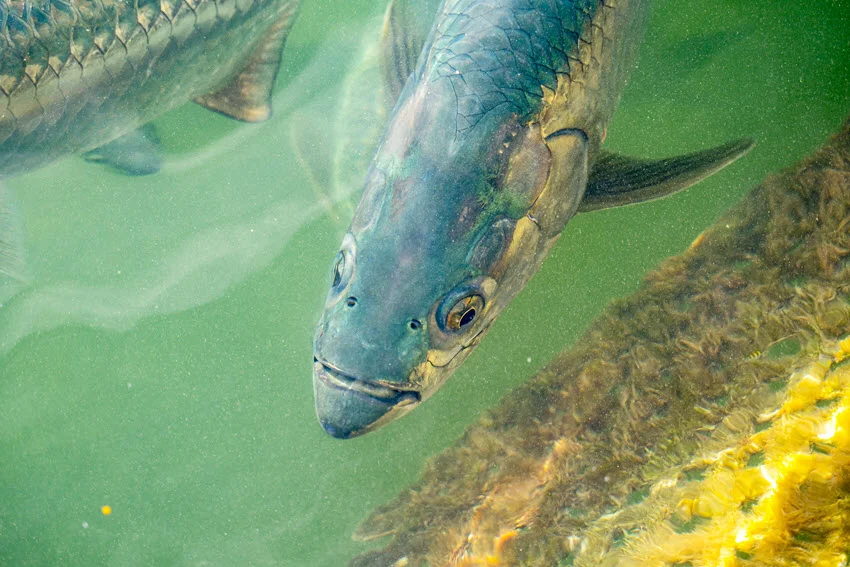
Understanding how Tarpon behave throughout the year is essential if you want to catch them consistently. Tarpon are strong, silver-colored fish that rely on stealth and tidal currents. Their large, upward-facing eyes help them spot baitfish near the surface. Anglers usually find them near passes, bridges, and inlets.
They prefer warm, brackish waters and are most active between 75°F and 85°F. Tarpon are very sensitive to cold. They move into deeper channels or protected bays when temperatures go below 70°F to stay safe.
Tarpon are predators that feed on small fish, shrimp, and crabs. They are very active around tidal changes, especially on outgoing tides when bait is pushed off flats and out of shallow areas. It is during these periods that Tarpon often roll or jump near the surface, making them easy to notice for anglers.
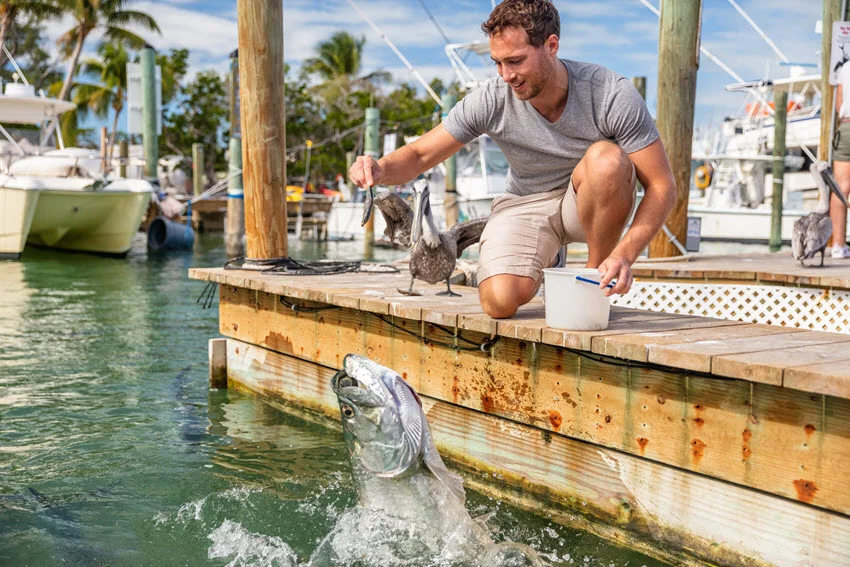
The best time to fish for Tarpon is from late spring through early summer. Below, we detail the daily and weather factors that affect Tarpon behavior.
When you plan your trips around seasonal peaks, moving tides, and stable weather, you significantly improve your chances of a successful Tarpon trip.
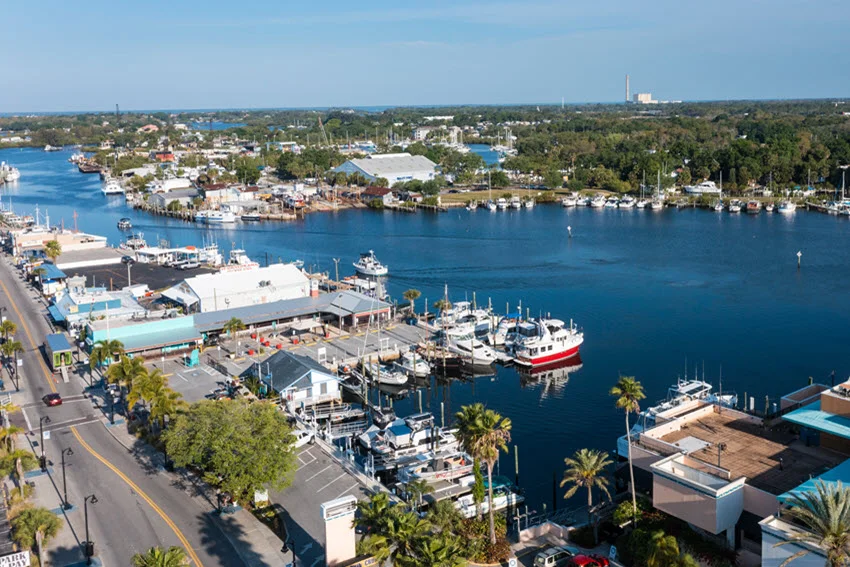
Across Florida, there are many great places to chase Tarpon. Here are some of the most popular and productive locations.
No matter where you go to fish, all of these regions also provide excellent opportunities for Tarpon fishing, depending on when you plan your trip.
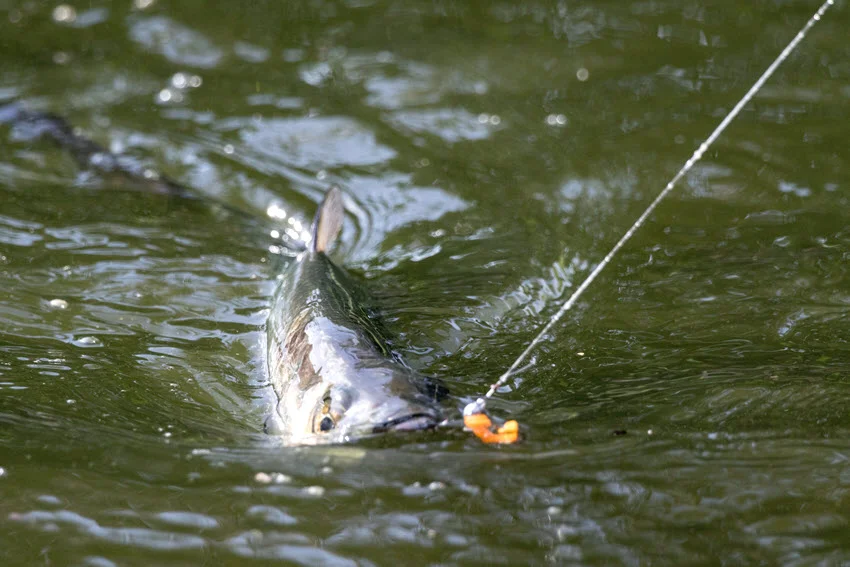
To have a successful Tarpon trip, you need a strong and durable setup that can handle their size and power. Here's what to consider when selecting your tackle.
If you use the effective tackle and keep knots strong, you are halfway to a successful catch. At the same time, you will improve your hookup rate.
Understanding fishing regulations and preserving specific fish species contributes to protecting fish populations and ecosystems and promoting responsible angling practices.
Anglers Booking Team
Florida fishing for Tarpon also has rules that anglers must abide by. Anglers must have all necessary fishing licenses; failure to do so carries penalties for fishing without them.
The key regulation for fishing in Florida involves a Florida saltwater fishing license and a Tarpon Tag, which an angler needs only if they catch a Tarpon for a record fish.
Both types can be ordered online and from trustworthy local retailers. However, don't forget: Tarpon are not for sale, and nearly all specimens are released.
Tarpon are robust yet delicate fish, so they should always be treated with care. Keep them in the water whenever possible, and minimize air exposure. If you want a quick shot, support the fish horizontally in the water, avoiding lifting it by the jaw. Never drag Tarpon onto dry surfaces.
Use tackle strong enough to land the fish efficiently, then release it only when it has regained strength and can swim away on its own. Careful handling and quick releases help protect Florida's Tarpon fishery for future anglers.
Florida Tarpon fishing provides anglers with memories of a lifetime. Learning how to care for and respect these fish is vital. Follow these tips, and you can live every moment of your fight with this incredible creature while taking care to protect it for yourself and for those who come in your wake.
Now it is your turn. What is your favorite spot for Tarpon fishing in Florida: the Keys, Boca Grande, or around Tampa Bay? Drop a comment with your questions or your best tip; we are always happy to hear from fellow anglers.
Disclaimer: Fishing regulations and open seasons may vary by region and are subject to change. The information in this guide is for general reference only. Learn the latest fishing rules, size limits, and season dates on the official websites of the state or federal government before your trip.

The expert copywriters at Anglers Booking have meticulously crafted this article. Our dedicated team of writers provides valuable insights and information to enhance your angling experience.

January 24, 2025
June 6, 2026
Subscribe to our newsletter and receive a selection of cool articles every week.
Embark on unforgettable fishing adventures with us at Anglers Booking.
book your charter
October 2, 2026
September 8, 2026
August 21, 2026
August 18, 2026
August 15, 2026
August 12, 2026
August 8, 2026
August 4, 2026

You're now part of our exclusive community. Get ready for premium content and updates straight to your inbox.
close
Subscribe to our newsletter and receive a selection of cool articles every week.
Please enter a valid email address.
Be the first to know when we're back in action.
Please enter a valid email address.
Leave a Comment
Your email address will not be published. Required fields are marked *
Thank you for your comment! It has been submitted for review and will appear on the site shortly.