


Anglers Booking Team
The expert copywriters at Anglers Booking have meticulously crafted this article. Our dedicated team of writers provides valuable insights and information to enhance your angling experience.
 14 minutes read
We challenge you to find the inhabitants of the oceans and seas that are more associated with fear, power, and ultimate predatory power than a shark! And if you put a Bull Shark and a Great White Shark against each other in the ring, it would be a clash of two ocean predators of power versus precision, stealth, and raw power. Both are indeed dangerous in their specific way.

On the one hand, you have the ultimate shallow-water opportunist with a fearless attitude and sharp focus, and on the other, a massive, cold-blooded sea beast built for explosive ambushes with awe-inspiring jaws in the wildest depths of the ocean.
We know you want to learn more about these beasts, so we invite you to stick with us as we break down their habitats, hunting strategies, and much more!
It is pretty clear that both sharks are dangerous apex predators, but each is in its own domain. They are significantly different, live in opposite habitats, behave differently, and have different hunting styles, making each a force to be reckoned with.

Both sharks are hunted primarily because of their reputations: They are dangerous and highly aggressive, and both will bring glory to whoever defeats them. It is usually 7 to 11 feet long and weighs up to 500 pounds.
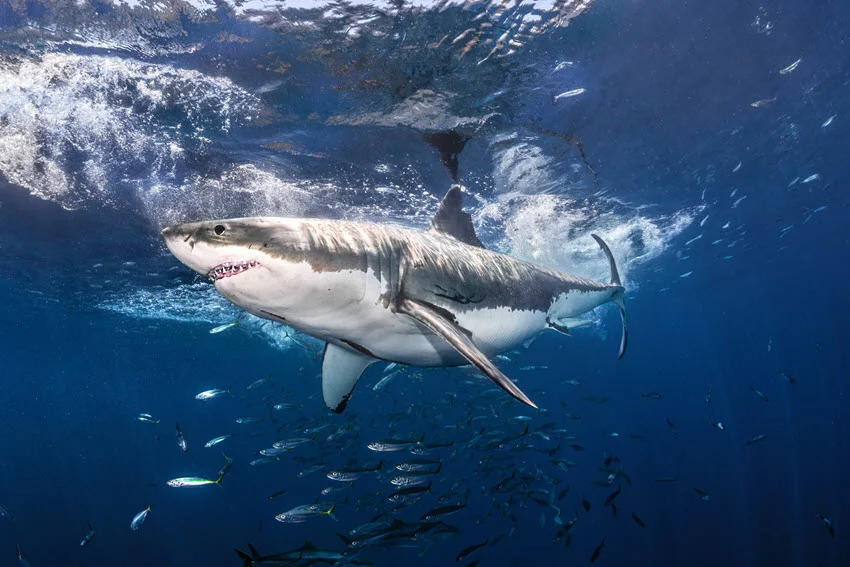
On the other hand, the Great White Shark is the heavyweight champion of the ocean, reaching lengths of 15 to 20 feet and weighing over 4,000 pounds! Such power makes them a real destructive force, which is very difficult to overcome.

Bull Sharks have a simple body color. Their backs are gray-blue, gradually changing to a lighter, almost white color on the belly. Thanks to this color, they easily camouflage in the murky waters of rivers and coastal areas, making them extremely dangerous and invisible predators.
Great White Sharks are not white but have a contrasting two-tone appearance, with a dark grey or bluish back and a bright, white belly. This so-called contrashade is the ultimate advantage in hunting because, from a bird's perspective, their dark part blends in with the ocean's depth. At the same time, looking from below, their prey is more difficult to spot because of their light belly and sharp lines between dark and light colors.

These types of sharks live longer than the average fish, so Bull Sharks usually live between 12 and 16 years, although, in ideal conditions, some specimens can reach 25 years. Their life span is limited by their aggressive lifestyle and stay in coastal areas, where they are exposed to a greater risk of human impact.
Great White Sharks have lifespans similar to humans, often living between 30 and 70 years. These giants mature slowly, and only in their later years do they reach their full potential as predators. They are dangerous and unloved, but they are necessary because every Great White Shark plays a key role in maintaining the ocean's ecosystem.
These two sharks differ significantly in habitat and behavior. Bull Sharks are known to swim in salt and fresh waters, while Great whites stick to deeper, colder ocean areas.

Bull Sharks are relatively common in warmer coastal waters around the world and are unique in that they can survive in freshwater. In some areas, they can be found in rivers and lakes connected to seas and oceans. Some of the most famous locations include the Amazon River, Mississippi, and the coasts of Australia, India, and Africa.
Rest assured that you will not meet Great White Sharks in freshwater. They prefer colder, deeper ocean waters. They are most often found along the coasts of South Africa, California, and Australia, as well as in the north of the Atlantic Ocean. These sharks are migratory, so they move following seasonal migrations, following prey, and changes in water temperature.

Sharks are always and forever symbols of risk and danger. Since they change their behavior seasonally, they provide a real opportunity for adventure to those willing to follow their migrations and adapt their fishing techniques.
Sharks are very dynamic and behave differently depending on the seasons. They move in search of prey and more favorable conditions. Bull Sharks and Great White Sharks follow a similar pattern, and you can find out exactly how and where below.
Spring brings freshness to the underwater world, and that's when their migratory journeys begin. Bull Sharks become more active as water temperatures rise, approaching coastal waters and even entering rivers in search of prey. Meanwhile, Great White Sharks follow the seasonal migrations of their favorite food, such as seals and other marine mammals, thus traveling long distances and often appearing closer to shore.
During the summer, both sharks become more cautious. Bull Sharks are the most active in warm waters and are often found in shallow coastal areas, which makes them accessible but also dangerous to humans. During the summer, Great White Sharks are on intensive migrations, following cooler currents and feeding on large marine animals, especially in colder ocean areas.
Autumn is a period of intense activity for Great White Sharks. They become highly active, following the seasonal migrations of their prey, and often appear in large numbers in areas rich in food, such as the coasts of South Africa and California. At the same time, Bull Sharks move towards deeper waters and can be found more often in freshwater areas, where they actively hunt to survive winter.
During the winter, Bull Sharks retreat to warmer coastal waters or deep river systems and are still significantly active, although their aggressiveness may decrease slightly. Great White Shark activity is also solid in deeper and colder ocean waters, where they feed on large quantities of fish and marine mammals. For those ready for the challenge, winter fishing for these sharks can bring unique experiences.

If you want the most exciting experience possible with these fish, timing plays an important role. So, the best time to target Bull Sharks is during the warmer months, usually late spring to early fall, when they are more active and more common in shallow waters. Early morning and late afternoon are the best parts of the day for these Bull Sharks, as they hunt near the surface and estuaries.
Great White Sharks are a seasonal spectacle, so their prime time is from late summer to early winter when they follow the migration patterns of seals and other prey to colder waters. They are mainly active and aggressive and engage in increased activity as they prepare for winter.
Large ocean animals like sharks are not satisfied with small things and light food, especially not the Great White Shark. Understanding their eating habits will help you understand and catch them more easily! Let's dive into what fuels their hunting instinct.

The Bull Shark is a top predator with an incredibly varied and opportunistic diet, making it a formidable hunter in saltwater and freshwater environments. This ability to thrive in various ecosystems, from coastal waters to rivers, directly affects their food choices. Since the evolutionary advantage and dominance are on their side, they eat everything they can, which is easy prey.
These include a variety of fish, such as Mullet, Tarpon, and Catfish, as well as rays, smaller sharks, and even crabs. In freshwater, they prey on turtles, birds, and land animals that get too close to the water's edge. They are fond of hunting in murky waters where they can use their keen sense of smell and lateral line system to detect movement. In this way, they quickly and aggressively ambush their prey, which makes them one of the most dangerous sharks that can be encountered both in open waters and in rivers.

The Great White sits at the top of the marine food chain, favoring high-fat, energy-rich prey like seals, sea lions, and dolphins. They often target seal colonies, using stealth and explosive speed to ambush from below.
They also hunt large fish such as Tuna, rays, and even other sharks, highlighting their raw power. While their diet can vary, Great Whites focus on substantial prey. Their attacks are precise and aggressive, like a sniper, and they’ve even been seen feeding on whale carcasses when the opportunity arises.
When landing a Bull Shark or Great White, you probably already know it goes beyond fishing. You are entering the ring with two of the most powerful predators in the ocean, and you must be aware that hunting them is not a joke but a risky endeavor.
Therefore, techniques and gear must be carefully created and selected. From choosing the perfect bait to mastering the art of fishing for these fish, let's break down the best techniques for hooking these top predators.

Catching a Bull Shark requires strong, durable gear and techniques to handle their strength and aggression. Anglers rely on heavy tackle techniques and tackle to withstand their intense running and thrashing. The primary use is live bait, such as Mullet, Bonito, or Catfish, especially in combination with catching. Socializing creates a scent trail of fish oil and blood, luring the sharks out of the murky waters where they rely on their keen sense of smell.
Trolling is also effective, especially when covering large bodies of water. It involves pulling a bait or lure behind a moving boat, and to troll for Bull Sharks successfully, you will need a sturdy boat and a heavy-duty rod and reel designed for big game fishing with a strong braided line and live bait. The key is to keep a slow and steady pace, usually around 3-5 knots, so your bait or lure moves naturally through the water.

Catching a Great White Shark is the pinnacle of big game fishing, and it's almost like going to war; it requires detailed preparation, gear selection, and a strategic approach. Like the Bull Shark, your focus must be on heavy tackle gear and tactics, backed up by a rod and reel built for serious big game and live bait, such as Tuna, Mackerel, or other large fish.
Focus on areas near offshore reefs, seal colonies, or landing sites, as these are prime hunting grounds for these sharks. As their teeth can easily cut through most materials, using a strong steel cable and any possible safety equipment to protect yourself is essential. With these techniques, patience, respect for this legendary species, and experience, you can catch these apex predators.
When it comes to hunting sharks, Bull Sharks, and Great Whites, choosing the correct tackle isn't just important – it's essential, and no skill will help you catch them with the wrong tackle, so don't even try. These powerful creatures require superior equipment designed to handle their strength and ferocity. Therefore, remember the following.

For Bull Shark hunting, be prepared to shell out for heavy and robust gear that can withstand the weight and aggressiveness of this species. Therefore, if you plan to catch this dangerous predator, we recommend the following:
Sharks are never to be joked with, so to be safe, ensure your gear is good quality and everything will work as it should.

It's tough to compare Great White Shark hunting with anything. Therefore, for that incomparable experience, the gear must be strong and maximally adapted to this impressive fish's size, strength, and endurance. Here's our pick.
Targeting the Great White Shark is anything but easy and requires a combination of the heaviest gear and skill. Still, the opportunity to hook this top predator can also become an unforgettable experience for every angler.
Both Bull and Great White Sharks offer a culinary experience as bold as their reputation, and each species brings a unique flavor profile to the table, ranging from mild to robust. These powerful fish require the right balance of heat, seasoning, and time to bring out the best in their firm, meaty texture. So, can you eat a shark? It's not that simple; they are not for everyone, just as not everyone can catch them.

Despite its robust and intimidating appearance, Bull Shark offers a surprisingly mild, slightly sweet taste, much more subtle than its fierce reputation would suggest. This kingfish has firm, dense flesh and a texture comparable to Swordfish, making it a versatile option for various cooking methods.
Considering the firm meat, which can withstand high temperatures well, grilling is one of the most popular ways of preparation. High temperatures allow for a delicious caramelized crust on the outside while the inside remains soft and moist. Also, many cooks recommend marinating meat in sauces based on citrus, garlic, or fresh herbs, improving the taste and softening the meat.
Roasting is also popular, where slow, even heat allows the meat to retain moisture. The meat of this fish is typical, and regardless of the method, Bull Shark is often combined with fresh, spicy ingredients that complement its mild taste.

The meat of this shark is much darker and denser in texture compared to other marine species. It also has an intense and robust taste that some describe as strong and "marine." For this reason, it is often recommended to soak the meat in water with lemon or milk to soften the intensity of the taste and neutralize the traces of urea, which are characteristic of sharks.
Smoking is the most popular method of preparing Great White Shark meat, enhancing its ultimate strong, robust taste and giving it a smoky aroma that perfectly complements the meat's natural firmness. Grilling is also a great choice because the high temperature caramelizes the exterior. Before grilling, it is recommended to marinate in strong spices, lemon juice, or garlic to enrich the complexity of the taste.
The specificity of this shark's meat is that it can be cooked in combination with strong spices such as smoked pepper or aromatic herbs to balance its strong marine taste. Great White Shark meat can become a culinary specialty, but it requires careful handling and proper preparation.
Both sharks are hunted for challenge and for their body parts, which are used for and as relics. So, choosing the right shark for your next fishing adventure can completely change your strategy. If you're wondering what makes Bull Sharks and Great Whites unique challenges, then let's dive deeper.

It's not for absolute beginners, and even more experienced anglers must have a good team to tackle these beasts, especially a Great White Shark. However, you can join the team because how else will you learn?
Bull Sharks are a great first step into shark fishing. They are usually found in coastal waters and even rivers, and are pretty accessible.
Why choose Bull Shark?
As the perfect entry point for those with a passion for shark hunting, Bull Shark offers a relatively affordable challenge with plenty of excitement. With simple gear and a quality fight, they are a great way to start fishing for this species.
The Great White Shark is a formidable, more ambitious challenge from a beginner's position. For all it is, catching a Great White is a monumental achievement for any angler.
Why choose Great White Shark?
Both species offer a rocket-propelled and exciting entry into shark fishing and the raw experience of testing ribbing character and skill.

As an experienced angler, you will hardly find a challenge that surpasses these two sharks, especially the Great White. However, besides the immense excitement, these sharks bring even more profound insights into fishing and the world.
These fierce fighters are aggressive but adaptable, making them an excellent option for those looking for an exciting fight.
Why choose Bull Sharks?
Bull Sharks are daring, relatively easily available, and versatile in fishing techniques. If this species inspires you, it is challenging to remain immune to the possibility of catching it.
Without experience with sharks, you can hardly catch these fish because they are the ocean's top predators.
Why choose Great White Shark?
Always remember the importance of good equipment and protecting yourself, especially when hunting for Great White Sharks.

Understanding fishing regulations and preserving specific fish species contributes to protecting fish populations and ecosystems and promoting responsible angling practices.
Anglers Booking Team
Bull Sharks and Great White Sharks are heavily monitored due to their importance and vulnerability. Both are top predators and vital to ocean health, yet they face threats from overfishing, fear, and the use of their body parts. Preserving their populations is critical for maintaining balance in the marine ecosystem.
Great Whites are protected in many countries, including the US, with strict rules and international agreements like CITES (Convention on International Trade in Endangered Species). Bull Sharks are less at risk but still regulated through size limits, quotas, and seasonal bans. In many areas, accidental catches must be released and recorded according to local laws.
Bull Sharks, often found in saltwater and freshwater environments, face numerous threats, including overfishing, habitat destruction, and pollution. To protect them, fishing regulations, habitat conservation, and tagging programs help monitor populations and maintain their numbers.
In contrast, Great White Sharks, classified as vulnerable, are protected by international laws because their slow reproduction and high value on the black market pose a significant threat. Various organizations, including the Shark Trust and Oceana, work to raise public awareness and conduct research to protect and support the conservation of these top marine predators.
Anglers are an essential factor in the conservation of Bull Sharks and Great White Sharks. This primarily means adopting responsible fishing practices and following local and international fishing regulations. In addition to meeting all the necessary regulations, these often include catch-and-release policies, size limits, and restricted fishing zones.
Anglers can help preserve these top predators and contribute to the overall health of marine ecosystems. In this way, you will help future generations continue to enjoy the sport.
Sharks, especially Bull and Great White Sharks, hold a unique and fearsome place in the ocean. The more you study them, the more fascinating they become. If you decide to pursue them, do it legally and with respect for their role in the ecosystem.
Now, we want to hear your opinion! Of course, we are curious, so write to us. Have you ever tangled with a shark or tried your luck with the legendary Great White? We are waiting for you in the comments. Happy fishing!

The expert copywriters at Anglers Booking have meticulously crafted this article. Our dedicated team of writers provides valuable insights and information to enhance your angling experience.

October 16, 2024

November 27, 2025
Subscribe to our newsletter and receive a selection of cool articles every week.
Embark on unforgettable fishing adventures with us at Anglers Booking.
book your charter
October 2, 2026
September 8, 2026
August 21, 2026
August 18, 2026
August 15, 2026
August 12, 2026
August 8, 2026
August 4, 2026

You're now part of our exclusive community. Get ready for premium content and updates straight to your inbox.
close
Subscribe to our newsletter and receive a selection of cool articles every week.
Please enter a valid email address.
Be the first to know when we're back in action.
Please enter a valid email address.
Leave a Comment
Your email address will not be published. Required fields are marked *
Thank you for your comment! It has been submitted for review and will appear on the site shortly.