


Anglers Booking Team
The expert copywriters at Anglers Booking have meticulously crafted this article. Our dedicated team of writers provides valuable insights and information to enhance your angling experience.
 10 minutes read
Wahoo fishing takes more than just luck or speed. You need the right lure, and you must present it properly. Wahoo are aggressive predators, but they are not careless; they respond to realistic movement and sharp color contrasts.

In this guide, we'll help you choose the best Wahoo lures for every condition. We'll highlight the top saltwater fishing lures that experienced anglers rely on. You will find out how to use them effectively.
If you want to catch Wahoo, you must be adequately prepared. To manage them effectively, you must understand their habitat and behavior. You must check how they react in different seasons and where you can find them – all the information you will see below.

Wahoo are among the fastest fish in the ocean. They can swim at speeds of up to 60 mph. They strike hard and fight vigorously. They have sharp teeth that can easily cut through a line. To catch one, your lure must move fast.
These fish thrive in warm tropical and subtropical waters and swim offshore near reefs, drop-offs, and current edges. They prefer bluewater zones where baitfish are frequently seen.
They swim alone or in small packs. You'll find them near the surface early in the morning, but they are often deep along thermoclines during the day. They hunt by speed, so trolling lures are the most effective way to get their attention.

Wahoo are found year-round in warm offshore waters. However, their activity could change with the seasons. Water temperature, current strength, and bait location all affect how and where they feed. Below, we discuss Wahoo's behavior during the year.
By fishing in the right place at the right time and using the right lures, you are on the right track to catch Wahoo.

It is essential to know where Wahoo live and hunt. Each environment demands a different lure approach and trolling strategy. Matching your lures to the setting will help you catch more fish. Below, we discuss it in detail.
It is essential to understand these offshore environments. When you match your lure type, depth, and speed to each location, you increase your chances of hooking a Wahoo.
There's no single best lure for Wahoo in every situation. The best lure depends on factors such as water depth, speed, lighting conditions, and the level of fish activity. As these conditions change, your lure choice should also change. Below are some of the most effective lure types and tips on when to use them.

Skirted lures are a top choice for high-speed trolling. They cut through the surface. They make a strong bubble trail, which attracts Wahoo from a distance. These lures are most effective in open waters, near current edges, reefs, or drop-offs. Use them when Wahoo are feeding near the surface. Color matters; purple and black, red and black, or blue and white are all proven options. They are best used at speeds between 12 and 18 knots.

These lures dive deep and hold steady at high speeds. They are great when Wahoo are not near the surface. Use them around ledges, offshore humps, and steep drop-offs. Their side-to-side swimming action mimics fleeing baitfish. These lures are most effective when trolled at speeds between 10 and 15 knots. Natural baitfish colors, such as silver, mackerel, or dark backs with white bellies, work well in clear water.

These lures feature heavy metal heads and are designed for speed. They track straight, even in rough water, and can be used with or without bait. They are suitable for deep trolling and in areas with strong currents. Use them near an offshore structure. Choose reflective finishes in silver or gold when the sun is high. Darker patterns work better early in the morning.
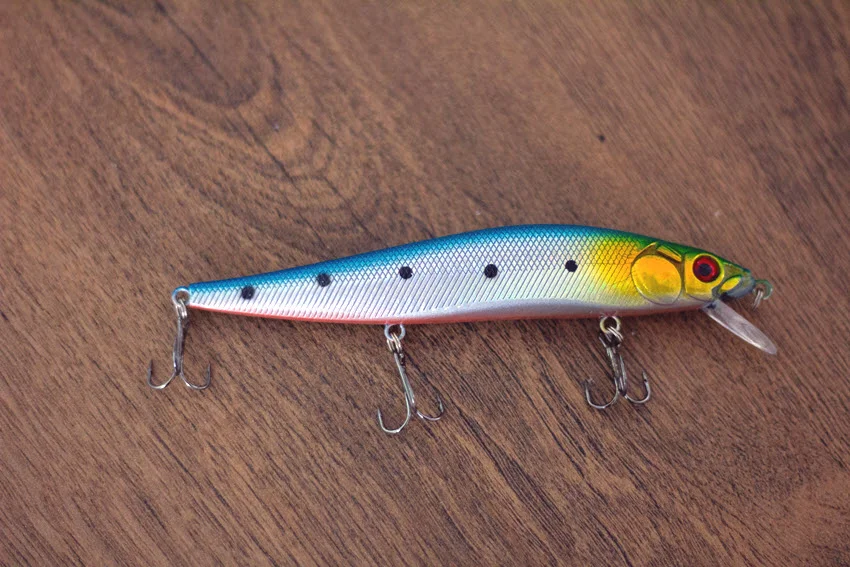
When Wahoo stay deep, use lures that can reach the midwater column. These are heavy, deep-running lures made to track below the surface even at higher speeds. They work well near steep underwater walls or strong drop-offs. Choose colors like black and purple, red and black, or blue and silver. These lures are effective when fished between 10 and 14 knots. Anglers use them often in areas with structure and current.
These fast predators demand the right combination of presentation, lure speed, and depth. Below are the most productive techniques, along with their appropriate uses.

When Wahoo are actively feeding, trolling between 12 and 18 knots draws their attention – position four to six lures at staggered distances behind the boat to mimic a school of baitfish. Use planers or fixed weights to stagger depth, with some lures at 5 to 15 feet and others at 20 to 30 feet. A zig‑zag or serpentine course can produce more strikes than a straight path. Keep pressure steady during a strike. Don't cut the throttle until the fish is securely in place.

Slow trolling is effective when Wahoo are not feeding aggressively. Use skirted lures with a speed of 7 to 10 knots. The best situation to use this method is when fish stay deeper in the water. Add a planer or downrigger to reach depths of 20 to 30 feet. The steady movement and flashy skirts trigger bites when fast trolling does not. Use longer leaders and rig the lures to run straight without spinning, keeping the action smooth and lifelike.

Vertical jigging could be a productive method near a structure. First, drop a metal jig to depth (often 200+ feet). Then use a "rod up, handle down" motion to make it dart and flutter. This mimics injured baitfish. It can provoke aggressive strikes from Wahoo. It is also useful when fuel or speed limitations make trolling less practical.

When Wahoo start feeding on live or chum bait at the surface, anglers can cast retractable lures or jigs into the chaos. Cast a heavy lure 30 to 50 feet out and let it sink to the strike zone. Then retrieve aggressively. These sudden "slide cast" presentations often trigger explosive surface strikes during a frenzy.

Understanding fishing regulations and ethical practices about specific fish species protects fish populations and ecosystems and promotes responsible angling practices.
Anglers Booking Team
Following ethical fishing and local rules helps keep Wahoo populations healthy for the future. Many places set daily catch limits and size rules to ensure healthy fish stocks for the future. In U.S. Caribbean federal waters, Wahoo fishing is regulated under the NOAA Fisheries. The minimum size limit is 32 inches of fork length for recreational and commercial fisheries. Around Puerto Rico, the recreational bag limit is five fish per person per day, not to exceed 10 per vessel.
Fishing seasons often focus on peak Wahoo activity, usually late spring to early fall in places like the Gulf of Mexico. Choosing gear that avoids habitat damage and bycatch is essential. For example, Wahoo fishing gear rarely touches the ocean floor.
With fish, you must treat them gently and with care. Use circle hooks to reduce injury. Revive fish carefully in the water to help them recover. Avoid holding fish in sensitive areas.
Supporting regional conservation programs protects Wahoo and their habitat. Responsible fishing helps ensure that Wahoo stay available in the future.
Catching Wahoo is a real challenge. However, with the right lures and techniques, you are on the right track to catch one. These fast and smart fish respond best to well-presented, realistic lures. Don't forget to respect the rules. When fishing, do it ethically, and remember that regulations can change, so always check the latest rules on local official websites before your trip.
What's your favorite lure or technique for Wahoo? Share your answers in the comments below!

The expert copywriters at Anglers Booking have meticulously crafted this article. Our dedicated team of writers provides valuable insights and information to enhance your angling experience.

November 7, 2024

October 25, 2024
Subscribe to our newsletter and receive a selection of cool articles every week.
Embark on unforgettable fishing adventures with us at Anglers Booking.
book your charter
October 2, 2026
September 8, 2026
August 21, 2026
August 18, 2026
August 15, 2026
August 12, 2026
August 8, 2026
August 4, 2026

You're now part of our exclusive community. Get ready for premium content and updates straight to your inbox.
close
Subscribe to our newsletter and receive a selection of cool articles every week.
Please enter a valid email address.
Be the first to know when we're back in action.
Please enter a valid email address.
Leave a Comment
Your email address will not be published. Required fields are marked *
Thank you for your comment! It has been submitted for review and will appear on the site shortly.