


Anglers Booking Team
The expert copywriters at Anglers Booking have meticulously crafted this article. Our dedicated team of writers provides valuable insights and information to enhance your angling experience.
 10 minutes read
Redfish, also known as Red Drum, are among the most popular game fish for anglers, especially in inshore estuaries. Powerful and aggressive, they are often found near the shore, around structures, or cruising the flats.
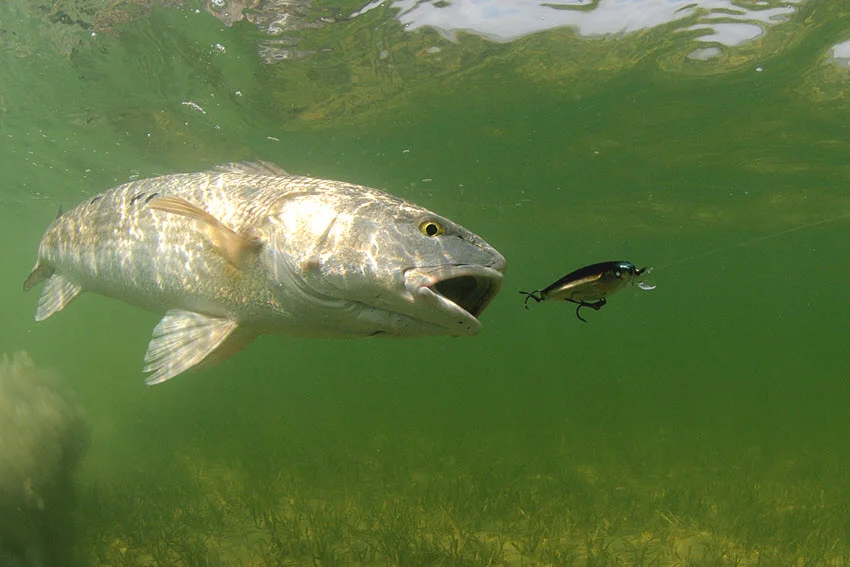
When targeting Redfish on the water, choosing the right lure for the season is crucial. Water conditions also play a significant role in determining lure effectiveness. In this guide, we'll cover the best lures for Redfish and how to use them to maximize your success.
Light, tide, and fishing activity can alter their behavior during the day. In low light, Redfish often roam more freely across flats. As the sun rises, they become more cautious. Below, we will help you understand this fish.
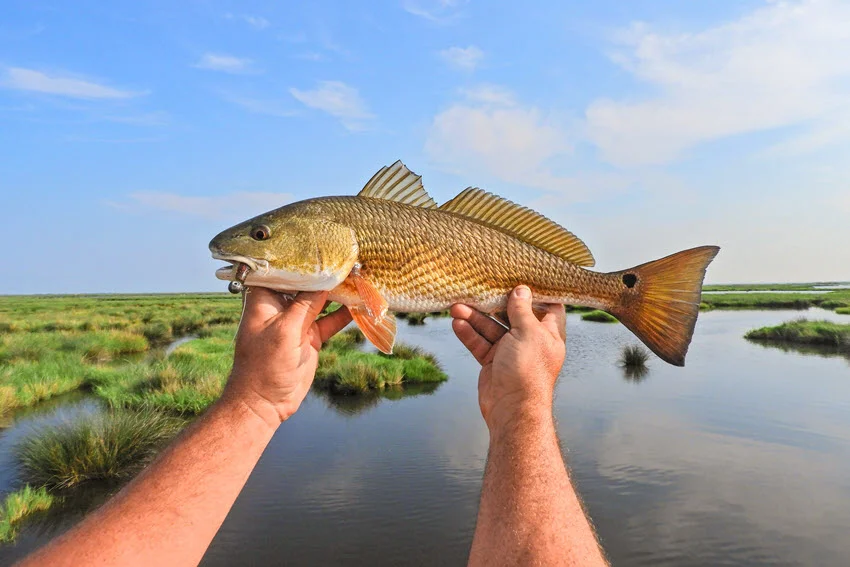
Redfish live in warm, shallow, and brackish environments. They swim in estuaries, coastal marshes, oyster beds, tidal flats, and grassy shorelines along the Gulf and Atlantic coasts. Places like this provide the cover and forage that Redfish need to feed and grow.
This fish prefers calm, protected waters. Here, they can search for crustaceans, baitfish, and shrimp along the bottom. They often patrol grassy edges, mangrove roots, or oyster bars during high tide and retreat to deeper channels or holes as the tide falls. Their feeding is heavily influenced by tidal movement, and the best bite typically occurs during periods of moving water, whether incoming or outgoing.
Redfish use their downward-facing mouth to root around in the mud and sand for food. They are most active at water temperatures between 65°F and 80°F. In colder months, they may school up in deeper channels where the water stays more stable.
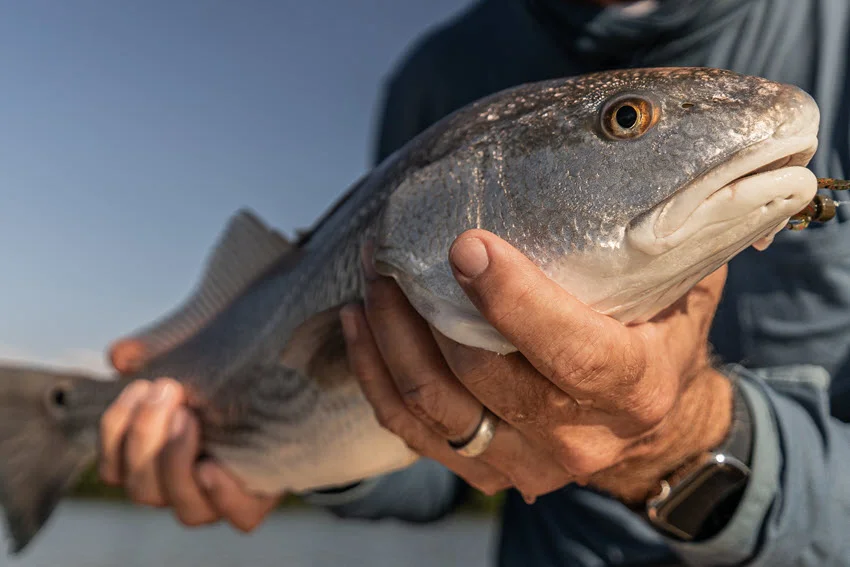
Seasonal changes affect how Redfish feed and where they stay. Just as water and habitat matter, the time of year matters. Here's a closer look.
If you choose your lures based on the season, you will catch more Redfish. Pay attention to how they move and feed during the year.
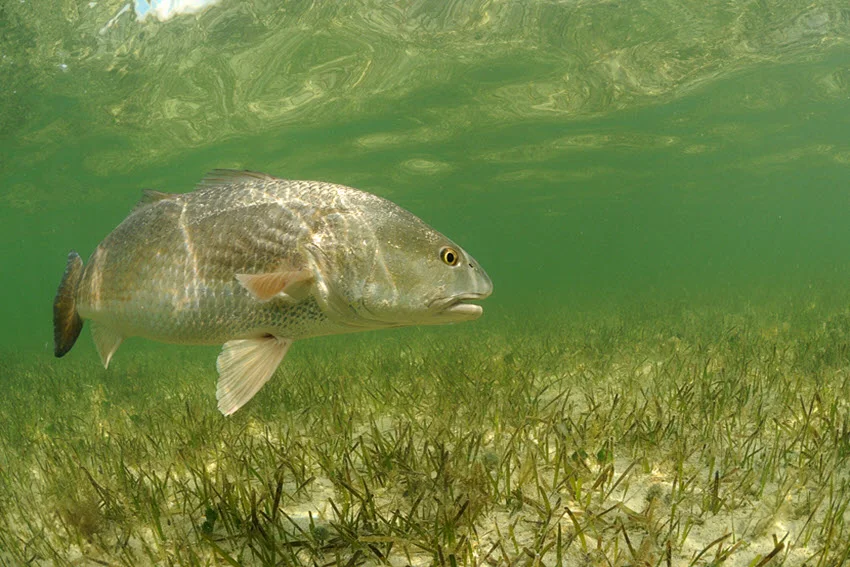
Redfish swim in many coastal areas. They like shallow water, structure, and current. Knowing where to find them and what to use there will help you catch more fish.
Match your lure to the spot and water conditions. Use scent when the water is dirty, or the bite is slow, to increase your chances of catching fish.
There is no single best lure for Redfish in every situation. The best lure depends on several factors. Water clarity and depth are among them. As conditions change, your lures and tactics should change too. Below are the best Redfish lures.
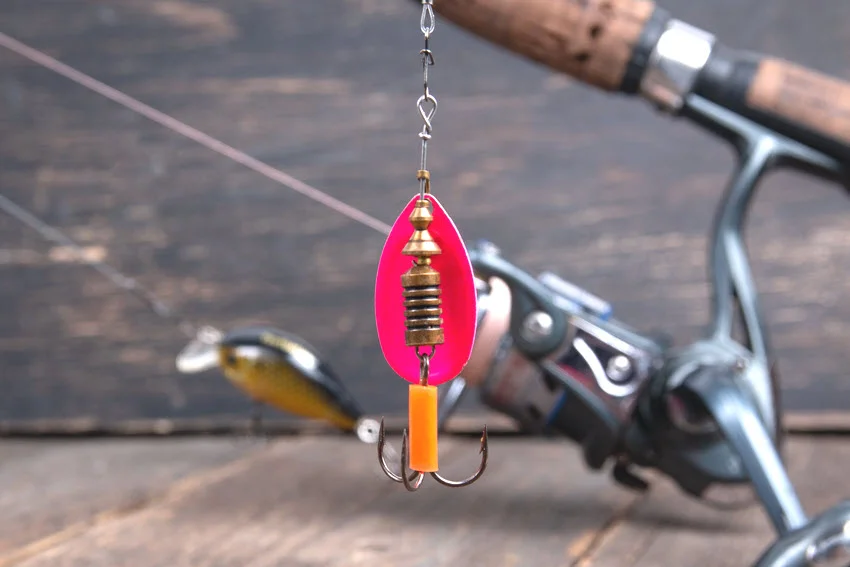
Gold spoons are classic Redfish lures. They flash in the water. That grabs the fish's attention. They work best in stained water. They could be especially effective on open flats or in areas with sparse grass and sand.
Gold and copper colors perform well in low-visibility conditions. Cast far and retrieve slowly, pausing occasionally to ensure a steady retrieve. Let the spoon flutter and flash to mimic a wounded baitfish.
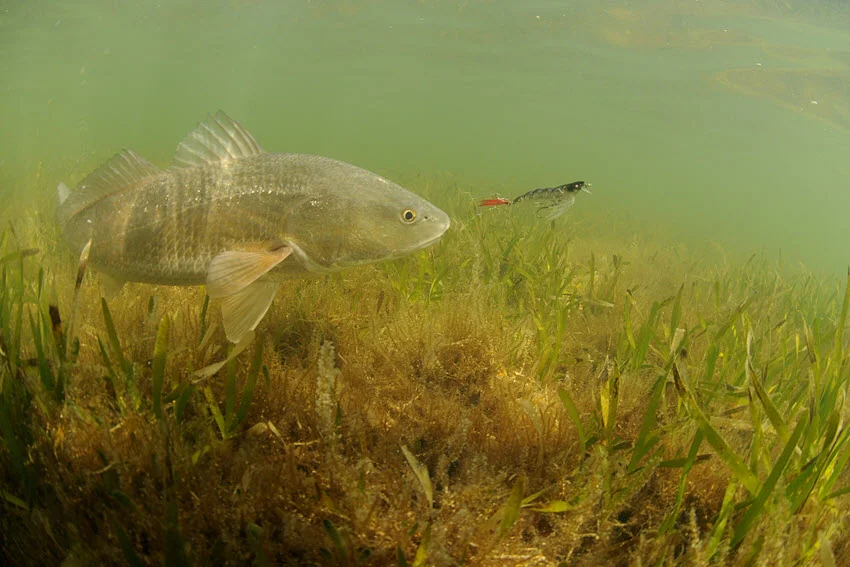
Soft plastics are effective for sight fishing and when Redfish are feeding on the bottom. They imitate shrimp, crabs, or baitfish. Shrimp imitations are great in shallow or grassy areas. Some models include rattles for extra sound attraction.
Other soft plastics, such as jerk shads or swimming mullets, also work well. White, chartreuse, or root beer colors are the most effective colors for these lures, rigged on a jig head for bounce-style retrieves. Or use under a popping cork in shallow flats to draw attention.
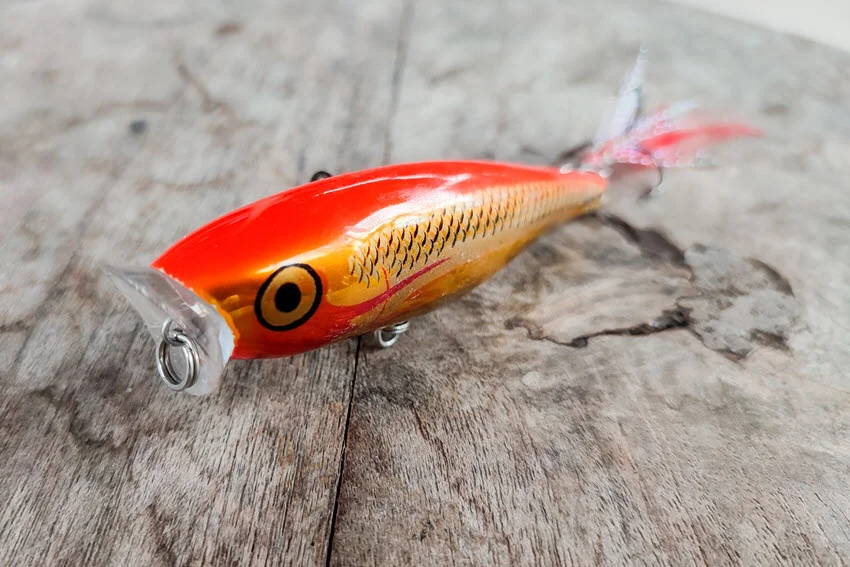
Topwater fishing lures are exciting and effective when Redfish are feeding near the surface. These lures make noise and splashes that trigger aggressive strikes.
Use poppers or walk-the-dog lures early in the morning or late in the day. They work best in calm conditions on shallow flats or near grass lines, cast near structure or where fish are visible. Retrieve with rhythmic pops or a side-to-side motion for lifelike movement.
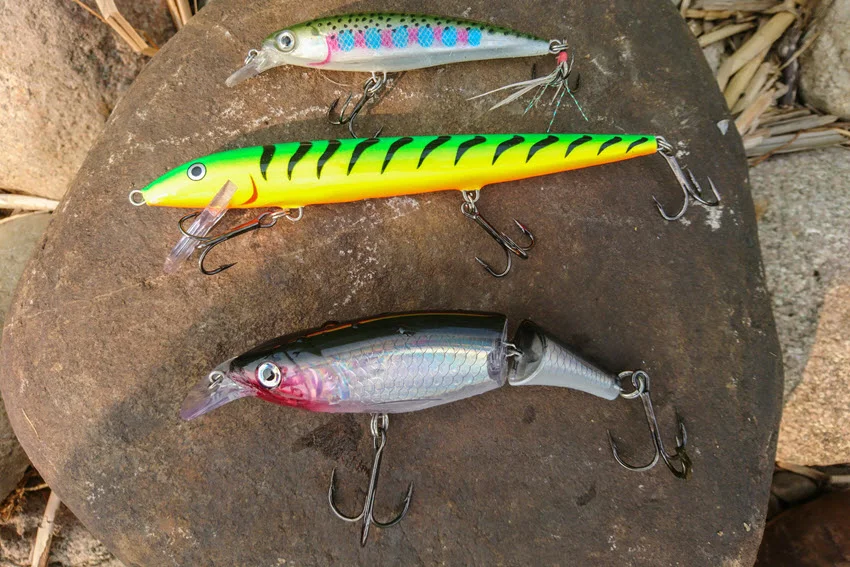
Jerkbaits are great for covering a wide range of depths and locating active fish. They work well when Redfish are scattered or holding around structure. These lures imitate injured baitfish. They can provoke bites, especially in clearer water.
Use a twitch-pause-twitch motion. Try a slow retrieve in colder water and a quicker one in warmer conditions, as this approach can lead to a great catch.
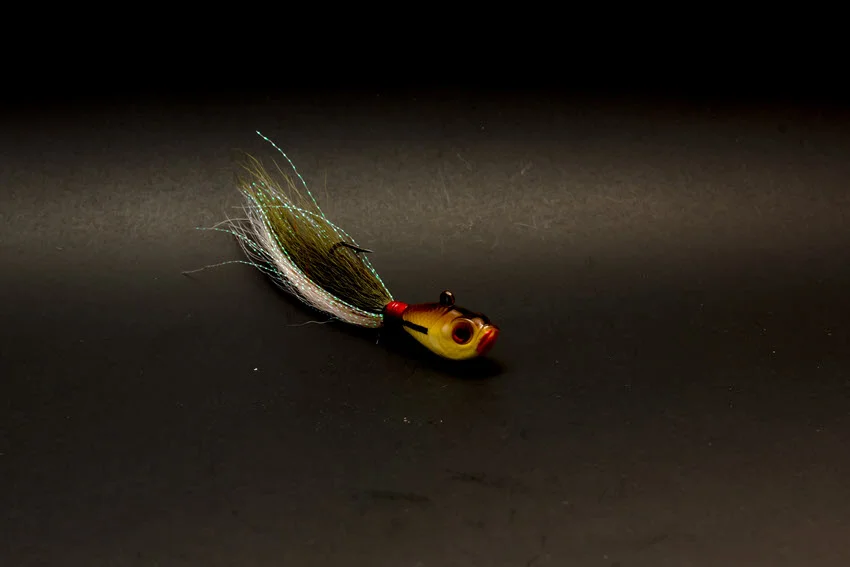
Bucktail jigs are known for being simple, durable, and effective. They perform exceptionally well in areas with current, such as near bridges, docks, and rocky structures. The natural hair of the jig provides lifelike movement in the water.
When fishing with bucktail jigs, let the jig sink to the bottom, then gently hop or bounce it along the bottom. In clear water, use colors like white or chartreuse, and opt for brighter colors in stained water for better visibility.
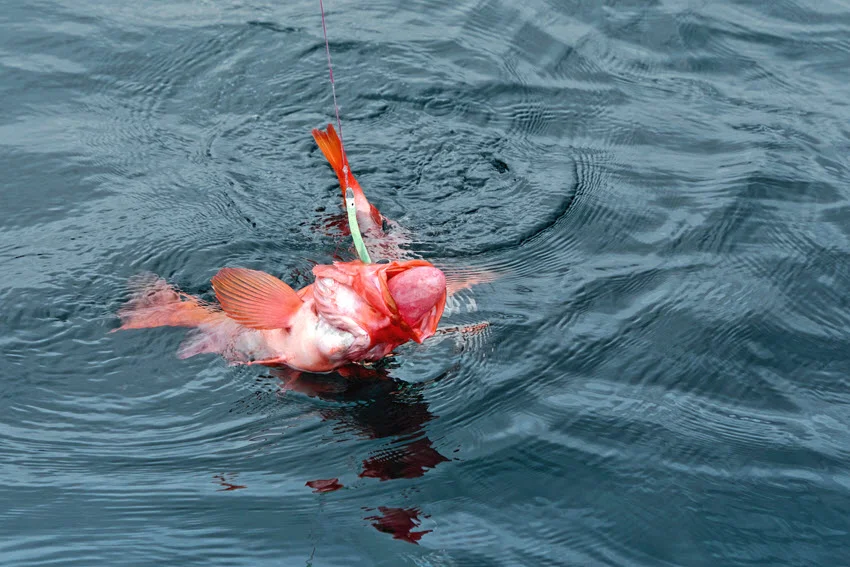
Use topwater plugs in low-light conditions and subsurface or diving plugs when fish are deeper. They're excellent for catching Redfish around mangroves, oyster bars, or grass edges.
Choose shallow-running plugs for flats and deep-diving models for channels and inlets. Steady or stop-and-go retrieves both work. Experiment to see what Redfish prefer that day.
Fishing for Redfish with lures takes the proper methods. That is what we are dealing with in the next part. Make sure you don't miss it!
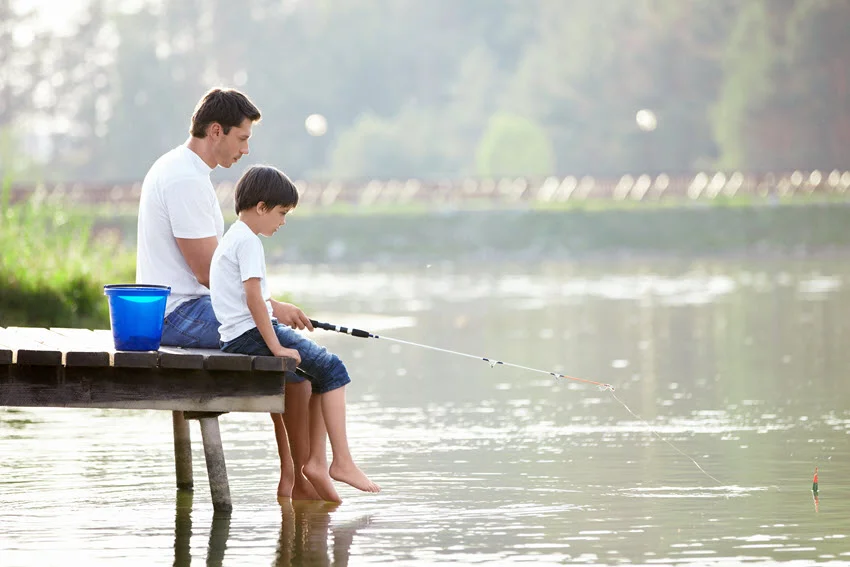
Steady retrieve is the simplest way to fish a lure and works well with spoons, soft plastics, and plugs. A steady retrieve keeps the lure moving naturally and can attract cruising Redfish. This technique is particularly effective in clear water when fish are actively feeding.
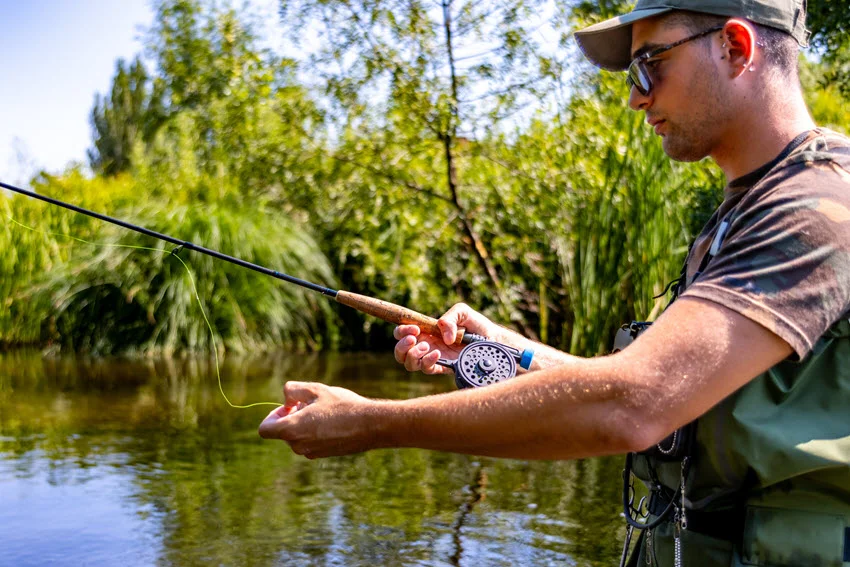
This technique makes your lure look like a wounded baitfish or shrimp. It can provoke bites. The sudden stop and twitch often lure curious Redfish into biting. Twitch and pause work great with soft plastics and jerkbaits.
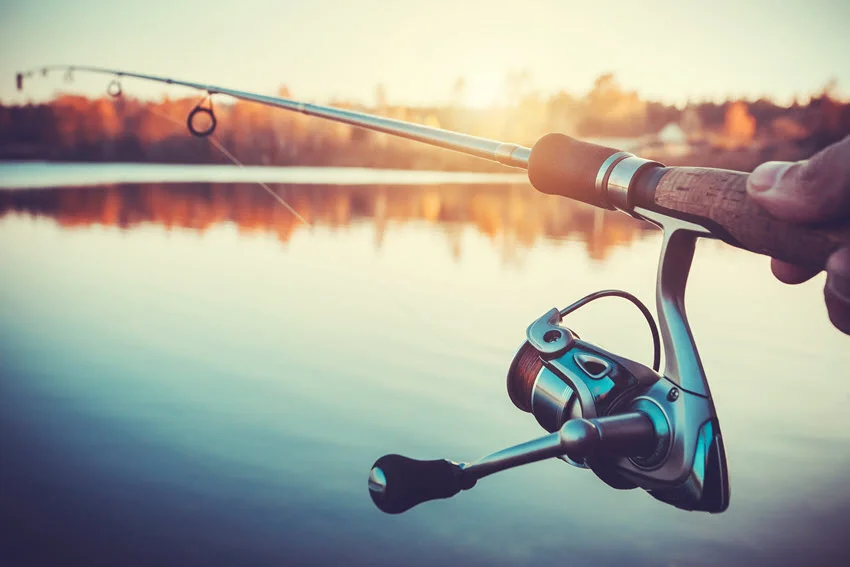
This technique works best in colder water. Also, slow rolling is effective when fish are less active. Moving the lure very slowly keeps it in the strike zone longer, giving Redfish more time to react. It is very effective with spoons that swim just above the bottom.
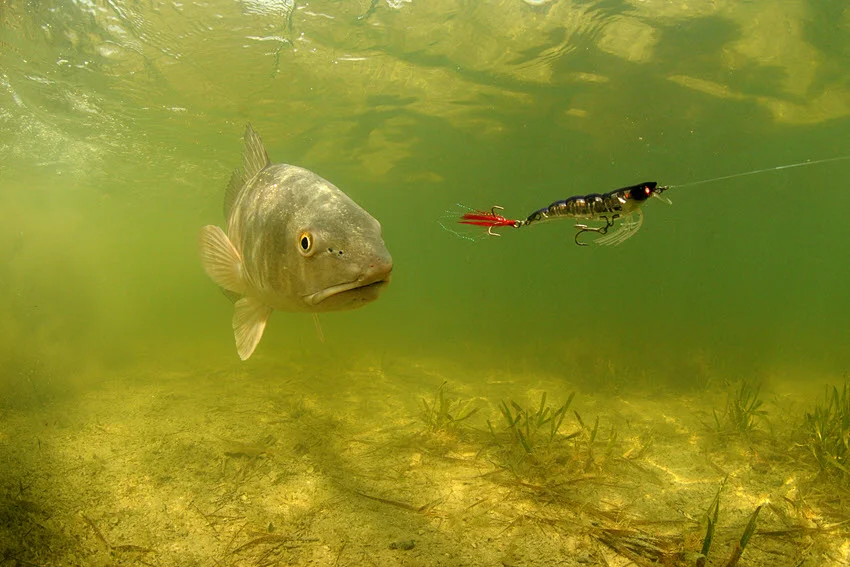
Fishing with soft plastics or jigheads in this manner can be very effective when discussing this technique. Redfish often feed near the bottom. For that reason, bouncing your lure along the seabed mimics the movement of their prey. It can also attract fish that hide near structures or in grass. This method increases your chances of getting bites by keeping the lure in the fish's strike zone longer.
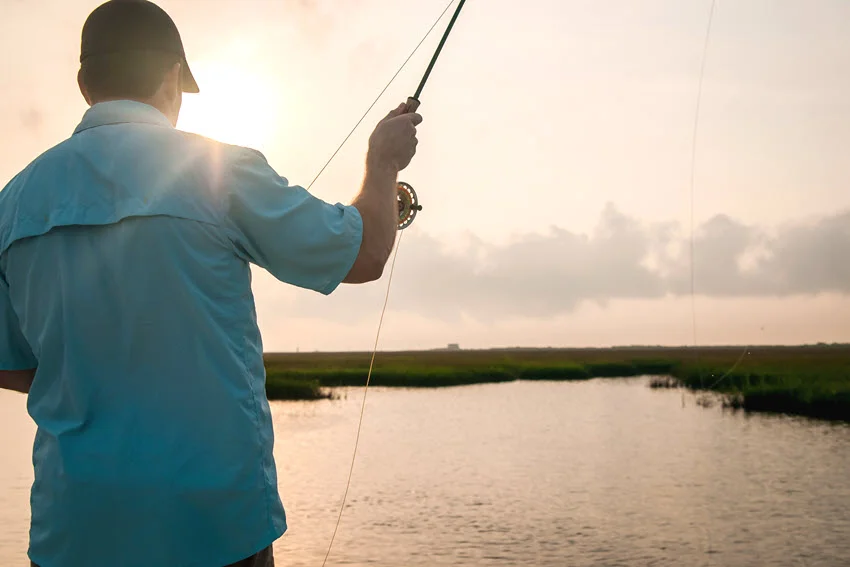
Use this method when you can see Redfish in shallow water, casting just ahead of the fish. Let the lure fall naturally to provoke a quick strike. Sight casting is effective with shrimp lures. Small soft plastics can also be successful but require subtle movements.
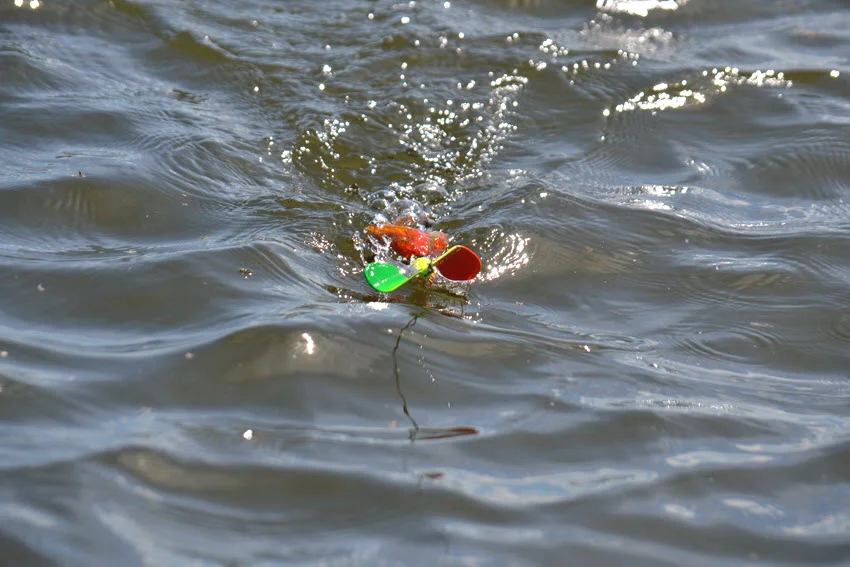
This method is particularly effective in shallow flats. It is especially productive on calm days. The zig-zag action of a walk-the-dog lure imitates fleeing baitfish on the surface, which attracts Redfish. They often strike aggressively at this lively topwater movement. It's a great way to see the action and feel the bite right away.
This method is particularly effective in shallow water and murky conditions. The popping sound attracts Redfish from a distance. It helps locate them in low visibility. Use a soft plastic shrimp under the cork to mimic natural prey to provoke Redfish to strike.

Understanding fishing regulations and ethical practices about specific fish species protects fish populations and ecosystems and promotes responsible angling practices.
Anglers Booking Team
One of the primary objectives of regulations related to fishing is to maintain healthy Redfish populations for the future. When catching and releasing Redfish, do so carefully.
Use gloves to protect yourself. Avoid lifting them by the gills. If the hook is deeply embedded, cut the line close to the fish's mouth instead of trying to pull it out.
Fish only what you need and dispose of fishing line and other gear responsibly. Responsible fishing helps protect Redfish and the habitats they depend on.
Redfish are a popular and exciting fish to catch. Knowing their behavior will lead you to fishing success. Choosing a suitable lure and the proper techniques will help you catch more fish. Follow ethical fishing to protect Redfish and keep the fishery strong for the future.
Now, what about your experiences in fishing for Redfish? What's your favorite Redfish lure or technique? Please share your answers in the comments below.

The expert copywriters at Anglers Booking have meticulously crafted this article. Our dedicated team of writers provides valuable insights and information to enhance your angling experience.

September 21, 2025
September 29, 2026
Subscribe to our newsletter and receive a selection of cool articles every week.
Embark on unforgettable fishing adventures with us at Anglers Booking.
book your charter
October 2, 2026
September 8, 2026
August 21, 2026
August 18, 2026
August 15, 2026
August 12, 2026
August 8, 2026
August 4, 2026

You're now part of our exclusive community. Get ready for premium content and updates straight to your inbox.
close
Subscribe to our newsletter and receive a selection of cool articles every week.
Please enter a valid email address.
Be the first to know when we're back in action.
Please enter a valid email address.
Leave a Comment
Your email address will not be published. Required fields are marked *
Thank you for your comment! It has been submitted for review and will appear on the site shortly.