


Anglers Booking Team
The expert copywriters at Anglers Booking have meticulously crafted this article. Our dedicated team of writers provides valuable insights and information to enhance your angling experience.
 8 minutes read
A hollow-body frog worked across thick vegetation, and a small soft plastic fished beside a rocky drop-off place different demands on your line. For Bass anglers, the choice starts with the lure, the cover, and how much control the presentation requires.
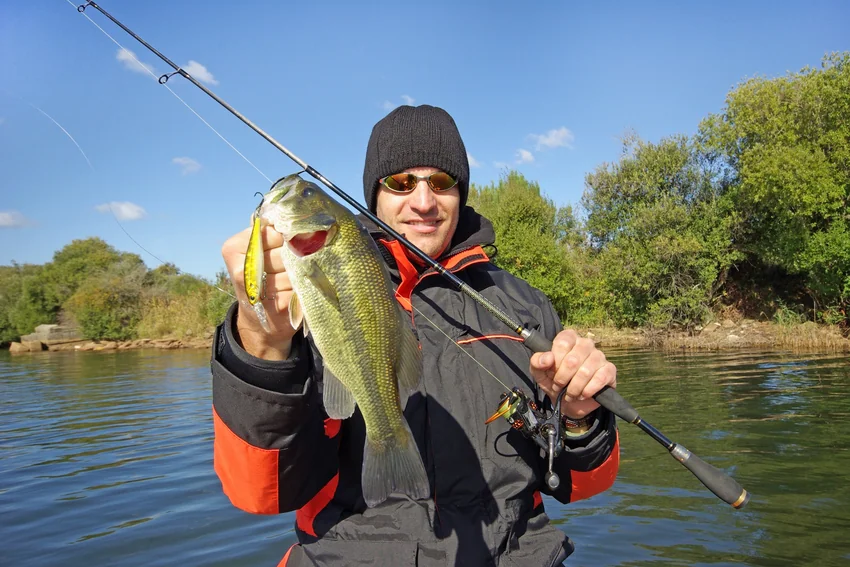
This guide covers fishing line for freshwater Largemouth and Smallmouth Bass with spinning and baitcasting tackle. It explains where monofilament, fluorocarbon, and braid fit, with practical starting points for finesse fishing, moving baits, and frogs around vegetation.
Use those applications to narrow your choice, then match line diameter and strength to your equipment. A setup that casts a lightweight bait comfortably may be unsuitable for pulling a hooked Bass out of thick cover.
The lure and the water around it help narrow your line choice. Lightweight finesse baits call for line that casts comfortably and preserves their action, while jigs near cover and frogs over vegetation demand enough strength to control a hooked Bass. Consider diameter, stretch, abrasion resistance, and visibility together when matching the line to your tackle.
For Bass fishing, compare line types through the presentations you plan to use. Monofilament can suit treble-hook baits, fluorocarbon is useful for jigs and other subsurface lures, and braid serves both finesse spinning and frog fishing. Each application calls for a different balance of handling, stretch, and strength.
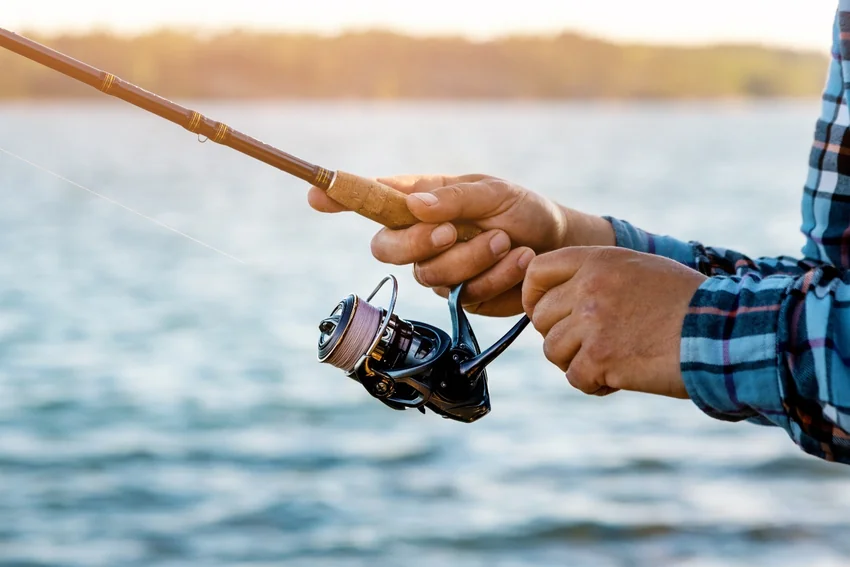
Monofilament is an affordable, manageable starting point for Bass fishing. Its stretch cushions sudden runs and can help protect treble-hook connections, although it reduces direct feedback from the lure. Line diameter and spool memory also affect casting.
Monofilament works well for many topwater baits and moving lures when some stretch is useful. It is also practical for beginners learning to manage hooksets and drag. Choose a diameter that suits the reel and lure rather than assuming every mono product handles the same way.

Fluorocarbon suits many subsurface Bass presentations, including jigs and Texas rigs. It generally sinks faster than monofilament and is less visible underwater, although it is not completely invisible. Choose its diameter for the lure and cover, then check how well it handles on your reel.
For bottom-contact casting setups, choose fluorocarbon designed for use as a main line. On finesse spinning tackle, braid with a fluorocarbon leader offers another practical option. Select the leader strength separately from the braid rating, and inspect it after contact with rocks or dock posts. Fluorocarbon leader material is not automatically suitable for filling a reel.
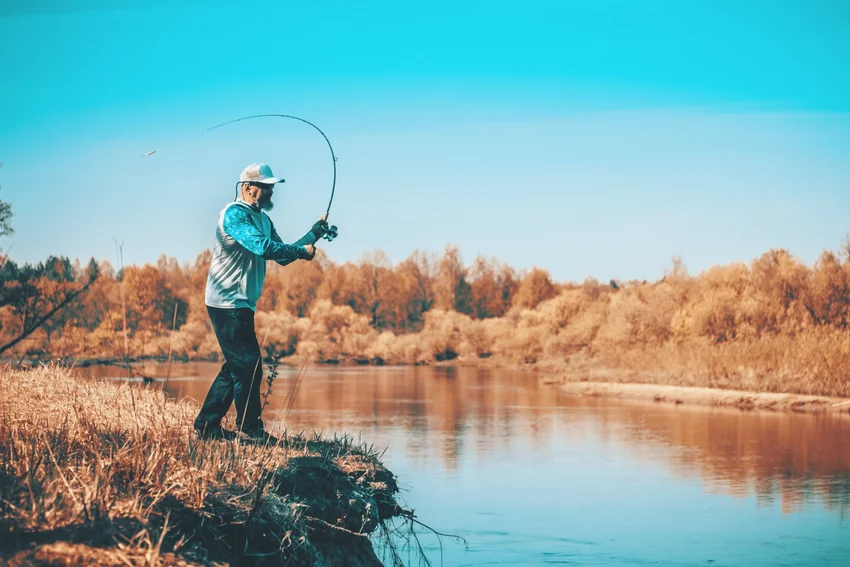
Braid serves two distinct roles in Bass fishing: a sensitive main line for finesse spinning and a strong, low-stretch option for hollow-body frogs around vegetation. Those applications require different line ratings and tackle. Choose braid for the presentation, then decide whether a leader adds value to that particular setup.
Braid with a fluorocarbon leader is useful for many finesse presentations. Direct braid is a common choice for hollow-body frogs and some heavy-vegetation techniques, where a leader is unnecessary. For other topwater lures, a mono leader may suit the action better. Choose the connection for the technique rather than adding fluorocarbon to every setup.
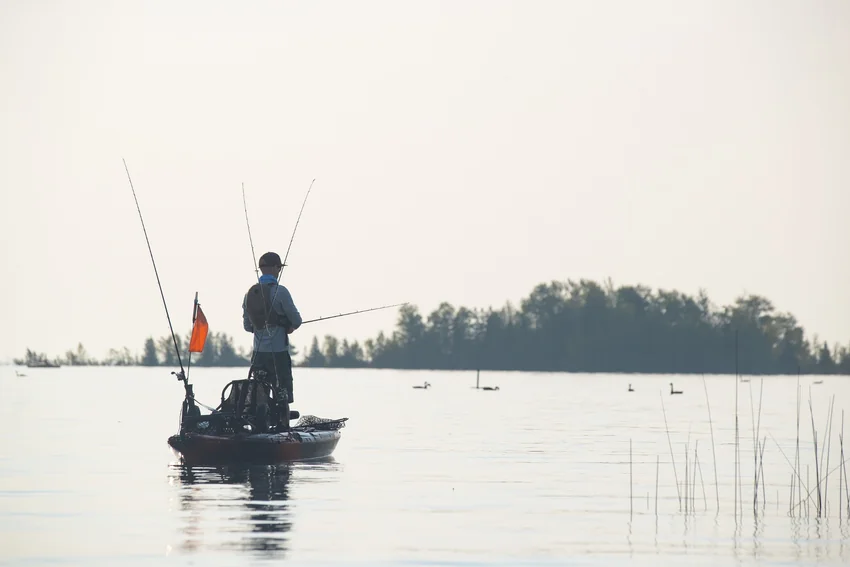
Pound test describes rated breaking strength, not the maximum weight of a fish you can land. Knots, abrasion, rod action, and drag all affect the system. The following starting points separate line materials and techniques; adjust them for your tackle, lure size, and cover.
These ranges are starting points, not universal requirements. A finesse leader and a frog main line serve different purposes, even when targeting the same fish. Match the line to the reel's capacity and the rod's guidance, then check casting behavior, knot strength, and drag before fishing.
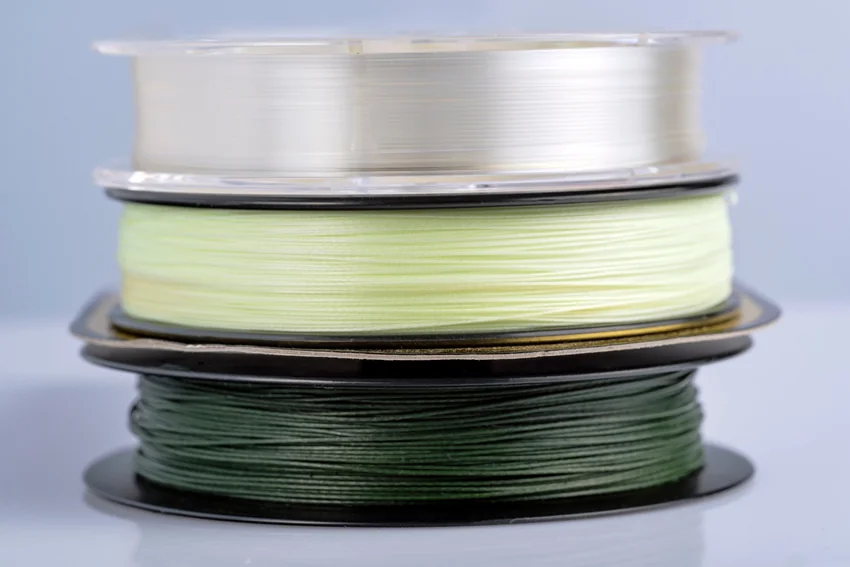
Build the setup around the Largemouth Bass lures and techniques you use most often. Keep finesse, moving-bait, and heavy-cover applications separate rather than treating one line combination as the best option for every outing.
Choose Bass fishing rigs that suit the presentation, then assess how the line changes lure action and bite feedback. You do not need a different spool for every lure. Start with a few practical setups and change them when a specific limitation becomes clear.
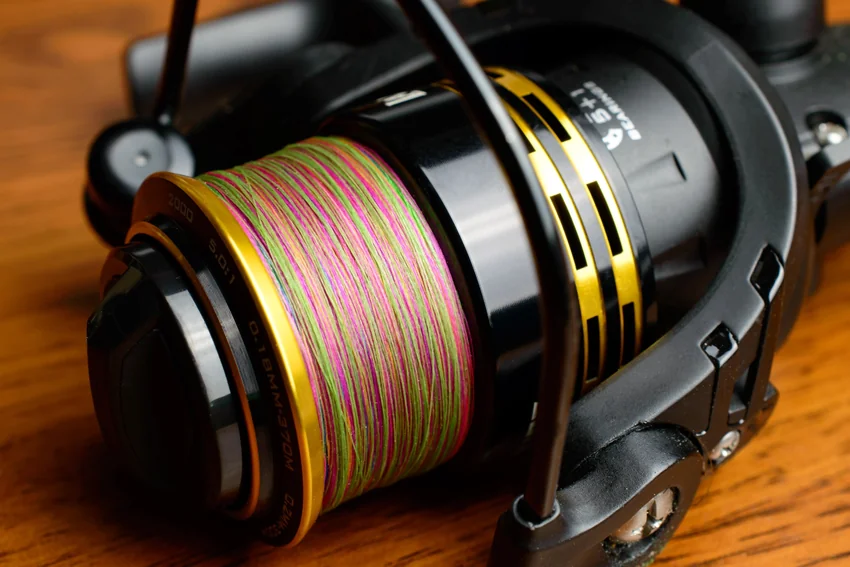
When fishing finesse baits on a slack or semi-slack line, watching for movement can help you notice a bite before you feel it. Choose a main-line color you can follow against the water, then consider whether the presentation calls for a clear leader near the bait.
Choose color according to how you detect bites. Watching a finesse line during a pause differs from following a frog across vegetation. Keep lure action, line strength, and reliable connections part of the decision rather than expecting color alone to improve results.
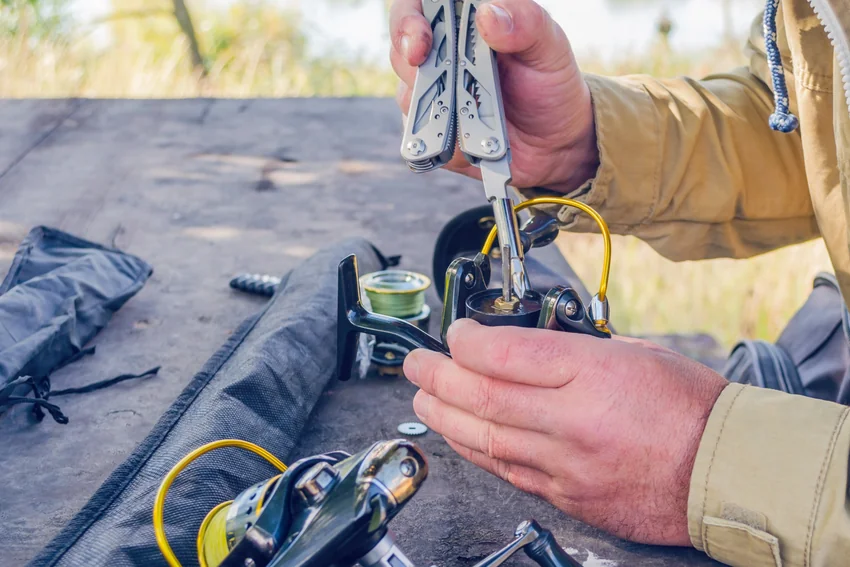
Check line handling with the lure you plan to fish. On a baitcaster, adjust spool tension and braking according to the reel's instructions before making full casts. On a spinning reel, watch for twist and loose wraps, particularly after retrieving lightweight finesse baits. Correct those problems before they develop into repeated tangles.
With finesse braid-to-leader setups, test both the joining knot and the knot at the hook or lure. When tying braid directly to a hollow-body frog, use fishing knots appropriate for that line and connection. After pulling through vegetation or contacting dock posts and rocks, inspect the working end and retie if it is damaged.
Recheck the drag when switching between a light finesse leader and a heavier casting setup. A setting suitable for one may be unsuitable for the other. Strong braid does not remove the need to match drag pressure, rod power, and hook strength. Store spare spools away from heat and sunlight, and replace line when damage or handling problems make it unreliable.
Choose Bass fishing line by starting with the lure and the cover. A finesse spinning setup may benefit from braid with a fluorocarbon leader, a treble-hook presentation may suit monofilament, and a hollow-body frog around vegetation often calls for direct braid.
Build around the techniques you actually fish. Before heading out, check that the line casts comfortably, the lure behaves as intended, and every connection holds under pressure. Change the setup when the presentation or cover demands it.

The expert copywriters at Anglers Booking have meticulously crafted this article. Our dedicated team of writers provides valuable insights and information to enhance your angling experience.

June 16, 2025
Subscribe to our newsletter and receive a selection of cool articles every week.
Embark on unforgettable fishing adventures with us at Anglers Booking.
book your charter
October 2, 2026
September 8, 2026
August 21, 2026
August 18, 2026
August 15, 2026
August 12, 2026
August 8, 2026
August 4, 2026

You're now part of our exclusive community. Get ready for premium content and updates straight to your inbox.
close
Subscribe to our newsletter and receive a selection of cool articles every week.
Please enter a valid email address.
Be the first to know when we're back in action.
Please enter a valid email address.

Leave a Comment
Your email address will not be published. Required fields are marked *
Thank you for your comment! It has been submitted for review and will appear on the site shortly.