


Anglers Booking Team
The expert copywriters at Anglers Booking have meticulously crafted this article. Our dedicated team of writers provides valuable insights and information to enhance your angling experience.
 10 minutes read
Tuna are among the most important fish in the ocean and are popular worldwide. They belong to the Thunnini tribe in the Mackerel family. They are famous for their speed and large size. This fish is very popular in many cuisines.

Learning about the different types of Tuna, how to recognize them, and how to catch them will lead you to a successful catch. Understanding these facts will help you succeed in Tuna fishing. Follow us on a new adventure!
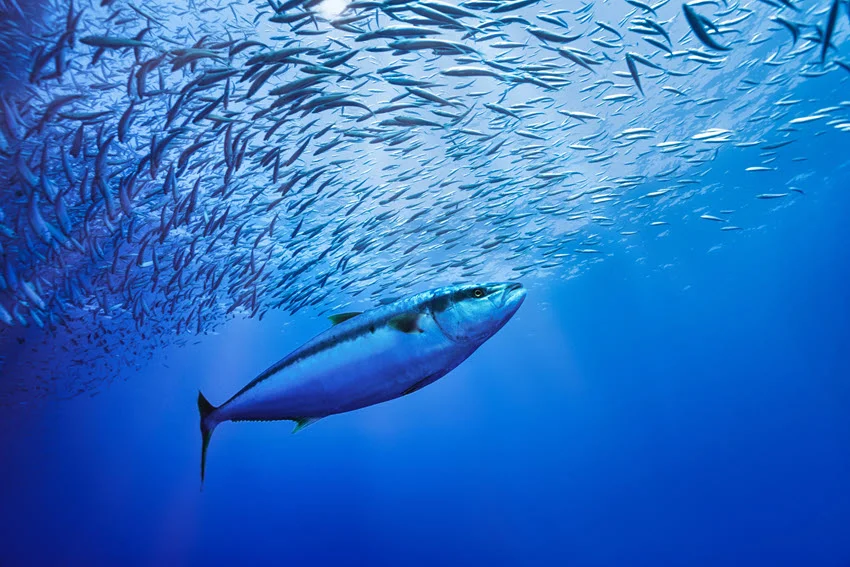
Tuna are large and amazing fish. The most commonly known species include Bluefin Tuna, Blackfin Tuna, Skipjack Tuna, Bigeye Tuna, Albacore and Yellowfin Tuna. Each species is different. They have different body shapes, colors, and sizes, which affect where they live and how they behave.
These fish are highly migratory and can swim long distances with bodies shaped to move fast through the water, enabling them to escape from predators easily. Tuna often travel in schools, which is an advantage for anglers because it makes them easier to catch.
Tuna are also very popular because of their taste and economic value. Some species, like Bluefin, are especially prized for sushi and high-quality dishes. Their populations are under pressure from overfishing, so scientists and fisheries organizations work to carefully manage Tuna populations.
For each species, we will describe what they look like, their size, where they live (depths and regions), best times to catch them, what gear works well, and the top baits to use.
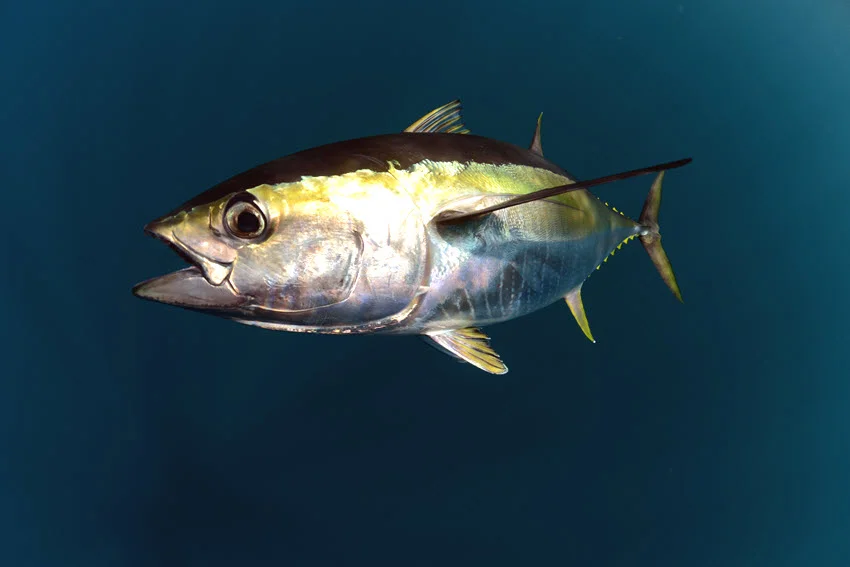
Yellowfin Tuna have a streamlined, torpedo-shaped body built for speed. Their backs are metallic dark blue or verdant, fading to a silvery belly. The sides often show a bright yellow stripe or yellow hues near their fins, and their second dorsal fin and anal fin (as well as the finlets) are often vivid yellow, giving them their name. Their bodies are slender compared to some of the broader Tuna species.
In terms of size, Yellowfin Tuna is 40 to 80 inches in length. The average weight of catches is in the 100 to 200-pound range. However, records indicate this fish can reach up to 400 pounds (possibly in ideal conditions).
Yellowfin Tuna are commonly found near the surface or in upper layers of the open ocean, often within perhaps tens to low hundreds of feet below the surface, depending on conditions. Many Yellowfin stay relatively shallow.
You can find them along continental slopes, near seamounts, around oceanic currents, and sometimes around floating objects or schools of dolphins. This fish thrives in the Atlantic, Pacific, and Indian Oceans. It is common around the Gulf of Mexico, Florida Keys, the Carolina coast, Southern California, Baja, and the Caribbean Sea.
The peak season for Yellowfin Tuna often falls during the warmer months (summer) in many regions, when sea temperatures rise and baitfish are plentiful. If you fish in tropical waters, the favorable period for Tuna fishing lasts even longer.
The best times of day are early morning and late afternoon, when light levels favor active feeding but conditions are not too hot. Tuna frequently feed closer to the surface during those periods.
To catch Yellowfin, anglers use heavy-duty rods capable of handling strong runs. Line strength of 50 to 100-lb test is standard, depending on expected size.
You'll want a well-balanced rig with a strong frame and sound drag systems. Offshore anglers often use trolling setups, chunking, or live-bait rigs to reach them.
Yellowfin often feed in the upper water column, so baits presented near the surface or down to a few dozen feet tend to work well.
Live bait (small mackerel, bonito, or sardines) is often effective. Trolled lures, dipping flies, or chunked bait can also attract them, especially when fish are schooling.
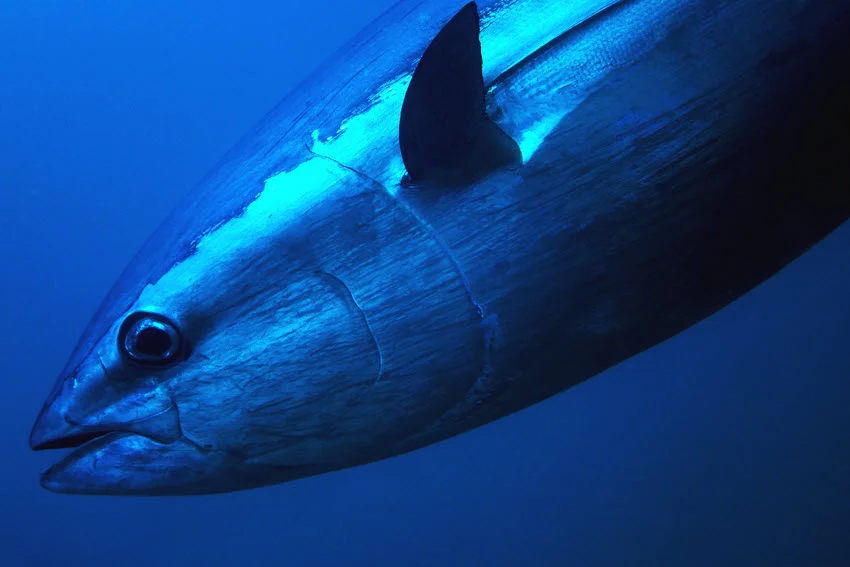
Bluefin Tuna are robust, often broader in body than many other Tuna species. Their coloration is generally dark blue on top, blending to silvery or lighter underneath. The body is deep and powerful, built to handle long migrations and strong swimming. These fish have a thick, sturdy frame with strong pectoral fins.
In terms of dimensions, Bluefin Tuna can reach very impressive sizes. Some individuals can reach lengths of more than 100 inches and weigh up to 1,000 pounds. However, average catches are in the 300 to 600 pounds range.
Bluefin Tuna inhabit both surface and subsurface temperate waters and can dive to depths of 1,500 feet or more. They migrate across ocean basins, often moving seasonally. In the Atlantic, for instance, they use the Mediterranean Sea as a spawning ground and travel between colder and warmer regions.
Atlantic Bluefin are found from New England to Nova Scotia, the mid-Atlantic, and the Gulf of Mexico. Pacific Bluefin can be seen from California and Lower Australia to Japan. The Mediterranean Sea is a significant spawning ground.
The peak season for many Bluefin populations occurs in late spring through summer, depending on the region, when they move to feeding grounds.
During daylight hours, morning and late afternoon are often the most active periods. At midday, they may move deeper.
Because Bluefin can be extremely large and powerful, you will need heavy tackle, strong rods rated for high line class (often 80 to 130-lb or more), robust reels with strong drags, and thick leader lines.
Wire leaders or heavy fluorocarbon are often used to avoid bite-offs from sharp teeth. Offshore trolling, chunking, or vertical jigging are standard methods.
Bluefin will often hunt from near the surface down to deeper depths, so baits presented over a range of depths (from surface lures to deep jigs) may work well.
Live bait (mackerel and herring), or large slow-trolled fish bait, plus chunking or chum streams, are commonly effective in attracting Bluefin.
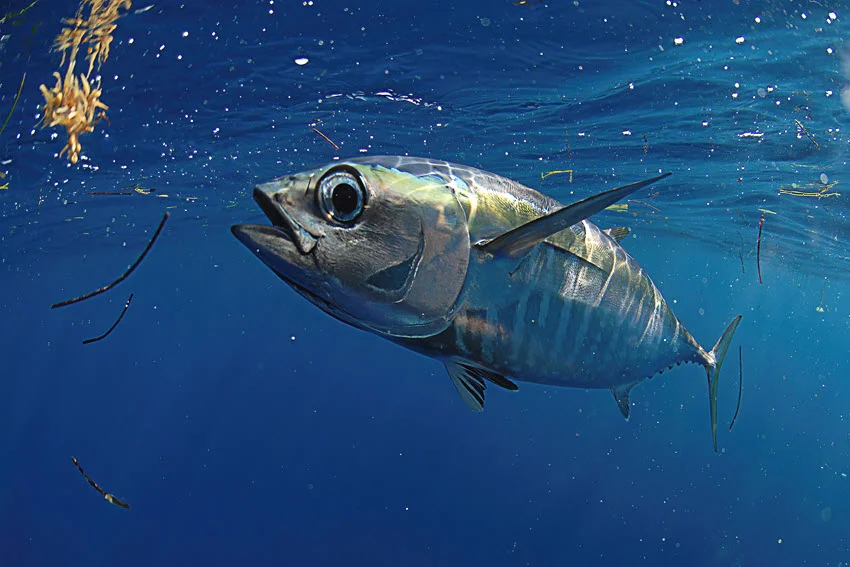
Blackfin Tuna are more compact compared to large Tunas. Their backs are dark blue to black, while their sides and bellies are silvery, often with an iridescent shimmer. They have relatively small dorsal finlets (which are darker) and a compact scale pattern. Their bodies are more deep-bodied relative to their length than those of slender species.
They are generally smaller than other Tuna types. Blackfin Tuna reach lengths of about 24 to 40 inches and weigh up to 50 pounds.
Blackfin Tuna often occur from near-surface waters to moderate depths; their larvae are found from the surface to depths of 100 to 300 feet in open ocean waters.
They inhabit tropical to warm-temperate waters along the Atlantic coast of the Americas (from Massachusetts to Brazil), including the Gulf of Mexico and the Caribbean Sea.
Spawning occurs off the coast of Florida from April through November, and in the Gulf of Mexico and northern Brazil between June and September.
The best times to fish for them are usually when the water is warmer (summer), and early morning or late day when feeding is more active.
For Blackfin Tuna, medium-heavy rods and reels are adequate, often in the 20 to 60-lb line class, depending on the expected size.
Light-tackle methods, trolling, or drift fishing with live bait or lures are common practices because the target fish are smaller than giant Tunas.
Blackfin often feed in upper layers, so baits presented within tens of feet of the surface are effective. They respond well to small fish baits (like sardines or small baitfish), strip baits, jigs, feathers, plugs, and other fast-moving live or artificial items.
Using chum or chunked bait can also help draw schools of Blackfin closer to the boat, increasing your chances of a successful catch.
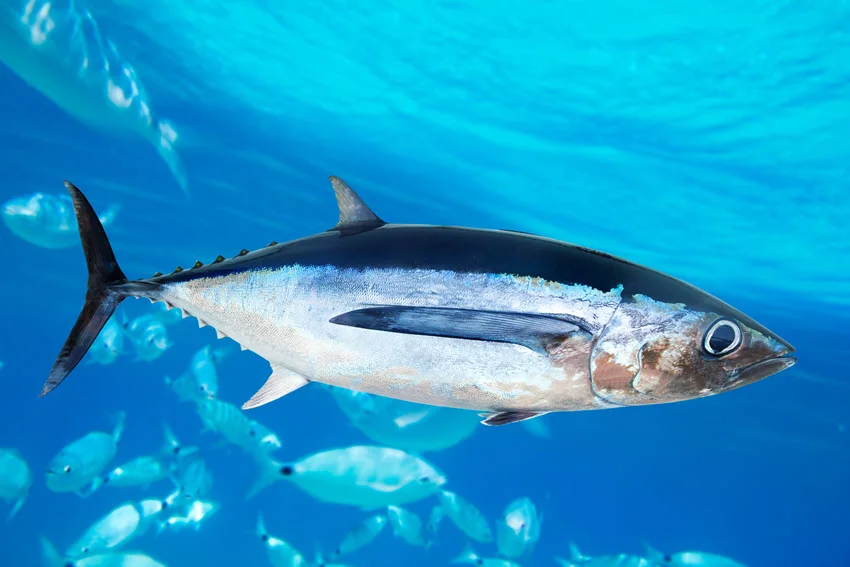
Albacore Tuna are more slender and elongated than some heavier Tunas. They have a streamlined body, a pointed snout, and relatively long pectoral fins. Their upper side is dark blue, fading to silver or white on the belly.
They often appear more delicate in form than Bluefin or Yellowfin. In terms of length, Albacore is 30 to 45 inches. Their average weight is 20 to 60 pounds.
Albacore tend to inhabit offshore temperate and tropical waters, often at mid-depths. They may be found from near the surface to moderate depths, depending on water temperature and prey distribution.
They are distributed widely in the Atlantic, Pacific, and Indian Oceans, often in more temperate zones than strictly tropical Tunas. Albacore Tuna is often caught offshore in locations from California to Washington. In the North Atlantic, they inhibit water from the Azores and Canary Islands to the Northeast US canyons.
Peak albacore fishing often occurs during summer and early autumn, when water temperatures are favorable, and bait schools are present.
Times of day when water mixing or upwelling occurs, or when the bait is active, often increase success.
Medium to heavy rods suited for offshore fishing are often used in the 30 to 80-lb line class. Trolling with spreader rigs, using diving plugs or deep lures, and live-bait drifting are standard methods.
It's also smart to equip reels with strong drag systems and use fluorocarbon leaders for better stealth and durability when targeting larger Albacore in clear waters.
Albacore often position at intermediate depths, so baits should cover subsurface zones. Trolled lures, diving plugs, skirted lures, or live bait like sardines or mackerel are productive.
Chumming with small bait pieces can also help keep Albacore near the boat, making them more likely to strike your presentation.
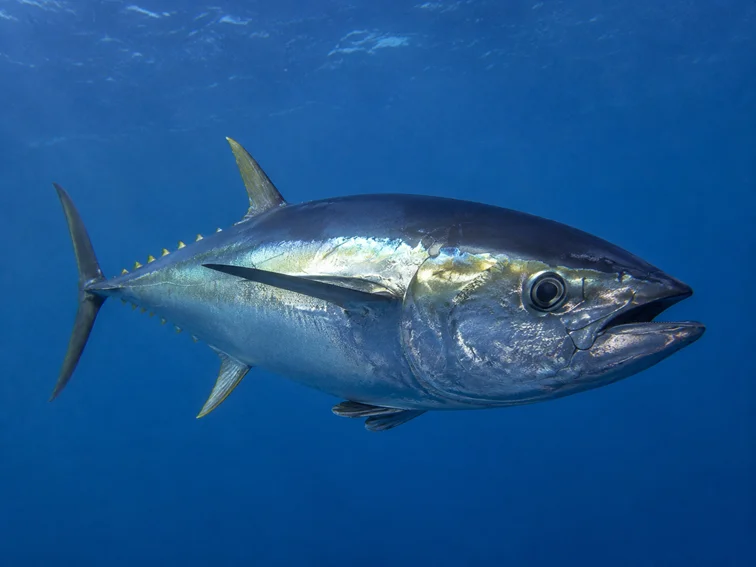
Bigeye Tuna have a robust, deep body shape with a relatively large head and proportionally big eyes, adapted for deeper waters. Their back is dark bluish, fading to silvery ventrally.
Their body are thick and robust, built to work in deeper, dimmer waters. They can grow to about 78 inches long and weigh up to 400 pounds, according to many reports.
Bigeye Tuna are known to dive into deeper waters. This fish can be found in mid-depth to mesopelagic zones. They perform daily vertical migrations, rising closer to the surface at night and dropping deeper during daylight.
They are common in tropical and subtropical regions, often near seamounts, underwater features, island slopes, or drop-offs that offer deep-sea feeding opportunities. This Tuna thrives in the subtropical Atlantic, Pacific, and Indian Oceans. Also, it can often be found off Hawaii, the Gulf Stream, and the Mid-Atlantic and Northeast canyons.
Peak season varies by region but often occurs when prey aggregations are present, especially in summer months in many areas.
The best times of day are generally around dawn or dusk, when Bigeye move shallower to feed, or at night when they are more accessible.
Heavy tackle is required because Bigeye fights vigorously and often drags deep. Strong rods (80 to 130-lb class or more) and reels with good drag capacity are frequently used. Vertical jigging, deep trolling, or drop-line methods are common strategies.
Anglers should also use strong fluorocarbon or wire leaders to prevent bite-offs and ensure successful hook sets when targeting these deep-dwelling Tuna.
Because they inhabit deeper zones, baits should be presented deeper (sometimes dozens or hundreds of feet down).
Jigs, deep-diving lures, or live bait on heavier rigs are effective. Using lighted or glow baits can help in low light.
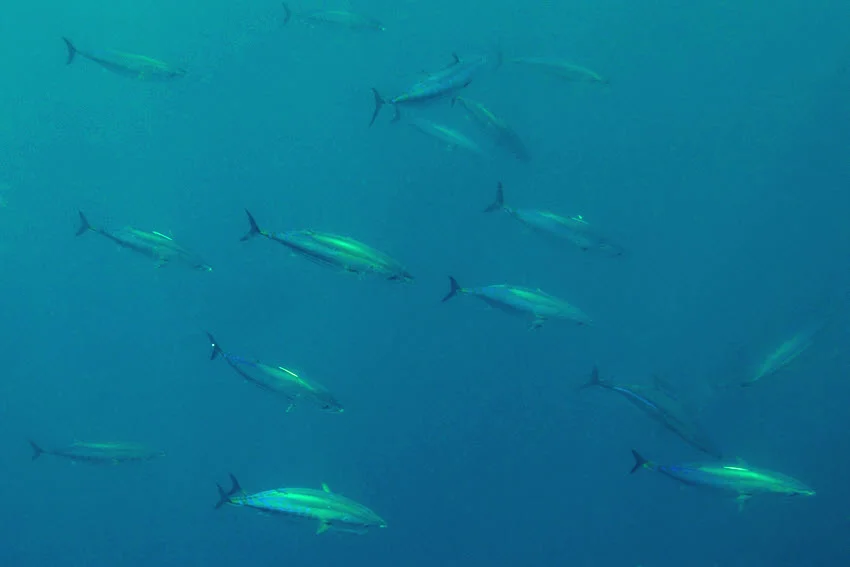
Skipjack Tuna have a compact, bullet-shaped body. Their back is dark blue, often with darker stripe patterns or markings, and their belly is silver or light. They lack the large, heavy frames of bluefin and are more slender and faster. Their appearance is sleek and efficient.
Skipjacks generally grow 16 to 32 inches in length, while their average weight is between 6 and 25 pounds. In some cases, they can be bigger.
Skipjack Tuna can be found near the surface, though during the daytime, they may dive to depths of around 850 feet to feed or to follow prey.
Skipjack Tuna swim in tropical and warm-temperate oceans worldwide. It is common near Hawaii, the Florida Keys, the edges of the Gulf Stream, the Caribbean Sea, and the coast of Southern California in warmer years.
Skipjacks are often more accessible during warmer months when schools are active, and food is abundant.
It is important to know that this type of Tuna feeds primarily during the day. However, you could also catch them at dawn or dusk when surface activity is higher.
Medium tackle (20 to 50-lb line class) is sufficient due to their size. Light trolling rigs and kite rigs could be very productive. Casting from a drifting boat can work well.
A high-strength line setup with a strong leader offers better sensitivity. Also, it provides hook-setting efficiency when targeting fast-moving Skipjack Tuna.
Because Skipjack often feed near the surface or shallow depths, baits placed in upper water layers can be very productive.
Small live baitfish like sardines, small jigs or trolling lures, or strip baits are commonly used near the surface.
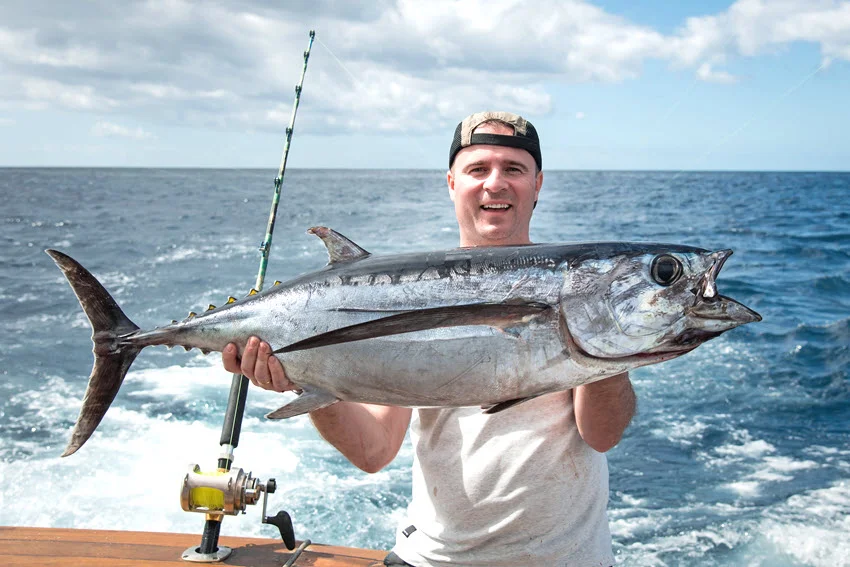
Fishing for Tuna is more successful when you first watch and analyze their environment. Look for birds diving on baitfish, surface disturbances (such as baitfish jumping), floating debris, temperature breaks in the water, or places where currents meet. These often signal feeding Tuna.
It is important to know which technique is the best. Trolling (dragging baits or lures behind a moving boat) lets you cover large areas and find where Tuna are active. Chunking or chumming (throwing bits of bait into the water) helps attract Tuna by scent. Vertical jigging can reach them when they are deeper.
Gear choice and solid preparation can lead you to a successful day of fishing. Use strong, durable rods and reels with good drag, and lines that can handle abrasion. Leaders (wire or heavy test mono/fluorocarbon) can help protect against Tuna teeth. Also, lures should mimic what Tuna eat; live bait like mackerel, sardines, or squid often works well.
Timing is important. Tuna often feed more at dawn and dusk, and during seasons when the water warms up, or when there are migratory or spawning movements. Also consider tides, currents, and light. Changing water conditions can improve activity.
Understanding fishing regulations and preserving specific fish species contributes to protecting fish populations and ecosystems and promoting responsible angling practices.
Anglers Booking Team
Tuna fishing, especially offshore or in deep water, involves real risks, including rough seas, strong fish pulling lines, and changing weather. Any angler needs to know both safety practices and legal rules before heading out.
Below are some safety tips to follow when Tuna fishing. Don't miss it!
Just follow precautions, and you will reduce the chance of accidents and falls overboard. Safety is just as important as skill when fishing for strong, fast fish like Tuna.
Fishing regulations vary from place to place. For example, in Florida, you can visit FWC's official site to learn about the rules applied in this state. They are different from place to place. However, you can learn some general rules before Tuna fishing.
These rules are enforced to conserve Tuna populations. Check the local regulatory body for the most up-to-date rules in your area before you fish. If you do not follow any of these rules, you must pay a fine.
Tuna fishing connects anglers with some of the ocean's most potent and beautiful fish. If you go on this adventure, there's no doubt that you will enjoy it.
However, do not forget to be ethical. Safety and conservation should always come first. Respecting the rules and handling fish responsibly protects the Tuna population. Whether you fish for sport or adventure, Tuna fishing connects you with the sea.
What about you? Have you ever tried catching Tuna? Did you have any success? We are happy to see your comments!

The expert copywriters at Anglers Booking have meticulously crafted this article. Our dedicated team of writers provides valuable insights and information to enhance your angling experience.

November 19, 2024

January 3, 2025
Subscribe to our newsletter and receive a selection of cool articles every week.
Embark on unforgettable fishing adventures with us at Anglers Booking.
book your charter
October 2, 2026
September 8, 2026
August 21, 2026
August 18, 2026
August 15, 2026
August 12, 2026
August 8, 2026
August 4, 2026

You're now part of our exclusive community. Get ready for premium content and updates straight to your inbox.
close
Subscribe to our newsletter and receive a selection of cool articles every week.
Please enter a valid email address.
Be the first to know when we're back in action.
Please enter a valid email address.
Leave a Comment
Your email address will not be published. Required fields are marked *
Thank you for your comment! It has been submitted for review and will appear on the site shortly.