


Anglers Booking Team
The expert copywriters at Anglers Booking have meticulously crafted this article. Our dedicated team of writers provides valuable insights and information to enhance your angling experience.
 11 minutes read
As soon as you come across this article, it means that you are getting ready for Perch fishing. To be as successful as possible, it is essential to distinguish between the types of Perch. Why is this necessary?
Well, although they, of course, have many similar or identical features, there are also significant differences between them. This means that not everyone lives in the same environment. Not everyone bites the same bait. Their dimensions differ.
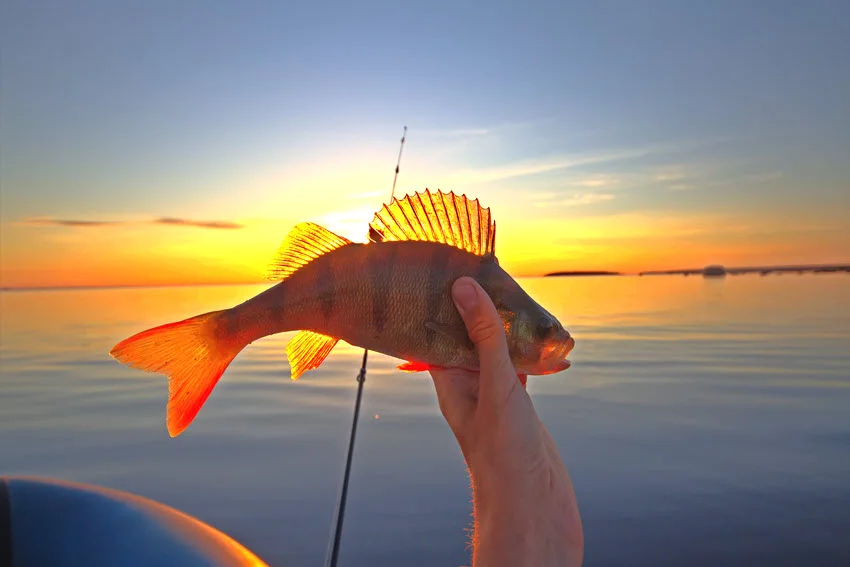
You need to learn all of this to prepare well for your fishing adventure. Does this all seem too complicated? Well, don't worry, we are here to help you. We will present the most common types of Perch in detail and explain how to distinguish them. Let's begin.
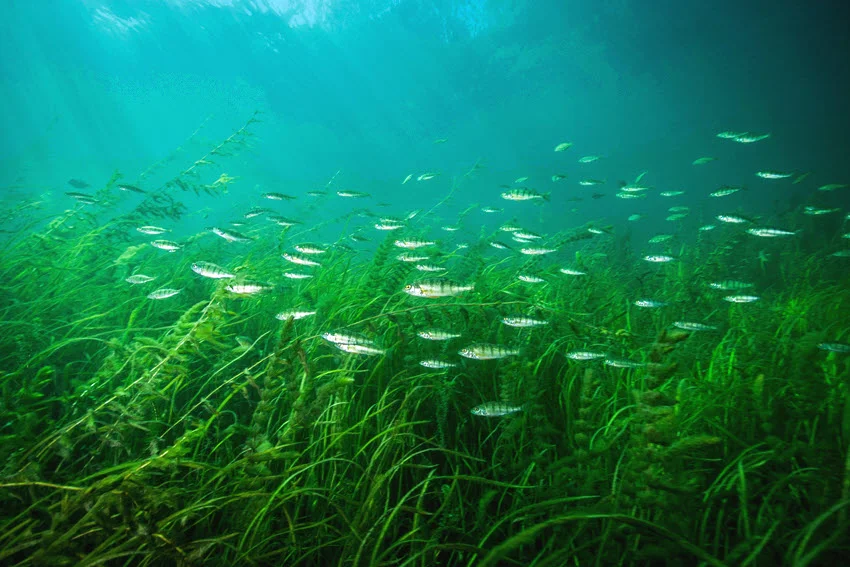
The species we'll cover are Yellow Perch, European Perch, Silver Perch, Golden Perch, and White Perch. These fish share physical traits. All of them have elongated, laterally compressed bodies, two dorsal fins, and characteristic vertical stripes, making them distinctive members of freshwater ecosystems.
Perch are known for their adaptive behaviors. They often form schools, especially during feeding times, to avoid predators and forage more effectively. Seasonal patterns influence their movements.
After explaining how to understand this fish, it is time to analyze its types. All have some characteristics. Don't skip the parts below.
Let's dive into the fascinating world of Perch species. Below, we will provide a detailed exploration of each type. Also, you will find insights to help you recognize their unique traits and learn the best ways to catch them.
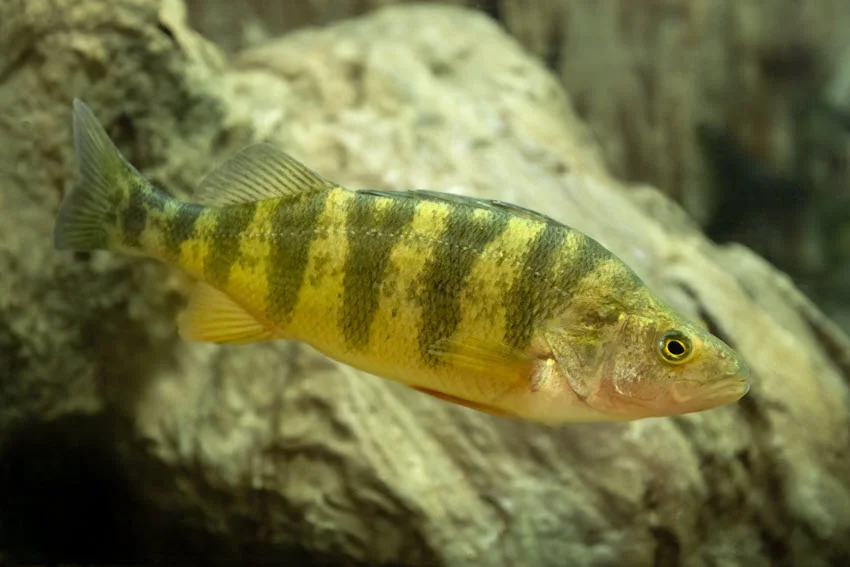
Yellow Perch have an elongated body with rough ctenoid scales. They feature 6 to 8 olive-green vertical bars over a yellow or golden flank. This type of Perch has a forked tail fin and two distinct dorsal fins. The first has 12 to 14 spines, and the second contains soft rays. During spawning, males may develop bright red or yellow hues in their lower fins.
Most Yellow Perch are commonly around 7.5 inches long. In rich environments, they can reach up to 16 inches, with a recorded maximum weight slightly under 4 pounds. Typical specimens weigh around 2 pounds. Perch schools typically consist of 50 to 200 fish, with the larger individuals usually found along the edges and the smaller ones clustered in the center.
Yellow Perch is a highly adaptable species. They thrive in various freshwater habitats (ponds, lakes, and slow-flowing rivers). They often prefer areas near aquatic vegetation in shallower waters. Such places provide shelter and abundant food sources. During the winter months, Yellow Perch tend to move into deeper waters. Anglers commonly find them at depths ranging from 20 to 50 feet in some lakes.
Initially, Yellow Perch spread naturally across much of North America during the glacial recession. Their native range includes Nova Scotia, Quebec, Alberta, and most of the northern United States east of the Rocky Mountains, especially around the Great Lakes. Over time, they have also been introduced by fishery programs to areas such as northern Missouri, western Pennsylvania, South Carolina, Maine, and parts of the Pacific Northwest and Southwest.
Their peak activity occurs in spring when they move to shallow waters for spawning. During summer, they seek deeper, calmer waters. In winter, they remain active and may be caught fishing under ice.
Evenings and early mornings are especially productive. Yellow Perch feed most actively around low-light periods just before dark.
Sensitive and straightforward fishing setups are key when targeting Yellow Perch. Using an ultralight or light-spinning rod between 5 and 7 feet, paired with a 1000 to 1500-size spinning reel, gives you sensitivity and casting control.
In terms of line, a 2 to 6-pound test monofilament is recommended. A 2-lb line is adequate for most Perch. Using 4 to 6-lb can help land larger or other bonus species encountered during fishing trips. Some anglers also use 6 to 8-lb fluorocarbon leaders paired with braid for stealth and abrasion resistance.
Live baits (worms, small minnows, or insect larvae) are highly effective when targeting Yellow Perch. These baits can be suspended near the bottom, where these fish typically feed.
Yellow Perch tend to stay close to the bottom. Because of that, using live bait near the lake or riverbed is often the most productive method, especially in the summer.
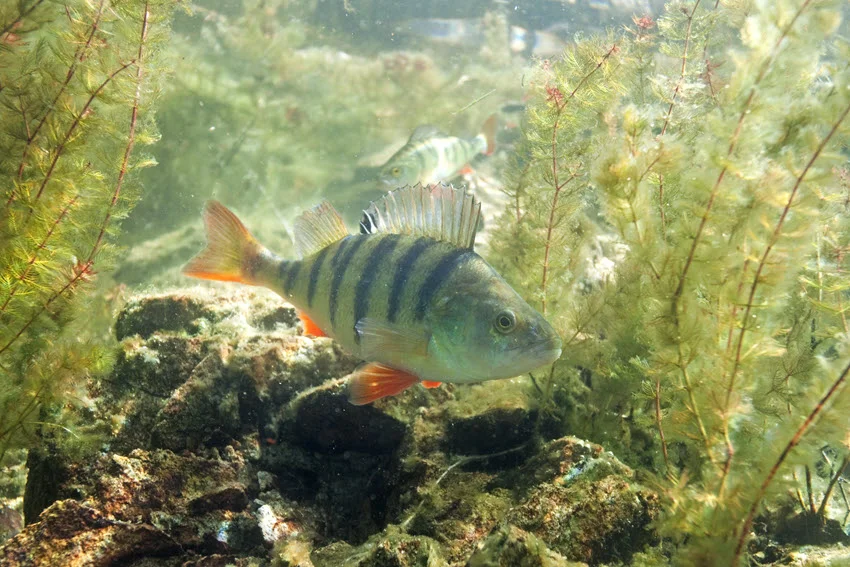
European Perch is covered in greenish scales with a golden hue, giving it a vivid and striking appearance. They are easily recognized by their bold vertical dark bars along the body. It has bright red or orange coloration on the lower fins. The back is typically darker, often olive-green, blending into lighter sides and a pale belly.
European Perch usually measures between 8 and 15 inches in length. Most commonly caught individuals weigh around 1 to 2 pounds, though trophy specimens can exceed 6 pounds. Known for their aggressive strikes and strong resistance, European Perch are highly prized among anglers for both sport and table quality.
European Perch are native to most of Europe (except the Iberian Peninsula), and parts of northern Asia, and they are also found in the brackish waters of the Baltic Sea. They thrive in slow-moving rivers, lakes, reservoirs, quarries, and canals. Ideal habitats are shallow waters with aquatic vegetation, rocky bottoms, and submerged trees. Also, they swim around artificial structures, where they can hide and ambush prey.
Perch changes their preferred locations throughout the year. In spring and autumn, they often move to shallow, food-rich zones. In summer and winter, they tend to gather in deeper, cooler, and more stable parts of the water body. In northern regions, they remain active under ice. That makes them a prime target for winter anglers using ice-fishing methods.
Although European Perch spawn between February and July, depending on the region, the period immediately after spawning is one of the most productive, as fish feed heavily to regain energy. In summer, they feed during early mornings and late evenings, particularly in shaded or vegetated shoreline areas.
Autumn marks another peak feeding period, as Perch aggressively hunts to prepare for the cold months ahead. Overcast days or clear, calm mornings often produce the best catches. In winter, their metabolism slows, but they can still be caught in deeper waters using slow techniques like vertical jigging or drop-shot rigs.
Light or ultralight spinning setups are ideal for Perch fishing. They offer excellent sensitivity for picking up the faintest strikes. A rod between 6 and 8 feet with light action is recommended, paired with a reel in the 2000 to 2500 size range. Monofilament lines rated between 4 and 11-lb are best for balancing stealth and strength.
For live baits, a simple float rig or light ledger works well. When using lures, a drop-shot rig, small jigs, or spinners can be highly effective. Adjust lure size and weight to match the depth and activity level of the fish. In colder months, slower retrieves and smaller baits often produce better results.
European Perch are opportunistic predators and respond well to a wide range of live baits. Popular choices include minnows, worms (such as red worms and lob worms), maggots, freshwater shrimp, and small fish pieces like sardine or mackerel. These baits are particularly effective near structures and in areas where baitfish are present.
Artificial lures are also highly productive. Soft plastics that imitate small fish or worms, micro-jigs, spinners, and spoons can all tempt Perch. In low-light conditions or murky water, lures with added flash or vibration are especially effective. Fly anglers can also succeed with small streamers that mimic baitfish movements.
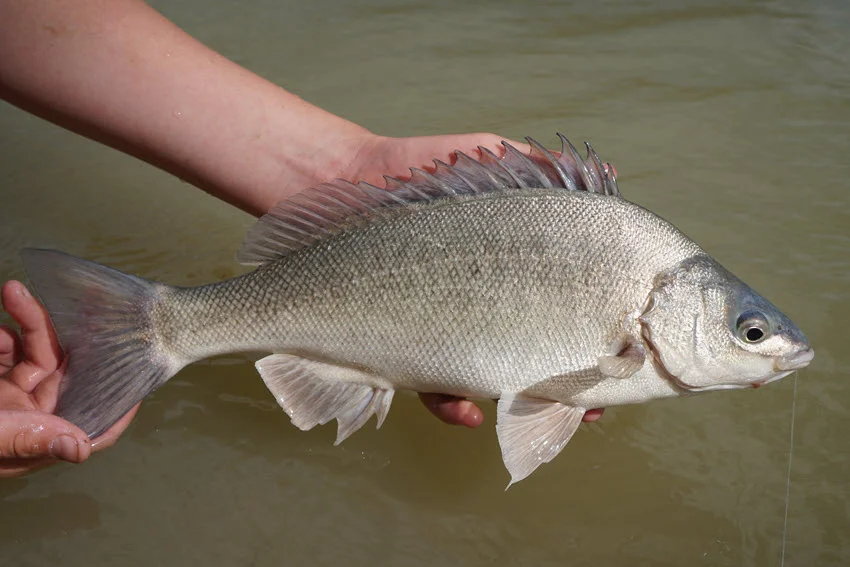
The body of Silver Perch is covered in shiny silver scales that reflect light brilliantly. Their dorsal fins are separated into a spiny front section and a soft-rayed rear section. The pelvic and anal fins show pale yellow or orange tones. They have a small mouth and a slightly forked tail, which gives them good maneuverability in their slow-moving freshwater habitats.
Silver Perch reach lengths of 10 to 12 inches. They can grow up to 18 inches in ideal conditions. Their weight ranges up to about 2 pounds. However, individuals of larger size have been documented on occasion.
Silver Perch is native to Australia. They inhabit river systems such as the Murray-Darling Basin. For this type of Perch, slow-moving or still waters (lakes, billabongs, and reservoirs) are the best. They are often found schooling near the bottom among submerged vegetation. These places provide shelter and feeding grounds.
Their populations have declined in some areas due to habitat loss and changes in river flow. However, they remain a popular species among recreational anglers in many parts of southeastern Australia, especially when fishing from the right recreational boat for slower rivers, lakes, and impoundments. Silver Perch tend to avoid fast currents and prefer warmer, stable water conditions.
The best times to fish for Silver Perch are in spring and summer. During this time, fish become more active. They move into shallower waters to spawn, making them more accessible to anglers during these months.
Early mornings are very productive. Additionally, late afternoons are also very fruitful, as Silver Perch tend to feed more aggressively during these cooler parts of the day. In colder months, they become less active.
Light spinning rods in the 6 to 7-foot range, paired with sensitive tips and small reels in the 2000 to 2500-size range, are ideal for Silver Perch fishing. Spooling the reel with 4 to 6-lb fluorocarbon line improves bite detection. This is especially notable when fishing near dense vegetation or submerged structures.
Using hook sizes 6 to 10 and light weights of around 1/16 to 1/8 oz improves the natural movement of baits and reduces the chance of spooking these cautious fish. Precision and patience remain key when targeting Silver Perch, as they often inspect bait closely before striking.
Live baits (worms, insect larvae, and small crustaceans) are very effective when fished near the bottom where Silver Perch feed. Their natural diet includes a variety of small aquatic invertebrates, making these baits ideal.
Small soft plastic lures and live bait imitations can also be productive, especially when targeting feeding fish in clearer water. Matching the hatch and bait size to local forage improves catch rates.
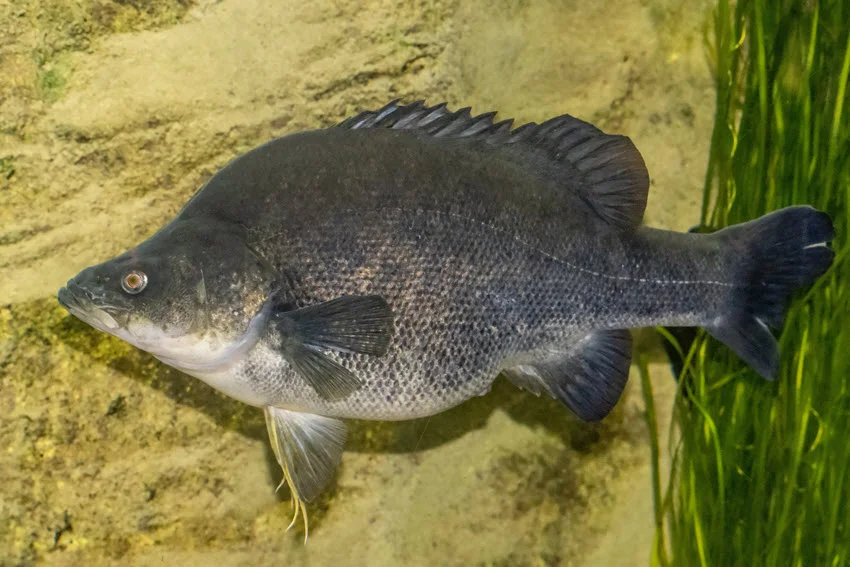
Golden Perch is often called "Yellowbelly" in Australia. Its body is covered with small, rough scales. Their coloration ranges from golden-yellow to olive-green, sometimes with a bronze sheen. The head is relatively small compared to the body. The mouth is slightly oblique with fine teeth. Fins are generally dark. Anal and pelvic fins sometimes show a reddish tinge.
Golden Perch grow between 12 and 24 inches in length. Exceptional specimens can exceed 30 inches and weigh over 15 pounds. Most commonly caught individuals range in size from 2 to 8 pounds. They are known for their intense, dogged fight. That makes them a prized catch among Australian freshwater anglers.
Golden Perch inhabit the Murray-Darling River system and other inland waterways. They prefer slow to moderate-flowing rivers, large lakes, and reservoirs. They can also be found at billabongs with sandy or muddy bottoms. They are often found near submerged timber, rocky outcrops, and steep banks. In these places, they can ambush passing prey.
While confined mainly to their native range, Golden Perch have been stocked in various impoundments and reservoirs across Australia for recreational fishing. Seasonal floods can trigger movements, with fish traveling long distances to spawning grounds in upstream sections.
Golden Perch are most active during spring and early summer, when rising water temperatures and increased food availability trigger strong feeding behavior. In rivers, they often bite best after rain events that improve flow and wash food into the system.
During hot summer days, early mornings and late afternoons are the most productive. At these times, fish tend to move into deeper, calmer waters during midday. In autumn, feeding remains good as fish build reserves for winter.
When you go Golden Perch fishing, a medium-light baitcasting setup is ideal. Rods around 6'6" to 7' matched with reels should be spooled with 8 to 15-lb braided monofilament line. Leaders of 10 to 20-lb fluorocarbon help prevent abrasion from structure.
When fishing in rivers, a simple running sinker rig with bait works well. In lakes and reservoirs, trolling lures or casting near structure is productive. Sensitivity and accuracy are important, as Golden Perch often strike close to cover.
Live baits (shrimp, worms, and small fish like gudgeons) are highly effective. They work best when fished close to the bottom near structure. Freshwater shrimp are especially popular in their native range.
Artificial lures (soft plastics, spinnerbaits, and lipless crankbaits) are also productive. They are best for fishing in murky water, where vibration and flash attract fish. Slow rolling retrieves near structure or along drop-offs often trigger strikes from larger individuals.
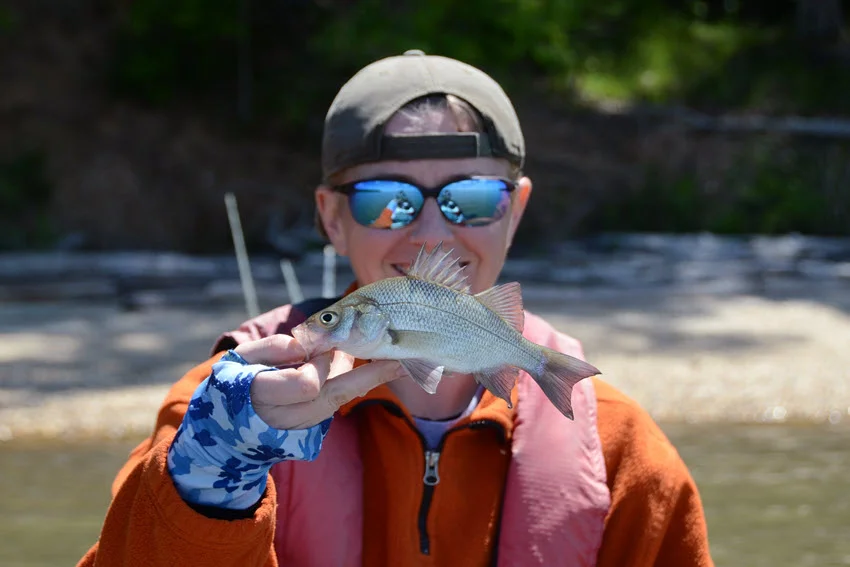
White Perch is not a true Perch. It belongs to the Bass family. However, anglers often confuse it with Perch, and many also compare White Perch with White Bass. They lack the bold vertical bars seen on Yellow or European Perch but have a more uniform coloration with a slightly darker back. Their fins are pale, with no intense spawning colors. The body is more rounded than elongated, and the mouth is moderately sized and slightly upward.
This fish measures 6 to 10 inches long. The most caught individuals weigh around 1 pound or less. While the world record sits at about 3.5 pounds, these larger fish are rare. White Perch are known for their spirited fight when hooked.
White Perch are found along the Eastern Seaboard. It inhabits shallow saltwaters, estuaries, rivers, and the Great Lakes. Their ability to tolerate a wide range of salinity allows them to move between fresh and brackish waters with ease.
They often concentrate in shallow bays and near the docks. It is not rare for anglers to catch them in calm river backwaters. It prefers spots where vegetation or submerged structures provide shelter. Their migration into freshwater during spawning seasons brings them upriver.
White Perch spawn in the spring, usually migrating upriver. This period is the best time to catch them, especially in shallow areas where they gather in large schools.
Outside spawning, they can be hit-or-miss in freshwater, with populations fluctuating wildly by location. Early morning provides successful fishing. Late afternoon is also a solid period of the day for fishing for White Perch.
Light to ultra-light spinning rods, ranging from 6 to 7 feet, paired with small reels in the 1000 to 2500 size, work best for White Perch, as their bites can be subtle. Spooling with 4 to 6-lb fluorocarbon line provides the sensitivity needed to detect the quick, gentle nibbles these fish often exhibit.
Using hook sizes 6 to 10, tiny jigs between 1/32 and 1/8 oz, and light bobbers allows for delicate bait presentation near vegetation or submerged structures where White Perch feed. Many anglers use ultralight gear similar to setups for Panfish, which maximizes sensitivity during the fight.
Live worms, small minnows, and insect larvae are top choices when targeting White Perch. They are especially effective when fished near the bottom or around underwater cover. These baits mimic their natural diet and trigger strikes.
Small jigs tipped with soft plastics or live bait can also be effective, particularly during cooler months or in deeper water where Perch seek refuge. Matching bait size to local forage will lead to fishing success.
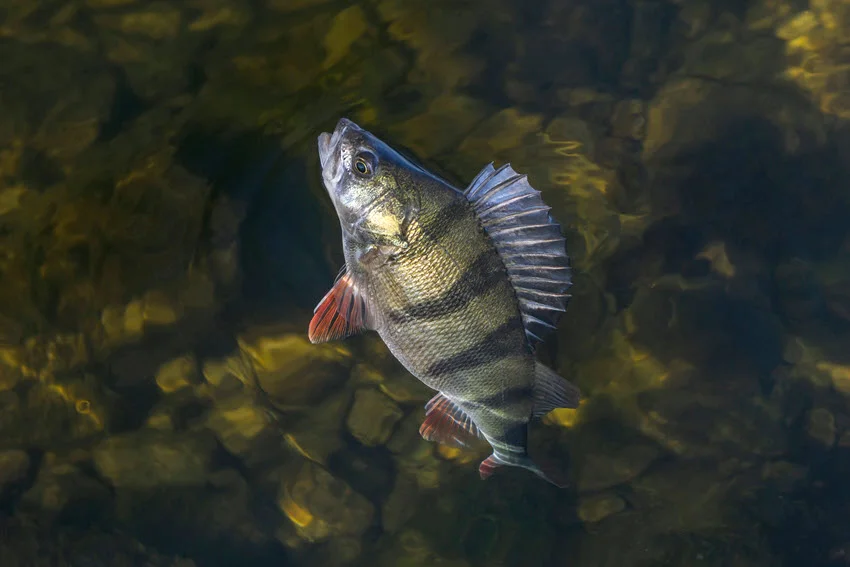
Perch are often most active in low-light conditions. These periods draw them from deeper water into the shallows to feed. So, during this time, anglers have a better chance of success. The reduced light offers them cover while hunting. That makes them less cautious.
It is essential to find the best fishing spot. Perch often hide among aquatic vegetation, submerged logs, and rocky bottoms.
Light tackle produces the best results. Use thin lines, sensitive rods, and jigs. Perch often bite gently, sometimes just inhaling the bait. Sensitive gear helps detect even the slightest nibble.
Avoid sticking to one method or bait for too long. If you don't get bites after 10 to 15 minutes, change your bait. Also, in this situation, you can try to change the fishing spot. Adjust your retrieve speed, alternating between steady pulls and pauses.
Understanding fishing regulations and preserving specific fish species contributes to protecting fish populations and ecosystems and promoting responsible angling practices.
Anglers Booking Team
Fishing for Perch can be enjoyable. However, it's necessary to follow safety practices. Additionally, it's essential to respect fishing regulations.
Safety comes first when we talk about Perch fishing. Thorough preparation reduces risks on the water and ensures you can enjoy your time outdoors without unnecessary hazards.
Don't forget to be alert. Staying prepared helps prevent accidents. It lets you focus on the fun part, catching Perch.
Fishing regulations vary by location. They are designed to protect fish populations. Following these rules ensures Perch remains abundant for future anglers.
By learning these regulations, anglers contribute to conservation. At the same time, they keep the sport thriving for generations to come.
Perch fishing offers anglers a rewarding challenge. From identifying different Perch species to choosing the effective bait and gear, every step adds to the excitement.
What Perch species have you caught? Which tips have worked best for you?

The expert copywriters at Anglers Booking have meticulously crafted this article. Our dedicated team of writers provides valuable insights and information to enhance your angling experience.

April 26, 2025

December 10, 2024
Subscribe to our newsletter and receive a selection of cool articles every week.
Embark on unforgettable fishing adventures with us at Anglers Booking.
book your charter
September 8, 2026
August 21, 2026
August 18, 2026
August 15, 2026
August 12, 2026
August 8, 2026
August 4, 2026
April 17, 2026

You're now part of our exclusive community. Get ready for premium content and updates straight to your inbox.
close
Subscribe to our newsletter and receive a selection of cool articles every week.
Please enter a valid email address.
Be the first to know when we're back in action.
Please enter a valid email address.
Leave a Comment
Your email address will not be published. Required fields are marked *
Thank you for your comment! It has been submitted for review and will appear on the site shortly.