


Anglers Booking Team
The expert copywriters at Anglers Booking have meticulously crafted this article. Our dedicated team of writers provides valuable insights and information to enhance your angling experience.
 12 minutes read
Billfish are among the most striking and challenging game fish in the world's oceans. Their long, spear-like upper jaw (bill) and fast swimming are their signature traits. Anglers often prize Billfish for the fight, speed, and acrobatics involved in hooking and landing them.
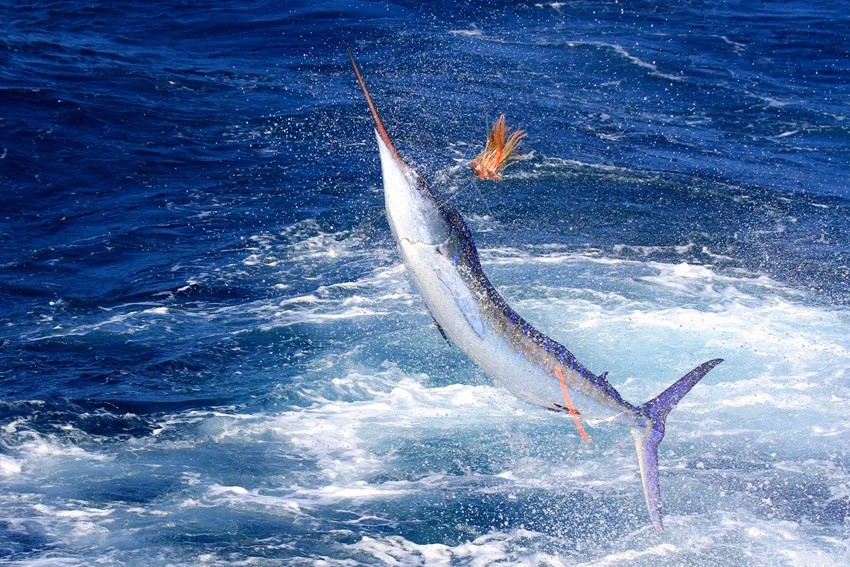
Our goal is to familiarize you with the types of Billfish. You will learn how to identify them. Additionally, we will give you tips on how to catch them. So, it is the right time to start our trip.
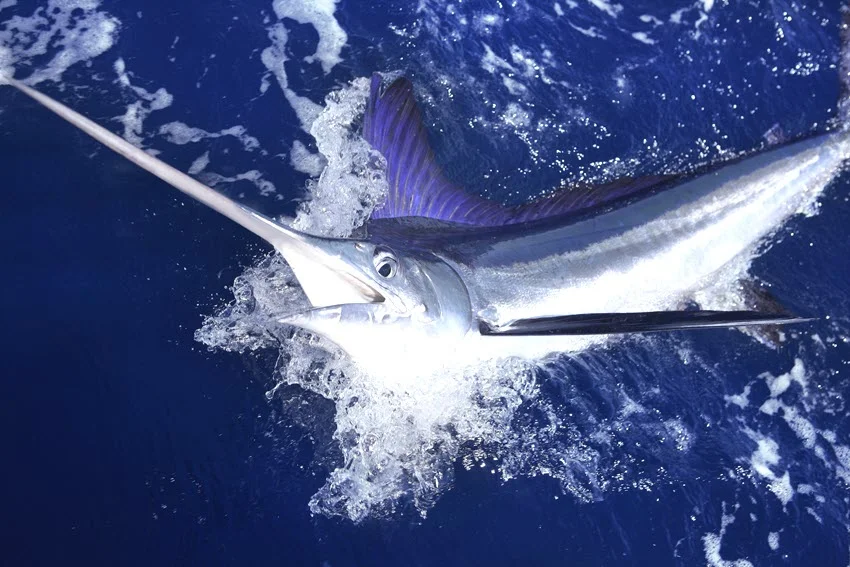
Billfish are a group of large marine fish with elongated rostra and high-performance swimming abilities. Types of Billfish include Marlin, Spearfish, Sailfish and Swordfish.
Migrating across vast distances in response to temperature changes is characteristic of Billfish. This group of fish uses their bills not to impale prey, but primarily to slash through schools of smaller fish, injuring or stunning prey so they can return and feed on weakened individuals.
As flagship species in sportfishing tournaments, Billfish hold a prestigious place in the fishing world. For many anglers, landing one is regarded as a true mark of skill, since they live in deep offshore waters and demand robust gear and technique.
In the following text, we will present the four most famous species of Billfish. We will describe each of them in detail. Therefore, stay with us so that you do not miss the most critical information.
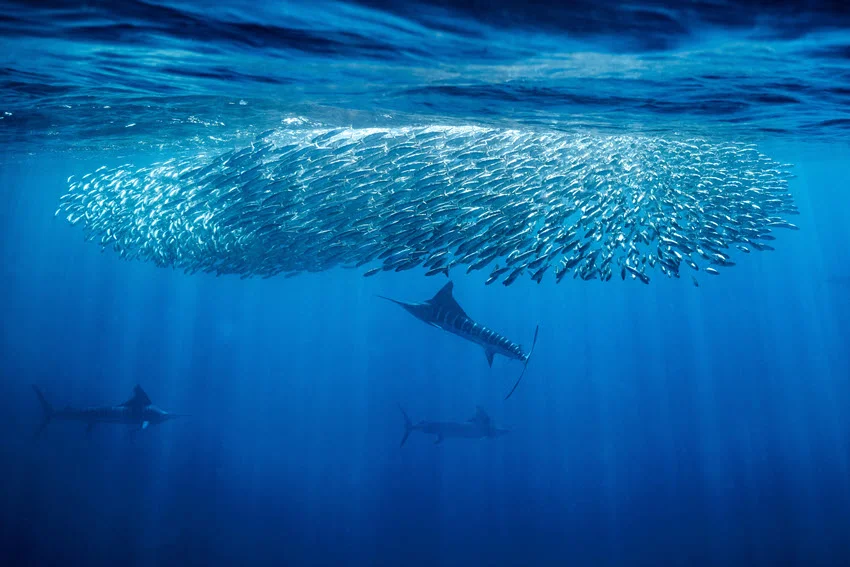
Marlins are top predators in tropical and subtropical waters. They hunt smaller fish and squid by slashing or stunning prey with their bills. Their dorsal fins are often tall and pointed. Their bodies are dark blue or black on top and silvery underneath.
Marlin includes a few famous species. It is about Blue Marlin (average length 132 inches, weight 200 to 500 pounds), Black Marlin (average length 108 to 120 inches, weight 300 to 1,200 pounds), Striped Marlin (average length 96 inches, weight 120 to 250 pounds), and White Marlin (average length 72 inches, weight 50 to 100 pounds). These species differ in size and color, but they have the same general body shape and predatory habits.
Marlins are pelagic fish; they live in the open ocean rather than close to the shore. This fish can be found from the surface down to hundreds of feet, typically at depths of 200 to 500 feet.
Geographically, Marlins swim in both the Atlantic and Pacific Oceans, including areas off the coasts of North and South America, the Caribbean, Africa, Southeast Asia, and Australia. They tend to stay near the continental shelf or around oceanic currents where baitfish are plentiful.
The peak season for catching Marlin depends on location. Generally, the best time to catch them coincides with warmer months, when water temperatures are ideal for their activity. In the Atlantic, this is often from May to September. In the Pacific, it varies by region.
Early mornings are usually the most productive. Also, try fishing in the late afternoon. Marlins are more active near the surface during these times. Midday can be less effective unless baitfish are near the surface.
Anglers targeting Marlins need heavy-duty trolling rods and reels that can handle powerful fish. Lines of 80 to 130 pounds test or higher are standard. Leaders made of durable materials (fluorocarbon or steel) are recommended.
Hooks should be strong and large, typically circle hooks, that ensure a secure hold without unnecessarily harming the fish. Because Marlins are strong fighters, robust gear is important to provide a safe catch.
Live bait is the best option when we're talking about baits for the Marlin. You can use small Tuna, mackerel, or squid, presented at varying depths depending on water temperature and Marlin activity. Marlins hunt by sight, so bait that mimics natural prey movement works best.
Artificial lures are also widely used. The most productive of them are trolling lures that look like injured fish. Varying the trolling speed and depth could attract a strike from these fast, powerful predators.
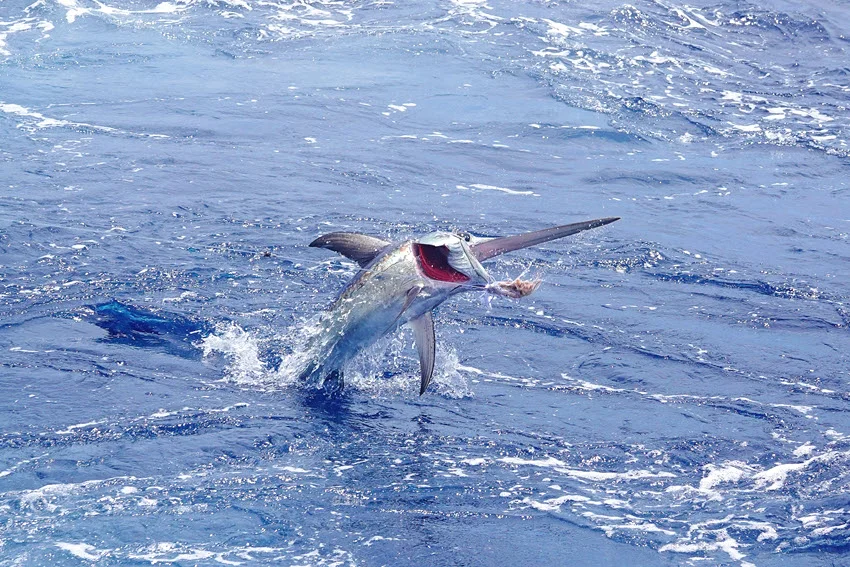
Another famous Billfish is the Swordfish. Their bodies are strong and streamlined, featuring a tall dorsal fin and a keeled form that makes them built for speed. Their body color is dark brown to black on top, fading to a lighter shade underneath.
Swordfish are respected in sportfishing for many reasons. Their size, strength, and endurance are among them. They can grow to an average length of 78 to 96 inches and weigh 200 to 400 pounds.
Swordfish can be found in regions of the Atlantic, Pacific, and Indian Oceans. Their locations can change seasonally depending on water temperature.
They are found from the surface down to depths of up to 2,625 feet. Swordfish often hunt at night in deeper waters and come closer to the surface at cooler parts of the day.
The peak season varies by region. In the Atlantic, the best months are generally May through September, when water temperatures are ideal, and Swordfish are more active.
The best time of day is at night or in the early morning. That is because Swordfish feed more aggressively in cooler, darker conditions.
Anglers should use heavy-duty rods and reels designed explicitly for big-game fishing. Lines of 80 to 130-pound test are recommended, with strong leaders to withstand the Swordfish's strength.
Large circle hooks are preferred to ensure a secure hookset. A robust trolling rig or deep-drop setup is usually employed.
Live bait (squid, mackerel, or small Tuna) works great. Baits are usually fished at depths between 300 and 800 feet, depending on water temperature and Swordfish activity.
Artificial lures are also effective. The best of them are those that move like injured prey. Trolling lures or vertical jigs are commonly used to attract Swordfish in deep waters.
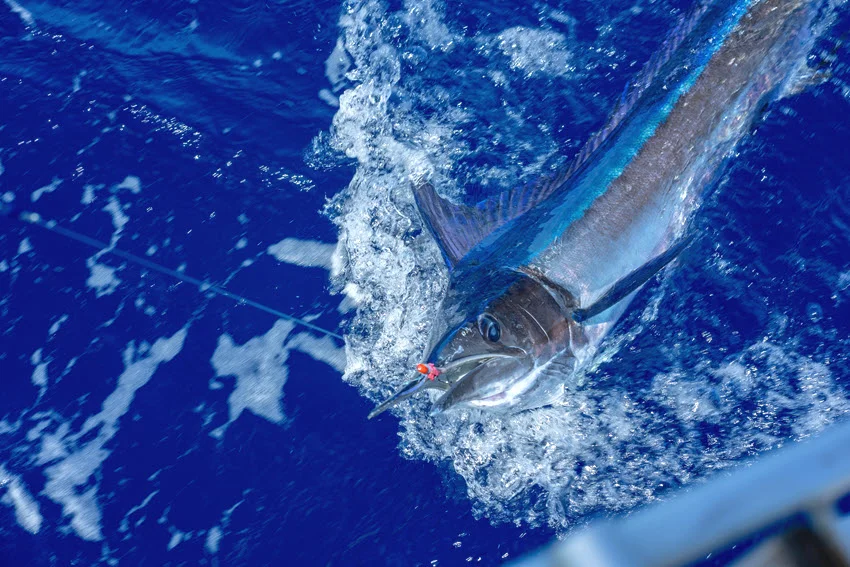
Spearfish are smaller members of the Billfish family. They are easily recognized by their sleek, streamlined bodies and short, slender bills, which are noticeably lighter and shorter than those of Marlins or Swordfish. Their dorsal fin is long and high, extending along much of the body. The back is bluish-purple, fading to a silvery white underside, with horizontal stripes visible along the sides.
The most common types of Spearfish are the Shortbill Spearfish (average length about 70 inches, average weight 45 to 65 pounds) and the Longbill Spearfish (average length about 80 inches, average weight 50 to 80 pounds). Despite their smaller size, Spearfish are fast, agile predators, capable of bursts of speed and impressive jumps when hooked. Their rarity in the wild makes them a valued catch among anglers.
Spearfish thrive in the Atlantic and Pacific Oceans. They prefer offshore waters with warmer surface temperatures. In the Atlantic, the Longbill Spearfish is found across a wide range, from the U.S. East Coast to the Mediterranean.
Shortbill Spearfish is often caught around Hawaii and in the central Pacific. They usually inhabit surface and mid-level depths, often between 100 and 300 feet.
In the Atlantic, Spearfish are more commonly targeted during summer and early fall, when warm waters attract them closer to the surface. In the Pacific, they are most abundant around Hawaii from February through June.
The best time of day is typically in the morning. Additionally, success can also be achieved in the late afternoon. Their feeding patterns often follow schools of small baitfish, which makes them more predictable for anglers.
Due to their smaller size, lighter tackle is optimal compared to Marlins or Swordfish. Medium-weight trolling rods and reels are sufficient, with 30 to 50-pound test line commonly used.
Hooks should be smaller circle hooks to match their size, and lighter leaders are effective since Spearfish do not have the same cutting strength as larger Billfish.
Live bait is very productive; small mackerel, sardines, or squid work best. They are presented at depths of 100 to 300 feet, depending on local conditions.
Artificial lures, especially small trolling lures, are also successful. Their smaller bills and feeding habits mean they often strike at lighter, faster-moving lures.
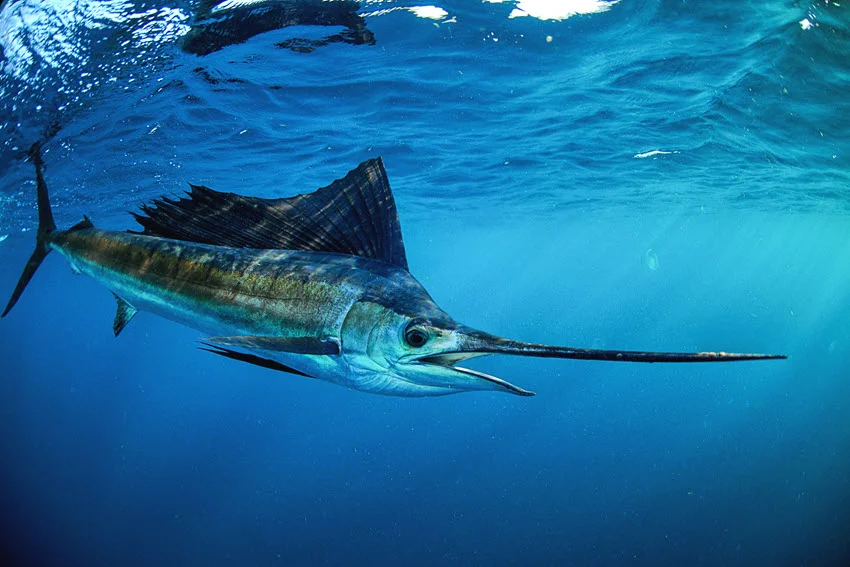
Sailfish are among the most recognizable and spectacular Billfish species, distinguished by their large dorsal fin, called a sail, which runs much of the length of their body and is often taller than the body is thick. Their colors range from vibrant blue to gray on the back, with a white underside. They usually display a cobalt-blue line running from the eye to the dorsal fin, along with spots on the dorsal side.
There are two main types: the Atlantic Sailfish (average length 80 to 110 inches, average weight 120 to 180 pounds), which is common in the Atlantic Ocean, and the Indo-Pacific Sailfish (average length 90 to 124 inches, average weight 150 to 200 pounds), which inhabits the Indian and Pacific Oceans.
Sailfish live in the Indo-Pacific and Atlantic Oceans. In the Atlantic, they are found from the U.S. East Coast down through the Gulf of Mexico and South America, extending across to parts of West Africa.
In the Indo-Pacific, they range from East Africa across the Indian Ocean to Japan and south to northern Australia. They often inhabit offshore waters at depths between 30 and 300 feet, especially near currents where baitfish are abundant.
The best season to catch Sailfish varies by region. In the Atlantic, the peak season is usually from December to March, particularly off Florida, where Fort Lauderdale is world-famous for Sailfish fishing. In the Pacific, prime months are generally from September through January.
The most productive times of day are in the morning and late afternoon, when they feed closer to the surface. During these times, anglers often spot their sails breaking the surface as they chase schools of baitfish.
Because Sailfish are smaller than marlins or swordfish, anglers typically use medium to heavy trolling rods and high-speed reels. A line test of 30 to 50 pounds is sufficient for most Sailfish catches.
Circle hooks are strongly recommended for catch-and-release fishing, as they help reduce injury to the fish. Fluorocarbon leaders are commonly used because they are nearly invisible in the water.
Live bait such as sardines, ballyhoo, or small mackerel is highly effective and is usually presented at depths of 30 to 100 feet, depending on conditions.
Artificial lures also work, mainly when used at higher trolling speeds that mimic fast-moving prey. Sailfish respond well to teasers that draw them closer before dropping back live or artificial bait.
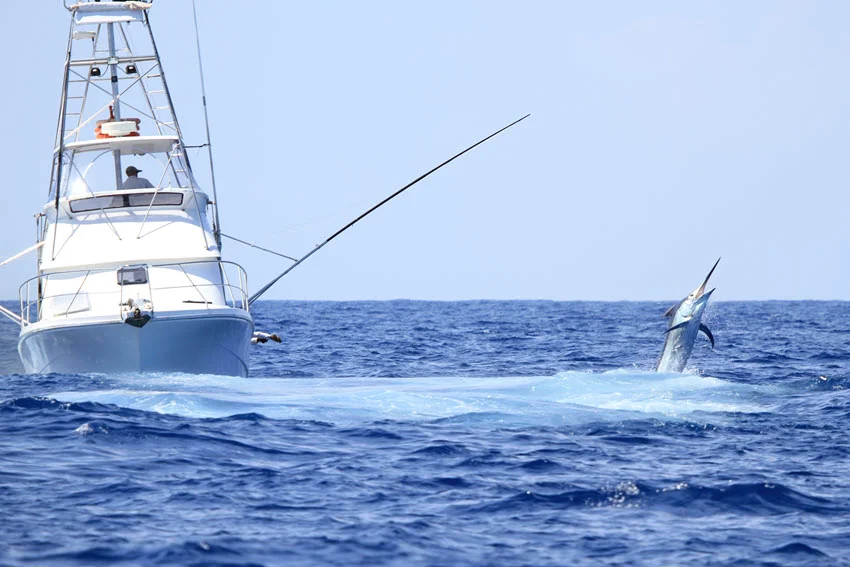
Fishing for Billfish requires a mix of patience, skill, and the right equipment. One of the most important tips is to understand the fish's behavior. Billfish are fast predators that hunt near the surface or at mid-depths. Knowing where they are likely to feed leads to fishing success.
Keep in mind these environmental factors (wind, water temperature), and you will be able to predict where Billfish are likely to appear. Using effective bait and lures can make a big difference. Mackerel, sardines, or squid are among the most effective live baits. Trolling lures that imitate injured prey also work well.
Practicing catch-and-release helps preserve Billfish populations. Minimizing time out of the water ensures that the fish remain healthy after release, allowing future anglers to enjoy the sport as well.
Understanding fishing regulations and preserving specific fish species contributes to protecting fish populations and ecosystems and promoting responsible angling practices.
Anglers Booking Team
Fishing for Billfish can be exhilarating, but it can also be risky, especially when considering their size. More information about this and the regulations can be found in the forward.
When targeting Billfish, safety is important. Proper precautions will minimize risks. Below are some safety tips.
Safety tips help anglers enjoy the fight without unnecessary danger. Stay alert, communicate with your crew, and respect the power of these incredible fish.
Billfish are protected in many regions due to concerns about overfishing and their ecological importance. Here is some information related to fishing rules.
Responsible anglers help ensure that these fish remain a vital part of marine ecosystems and continue to offer thrilling sportfishing opportunities for the future.
Billfish are some of the most powerful fish in the ocean, from the acrobatic Sailfish to the mighty Marlin and elusive Swordfish. These magnificent fish are a real challenge to catch for all anglers. However, it is up to all of us to help protect their numbers for the future.
Now we'd love to hear from you! Have you ever tried fishing for Billfish, or is there a species you dream of catching one day?

The expert copywriters at Anglers Booking have meticulously crafted this article. Our dedicated team of writers provides valuable insights and information to enhance your angling experience.

October 16, 2024
September 3, 2026
Subscribe to our newsletter and receive a selection of cool articles every week.
Embark on unforgettable fishing adventures with us at Anglers Booking.
book your charter
September 8, 2026
August 21, 2026
August 18, 2026
August 15, 2026
August 12, 2026
August 8, 2026
August 4, 2026
April 17, 2026

You're now part of our exclusive community. Get ready for premium content and updates straight to your inbox.
close
Subscribe to our newsletter and receive a selection of cool articles every week.
Please enter a valid email address.
Be the first to know when we're back in action.
Please enter a valid email address.
Leave a Comment
Your email address will not be published. Required fields are marked *
Thank you for your comment! It has been submitted for review and will appear on the site shortly.