


Anglers Booking Team
The expert copywriters at Anglers Booking have meticulously crafted this article. Our dedicated team of writers provides valuable insights and information to enhance your angling experience.
 14 minutes read
If you're a fishing enthusiast, you've probably heard the word "Panfish." But do you know what it means? In this guide, we'll analyze what makes a fish a Panfish. Additionally, we will examine the common species you might catch and discuss why they are so popular among anglers.
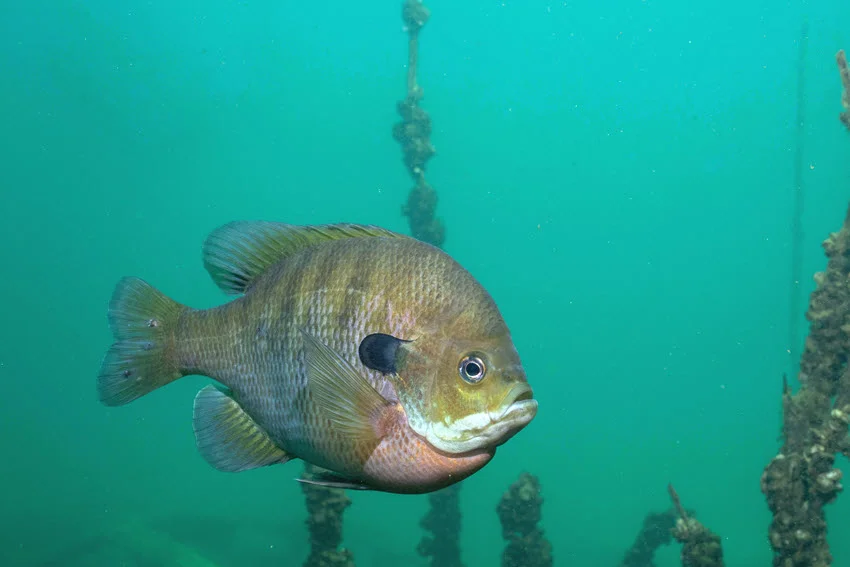
A Panfish is not a single species. It is a group of small freshwater fish that are easy to catch and prepare for cooking. The name "Panfish" comes from the idea that they are the perfect size to fit in a frying pan. Most weigh only a few ounces. However, some species of them can grow much larger.
These fish inhabit lakes, rivers, ponds, and reservoirs throughout the United States. They are colorful, active, and fun to catch. That makes them great for beginners and families. With simple gear and a little patience, anyone can enjoy a day of Panfish fishing.
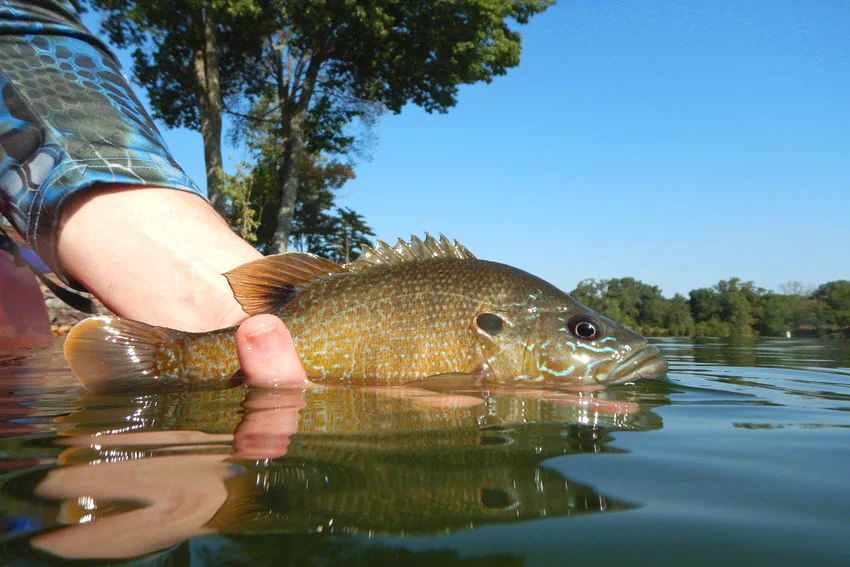
The most common Panfish include Bluegill, Pumpkinseed, Green Sunfish, Crappies (Black and White), and Redear Sunfish. Each has its own look and habits. However, all are well known for being easy to catch and suitable for eating.
These fish prefer shallow waters, especially near vegetation, fallen trees, or rocky areas. Many Panfish are known for forming schools and staying close to cover. Their feeding habits are simple. They eat insects, small minnows, and larvae. Because they are small and not very picky, Panfish play an essential role in the food chain.
One reason Panfish are so popular is their wide availability and friendly nature for beginners. They bite readily and often provide constant action. They are tasty, with firm white meat that many anglers enjoy frying.
Below, we will look at some of the most popular Panfish. You will learn about their appearance, habitat, optimal catch times, and the most effective gear and baits.
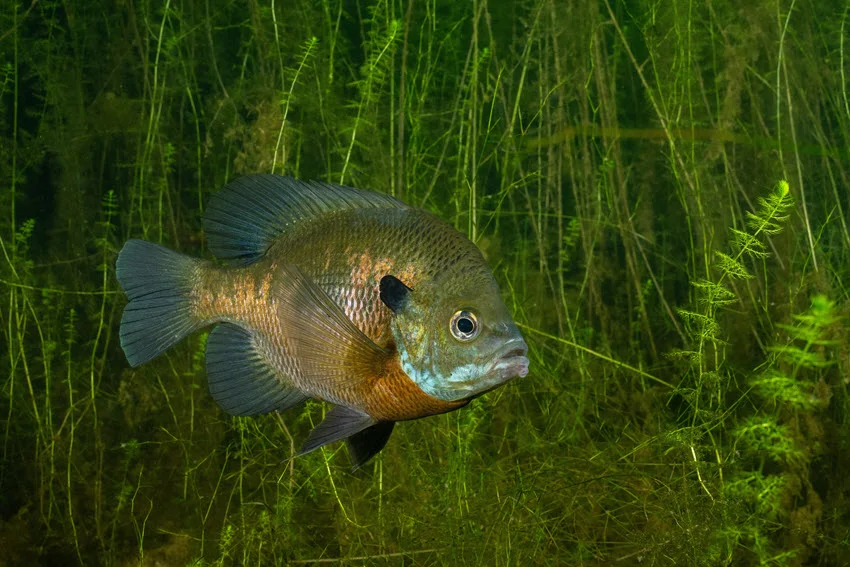
Bluegill are deep-bodied fish with a flat, disk-like shape. They are olive green on the back, fading to lighter yellow or orange on the belly. Vertical dark bars run along their sides. Additionally, there is a distinctive black spot on the rear edge of the gill cover, often called the "ear flap." Males can be especially colorful during spawning. At this period, they show bright orange bellies and a more intense blue tone along their cheeks.
Adult Bluegill measure between 6 and 10 inches in length, though record specimens may reach larger sizes. Most fish weigh around 0.5 to 1 pound. Some can reach up to 2 pounds in prime waters. The average size makes them easy to handle and a perfect fit for the frying pan, which is one reason they are so popular among anglers.
Bluegill are most often found in shallow waters ranging from 3 to 10 feet deep, especially during the warmer months. They prefer areas with plenty of vegetation, where they can feed on insects and find protection from predators. Fishing in lakes, ponds, and slow-moving rivers with weedy edges is considered a prime spot to locate them.
During hot summer or colder winter months, Bluegill may move into deeper water, sometimes holding at depths of 15 to 20 feet. In reservoirs and large lakes, they often gather near submerged structures such as fallen trees, docks, and rocky outcrops. This tendency to school makes them relatively easy to target once you locate a group.
The best season to catch Bluegill is in late spring and early summer, especially around May and June, when they spawn in shallow waters. At this time, they are aggressive and active, making them easier to catch. Fall can also be productive, as they feed heavily before winter.
In terms of daily activity, mornings and evenings are the prime times. During these hours, Bluegill move into the shallows to feed on insects and larvae. Midday fishing can still be effective, but the fish often retreat to shaded or deeper areas when the sun is high.
Light tackle is best for Bluegill, as their small size and delicate bite make ultralight rods more effective. A spinning rod with 4 to 6-pound test line and a small reel gives the right balance of sensitivity and control. Using small hooks helps ensure that Bluegill can take the bait easily.
A simple float setup works well, especially in shallow water where precise depth control is essential. In deeper spots, anglers can use small jigs or drop-shot rigs to present bait just above the bottom. The key is to keep the presentation subtle and scaled down to the Bluegill's size.
Live bait (worms, crickets, or small minnows) is a classic choices that almost always draw bites. These natural offerings mimic the insects and small prey that Bluegill feed on daily.
Artificial lures (tiny jigs, soft plastics, and micro crankbaits) can also be productive, especially when fish are more aggressive. Bright colors (chartreuse, orange, and white) often stand out in the water and attract strikes. Experimenting with live and artificial baits allows anglers to match the conditions and find what works best.
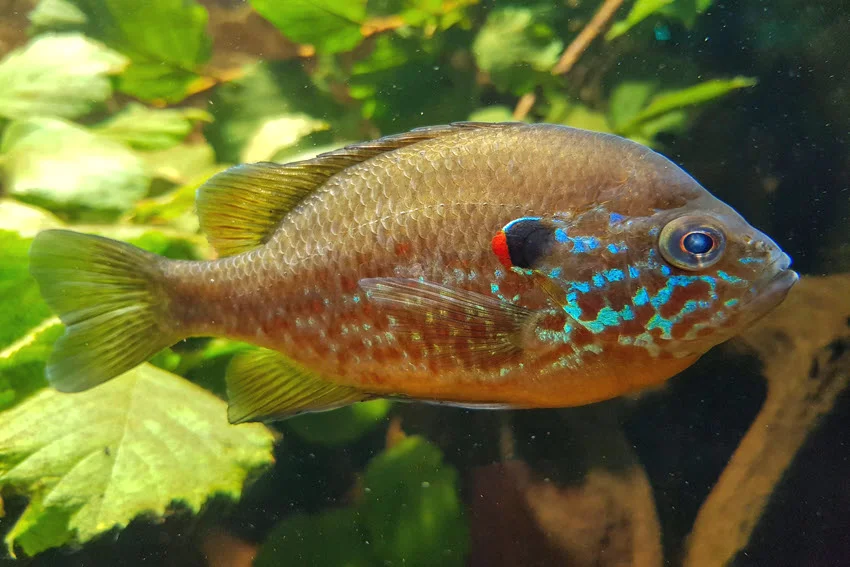
Pumpkinseed Sunfish are among the most colorful Panfish. They have a round, laterally compressed body. Their backs are olive-green, while the sides shine with blue, orange, yellow, and iridescent speckles. A bright red or orange spot is found at the tip of the gill flap. They also have wavy blue lines on their cheeks and gill covers, adding to their striking appearance.
Pumpkinseeds reach 4 to 8 inches in length, though larger individuals can grow up to 10 inches. They weigh between 0.25 and 0.5 pounds, with the largest occasionally reaching 1 pound. Their smaller average size makes them a fun catch for beginners, while still being a good Panfish for the table.
Pumpkinseed Sunfish are most often found in shallow waters between 2 and 8 feet deep. They love clear lakes and ponds with abundant aquatic vegetation, where they hide and feed on insects, small crustaceans, and snails. Their preference for weedy, calm waters makes them easier to target in smaller bodies of water.
In larger lakes and rivers, Pumpkinseeds may also be found near sandy or gravelly bottoms, especially during spawning season. During the summer, some fish may move slightly deeper, to around 10 to 15 feet, but they remain close to cover, such as submerged logs or beds of aquatic plants.
The peak season for catching Pumpkinseeds is in late spring and early summer, when they spawn in shallow, sandy areas. During this time, they are highly active and aggressive, protecting their nests and striking readily at bait. Early fall can also provide good action, as the fish feed more heavily before winter.
When it comes to the best time of day, mornings and evenings are the most productive. Pumpkinseeds often move into shallow areas to feed during low-light conditions, while during midda, they retreat closer to vegetation or slightly deeper waters to avoid bright sun.
Light spinning or spincast setups are ideal for Pumpkinseed Sunfish, as their small mouths require acceptable tackle. A rod with 4 to 6-pound test line and small hooks works best. Their colorful bites are often quick and subtle, so a sensitive rod helps detect them easily.
Float rigs are especially effective in shallow weedy areas, allowing anglers to keep baits just above vegetation. Small jigs tipped with worms or grubs can also work well when fishing slightly deeper water. Because Pumpkinseeds are smaller than Bluegills on average, using downsized gear ensures more consistent hookups.
Live bait (worms, mealworms, or small insects) is very effective because it mimics the fish's natural diet. In clear water, Pumpkinseeds can be sight-fished, making it easy to watch their response to bait.
Artificial options (tiny spinners, soft plastics, and micro jigs) can also bring good results, especially during spawning when Pumpkinseeds are aggressive. Bright colors (gold, orange, and chartreuse) often attract strikes, and slow retrieves along weed lines are particularly effective.
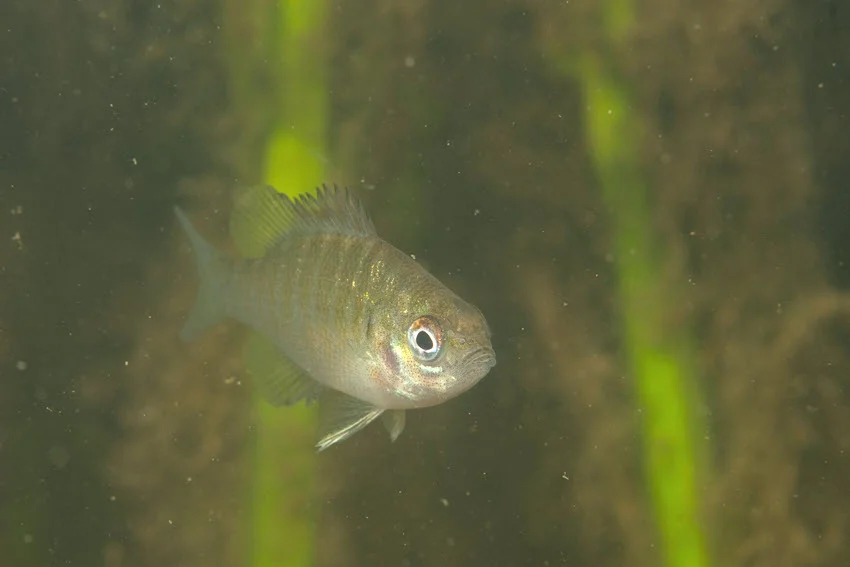
Green Sunfish have a more elongated body compared to Bluegill or Pumpkinseed, with a large mouth that extends to the middle of the eye. Their bodies are olive-green with yellow or turquoise highlights along the fins. They often show a bluish tint on the cheeks. They also have dark spots at the base of the dorsal fin and sometimes on the anal fin.
On average, Green Sunfish grow 4 to 7 inches long, with the most prominent individuals reaching about 12 inches. Most weigh between 0.25 and 0.5 pounds, though some can grow close to 1 pound in healthy waters.
Green Sunfish are commonly found in shallow water, usually between 1 and 6 feet deep. They thrive in ponds, streams, and small lakes, especially in areas with rocky bottoms, brush piles, or submerged wood. Unlike many other Panfish, they can tolerate poor water quality.
During hot weather, some Green Sunfish may move slightly deeper, but they rarely stray far from cover. Because of their aggressive nature, they are usually one of the first fish to bite in a new fishing spot.
The best season for Green Sunfish fishing is spring and early summer, primarily when they spawn in shallow nests near rocks or vegetation. They remain active through the summer months as well, making them one of the more reliable Panfish to catch throughout the warm season.
As for time of day, early morning and late evening are generally the best. These periods bring cooler temperatures and more insect activity near the surface, which encourages feeding. They can still be caught during midday, but they are less active in bright sunlight.
Ultralight rods and reels are the best choice for Green Sunfish, paired with 2 to 6-pound test line. Their mouths are larger than most other Sunfish, so slightly bigger hooks can be used without a problem. Because they fight hard for their size, a sensitive but durable rod makes the experience more fun.
Fishing close to cover is usually productive, so simple setups (small jigs or bobber rigs) work well. Casting along rocky shorelines, fallen branches, or near docks increases the chances of finding aggressive Green Sunfish ready to strike.
Green Sunfish will strike a wide variety of baits, which makes them very versatile. Live worms, crickets, and small minnows are effective natural choices that match their diet. They are also quick to attack grubs and other insect larvae, making them easy to catch with simple live-bait presentations.
Artificial baits (micro jigs, small spinners, and tiny soft plastics) are also productive. Bright colors and flashy lures tend to trigger their aggression, especially when retrieved near cover. Their willingness to hit lures intended for larger fish makes them a fun surprise catch for many anglers.
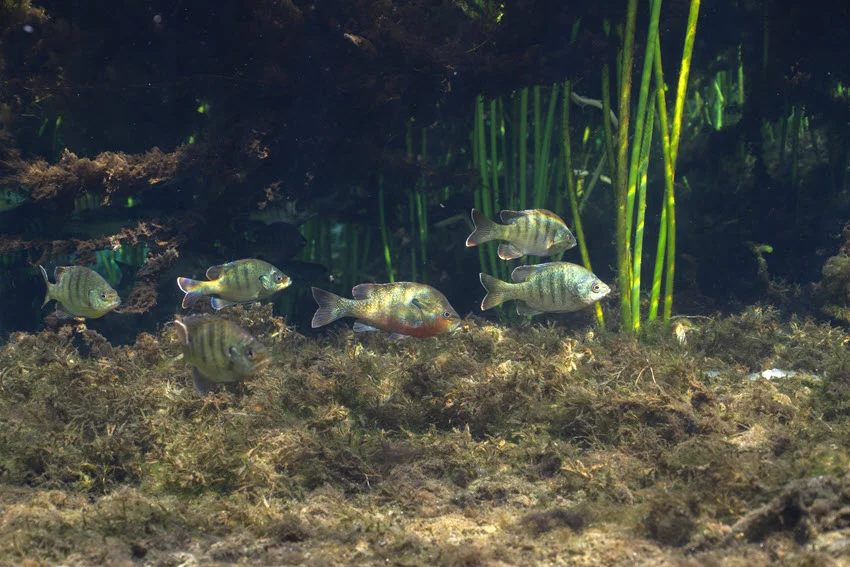
Redear Sunfish have a deep, laterally compressed body, similar to that of the Bluegill. However, they can be identified by the distinct red or orange margin on their gill flap. Their bodies are olive-green to yellow with faint vertical bars on the sides. Their fins often have a reddish tint. Males tend to show brighter colors, especially during spawning, while females are usually paler.
On average, Redear Sunfish grow larger than most other Sunfish, commonly reaching 7 to 10 inches in length. They typically weigh 0.5 to 1 pound, but in good waters, they can exceed 2 pounds. The world-record Redear Sunfish weighed over 6 pounds, underscoring their potential size compared to other Panfish.
Redear Sunfish are most often found in waters ranging from 4 to 12 feet deep, preferring areas with sandy or gravelly bottoms. They thrive in reservoirs, ponds, and natural lakes, especially where aquatic vegetation meets hard-bottomed regions. Unlike other Sunfish, they are less likely to stay in very shallow waters outside of spawning season.
They are also known for gathering near submerged structures such as brush piles, logs, or shell beds. Because they feed on snails and mollusks, Redear Sunfish are often found in areas rich in these food sources, which sets them apart from Bluegill and Pumpkinseeds, which focus more on insects.
The best seasons to target Redear Sunfish are late spring and early summer, during their spawning period. In May and June, they move into shallower water to build nests and are more aggressive in defending them. Fall can also be a good time to catch them, as they feed heavily before the colder months arrive.
For daily activity, early morning and late afternoon are generally the most productive times to catch Redear Sunfish. They tend to feed more actively during low-light conditions, and fishing slows down when the sun is directly overhead. Anglers often find success in shaded areas or near deeper cover during the midday hours.
Ultralight or light spinning setups are best for Redear Sunfish, paired with 4 to 8-pound-test line. Because they have larger mouths than most other Sunfish, slightly bigger hooks are effective. A sensitive rod helps detect their sometimes subtle bites, especially when fishing in deeper water.
Slip-sinker rigs, drop-shot setups, or small jigs tipped with natural bait work well for bottom-fishing. Since Redear Sunfish focus on mollusks and snails, fishing close to the substrate increases success. Anglers should stay patient, as these fish may bite more lightly than Bluegill or Green Sunfish.
Redear Sunfish are unique among Panfish because they prefer hard-shelled prey. Live baits (red worms, nightcrawlers, and waxworms) are excellent, but pieces of snail or mussel meat can be especially effective since they match the Redear's natural diet.
Artificial options include small jigs tipped with soft plastics that resemble grubs or insects. Slow presentations near the bottom tend to draw strikes, and using natural-colored lures often helps mimic the look of snails and other bottom-dwelling food sources.
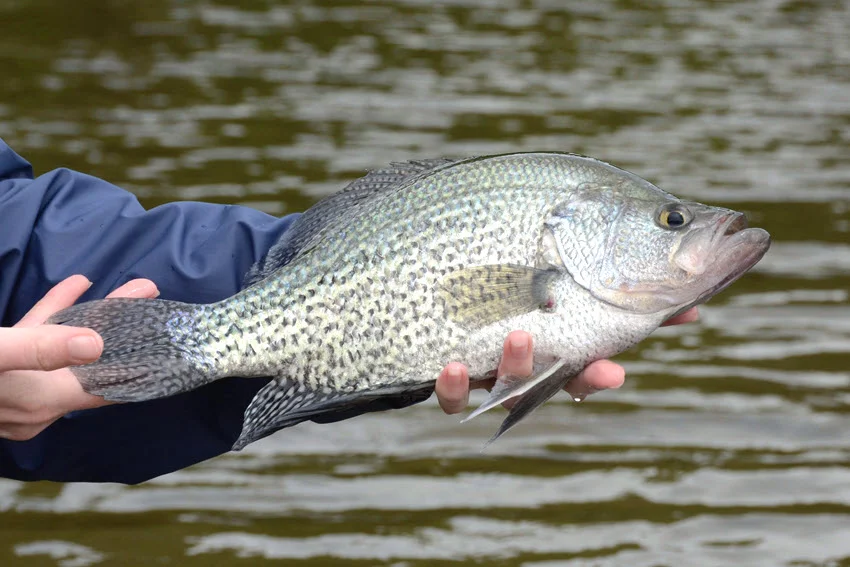
Black Crappies have a rounded, deep body with a silvery base color covered in irregular black spots. Their markings are scattered rather than forming vertical bars. They also have seven or eight dorsal fin spines, which is one way to tell them apart. Their large eyes help them feed in low-light conditions.
Adult Black Crappies usually grow 8 to 12 inches long and weigh between 0.25 and 1 pound. Trophy fish can reach 15 inches and exceed 2 pounds in healthy lakes and reservoirs.
Black Crappies are most common in clear lakes and reservoirs, usually at depths of 5 to 15 feet. They prefer cooler, cleaner waters with abundant aquatic vegetation. During the spawning season, they move into the shallows, but for most of the year, they are found around submerged cover such as brush piles, weed beds, or fallen trees.
In larger lakes, they often suspend in open water, especially around drop-offs and near schools of baitfish. Anglers can locate them using sonar, as they frequently form tight schools that hold at mid-depths. Their preference for clean, clear water makes them more common in northern and central U.S. states.
The peak season for Black Crappies is in spring, especially April through June, when they spawn in shallow nests near vegetation or brush. They are also active in the fall when they feed heavily to prepare for winter. Winter ice fishing can be productive in northern lakes, as Crappies school up in deeper basins.
Morning and evening are the best times of day to catch Black Crappies. Their large eyes give them an advantage in low light, making twilight hours especially productive. At midday, they often move deeper and become less active, requiring more precise presentations to trigger bites.
Light or ultralight spinning rods with 4 to 6-pound test line are ideal for Black Crappies. Small hooks or tiny jigs are best, as Crappies have thin, paper-like mouths that tear easily. A sensitive rod is essential to avoid pulling hooks out of the fish's mouth when setting the hook. Slip bobber rigs are excellent for presenting live bait at specific depths, especially when fish are suspended.
Vertical jigging also works well when schools are located on sonar. Anglers often use multiple rods to explore different depths until they find active fish.
Live minnows are one of the most popular baits for Black Crappies, as these fish feed heavily on small baitfish. Worms and insect larvae can also be effective in certain waters. Natural bait works exceptionally well during spawning and when fish are holding near vegetation.
Artificial baits (small jigs, tube baits, and soft plastics) are very effective for schooling Crappies. Colors such as white, chartreuse, and pink are popular choices. Small crankbaits or spinners can also trigger aggressive strikes when retrieved slowly near cover.
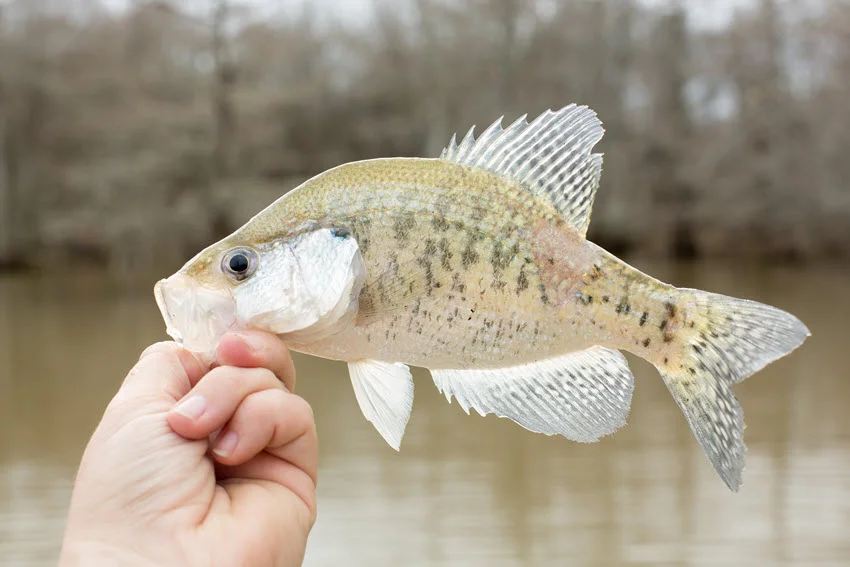
White Crappies are slightly more elongated than Black Crappies and have lighter, silvery bodies with vertical dark bars running down the sides. Unlike the Black Crappies' scattered spots, these bars are more regular and easier to identify. They also have six dorsal spines (compared to seven or eight in Black Crappies), which is a reliable way to distinguish the species.
White Crappies typically grow 9 to 13 inches long, with most specimens weighing between 0.5 and 1.5 pounds. Trophy-sized individuals can reach 16 inches and weigh over 2 pounds. The current world record for White Crappies is over 5 pounds, showing their ability to achieve impressive sizes for a Panfish.
White Crappies prefer murkier waters than Black Crappies and are often found in lakes, reservoirs, and rivers with muddy or silty bottoms. They are commonly found at depths of 5 to 20 feet, depending on the season. Like Black Crappies, they stay close to cover, including brush piles, docks, and submerged timber.
Because they tolerate stained or muddy water, White Crappies are more widespread in the southern and central United States. They often gather in large schools, making it possible to catch many once you locate them. Anglers targeting rivers usually find White Crappies near slow backwaters or oxbows.
The best season for White Crappies is spring, when they move into shallow water to spawn, in April and May, depending on water temperature. Fall is another good season as they feed aggressively before winter. In summer, they often retreat to deeper water but remain catchable with the proper techniques.
Daily activity peaks during the early morning and evening hours. These times are productive because White Crappies take advantage of reduced light to ambush prey. In the middle of the day, fishing deeper structures or shaded areas often gives better results.
Ultralight spinning gear with 4 to 8-pound-test line works best for White Crappies. Due to their slightly larger average size, anglers may opt for slightly heavier tackle than for Black Crappies. Small hooks or jigs are effective, and a soft hookset is vital to avoid tearing their delicate mouths.
Slip bobbers and live bait rigs are highly effective for suspended White Crappies. In deeper water, vertical jigging with lightweight lures allows anglers to present bait at the correct level. Crappie anglers often fish with multiple poles, spread at different depths, to locate active schools.
Minnows are the number one bait for White Crappies, as these fish rely heavily on small forage fish in their diet. Worms and insect larvae also produce bites, particularly in smaller ponds and rivers. Live bait is exceptionally reliable during spawning when fish are near shallow cover.
Artificial lures (tube jigs, curly-tail grubs, and small swimbaits) are excellent for covering water and locating schools. White, chartreuse, and silver are consistent lure colors. Slow trolling or casting near brush piles often produces steady action on White Crappies.
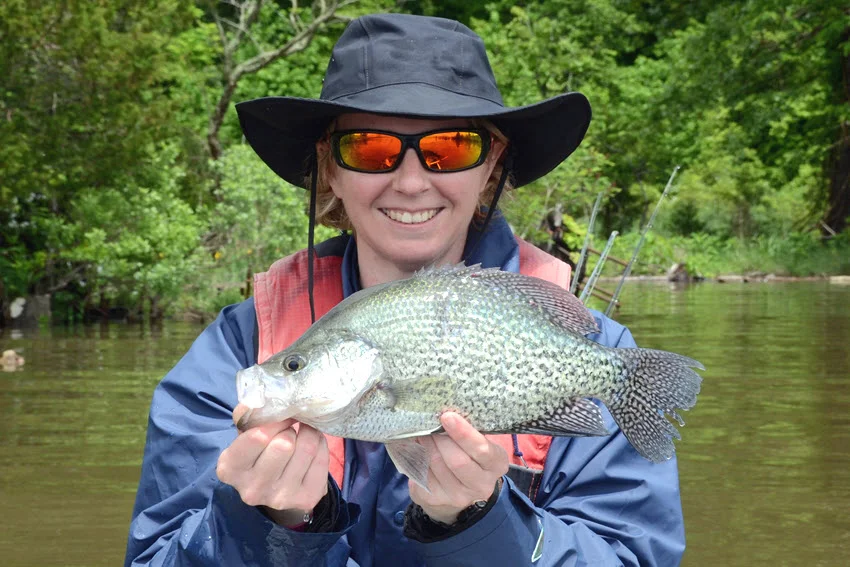
For success, of course, you must know where to find these fish. Panfish often gather near covers (weed beds, submerged logs, or docks). Casting close to these areas produces steady action. In deeper lakes, they can suspend at mid-depths.
Timing also makes a big difference. Early morning and late evening are the most productive times of day. Spring and fall are great times for beginners because during this period, Panfish feed actively throughout the day.
Be free to experiment with bait and lures to see what Panfish are biting on that day. Small jigs, soft plastics, and spinners can be just as effective as live bait, especially when schools are active. Changing color, size, or retrieve speed can quickly turn a slow day into a successful one.
Understanding fishing regulations and preserving specific fish species contributes to protecting fish populations and ecosystems and promoting responsible angling practices.
Anglers Booking Team
Following the rules is just as important as catching fish. Taking the proper precautions helps avoid accidents. Knowing local regulations ensures that fish populations remain healthy and sustainable.
Before heading out to the water, anglers should always think about personal safety. Whether fishing from a boat, dock, or shore, a few basic precautions make the experience safer and more enjoyable.
By following these simple steps, anglers can enjoy fishing without unnecessary risks and focus on catching Panfish safely.
Fishing regulations exist to protect fish populations and ensure fair use of public waters. Every state or region has its own set of rules, so it's important to check local guidelines before fishing.
Following these regulations not only helps protect Panfish but also supports future generations of anglers who want to enjoy the same opportunities.
Panfish may be small, but they bring big excitement to anglers of all skill levels. Their wide availability, willingness to bite, and great taste make them a favorite across North America. Whether you're targeting Bluegill, Crappies, or Pumpkinseed, each species offers its own fun challenges and rewards.
Now it's your turn! Which Panfish do you enjoy catching the most? What's your go-to bait for them? Share your thoughts in the comments below. We are curious to see your favorite techniques and tips.

The expert copywriters at Anglers Booking have meticulously crafted this article. Our dedicated team of writers provides valuable insights and information to enhance your angling experience.

December 8, 2025

March 31, 2025
Subscribe to our newsletter and receive a selection of cool articles every week.
Embark on unforgettable fishing adventures with us at Anglers Booking.
book your charter
October 2, 2026
September 8, 2026
August 21, 2026
August 18, 2026
August 15, 2026
August 12, 2026
August 8, 2026
August 4, 2026

You're now part of our exclusive community. Get ready for premium content and updates straight to your inbox.
close
Subscribe to our newsletter and receive a selection of cool articles every week.
Please enter a valid email address.
Be the first to know when we're back in action.
Please enter a valid email address.
Leave a Comment
Your email address will not be published. Required fields are marked *
Thank you for your comment! It has been submitted for review and will appear on the site shortly.