


Anglers Booking Team
The expert copywriters at Anglers Booking have meticulously crafted this article. Our dedicated team of writers provides valuable insights and information to enhance your angling experience.
 11 minutes read
Carp are among the most interesting and widespread freshwater fish in the world. They live in lakes, rivers, ponds, and slow-moving water systems. For many anglers, Carp fishing is a challenge and a passion. To catch Carp well, it is helpful to know the different types of Carp, how they behave, and what makes each one unique.

In this article, we will explore the types of Carp, how to identify them, and how to catch them successfully. We will also share key insights and practical tips every angler should know. Let us break down the main Carp types and how to catch each one.
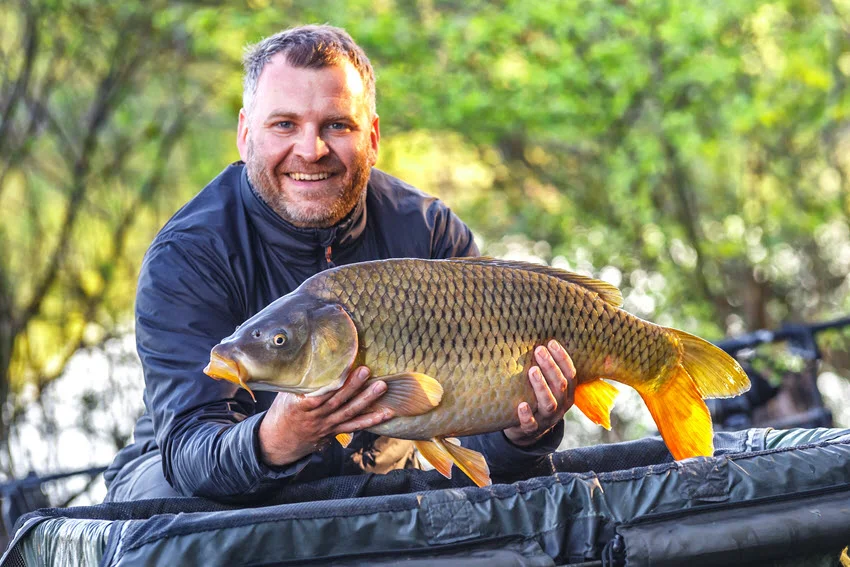
Carp is a broad term that usually refers to fish in the Cyprinidae family. The "classic" Carp that many anglers target is the Common Carp (Cyprinus Carpio), but there are many variants and also other Carp species. When talking about Carp, anglers often mention Mirror Carp, Leather Carp, and Ghost Carp.
They are built for bottom feeding and opportunistic foraging, often stirring up mud and vegetation as they search for food. They eat insects, mollusks, crustaceans, plant material, and detritus, and they can be cautious around unfamiliar baits or heavy pressure. Many Carp feed best in low light, especially at dawn, dusk, or on overcast days.
The popularity of Carp comes from their fighting ability, size potential, and the challenge they pose. Among anglers, catching a large Carp is regarded as a significant achievement. In some regions, Carp are also introduced (or considered invasive) because they adapt well and can thrive in diverse habitats.
Below, we'll take a closer look at several forms. We will explore their physical traits, typical sizes, habitats, and the best ways to catch them. Each type has unique characteristics that every angler should know.
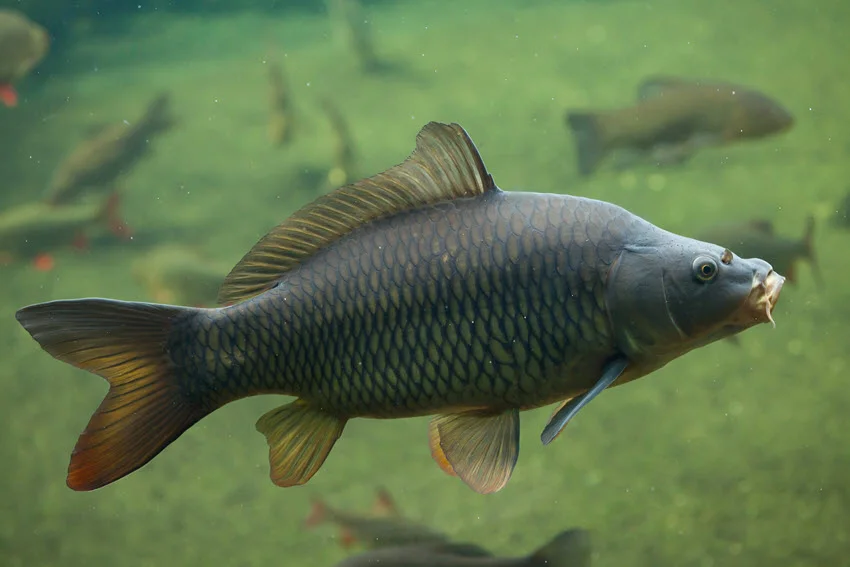
The Common Carp has a thick, heavy body with large, regular scales and a long dorsal fin. It has a slightly downturned mouth with fleshy barbels at the corners, which is a key identification feature. Color is usually olive to brassy brown on the back, fading to golden sides and a pale belly, with fins that may show reddish or orange tones.
Adult Common Carp can grow very large. Most fish run about 16 to 28 inches in many waters, with bigger Carp pushing well beyond that in productive lakes and rivers. For record context, the IGFA all-tackle world record is 75 lb 11 oz.
Common Carp often inhabit deeper sections of lakes and slow rivers. They can be found at depths up to 20 feet (or more) in large, fertile water bodies with abundant vegetation and soft, muddy bottoms. They prefer zones with cover, submerged logs, aquatic plants, or structures, and often stay near the bottom or edges in deeper water as refuges.
Common Carp are widely distributed across the United States, but are particularly prevalent in Midwestern and Southern lakes and rivers. They thrive in the Mississippi River Basin, the Great Lakes, and large reservoirs in Texas and Florida.
The peak season for catching Common Carp is spring to early summer, when water temperatures rise, and spawning activity begins (often when water temperature is around 60 to 75 °F).
During a typical day, the best times are early morning and late evening (dawn and dusk), when Carp feed more actively. In very warm weather, low-light periods are safer times to fish.
Use a medium to heavy rod in the 9 to 11 feet class (for bank fishing), paired with a strong reel. Braided line or heavy monofilament in the 15 to 25-lb (pound test) range is common. A long rod helps cast bait into deeper water without spooking Carp.
Use a strong hook (e.g., sizes 4 to 8) and robust terminal tackle (sinkers, swivels) to withstand the Carp's initial powerful runs. It is recommended to have a landing net or cradle for safe handling of large fish.
Carp feed near the bottom, so baits should be presented close to or on the substrate. Common and effective baits are corn kernels, boilies, bread, dough baits, worms, and pellets.
Because Carp feed on or near the bottom, present baits on soft sediment flats, along weed edges, and near drop-offs, then adjust depth based on where you see signs like bubbles, mud trails, or cruising fish.
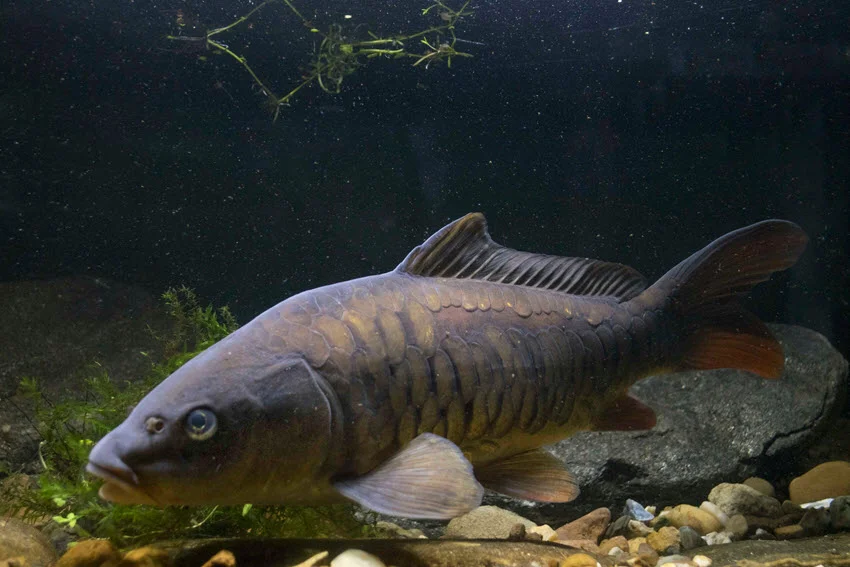
The Mirror Carp has large "Mirror-like" scales scattered over a mostly smooth body. Many have very few scales, often only along the dorsal line or near the tail. Their body shape, color (olive to bronze back fading toward lighter sides), barbels, and fins are much like those of Common Carp. The skin between scales is smoother and shinier where scales are absent.
In terms of size, Mirror Carp often average 25 to 30 inches in length. Most often, their weight is around 15 to 30 pounds for good specimens. Some can grow much larger. Records indicate that Mirror Carp can reach 60 pounds or more in prime conditions.
Mirror Carp tend to inhabit slow or standing freshwater bodies with soft, muddy, or silty bottoms and abundant aquatic vegetation. They swim near structures (such as submerged logs or weed beds). Specific depth data is less frequently published, but when available, it is usually found in mid to deep zones, 10 to 25 feet deep in large lakes.
Mirror Carp shares a similar range with Common Carp. It is often found in stocked lakes, ponds, and reservoirs across the Midwest and Northeast US. In Europe, they are popular in the UK, France, and Germany, where they are prime sport fish.
Peak season is late spring through summer when water warms, vegetation is abundant, and Carp feed heavily in preparation for spawning or afterward. Water temperatures between 60 and 75 °F are often good.
The best times of day are dawn and dusk, when light is low, and Carp are more confident feeding in shallower zones. Evening just after sunset or early morning before the temperature rises often yields bites. During hot midday periods, they usually retreat to deeper water.
A medium-heavy Carp rod (9 to 11 feet) to make long casts and handle big fish without spooking them. A reel with smooth drag and good line capacity.
Line strength, often 15 to 25-lb test monofilament, is recommended. Hooks size 4 to 8 (depending on bait) and strong terminal tackle. Landing cradle for safely handling large Mirrors (same type of gear as for large Common Carp).
Top baits include boilies, sweetcorn, pellets, worms, or dough baits. Particularly effective are boilies with a protein base or sweetened ones plus corn. Also, particles or ground baits around likely feeding areas help.
Since they often feed off or near the bottom, placing bait at depths of 10 to 25 feet in larger bodies of water works well, especially near structural features or drop-offs.
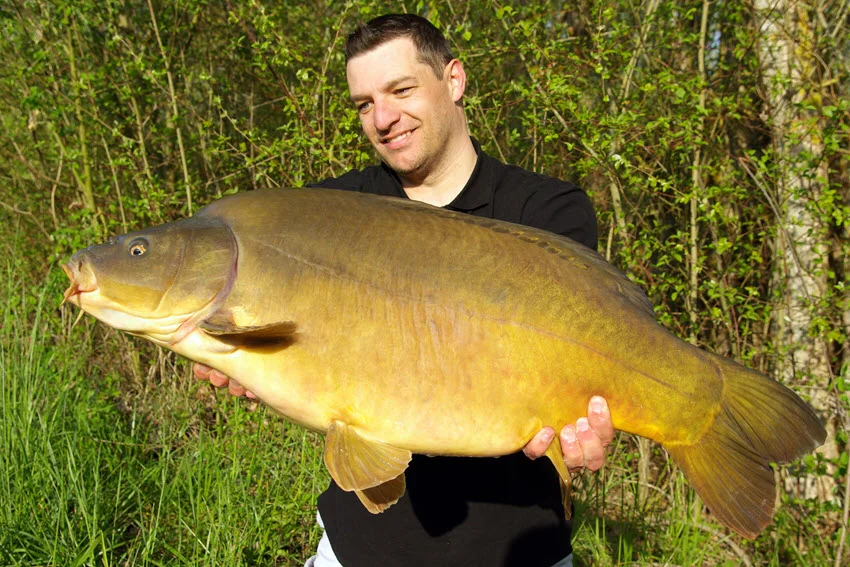
Leather Carp is another morphological variant of Cyprinus Carpio. They are much like Common Carp in overall shape but have almost no scales over nearly all of their body, giving a smooth, leathery skin appearance. They still have two pairs of barbels, similar fins, a wide mouth, and similar coloration, though sometimes slightly duller because of skin texture. The dorsal fin (long), tail fin fork, and mouth structure are typical of Carp.
Regarding size, Leather Carp often fall in similar ranges to Mirror Carp for average specimens. Many Leather Carp are 18 to 26 inches in length. Their average weight is 10 to 20 pounds. But there are records of Leather Carp in Europe that have weighed over 50 pounds and reached nearly 48 inches in rare cases.
Leather Carp shares many habitat preferences with Common and Mirror Carp, slow or still freshwater, lakes or large ponds, and areas with soft substrate where they can root. Depths are often similar: they tend to remain in deeper margins or zones when undisturbed; in the early morning or evening, they may move into shallower water.
Leather Carp are less common in the wild but can be found in managed fisheries and stocked lakes throughout Europe, the UK, and North America. They prefer calm freshwater systems with abundant vegetation and soft bottoms.
Peak season is similar to other Carp: late spring through summer, when the water warms, Carp feed and possibly spawn. Warmer water encourages more movement and foraging.
The best times of day are early morning (just before sunrise) and late afternoon to dusk. Sometimes night fishing or hours around dusk can also be good. Avoid bright midday if possible; Carp may be deeper then.
Because Leather Carp can grow large and are often cautious, use strong rods (medium to heavy Carp rods) and good-quality reels with reliable drag.
A line strength of 15 to 25-lb or more for large specimens is standard. Hooks must be strong; hair rigs or method feeders are often used. Landing gear is important, the same kind of gear as Mirror Carp.
Baits include boilies, corn kernels, pellets, and worms. Because Leather Carp have smoother skin, some anglers believe they may be more wary of baits that appear unnatural or too bright.
More natural presentations often work better. Groundbait or particle baits are thrown ahead to build confidence. They tend to feed on the bottom, so baits placed near the bottom, in zones of 10 to 20 feet, can be effective.
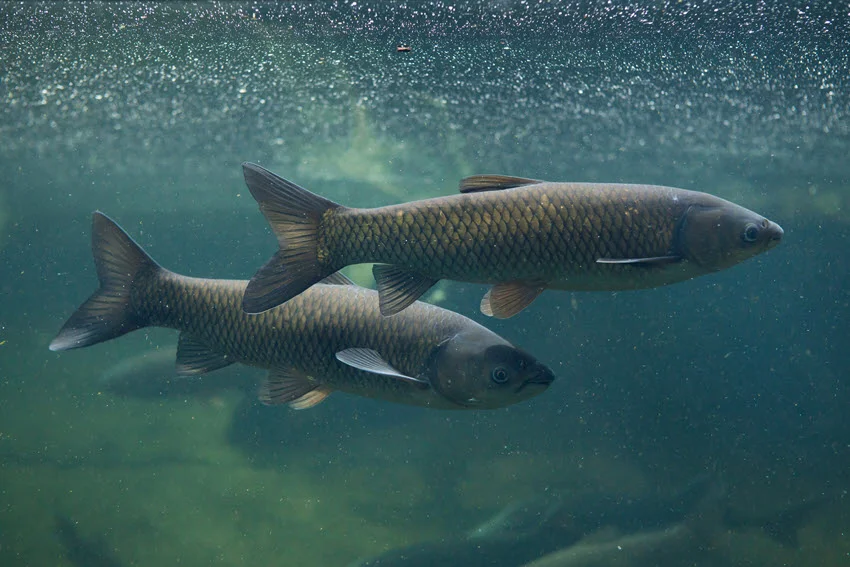
Grass Carp is a different species from Cyprinus Carpio. They have a torpedo-shaped, elongated body, a blunt head, no barbels, and large scales with dark edges that give a cross-hatch appearance. Their back is olive brown, the sides more silvery, and the belly pale. They are herbivorous, feeding mainly on aquatic vegetation.
They are powerful fish that can reach impressive sizes. Many fish are in the 24 to 39 inches range and often weigh 10 to 30 pounds, depending on the water body and available forage. For record context, the IGFA all-tackle world record is 87 lb 10 oz.
Grass Carp prefer large, warm rivers and connected lakes. They are often found in shallow, heavily vegetated edges because that is where their food (aquatic plants) is. Depths where they feed may be relatively shallow, 3 to 10 feet near the margins when vegetation is present. In deeper parts of lakes, they may move with depth, following changes in temperature and light.
During hotter periods or intense sun, Grass Carp may retreat to cooler, deeper water (15 to 25 feet or more) or to deeper channels in rivers. But feeding and movement are often tied to edges with vegetation. Grass Carp were introduced to North America from Asia for vegetation control and are now present in southern and central US states, including Florida, Texas, and Louisiana.
Peak times are summer, especially mid- to late summer, when vegetation is abundant, and water is warm. Also, after a period of growth, or when food plants are flourishing.
The best times of day are early morning and late afternoon or evening, when feeding is more vigorous, and vegetation edges are cooler; also after sunrise or before sunset. Overcast days also help, since bright sun may push them deeper.
Because Grass Carp can get large and strong, gear similar to that for large Carp is needed: medium-heavy to heavy rods, reels with good drag, and line strength in the 20 and 40-lb range (for bigger ones).
Use strong hooks that match your bait size. Also, floats or surface rigs may be used sometimes because Grass Carp feed higher in the water column.
They prefer plant-based baits, such as aquatic vegetation, pieces of plant material, sometimes bread or melon, or floating baits if surface-feeding. Some anglers use sweet corn, especially near edges.
When feeding at or near margins, baiting zones in depths of 3 to 10 feet work well. When fish retreat deeper, adjust the bait to match the depth (use bottom rigs or floats).
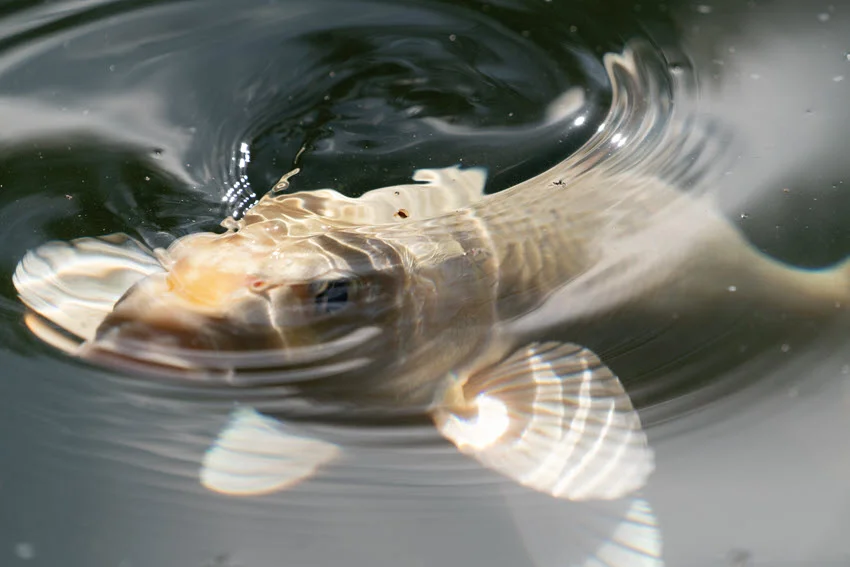
Ghost Carp, sometimes called Ghost Koi, are pale, metallic color variants most often seen in stocked waters and private fisheries. They resemble Common Carp in body shape, fins, and barbels, but stand out for their light, reflective coloration and reduced pigmentation. Scale patterns vary by lineage, ranging from mirror-style scaling to full scaling.
The typical size for Ghost Carp is around 24 to 36 inches and weighs 15 to 25 pounds. Larger ones can reach 40 to 50 lbs in lakes or well-managed fisheries.
They are found in similar waters to those of Common Carp, including lakes, large ponds, reservoirs, and slow-moving or still waters. Often, ones that are stocked (fisheries or recreational lakes) rather than pure wild waters, because fishery managers usually breed color variants. They are comfortable in mid-depths and margins, depending on cover and light.
In shallow margins, they are mostly early or late in the day, whereas in deeper zones they peak during bright sun. Ghost Carp swim at similar depths to Mirror and Leather Carp (10 to 25 feet in deeper zones, 3 to 10 feet in margins). In the US, they appear in managed private lakes and ornamental ponds. In the UK and Europe, they are a favorite among anglers for their striking color and size.
The best period to catch Ghost Carp is late spring through summer. At this time of year, water temperatures are warm, growth is active, and fish are also more mobile when food is abundant in the margins.
The best times of day are early morning and dusk. Low-light conditions are an ideal time for catching them. Nighttime can sometimes be productive, especially in warmer months. Avoid bright midday if possible.
For Ghost Carp, you can use similar gear as for other large Carp. Recommendation is to use medium- to heavy-duty rods, strong line (15 to 30-lb or more, depending on size), good hooks, bottom or near-bottom rigs, and landing equipment to handle large fish.
Because of their color and possibly greater wariness, using quieter presentations, subtle rigs, and live baits often helps.
Boilies, corn, pellets, and worms are the best baits for this Carp. Also, sweetcorn or colored but natural-tone baits are effective. Where they feed near the surface, floating baits or corn on hair rigs work.
Use bait in depths similar to Mirror Carp when deep, or edge shallow water. Baiting margins with attractive sweetened or milky baits works.
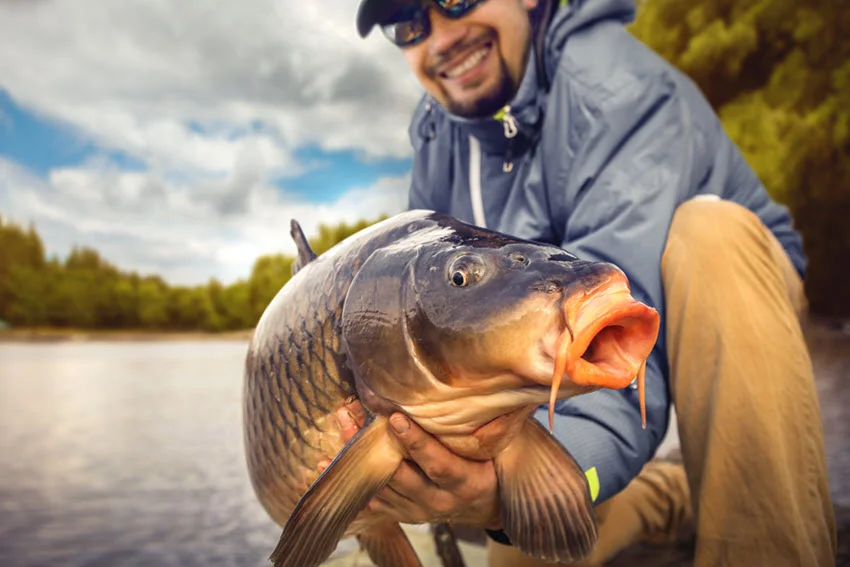
Before you start fishing, watch the water for signs of feeding. Signs such as ripples and bubbles can indicate that Carp are feeding near the surface. Underwater structures, weedbeds, or drop-offs are preferred by Carp because they can hide there. Spending time watching the water helps you choose the best spot to cast.
Use appropriate bait and presentation. Carp feed primarily near the bottom, so make sure your bait is placed close to the substrate. Popular baits include boilies, corn, pellets, dough baits, and worms. Mixing in a little groundbait around your hook can attract more Carp to your spot.
Timing matters. Carp are more active during low-light conditions (early morning and cloudy days). Water temperature also affects feeding, with spring and summer often being the most productive seasons.
Understanding fishing regulations and preserving specific fish species contributes to protecting fish populations and ecosystems and promoting responsible angling practices.
Anglers Booking Team
It is also important to stay safe. It is also important to stay safe and follow local fishing rules. Whether you are fishing from a pier, the bank, or a boat, being prepared helps both anglers and fish.
Carp fishing is usually low risk, but safety still matters, especially when you are fishing from steep banks, rocks, docks, or at night. A little preparation helps you avoid injuries and makes the day smoother for everyone on the water.
Fishing safely protects you, helps you avoid preventable injuries on slick banks or around hooks and heavy tackle, and keeps the fish in good shape for release by reducing stress and protecting its slime coat.
Rules vary by state and sometimes by water body, so check your state fish and wildlife agency before you fish.
Understanding these regulations is essential to determining the availability of Carp populations. Always fish ethically and responsibly, and encourage others to do the same.
Carp are some of the toughest freshwater fish you can hook into, and knowing the differences between Common Carp, Grass Carp, and the Common Carp varieties (Mirror, Leather, and Ghost) helps you fish smarter and get more bites. Focus on quiet water, soft bottoms, weed edges, and a simple bottom presentation with corn, boilies, pellets, or worms.
Ready to put this into practice on your next trip? Check out local waters, match your bait to what Carp naturally feed on, and always confirm current rules with your state fish and wildlife agency.
What type of Carp are you targeting next, and which bait or setup has worked best for you? Share your tips in the comments to help other anglers improve their Carp fishing skills.

The expert copywriters at Anglers Booking have meticulously crafted this article. Our dedicated team of writers provides valuable insights and information to enhance your angling experience.

October 1, 2026

February 15, 2026
Subscribe to our newsletter and receive a selection of cool articles every week.
Embark on unforgettable fishing adventures with us at Anglers Booking.
book your charter
October 2, 2026
September 8, 2026
August 21, 2026
August 18, 2026
August 15, 2026
August 12, 2026
August 8, 2026
August 4, 2026

You're now part of our exclusive community. Get ready for premium content and updates straight to your inbox.
close
Subscribe to our newsletter and receive a selection of cool articles every week.
Please enter a valid email address.
Be the first to know when we're back in action.
Please enter a valid email address.
Leave a Comment
Your email address will not be published. Required fields are marked *
Thank you for your comment! It has been submitted for review and will appear on the site shortly.