


Anglers Booking Team
The expert copywriters at Anglers Booking have meticulously crafted this article. Our dedicated team of writers provides valuable insights and information to enhance your angling experience.
 13 minutes read
Pitch fishing is an innovative technique that redefines traditional fishing, combining precision and strategy with anarchic adventure and pleasure.
Much of it is based on a deliberate approach, where anglers try to place the bait exactly where they want it, inside a submerged log, dock, or brush pile, using shorter bottom casts. That gives this approach a special touch of elegance because waiting and impatience are often the main features of pitch fishing!

Of course, it's not just that; this technique is more than interesting, with a lot of play and fun, but also a serious approach requiring sharp and quick thinking! Whether you want to improve your skills or try something new, this comprehensive guide will equip you with everything you need to understand.
And why not master pitch fishing? The thrill of mastering this technique, with its precision and adaptability, will surely keep you excited and motivated. So, without further ado, let's explore everything in more detail!
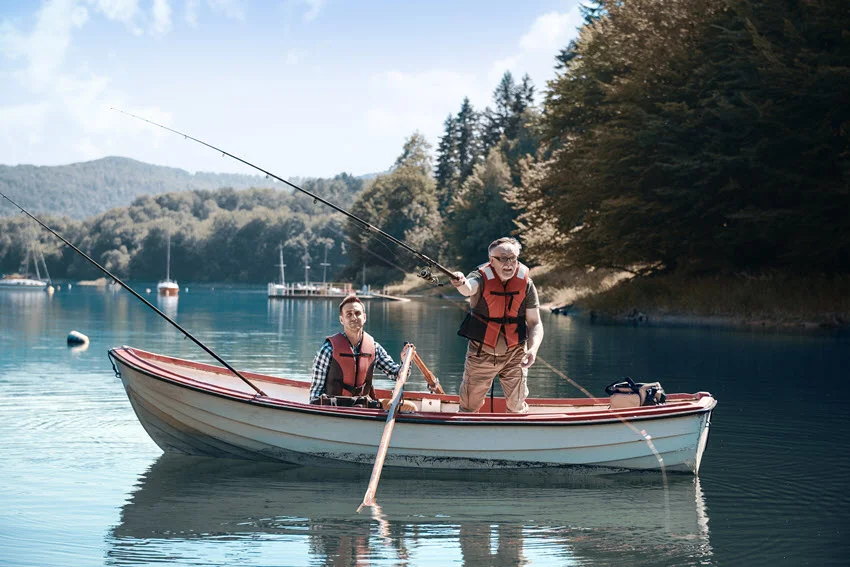
The essence of pitch fishing is its deliberate approach. The angler uses shorter, skillfully controlled casts to place the bait exactly where they want or think the fish are. The bait can be an underwater structure such as a bridge, a jetty, or a wreck. It is used in fresh and saltwater, and most importantly, it will attract a wide range of fish.
The technique requires meticulousness and precocity. The angler must carefully measure the distance and direction of each cast, ensuring that the bait lands in the optimal place. In addition, pitch fishing is relatively easily adaptable to various water conditions, and its playfulness is attractive even to beginners, who will still need some time to master it.

Once you learn pitch fishing, you will see its greatest attraction is precision, which is more challenging. But when you succeed, the sky's the limit. You will be able to place the bait exactly where you want it, often in tight spots where it is known, and this accuracy can significantly increase your chances of a successful catch, especially when targeting species that are reluctant to leave their cover.
The benefits of this precision are numerous. It allows you to reach fish in areas that are difficult to access with other techniques, increasing your chances of a catch. It also reduces the risk of scaring the fish, as the bait is placed in a way that mimics their natural prey, making them more likely to strike.
This technique can be adapted to various water bodies, conditions, and species. You must be dedicated and understand fish behavior and habitat well. This understanding will make you feel knowledgeable and competent, enhancing the excitement and value of the process because success depends on luck and the angler's skill and strategy.

Although this technique can be used in various environments, it shines in freshwater and can be very effective in coastal saltwater. For example, pitch fishing benefits species such as Bass, Crappie, and Catfish in freshwater lakes and rivers, as well as Redfish and Snook in coastal areas.
There's no limit to when you can apply it, so it's available during the warmer months when fish are more active and tend to hide in shaded areas or near structures to stay cool. In the colder months, it's the other way around, and the fish often seek cover to warm up, so pitch fishing is an excellent technique to get to those spots.

It is effective primarily due to the optimal presentation of the bait. Anglers can easily place it in fish-productive places without scaring the fish, especially in clear or shallow waters where the fish are more cautious.
A successful bait means that the fish we catch perceive it as a natural part of the environment and are, therefore, more ready to attack. Also, the technique allows access to hard-to-reach places where fish are, so it is more likely that they will need to be more careful there. The precision ensures that the bait falls right into their strike zone, the area around the fish where they are most likely to attack. This eliminates doubt and increases the chances of a catch.
Pitch fishing combines precision, minimal distraction, and adaptability to attract fish naturally. This precision and adaptability will make you feel confident and competent in your fishing skills.

With pitch fishing, you can catch some prevalent and diverse species. Although the focus is primarily on freshwater fish, in the end, it's your skill and determination that makes the difference.
Largemouth Bass: This species prefers near objects such as downed trees, docks, and vegetation, making it ideal for pitch fishing. The technique's precision allows anglers to place the bait exactly where they want it.
Smallmouth Bass: Like the Largemouth, it is primarily found in rocky areas and around submerged structures. Given its highly aggressive and greedy nature, it is also a perfect candidate for this technique.
Crappies: Usually sw gather around submerged brush piles, downed trees, and dock and bridge structures. Pitch fishing lets you set your bait in these tight spots where the crappie hides.
Bluegills: They often hide in shallow water near vegetation and buildings and are frequent targets of this species.
Catfish: It also likes underwater structures and deep holes, and bait can be placed in these specific areas to increase the chances of a catch.
Redfish: A famous inshore saltwater and brackish sighting fish, Redfish can be found around mangroves, oyster beds, and docks, allowing for precise bait placement.
Snook: Similar to the Redfish, it loaches and hunts near docks, mangroves, and other structures in coastal waters.
Trout: Trout swims in rivers and streams, with some species in seas, near rocks, and submerged objects.
Panfish: Different types of fish are suitable for pitch fishing and are found in areas with dense vegetation and underwater structures.
In short, pitch fishing is an easily adaptable and precise technique that, with a well-thought-out strategy, can yield significant catches.
You don't have to worry. Choosing bait for pinch fishing is easy; you can find it in any fishing equipment store. Pay attention to the following live and artificial baits in salt or freshwater.
The saltwater environment offers a multitude of different fish, each with its own preferences and eating habits. Here is a short presentation of the basic live and artificial baits for saltwater pitch fishing.
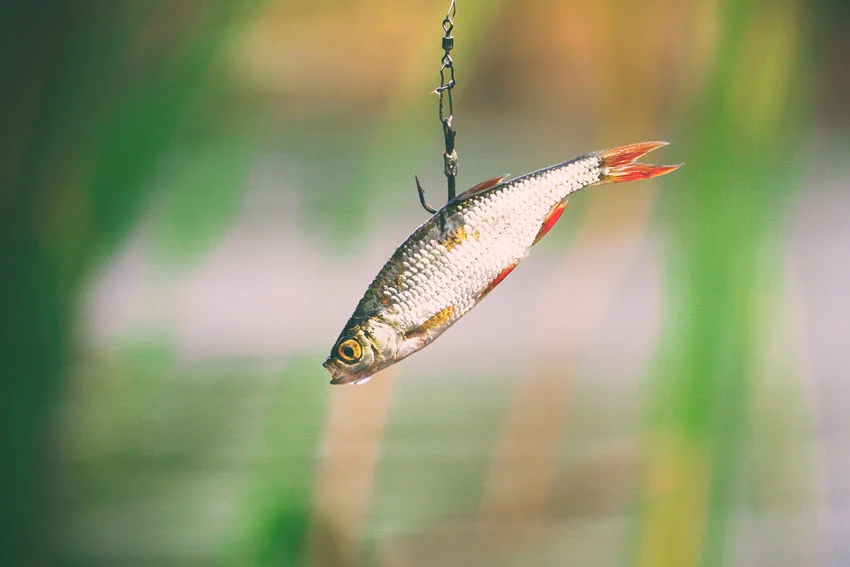
The first association for any fishing technique is the use of live bait. It is unsurpassed because it fits perfectly with the natural environment and the prey of the fish we want to catch.
Shrimp: Favorite prey for many saltwater fish, including Redfish, Snook, and Speckled Trout. The pungent smell and frenetic movement make them irresistible to many species.
Mullet: Mullets are primarily used to target larger predators such as Tarpon and Snook. Use them alive or hooked from the back.
Pinfish: Pinfish are hardy and active, making them excellent bait for Redfish, Snapper, and Grouper. For best results, hook them through the back or nose.
Crabs: Species such as Blue Crabs and Fiddler Crabs are often on the Redfish and Black Drum menu.
To make your fishing expedition as successful as possible, you need to know their feeding habits and, usually, hunting behavior.

Since so many exist, it's hard to make the wrong move when choosing artificial bait. It all comes down to your intuition, experience, and what you think is the best option.
Soft Plastic Baits: These include jerk baits and paddle tails, which mimic the action of small fish and shrimp. They can be rigged weedless or on jig heads. For better results, use colors that match the local bait fish.
Topwater Lures: These are poppers and walk-the-dog baits and are excellent for attracting strikes from aggressive species such as Snook and Tarpon.
Templates: Jigs, or bait necks such as bucktail and soft plastic jigs, are versatile and practical for many species.
Spoons: They flash, vibrate, and attract predatory fish such as Mackerel and Bluefish. Using a slow, steady retrieve is best to mimic a running baitfish.
Crankbaits: In pinch fishing, they are primarily used for species such as Striped Bass and Bluefish.
Live baits are effective in attracting various marine species. Meanwhile, artificials offer versatility and can adapt to local prey, luring even the most wary of fish.
Pinch fishing is more adaptable and often used in freshwater areas, so you can be more creative when choosing baits.

The choice of live bait for pinch fishing is quite large, and the advantage is that sometimes you can find them on the spot.
Nightcrawlers: Nightcrawlers are a staple in freshwater fishing, attracting Bass, Walleye, and Catfish.
Minnows: They are very effective in targeting various freshwater species, including Crappies, Bass, and Walleye. They are best used live, hooked through the back or lips, to lure predatory fish lurking around structures.
Crabs: Favorite to Sea Bass and other bottom-dwelling fish. You can attach them on the tail or back and place them near rocky areas and submerged logs where crabs naturally reside.
Leeches: Leeches are an excellent choice for Redfish and small Sea Bass. They move tortuously and frantically, and their smell attracts fish. For best results, attach them through a suction cup or head.
Even though they are live bait, they must be taken care of and stored correctly. Whether you collect or buy them, always have a separate compartment and storage box.
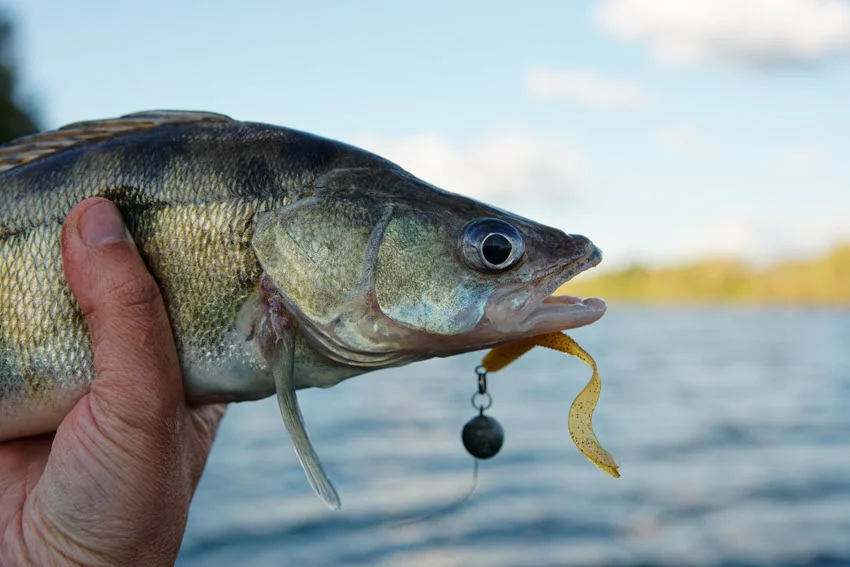
Artificial baits will not disappoint you, either. Moreover, they may charm you with their choice and playful options sooner.
Soft Plastic Lures: In Texas-style pinch fishing or on jig heads, soft plastics or artificial baits such as worms, creature baits, and swimbaits. Thus, they imitate the action of natural prey such as worms, insects, and small fish.
Spinnerbaits: Spinnerbaits are highly prized because they offer flash and vibration, attracting Bass, Pike, and Perch. They are excellent for use near vegetation and structures.
Crankbaits: This species comes in many shapes and sizes, mimicking small fish and prey. They allow near-surface fishing and deep-diving lures to reach fish in deeper water.
Templates: This versatile bait can be cast in tight spots, such as under docks and near submerged structures.
Topwater Lures: A type that creates surface turbulence and attracts fish from a distance. It is especially effective for bass early in the morning or late at night when the fish feed close to the surface.
The advantage of artificial baits is sophistication; some can also have meat fillings and spread the smell. The downside is that they can harm the environment.
What is unique about pitch fishing is that you don't need special equipment to perform a particular and successful fishing action. Here's what you should pay attention to.

You can use all of them, from classic rods for various techniques to those more narrowly specialized for pitch fishing. Which one you choose depends on you.
Medium-Weight Baitcasting Rods: They range from 6'6" to 7'6" in length and have fast or extra-fast action. This type provides an almost perfect balance of strength and sensitivity, allowing anglers to precisely place lures in narrow and hard-to-reach places.
Heavy Baitcasting Rods: These rods range between 7' and 8' long and have fast action. They are ideal for targeting larger fish species and fishing in dense vegetation.
Medium Rods: The 6'6" to 7'3" lengths provide fast action, and the prides offer enough sensitivity to detect subtle bites while delivering enough power to handle both light and heavier fish.
Spinning and Throwing Rods: Designed especially for spinning and throwing techniques, these rods are characterized by swift action and high power. They won't disappoint you when it comes to setting baits, either.
Shorter Rods: These rods are shorter, but with quick action and medium power, they provide greater mobility and control. They are ideal for casting in docks, overhanging trees, and close to shore.
When choosing, it is essential to pay attention to the balance of power, not to the detriment of performance.

An intelligent choice of reel will provide you with the much-needed precision and control for this technique. Therefore, pay attention to the following:
High Transmission Ratio Reels: This reel provides a good angle and fast line retrieve, allowing anglers to effectively and quickly set the hook when the fish strikes.
Low Profile Baitcasting Reels: They are designed for comfort and ease of handling, which allows for a secure hold and smooth operation, reducing fatigue.
Heavy-Duty Baitcasting Reels: Heavy-duty baitcasting reels handle the stress of catching bigger fish and fishing in choppy areas.
Compact Reels for Throwing Baits: Compact baitcasting reels are much smaller and lighter than other types and provide greater control and precision.
Smooth Drag System Reels: Clever designs with a smooth drag system are crucial for fishing, as they allow for consistent pressure when fighting fish. The reliable pulling system ensures the line does not break during a sudden run or an aggressive fish attack.
Choose a reel that matches the fishing conditions and how you interpret this technique through your style.

A good line choice in pitch fishing affects the ability to cast accurately, detect bites, and handle fish in different conditions. Our advice is to choose one of the following.
Braided Line: Braided line is the best choice for fishing due to its superior strength, high sensitivity, and minimal stretch. It allows for precise bait placement and strong hook sets.
Fluorocarbon Line: Fluorocarbon rope is known for its low visibility underwater, good sensitivity, and abrasion resistance.
Monofilament Line: It is used sparingly in pitch fishing, although it can be effective in certain situations. Its stretch can be helpful as it provides a little shock absorption during hook sets and grappling.
Hybrid Lines: The hybrid line combines the best features of monofilament fluorocarbon, which means a balance of strength, sensitivity, and low visibility, and is suitable for various conditions.
Always consider the important benefits of pitch fishing and choose a line based on that.
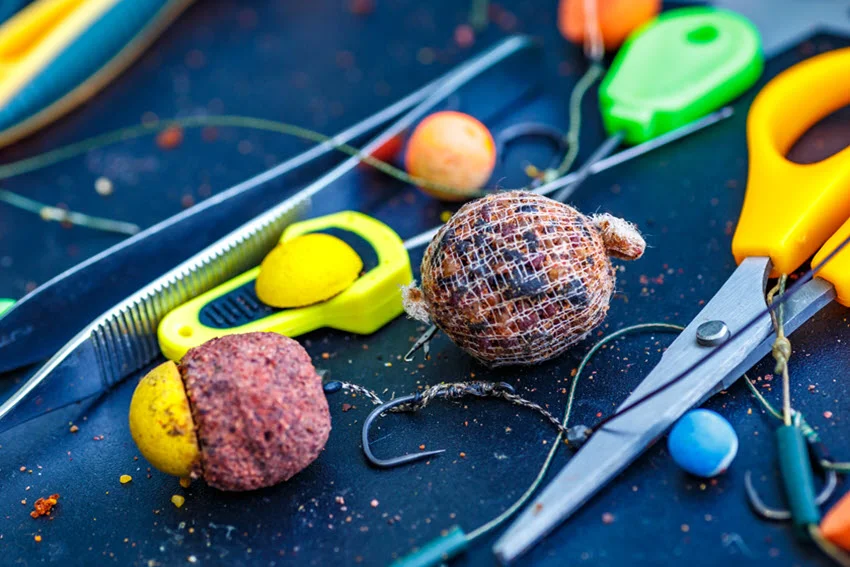
The pitch fishing show revolves primarily around placing the bait in the desired position. That's why choosing an appropriate rig is crucial to ensure your bait performs effectively and can withstand the conditions you're fishing in.
Texas Rig: This is one of the most popular and versatile fishing rigs. It enables precise bait placement near vegetation, docks, and other objects in tight places.
Carolina Rig: It is made with a weight attached to a swivel that slides freely on the main line. Thus, the bait moves freely and naturally, making it great for wary fish.
Drop Shot Rig: This type has a weight on the end of the line with a hook tied above it, leaving the bait suspended on the bottom. It excels in clear water, allowing excellent control over bait presentation and subtle movements that can attract finicky fish.
Silly Rig: This type of rig, with an unusual name, involves a hook made of soft plastic bait, usually a stick worm, with both ends free for the lure to wiggle. It works well in clear water and is often used to attract Bass and other species that are attracted to the lure's wriggling motion.
Punch Rig: This rig is primarily used in complicated underground mazes and structures. Its heavy weight, attached close to the hook with a strong, soft plastic bait, allows it to break through dense vegetation.
Considering that it is important to make your way to the location where you will present the baits, make an effort to choose those that will allow you to break through the possible complex or dense water environment.
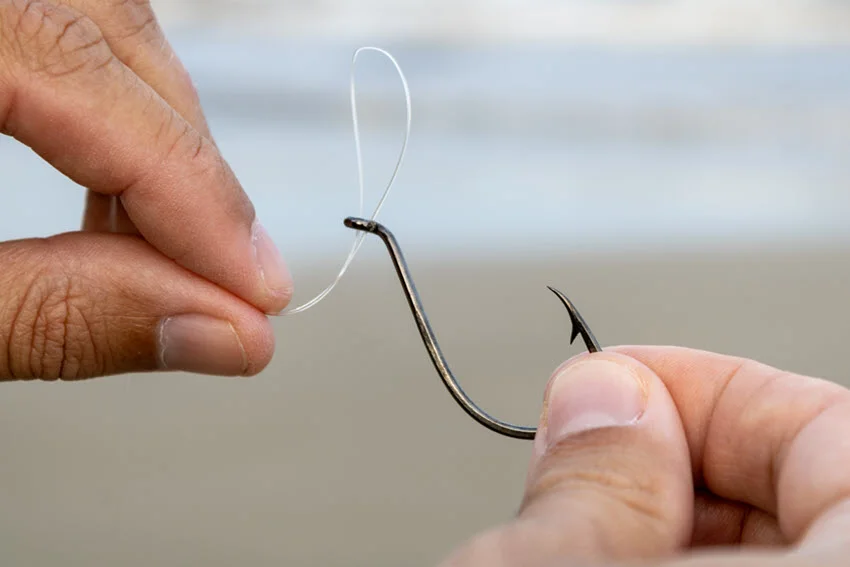
Given that pitch fishing is detailed and sometimes almost surgically precise, for these measured operations, you also need quality hooks, that is, those that can answer the fishing challenge you intended for them.
Offset Worm Hooks: This hook has a bend near the lug to keep the soft plastic in place and a slanted point to hold the bait securely. They are best when combined with Texas platforms.
Extra Wide Hole (EWG) Hooks: They have a vast gap between the shank and tip, making them perfect for larger lures. That extra space allows for efficiency in a variety of high-altitude fishing scenarios.
Straight Hooks: They have a simple design, with a straight handle and no bend. They are used in areas with dense vegetation or heavy structures, where more power is needed to break through.
Circle Hooks: This type is rounded in shape, with the tip turned inward. It is designed to catch fish in the corner of the mouth and is often used for the catch-and-release technique, as it reduces hooking depth and fish injury.
Treble Hooks: A specific design of three hook points extending from a single shank, typically used on hard baits such as crankbaits and topwater lures. They are not often used in pitch fishing, although they increase hooking ratios on baits that the fish attack aggressively, which makes them effective in open water.
Always remember that the hooks must be strong enough to lift the bait and withstand the obstacles of the various underwater environments.
Pitch fishing is most effective in complex water areas, where precision, control, and a well-developed strategy are crucial. These factors contribute to the challenge and beauty of this technique.

Areas of dense, bushy vegetation such as lilies, hydrilla, and reeds are places where fish hide but also stalk their prey. Pitch fishing methods allow anglers to approach these habitats and precisely place the bait in small openings within this dense cover. With the smartly chosen gear, you will avoid getting stuck and, at the same time, reach the place where the fish is hiding.

Underwater structures attract many fish species because they provide shade, protection, and a place to lurk. You will mostly find Bass, Crappies, and other species here. Pitch fishing, with its precise Amberjacks, is ideal for hunting around these structures. Controlled pitch fishing casts, especially those at short distances, ensure accurate placement of the lure in the place where the fish is likely to be hiding.

Overhanging trees and bushes create shady areas along the shore, which are common places where fish seek shelter and food. Pitch fishing methods allow anglers to pull bait under these natural canopies without getting tangled. This method is excellent for stalking Bass and Panfish that lurk in the shadows, making it a popular choice for surface fishing.

Submerged structures such as fallen trees, brush piles, and complicated underwater rock formations are excellent and favorite habitats for various fish species. At the same time, these structures make a fantastic location for pitching fishing, with the particularly attractive challenge of delivering and placing the bait in a critical place where the fish will bite it.

Shallow saltwater environments or brackish waters with scattered covers such as stumps, rocks, and sparse vegetation are top-notch productive pitching areas. The marine areas of the flats are particularly attractive because they attract almost all fish, especially Snook and Redfish, and enable quiet, precise presentations that will not spook the fish.
This technique is specific enough, but there are still a few different strategies you can adapt depending on your situation.

This strategy is excellent for covering a larger area of water and reaching greater depths and regions leading to the bottom, and it can be very varied. You need to spin the bait in heavy cover and cast it in open areas or around the edges of underwater structures.
This approach allows for adaptation to different conditions, especially in conditions of dense vegetation, although it is also effective in more open areas, increasing your coverage and efficiency.

Heavy gear is a technique you must apply to fish in harsh conditions, either because of the terrain or the specific season, which may be in the winter. Heavy tackle setting allows you to pull fish out of thick cover without breaking the line or damaging your rig while providing the support and power needed to handle large or very aggressive fish.

This oddly named approach focuses on careful and detailed line maneuvering, which is essential as any unusual movement or slack can sometimes cause a fish to pick up the bait or become suspicious. The technique means setting the hook at the first sign of irregular line movement. By carefully watching your line, you can detect these subtle bites and quickly set the hook, increasing your chances of catching a fish.
If you like a bit of ambush type of angler and your mind is analytical, constantly thinking and strategizing, from choosing the right equipment to mastering the precise technique, then pitch fishing has the optimal dose of excitement for you.
We hope this guide has met the task we set ourselves and helped you understand pitch fishing better. Of course, feel free to share your experiences, tips, and questions in the comments section below! Remember that we are always here to help or participate in the conversation. Tight lines and happy fishing!

The expert copywriters at Anglers Booking have meticulously crafted this article. Our dedicated team of writers provides valuable insights and information to enhance your angling experience.

July 26, 2025

November 15, 2024
Subscribe to our newsletter and receive a selection of cool articles every week.
Embark on unforgettable fishing adventures with us at Anglers Booking.
book your charter
September 8, 2026
August 21, 2026
August 18, 2026
August 15, 2026
August 12, 2026
August 8, 2026
August 4, 2026
April 17, 2026

You're now part of our exclusive community. Get ready for premium content and updates straight to your inbox.
close
Subscribe to our newsletter and receive a selection of cool articles every week.
Please enter a valid email address.
Be the first to know when we're back in action.
Please enter a valid email address.
Leave a Comment
Your email address will not be published. Required fields are marked *
Thank you for your comment! It has been submitted for review and will appear on the site shortly.