


Anglers Booking Team
The expert copywriters at Anglers Booking have meticulously crafted this article. Our dedicated team of writers provides valuable insights and information to enhance your angling experience.
 13 minutes read
If any fish are charming little gems of freshwater fishing, both beloved by anglers for their strong fight, they are Bluegill and Crappie. Despite their relatively small size, there is something in their behavior, the ease of catching, and the mild, soft taste of the meat, making them an always popular species.
Bluegill, with their bold, round bodies and liveliness, look like fierce firecrackers in the water in the sun and are real little warriors that rush through the shallows at incredible speed.
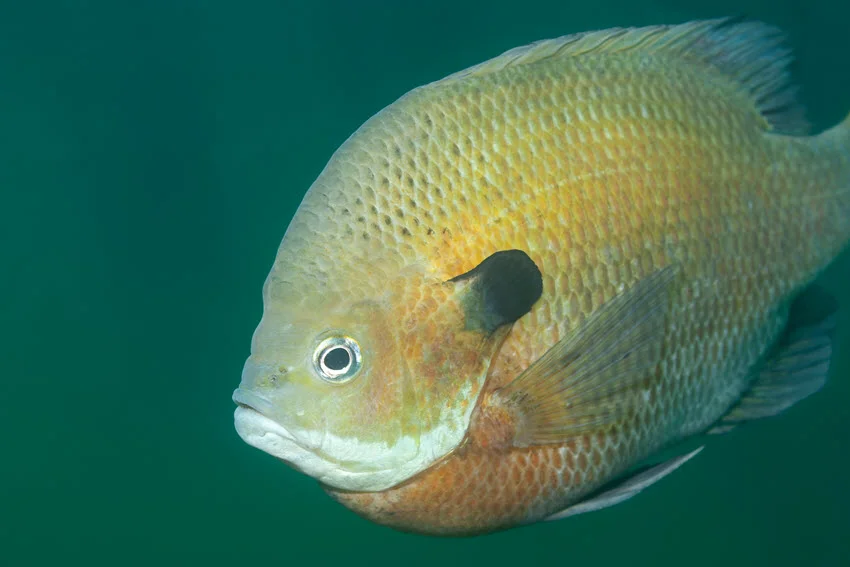
Crappies are the total opposite of cool, calculated strategists, with their sleek, silvery bodies and laid-back nature, prefer to be alone in deeper, calmer waters, waiting for the perfect moment to strike. Bluegill are sprinters, masters of fast action, and Crappies are marathoners, patient, methodical and ready to test your fishing finesse.
Whether you're into the fast-moving Bluegill or the stealthy Crappie, we've got instructions on how to target these two fish. Join us as we explore their habitats, feeding habits, and more to help you outwit these freshwater favorites.
Bluegills and Crappie are quite similar, but their differences are crucial to setting up a fishing ambush. While Bluegills are characterized by bright colors and a stockier body, Crappie are slimmer and silvery in color and prefer deeper water, making them a little more difficult to catch. There's more to the difference, and it's a real pleasure to compare these fish, so let's continue.

In terms of weight or size, the two fish are not very different; Bluegills average around 6 to 8 inches in length, although larger specimens can reach up to 10 inches in some waters. In terms of weight, they usually tip the scale by about 1/2 pound. Crappies, slightly larger ones, usually measure between 10 and 12 inches, and weighs around 1 pound.
In some cases, especially White Crappie, they can exceed 2 pounds. These are their approximate sizes and weights, although it is not uncommon to come across Bluegills which, due to better conditions, are larger and heavier than Crappies. Crappies are generally considered a more substantial catch, appealing to anglers looking for a bigger fish that offers a little more challenge and satisfaction.

Probably the easiest way to tell them apart is by their colors. Bluegill are known for their vibrant colors, like the sun, which sparkle beautifully in the water. They have a dark olive-green body with light blue or purple hues around the gill covers, hence their name. And if you look even closer, you'll see vertical dark stripes along their sides, and their bellies can take on shades of orange or yellow. In addition to being so easy to spot, the Bluegill is extremely beautiful to look at.
Crappie have a more muted appearance but are no less striking. They can be found in two main types: Black and White. Black Crappies have a silvery base color with dark and mottled, irregular spots scattered across their body, while White Crappies have a lighter, more uniform silver body with vertical stripes. The difference is subtle, but it helps anglers distinguish between the two species, especially in waters where both species inhabit.

Although Bluegill and Crappie have relatively similar lifespans, it is also true that environmental factors can affect their longevity. Bluegills usually live about 5 to 6 years in the wild, ideally, they can live up to 10 years. They are quite sensitive and often hunted fish, and their lifespan is affected by water temperature, food availability, and the presence of predators. It is also true that most Bluegill, however, rarely survive the 5-year mark, especially in fish-rich environments.
Crappies live a little longer, on average about 7 to 10 years, and the luckiest individuals even up to 15 years in ideal conditions. Like Bluegill, their growth and survival depend on their habitat, food sources, and fishing pressure. Crappies grow faster in their early years and slow down as they age.
If you exclusively target these two fish, you will find them most easily by knowing their favorite habitats. Bluegills like shallow, warm waters with lots of vegetation, and Crappies, deeper waters and are more likely to be found around structures such as submerged trees or levees. They significantly change behavior according to seasons.

Cooler waters are a key habitat feature for Bluegills and Crappies, two favorite freshwater species. Bluegills thrive in shallow lakes, ponds, and slow-moving rivers throughout North America. They like areas with lush vegetation and structure, such as lilies, submerged plants, and docks. They are most active in spring and summer, which makes them ideal for hunting in their sunny habitats.
Crappies like deeper water, especially during the warmer months and like Bluegill, they inhabit lakes and rivers, near submerged structures like downed trees, brush piles and docks. This species migrates to shallow spawning areas in the spring, looking for places with cover where they can breed. Their behavior changes with the seasons, and they can be found all over the USA, from Texas to Florida to Indiana.

These species are quite sensitive to seasonal changes and show different patterns throughout the year, influenced by changes in water temperature, spawning cycle, and food availability. Below, explore how Bluegill and Crappie perform in each season and how to adjust your fishing techniques to maximize success on the water.
In the spring, Bluegill emerge from hibernation, entering shallow waters full of vegetation and spawning grounds. These are usually near the edges of lakes and ponds, often in groups, and are thus quite easy to target. Crappies also begin their seasonal migration, moving toward warmer shallows, among submerged structures such as fallen trees or brush piles. Both species feed very aggressively, taking advantage of the abundance of food, making spring an ideal season for anglers.
In the heat of summer, Bluegills are most active in the early morning and late evening, seeking shade under overhanging vegetation or near docks. If it's hot, they'll retreat even deeper during the hottest parts of the day but remain relatively accessible. Crappie prefer cooler, deeper water and become less active as temperatures rise, but they still bite well during the cooler hours.
As temperatures drop in the fall, Bluegills return to their deeper habitats, feeding rates decrease, and they feed more cautiously as they prepare for winter. They can still be found near shallow areas, but are less aggressive and more selective in their diet. Crappies begin to migrate back toward shallower waters, congregating near the spawning grounds, and continue to feed but become more methodical in their approach, making fall a great time for patient and strategic anglers.
Winter is a time of rest, when Bluegill retreats to the depths, seeking warmer waters with slower currents. They become significantly less active, and their feeding significantly decreases and slows down, making it challenging to catch them. Crappies also move to deeper, more stable waters, where they remain relatively inactive. You may get lucky and manage to lure them out, but generally, you will need a lot of patience to lure these sleeping fish.

The best time to catch Bluegill and Crappie is spring, as both species move to shallow waters to spawn, making it the best time to fish. Summer isn't bad either, as Bluegill retreats to deeper areas, where early mornings and late evenings are most productive, while Crappie can be found hanging near cover.
Fall is the time for both fish to migrate to shallower waters for the last food supply before winter, and even then, you can catch them relatively easily. In the winter, while Bluegill can be caught in deeper water, Crappies become less active and require more patience.
The two species have different food preferences that change with the seasons and water conditions, but generally stick to what they like. Bluegills are known for their opportunistic feeding behavior, primarily eating insects, small crustaceans, and plant matter, while Crappies prefer smaller fish. Let's look closer at their menu to help you reel them in all seasons.

Bluegill are not selective, and their diet is predominantly opportunistic, allowing them to survive in various freshwater environments. Their diet consists of insects, small crustaceans, zooplankton, and aquatic vegetation. Bluegill feeds on flies, bugs, and grasshoppers, especially those that land on the water's surface or near the shoreline and vegetation. It won’t miss crabs and shrimps either, especially in habitats where these creatures are abundant.
Zooplankton play a key role in the diet of young Bluegills, providing essential nutrients. As Bluegills mature, they expand their diet to include aquatic plants and algae, especially when other food sources are scarce. Their feeding adaptability makes Bluegills a fun and relatively easy target for anglers, who can use a variety of baits, including live insects, small fish, and artificial lures.

Crappie's diet is primarily focused on small fish and aquatic organisms, but they will adjust as needed based on availability. Their favorite foods include minnows and other baitfish, which make up the bulk of their diet, especially as they mature. During their younger stages, Crappies feed heavily on zooplankton and small insects.
As they grow, their predatory instincts lead them to prey on small fish and crustaceans, including crabs and shrimp. They may also consume small aquatic insects and larvae that inhabit underwater structures like brush piles.
In principle, these two fish are not difficult to catch and are more fun than complicated, but there are challenges. Although both species can be found in similar freshwater environments, their behavior and feeding habits require a customized approach. So, let's dive into the most effective methods to help you catch them and have fun.

When fishing for Bluegill, the best option is to use simple and accurate techniques. One of the most popular is float fishing with a bait such as worms, as it allows you to place the bait at the perfect depth. The next option is ultralight tackle with light lines and small hooks, given the Bluegill's small mouth and subtle bites.
For a more challenging approach, fly fishing with small insect-imitating flies, such as ants or mayflies, works well near vegetation or on the water's surface. Although rarely used, you can also catch them performing vertical jigging with small jigs or soft plastics around underwater structures.

One of the most popular techniques for targeting Crappie is jigging, either vertically or by casting small soft plastic jigs into brush piles, docks, or downed trees, where Crappie often hide. An effective and even simpler technique is bait fishing with live bait under a float, especially during the spring spawning season when Crappie move to shallower waters.
You can even catch Crappies with the famous trolling, with small baits or spinners. This will cover large areas and locate schools of Crappie in open water. By adapting and changing techniques, Crappies can be caught year-round, adapting to their changing behavior and seasonal movements.
These fish have a lot in common and can be caught with relatively similar equipment, and the differences mostly concern habitat, season, and approach.

Bluegills are small and delicate fish, but they nevertheless have some predatory qualities and tons of speed, agility, and the ability to thrive in challenging environments. They are mostly hidden by thick vegetation and shallow waters, which is why it is necessary to use the right gear. Here is our recommendation.
This setup will give you the surgical precision and control you need to outsmart Bluegill, no matter your technique.

Crappies may not be much bigger than Bluegill, but they are known for their aggressive strikes and tendency to hide in the depths, which makes them a bit more challenging to catch, and you will need different gear. Here's what we recommend:
With this rig, you'll be ready to tackle Crappie, but of course, you can always upgrade as you experience it.
The common characteristic of the taste of both fish is that they are very mild, light, and suitable for the most sensitive stomachs. However, there are nuances of firmness and methods of preparation in which they differ and which bring out the best of the taste they have to offer.

Bluegill is well-loved for its far-famed mild, sweet flavor and flaky, tender meat, which lends itself to sophisticated preparations that don't overpower its tender beauty. Often described as similar to Tilapia or Perch, Bluegill has a light flavor that allows it to absorb well. The most popular way is frying, which enhances its natural flavor and adds a satisfying crunch. Anglers often coat the fillets in a seasoned mixture of cornmeal or flour and fry them until golden brown.
It is then served with a side of tartar sauce and lemon wedges, creating a delicious dish highlighting the fish's delicate flavor. Grilling is another way to cook, especially if you marinate the Bluegill fillets in lemon juice, olive oil, and spices before. Grilled Bluegill can be served on a bed of rice or with grilled vegetables. Roasting is also a healthy option. By simply seasoning the fillet with herbs, you get a light, aromatic dish that retains the fish's moisture.

Crappie meat is often compared to the taste of whitefish, with a slightly sweet flavor and a firm, flaky texture, giving it a delicate quality that allows it to absorb spices nicely. Crappies are usually fried with plenty of room to experiment with toppings, vegetables, cream soups, or rice. Then frying, when the fillets are coated in a seasoned mixture of cornmeal or flour, and fried until golden and crispy.
This elevates the sweetness while providing a satisfying crunch and is often served with tartar sauce and lemon wedges for a classic treat. You won't go wrong with the grill either, with the previous marinating fillet in olive oil, lemon juice, and herbs grilled Crappies can be served with fresh vegetables or on a bed of rice. Crappie meat is perfect for culinary play, so you can get creative and enjoy it.
Perhaps more than anything, Bluegills and Crappies are quite similar, at least when it comes to the difficulty of the challenge, but nuances always exist.
Whether you're looking for a great-tasting, easy-to-catch fish or a species that thrives in a specific habitat, below we'll explain in detail what challenges these fish bring to beginners and experienced anglers.

The start of your fishing trip should be fun and challenging. Let's see if Bluegills or Crappies are perfect for your adventure.
Bluegill is a fantastic choice, especially for absolute fishing beginners. This fish's size and behavior offer an enjoyable challenge without being overwhelming.
Why choose Bluegill?
The Sunfish is a small fish, but it provides a fun fight, and its mild, sweet meat is great for preparing delicious dishes.
If you're up for a little more excitement, Crappie is a slightly more challenging catch. It allows you to experiment and learn more techniques and handling in a complex environment.
Why choose Crappie?
Both Bluegill and Crappie are perfect for beginners, and you can't go wrong with either fish. They aren't too much of a beginner's bite, and they aren't banal or boring species.

For experienced anglers, the greatest thrill of Bluegill and Crappie fishing lies in mastering the subtle differences and challenges. However, for the experienced, neither of these two fish is hard to catch.
Although often considered a fish for beginners and amateur anglers, the Bluegill can surprise even the most experienced with its wisdom and combativeness.
Why choose Bluegill?
Sunfish often hide under docks or in dense vegetation, making baiting a challenge. Ultralight equipment adds excitement, as it requires a steady and surgically precise hand.
Crappies may seem simple, but their seasonal behavior and migrations make the essence of the challenge and opportunity to improve your skills.
Why choose Crappie?
For those looking for more than just a catch or typical trophy fish, Bluegill and Crappie are the perfect fish to perfect your techniques and push your fishing skills to new heights.

Understanding fishing regulations and preserving specific fish species contributes to protecting fish populations and ecosystems and promoting responsible angling practices.
Anglers Booking Team
Both species are popular targets among anglers, as they are relatively easily accessible to everyone. As with many other fish, most states have regulations and laws that limit the number of fish in the bag, size, and seasonal bans, which include limits on a certain number of Bluegill or Crappie per day, and some areas apply minimum size limits to allow the fish to mature and spawn sooner.
Both species are widely targeted due to their accessibility. Most states set limits on daily catch and size, as well as seasonal closures to protect populations. Some areas enforce minimum size rules to allow fish to mature. Catch and release is encouraged, especially for trophy specimens. Always check local rules before fishing.
In the USA, the competent organization is the U.S. Fish and Wildlife Service (USFWS), which oversees the conservation and management of fish species in freshwater and coastal habitats, including Bluegill and Crappie.
Anglers are the first and basic step towards the preservation of these fish, and the simplest thing they can do is to practice responsible fishing. That is, they have the purpose of permission and respecting the rules of fishing restrictions and bans.
There are also regular catch-and-release practices, care for the environment, not disturbing and polluting the habitat of these fish, and reporting illegal activities. Using environmentally friendly gear, such as biodegradable tackle and lead-free submersibles, reduces environmental damage. There's also reporting data on tagged fish and supporting local conservation programs or habitat restoration efforts.
Bluegill and Crappie may seem simple, but they can deliver big thrills. They're perfect for beginners and fun for seasoned anglers alike.
Ready to hit the water? Share your best catch, top tips, or favorite recipe in the comments below, and let's keep the fishing conversation going! Tight lines!

The expert copywriters at Anglers Booking have meticulously crafted this article. Our dedicated team of writers provides valuable insights and information to enhance your angling experience.
January 27, 2026
October 11, 2025
Subscribe to our newsletter and receive a selection of cool articles every week.
Embark on unforgettable fishing adventures with us at Anglers Booking.
book your charter
September 8, 2026
August 21, 2026
August 18, 2026
August 15, 2026
August 12, 2026
August 8, 2026
August 4, 2026
April 17, 2026

You're now part of our exclusive community. Get ready for premium content and updates straight to your inbox.
close
Subscribe to our newsletter and receive a selection of cool articles every week.
Please enter a valid email address.
Be the first to know when we're back in action.
Please enter a valid email address.
Leave a Comment
Your email address will not be published. Required fields are marked *
Thank you for your comment! It has been submitted for review and will appear on the site shortly.